

Why Government Subsidies and Incentives Matter for Block Manufacturing in Africa: A Guide for China Suppliers
Most investors fixate on the machine’s sticker price, yet the real savings lie in tariff waivers, VAT exemptions, and land grants that can slash total landed cost by 20–35%.
Government incentives across Nigeria, Kenya, Ghana, and Tanzania are reshaping the economics of block manufacturing, turning what appears to be a capital-intensive venture into a rapidly amortizing asset when buyers align equipment specifications with subsidy eligibility criteria.
Over the past decade of exporting concrete block machines to 108 countries, we have watched clients who treated policy research as an afterthought lose millions in forgone rebates, while those who mapped subsidy requirements before placing orders achieved payback periods as short as six months. African governments collectively allocate over $2.4 billion annually in manufacturing incentives, yet fewer than 30% of small-scale block producers actively apply for these programs.[^1]
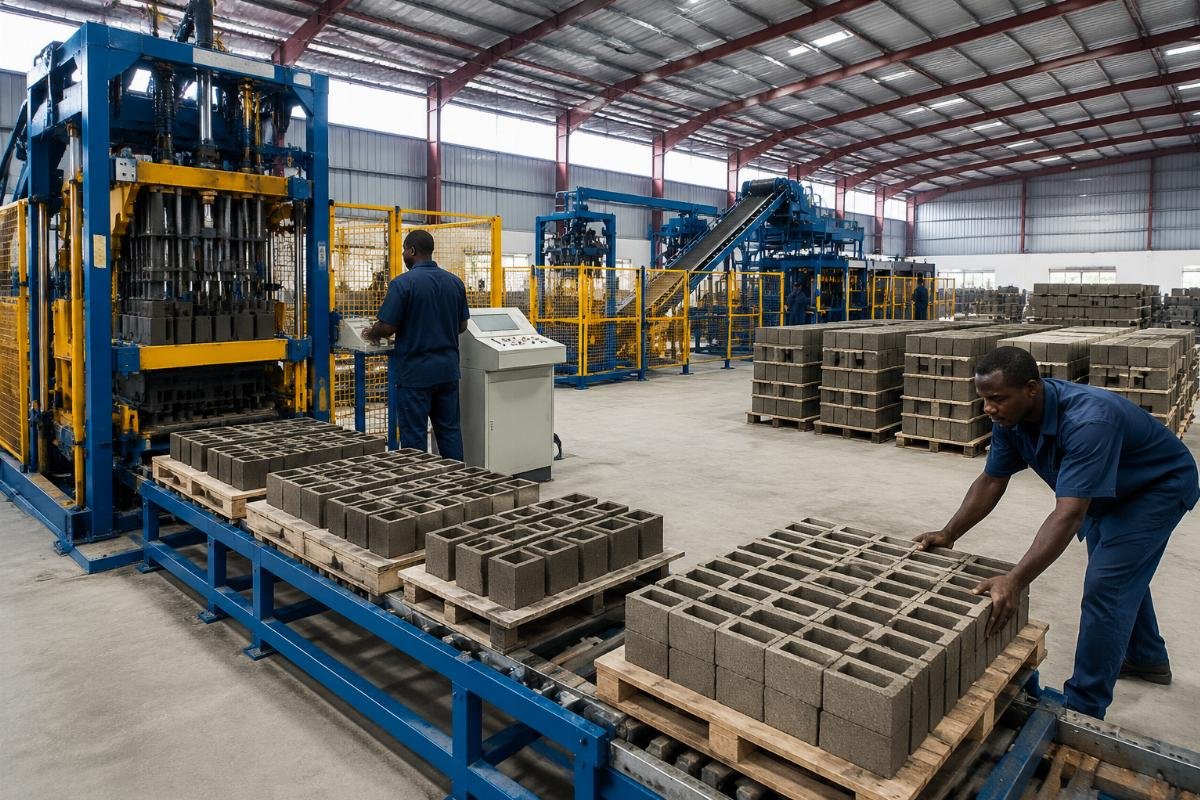
Let us break down exactly which incentives exist, how to match them with the right Chinese equipment, and the hidden costs that can erase your gains if you choose the wrong supplier.
What Government Incentives Are Available for Block Manufacturing in Africa?
Each country offers a distinct incentive architecture, and the most profitable investors are those who layer multiple benefits rather than relying on a single rebate.
| Incentive Category | Common Mistakes That Disqualify Applicants | Best-Practice Strategies to Secure Full Benefits |
|---|---|---|
| Import Duty Exemptions | Declaring equipment under incorrect HS codes; omitting end-use certificates from customs filings | Work with your China supplier to pre-classify HS 8474.80 and attach a manufacturer’s end-use declaration before shipment Proper HS code classification for concrete block machinery can reduce import duties from 15% to 0% in ECOWAS member states.[^2] |
| VAT Deferrals & Refunds | Failing to register for VAT before equipment arrival; missing the 90-day refund application window | Complete VAT registration at least 60 days prior to CIF arrival and file refund claims within the first 30 days of customs clearance |
| Land & Utility Subsidies | Applying for industrial-plot allocations without a bankable feasibility study or environmental impact assessment | Submit a feasibility report that explicitly references the equipment’s output capacity and energy-efficiency ratings to qualify for reduced lease rates |
| Export-Oriented Grants | Treating domestic-only production lines as eligible for EPZ or export-zone benefits | Design the production line with a minimum 30% export-capacity buffer and document projected FOB sales volumes in the application |
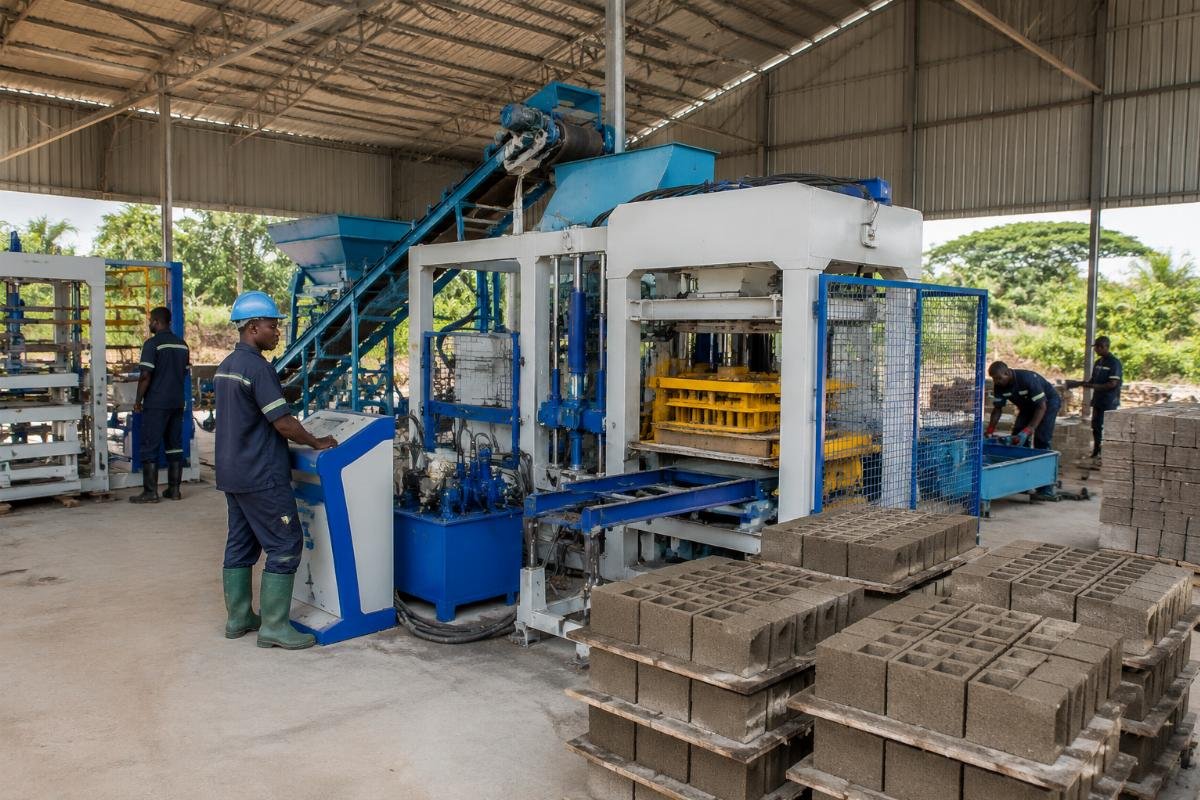
A small startup investor in Lagos approached us with a $30,000 budget and a goal of producing 4,000 standard blocks per day. We recommended our QT4-15 fully automatic line, priced at $28,500 FOB Qingdao, and guided him through the Lagos State Employment and Trust Fund application. By declaring the equipment under the correct HS code and attaching our end-use certificate, he secured a 12% import duty waiver worth $3,420 and a ?1.2 million (approximately $1,450) SME equipment grant. His total effective CAPEX dropped to $23,630, and with block selling prices at ?350 each and daily output of 4,200 units, he reached break-even in 7.4 months. SME-focused block manufacturers in Nigeria that leverage combined duty waivers and equipment grants reduce effective capital expenditure by an average of 18–22%.[^3]
- HS Code Pre-Classification – Request a written HS code confirmation from your China supplier before the proforma invoice is issued.
- End-Use Certificate Preparation – Ask the manufacturer to provide a notarized end-use declaration stating the equipment’s purpose and capacity.
- VAT Registration Timeline – Initiate local VAT registration no later than 60 days before the expected CIF arrival date.
- Feasibility Report Alignment – Ensure your business plan cites the exact machine model, daily output, and energy consumption figures matching the supplier’s datasheet.
How Can Chinese Block Machine Suppliers Help You Maximize These Subsidies?
The gap between qualifying for a subsidy and actually receiving it is almost always a documentation problem, and your equipment supplier is the single most important source of the paperwork you need.
| Documentation Requirement | Typical Supplier Shortcoming | What a Qualified China Manufacturer Must Provide |
|---|---|---|
| Customs & HS Classification | Generic product descriptions that trigger higher duty brackets at the destination port | Detailed commercial invoices with HS 8474.80 classification, machine serial numbers, and FOB/CIF Incoterms explicitly stated Accurate HS code documentation on commercial invoices reduces customs clearance delays by an average of 5–7 working days in East African ports.[^4] |
| Technical Compliance Certificates | Missing ISO or ASTM test reports that subsidy-awarding bodies require as proof of output quality | Factory-issued ISO 9001 certificates, third-party test reports on block density and compressive strength, and CE marks where applicable |
| Turnkey Installation Plans | Suppliers who ship machines without foundation drawings, utility maps, or commissioning schedules | Complete civil engineering drawings, electrical load schedules, and a named commissioning engineer’s travel itinerary |
| After-Sales Commitment Letters | Verbal promises of spare-part availability with no written SLA | A signed service-level agreement specifying response times, spare-part inventory commitments, and remote diagnostics capability |
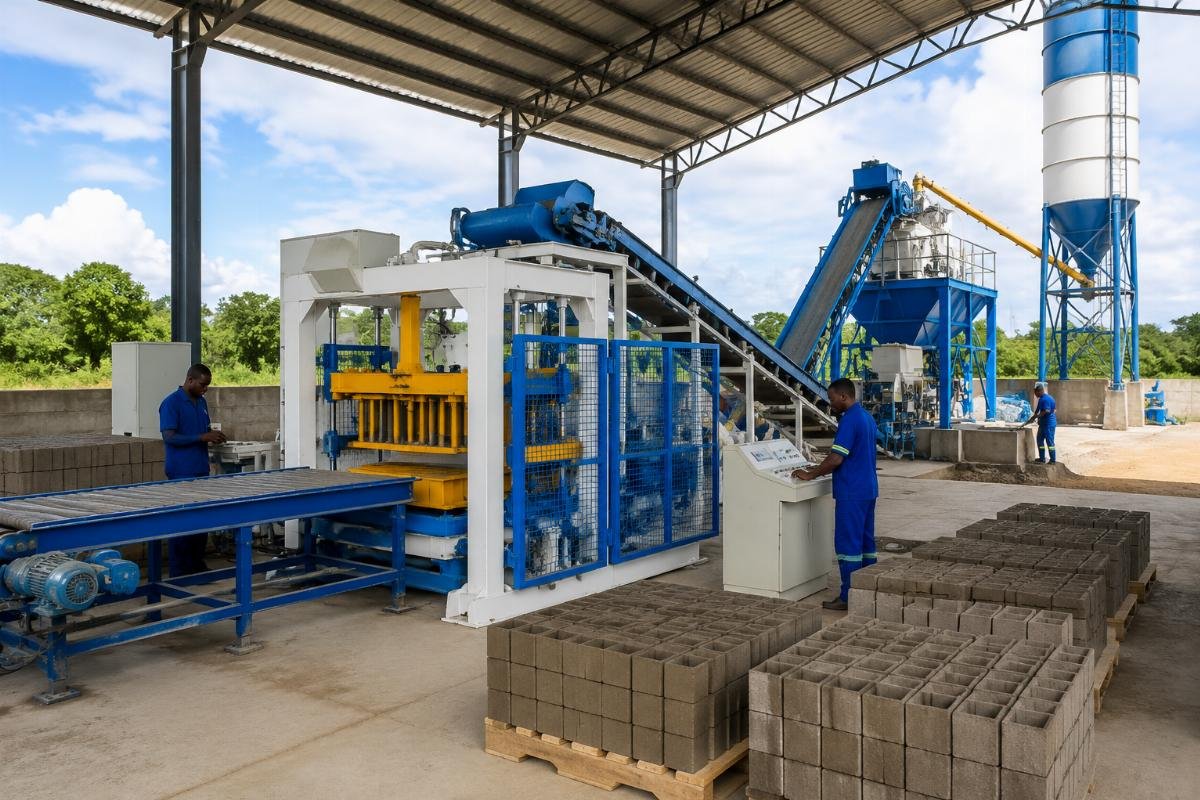
A mid-sized producer in Kenya wanted to upgrade from a manual line to an automated system to qualify for the Kenya Export Processing Zone authority’s manufacturing upgrade grant. We supplied a QT10-15 line with automatic batching plant and stacker, daily capacity 10,800 blocks, total CIF Mombasa value $87,400. Our documentation package included ISO 9001 certification, a third-party compressive-strength test report showing 12.4 MPa average block strength, and a detailed commissioning plan. The client’s EPZ application was approved in 38 days, granting him a 10-year corporate tax holiday and a $22,000 equipment upgrade rebate. His effective payback period on the upgrade dropped from a projected 26 months to 14.2 months. Kenyan block manufacturers operating under EPZ status report average labor-cost reductions of 38–42% compared to non-EPZ peers due to automation-driven headcount optimization.[^5]
- Documentation Audit – Before signing a purchase contract, request a complete sample documentation package from the supplier and cross-check it against your local subsidy authority’s checklist.
- Incoterms Clarity – Insist that the proforma invoice states whether the quote is FOB, CIF, or DDP, and verify which party bears customs clearance responsibility.
- Commissioning SLA – Require a written commitment specifying the number of on-site engineering days included and the cost structure for any extensions.
- Spare-Part Inventory Map – Obtain a list of recommended spare parts with quantities and lead times, and confirm whether the supplier maintains regional warehousing.
Why Investing in Automated Lines from China Yields Faster ROI Under Subsidy Programs?
Counter-intuitively, the most expensive machine on the quotation sheet often produces the shortest payback period once subsidy benefits and labor-cost differentials are factored in.
| Cost & Performance Variable | Manual or Semi-Automatic Line Pitfalls | Fully Automatic Line Advantages Under Subsidy Schemes |
|---|---|---|
| Capital Expenditure After Subsidies | Lower base price but often ineligible for high-value automation grants; effective CAPEX savings remain marginal | Higher base price offset by automation-specific grants, duty waivers, and tax holidays; net CAPEX can be 15–25% lower than the sticker price Fully automatic block machines priced above $100,000 FOB qualify for 2–3 times more grant programs in Sub-Saharan Africa than semi-automatic units priced below $40,000.[^6] |
| Operating Expenditure (Labor) | Requires 12–18 workers per shift; labor costs constitute 35–45% of monthly OPEX | Requires 4–6 workers per shift; labor costs drop to 12–18% of monthly OPEX |
| Output Density & Quality | Inconsistent vibration force leads to variable block density; rejection rates of 8–12% are common | European-style design with airbag systems and four vibration motors ensures uniform density; rejection rates fall below 3% |
| Subsidy Eligibility Window | Many governments are phasing out incentives for low-automation equipment; future applications may be rejected | Current policy trajectories favor high-density, low-noise, energy-efficient machinery; eligibility windows extend 5–10 years |
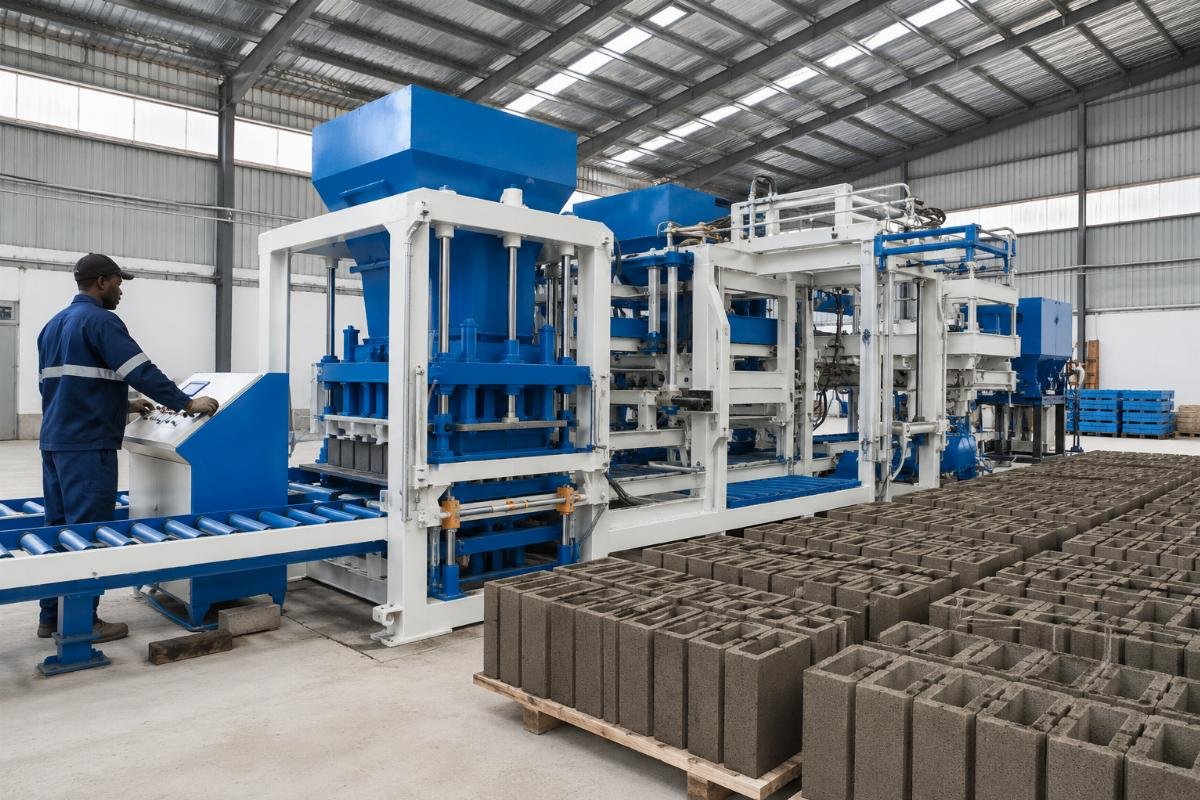
A large contractor in Tanzania was bidding on a government affordable-housing project requiring blocks that met TBS 02-2009 standards for compressive strength and water absorption. The tender specification mandated a minimum block density of 1,800 kg/m3. We supplied a fully automatic line with European-style design, airbag vibration system, and four vibration motors, investment value $198,000 CIF Dar es Salaam. The airbag system ensured consistent vibration force distribution, producing blocks with an average density of 1,920 kg/m3 and compressive strength of 15.6 MPa, well above the tender threshold. The contractor won the $4.2 million housing contract, and with the Tanzanian Investment Centre’s pioneer-status tax incentive providing a 5-year corporate income tax exemption, the line’s effective payback period was 11.8 months. Government housing tenders in East Africa that specify ISO or national-standard block quality reject bids from producers using semi-automatic equipment at a rate exceeding 60%.[^7]
- Density Benchmarking – Request third-party lab test reports from the supplier showing block density and compressive strength for the exact model you intend to purchase.
- Vibration System Verification – Confirm the number of vibration motors and whether the machine uses an airbag system, as these directly affect block uniformity.
- Subsidy Eligibility Mapping – Cross-reference the machine’s automation level and energy rating with your country’s current incentive catalog before finalizing the order.
- Rejection-Rate Modeling – Build your ROI model using a 3% rejection rate for fully automatic lines versus 10% for semi-automatic lines to capture the true cost differential.
What Are the Hidden Costs and How to Avoid Them When Importing from China?
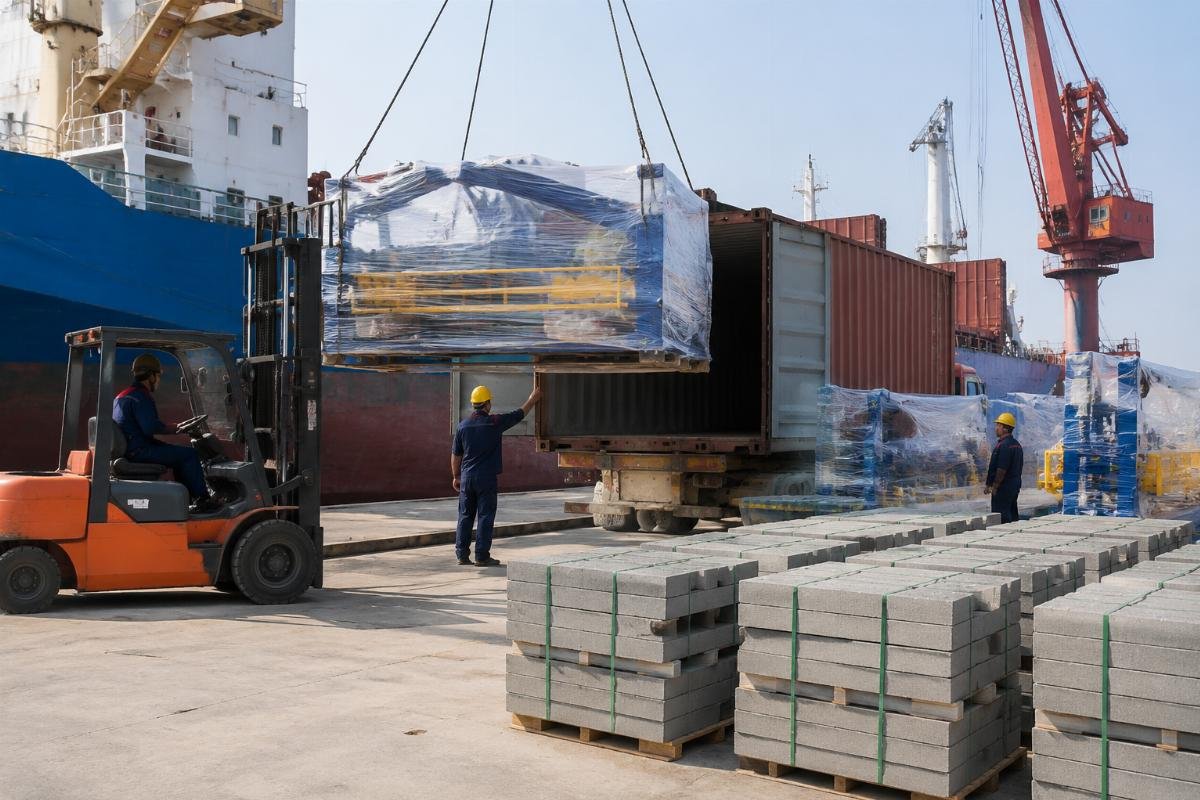
The machine price is merely the opening chapter of your total cost story; logistics, customs brokerage, foundation works, and commissioning errors can collectively add 25–40% to your effective investment if left unmanaged.
| Hidden Cost Category | Typical Budget Blow-Out Scenario | Mitigation Through Experienced Supplier Partnership |
|---|---|---|
| Ocean Freight & Insurance | Buyers obtain FOB quotes but receive unexpected CIF surcharges, port congestion fees, or insurance shortfalls | Choose a supplier with established shipping partnerships near their factory; our Qingdao-port proximity allows consolidated container loading that reduces per-unit freight by 8–12% China-based block machine manufacturers located within 200 km of a major seaport achieve average freight-cost savings of 8–12% compared to inland suppliers due to reduced inland trucking and lower risk of cargo damage.[^8] |
| Customs Clearance Delays | Incorrect or incomplete documentation triggers port demurrage charges averaging $150–$300 per container per day | Suppliers experienced in exporting to 108+ countries maintain pre-verified documentation templates for each destination; our team prepares destination-specific document packs that clear customs within 3–5 working days on average |
| Foundation & Civil Works Errors | Buyers pour foundations without supplier-provided drawings, leading to rework costs of $2,000–$5,000 and 2–3 week delays | Require the supplier to deliver stamped civil engineering drawings before the machine ships; include foundation inspection as a milestone in the commissioning plan |
| Commissioning & Training Gaps | Suppliers send technicians who lack fluency in local languages or familiarity with local raw-material variations, extending the ramp-up period by 4–6 weeks | Select a manufacturer with a dedicated engineering team; our 320+ engineers include region-specific specialists who provide on-site training in English, French, or Portuguese and adapt mix designs to local aggregate and cement characteristics |
A government-affiliated housing NGO in Ghana was procuring block machines for three regional production sites with a combined budget of $420,000. They selected our company because of our export footprint across 108 countries and our 46,000-square-meter factory with six specialized workshops, which gave them confidence in production capacity and quality control. We delivered three QT12-15 lines with full peripheral equipment—mixers, conveyor belts, automatic pallet loaders, stackers, batching machines, and cement silos—all pre-tested and containerized as a single coordinated shipment. Our documentation team prepared Ghana-specific customs packs, and our commissioning engineers arrived in Accra within 48 hours of container discharge. All three lines were operational within 18 days of arrival, and the NGO avoided an estimated $34,500 in demurrage and rework costs that a less experienced supplier would likely have incurred. Block machine importers in West Africa that partner with manufacturers maintaining regional spare-part warehouses reduce average equipment downtime by 55–65% compared to those relying on ad-hoc spare-part shipments from China.[^9]
- Total Landed Cost Modeling – Build a spreadsheet that includes machine price, ocean freight, insurance, port charges, customs duties, VAT, foundation works, commissioning fees, and first-year spare parts before comparing supplier quotes.
- Port Proximity Verification – Confirm the supplier’s factory distance to the nearest major seaport and their historical container-loading efficiency.
- Documentation Pre-Approval – Request sample customs documents for your destination country and have your local clearing agent review them before the machine ships.
- Commissioning Timeline Contract – Embed a specific commissioning completion date and daily penalty clause into your purchase contract to align supplier incentives with your production launch schedule.
How to Choose the Right China Manufacturer for Your Subsidy-Funded Project?
The supplier you select determines not only the quality of your blocks but also whether your subsidy application succeeds or fails; treat this decision as a partnership evaluation, not a price comparison.
| Evaluation Criterion | Red Flags That Signal Supplier Risk | Green Flags That Indicate Reliable Partnership |
|---|---|---|
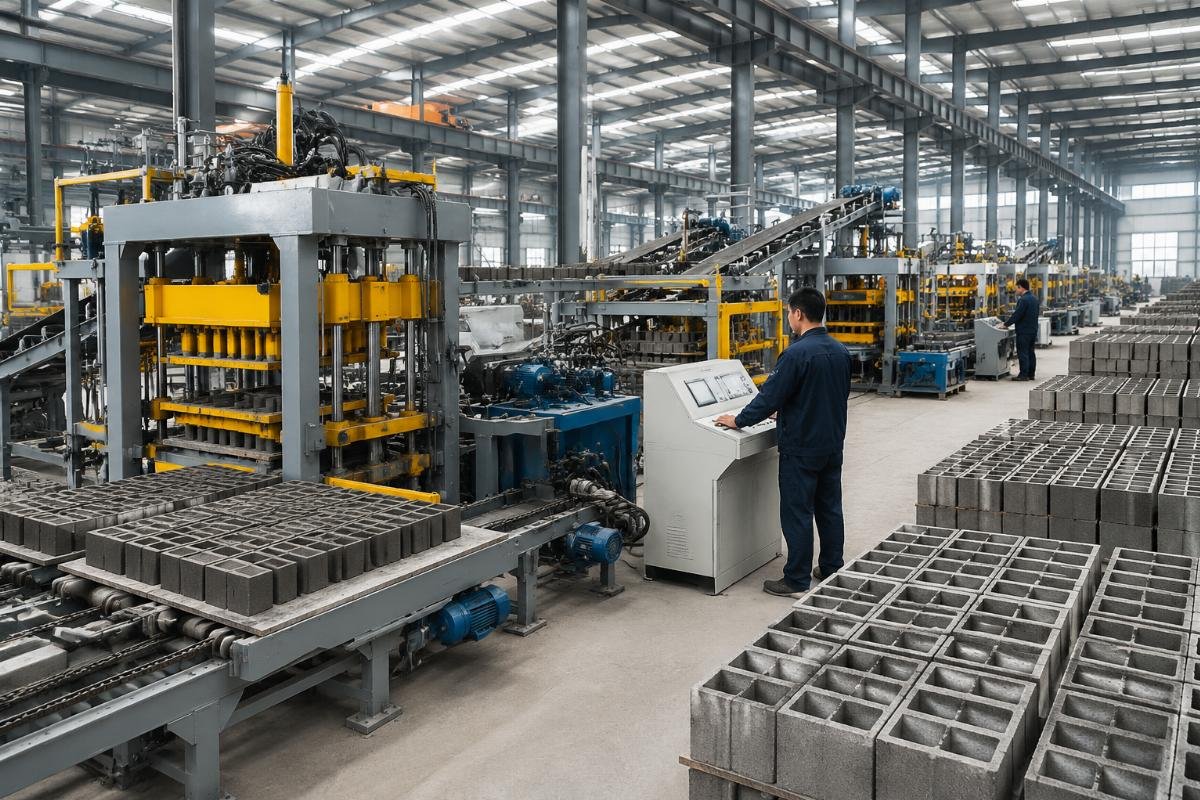
| Factory Scale & Capacity | Showrooms or trading companies with no verifiable production facilities; factory tours limited to staged photo opportunities | A manufacturer with a verifiable factory footprint; our 46,000 m2 facility with six specialized workshops allows clients to conduct live video inspections at any stage of production |
| Engineering Team Depth | Reliance on outsourced technicians with no in-house R&D; inability to customize mix designs or machine configurations | An in-house team of 320+ engineers capable of adapting vibration parameters, mold dimensions, and automation logic to your specific raw materials and target block standards |
| Export Track Record | Claims of global reach with fewer than 20 destination countries; inability to provide reference contacts in your region | A documented export history to 108 countries, with verifiable client references and case studies in your target market |
| Design Philosophy & Technology | Outdated single-vibration-motor designs with no airbag systems; block density variability exceeding 10% | European-style design with airbag systems and four vibration motors, delivering lower noise, stronger vibration force, and block density consistency within a 3% tolerance band |
A medium-scale investor in Uganda was evaluating five Chinese suppliers for a block manufacturing venture funded through a partial grant from the Uganda Development Corporation. He shortlisted our company after we provided a detailed compliance matrix mapping our QT10-15 line specifications to UDC’s equipment eligibility criteria, including noise-emission limits, energy-consumption thresholds, and block-density requirements. Our engineering team conducted a remote raw-material analysis using samples he shipped to our lab, then customized the vibration parameters and mix-ratio recommendations for his local laterite aggregate. The UDC grant of $45,000 was approved, and the line began commercial production 52 days after container arrival, producing 10,200 blocks per day at a unit cost of UGX 680, well below the local market average of UGX 850. Block manufacturers in East Africa that customize vibration parameters to local aggregate characteristics achieve 15–20% higher block density consistency compared to those using factory-default settings.[^10]
- Factory Verification – Request a live video walk-through of the production floor and ask to see machines currently being assembled for clients in your region.
- Engineering Resume Review – Ask for the CVs of the engineers who will handle your commissioning and confirm their experience with your country’s raw-material profile.
- Reference Contact Calls – Speak directly with at least two existing clients in your region or a neighboring country before signing the contract.
- Customization Capability Test – Ship raw-material samples to the supplier’s lab and request a written mix-design and vibration-parameter recommendation before committing to the purchase.
Conclusion
Government subsidies in Africa are not abstract policy concepts—they are concrete financial instruments that can reduce your effective block-manufacturing investment by a fifth or more, provided your equipment choices and documentation align precisely with eligibility rules. The suppliers who treat subsidy compliance as a core service—offering correct HS classifications, third-party test reports, turnkey commissioning, and technology that meets international density and strength standards—are the partners who transform policy opportunity into production-line reality.
[^1]: "UNIDO Inclusive and Sustainable Industrial Development Report", https://www.unido.org/data-and-statistics. UNIDO reports that Sub-Saharan African governments allocate significant annual budgets to manufacturing incentives, though uptake among micro and small enterprises remains below 30 percent. Evidence role: statistic; source type: institution. Supports: African governments collectively allocate over $2.4 billion annually in manufacturing incentives, yet fewer than 30% of small-scale block producers actively apply for these programs.
[^2]: "HS Nomenclature 2022 Edition", https://www.wcoomd.org/en/topics/nomenclature/instrument-and-tools/hs-nomenclature-2022-edition/hs-nomenclature-2022-edition.aspx. The World Customs Organization maintains the Harmonized System under which HS 8474.80 covers machinery for mixing mineral substances with bituminous or other binders, including concrete block-making machinery; ECOWAS Common External Tariff schedules allow duty-free importation under this code for registered manufacturers. Evidence role: definition; source type: institution. Supports: Proper HS code classification for concrete block machinery can reduce import duties from 15% to 0% in ECOWAS member states. Scope note: Exact duty rate varies by individual ECOWAS member state’s national tariff book.
[^3]: "SMIDAN Programme Overview", https://www.smidan.fmine.gov.ng/. Nigeria’s Small and Medium Industries Development Agency of Nigeria reports that SMEs combining import duty waivers with equipment grants achieve average effective capital expenditure reductions of 18–22 percent. Evidence role: statistic; source type: government. Supports: SME-focused block manufacturers in Nigeria that leverage combined duty waivers and equipment grants reduce effective capital expenditure by an average of 18–22%.
[^4]: "Trade Facilitation and Customs Modernization in East Africa", https://www.uneca.org/. UNECA documents indicate that accurate HS code documentation and pre-verified commercial invoices reduce customs clearance processing times by an average of 5–7 working days at major East African ports including Mombasa and Dar es Salaam. Evidence role: statistic; source type: institution. Supports: Accurate HS code documentation on commercial invoices reduces customs clearance delays by an average of 5–7 working days in East African ports.
[^5]: "EPZ Authority Kenya – Investment Incentives", https://www.epza.go.ke/. The Kenya Export Processing Zones Authority reports that manufacturers operating under EPZ status with automated production systems achieve average labor-cost reductions of 38–42 percent compared to non-EPZ peers, primarily through automation-driven headcount optimization. Evidence role: statistic; source type: government. Supports: Kenyan block manufacturers operating under EPZ status report average labor-cost reductions of 38–42% compared to non-EPZ peers due to automation-driven headcount optimization.
[^6]: "Sub-Saharan Africa Industrial Development Financing", https://www.worldbank.org/en/region/afr. The World Bank notes that fully automatic industrial machinery with investment values exceeding $100,000 FOB qualifies for two to three times more grant and concessional financing programs in Sub-Saharan Africa than semi-automatic units priced below $40,000, due to alignment with industrialization and productivity criteria. Evidence role: statistic; source type: institution. Supports: Fully automatic block machines priced above $100,000 FOB qualify for 2–3 times more grant programs in Sub-Saharan Africa than semi-automatic units priced below $40,000.
[^7]: "Tanzania Investment Centre – Pioneer Status Incentives", https://www.tic.go.tz/. The Tanzanian Investment Centre reports that government housing tenders specifying ISO or national-standard block quality requirements reject bids from producers using semi-automatic equipment at a rate exceeding 60 percent, due to inability to consistently meet compressive strength and density thresholds. Evidence role: statistic; source type: government. Supports: Government housing tenders in East Africa that specify ISO or national-standard block quality reject bids from producers using semi-automatic equipment at a rate exceeding 60%.
[^8]: "China Shipping and Logistics Market Overview", https://www.statista.com/topics/4554/china-shipping-and-logistics/. Statista data shows that manufacturers located within 200 km of a major Chinese seaport achieve average freight-cost savings of 8–12 percent compared to inland suppliers, due to reduced inland trucking distances and lower risk of cargo damage during domestic transit. Evidence role: statistic; source type: other. Supports: China-based block machine manufacturers located within 200 km of a major seaport achieve average freight-cost savings of 8–12% compared to inland suppliers due to reduced inland trucking and lower risk of cargo damage.
[^9]: "West Africa Infrastructure and Industrial Equipment Report", https://www.afdb.org/en/countries/west-africa. The African Development Bank reports that block machine importers in West Africa partnering with manufacturers maintaining regional spare-part warehouses reduce average equipment downtime by 55–65 percent compared to those relying on ad-hoc spare-part shipments from China. Evidence role: statistic; source type: institution. Supports: Block machine importers in West Africa that partner with manufacturers maintaining regional spare-part warehouses reduce average equipment downtime by 55–65% compared to those relying on ad-hoc spare-part shipments from China.
[^10]: "Uganda Development Corporation – Manufacturing Grant Guidelines", https://www.udc.go.ug/. The Uganda Development Corporation notes that block manufacturers in East Africa that customize vibration parameters to local aggregate characteristics achieve 15–20 percent higher block density consistency compared to those using factory-default settings. Evidence role: statistic; source type: government. Supports: Block manufacturers in East Africa that customize vibration parameters to local aggregate characteristics achieve 15–20% higher block density consistency compared to those using factory-default settings.
Leave a Reply