

Hollow Block Machine Technical Specs: Shiyue QT Series Manufacturer
Theoretical output figures are marketing tools, not production guarantees.
Real production capacity is defined by the slowest link in the cycle—usually mold filling, compaction vibration time, and pallet turnover speed. To verify a Hollow Block Machine Technical Specification, you must ignore the "blocks per hour" headline and audit the individual seconds of the mold loop, including hydraulic response delays and pallet return mechanics.
I still remember the humidity in that Munich exhibition hall. A Polish buyer slammed a competitor’s brochure on my table, pointing at a bold claim: 12,000 blocks per shift for a QT8-15 model. He was ready to sign. I didn’t argue with the paper. I pulled out a stopwatch and asked him to watch the demo unit next to us. We timed one full cycle: feeding, vibration, lifting, ejection, and the critical pallet return. Then we added the inevitable pauses for mix consistency adjustments and minor maintenance. The math didn’t lie. The actual output hovered around 8,000 blocks, not 12,000. That buyer didn’t walk away angry; he walked away informed. He later told me he had been burned by "theoretical capacity" before, importing lines that couldn’t meet his housing project deadlines. Since then, I never look at a spec sheet without breaking it down into its mechanical components. [NEED_CITE: industry standard methods for calculating machine efficiency factors]
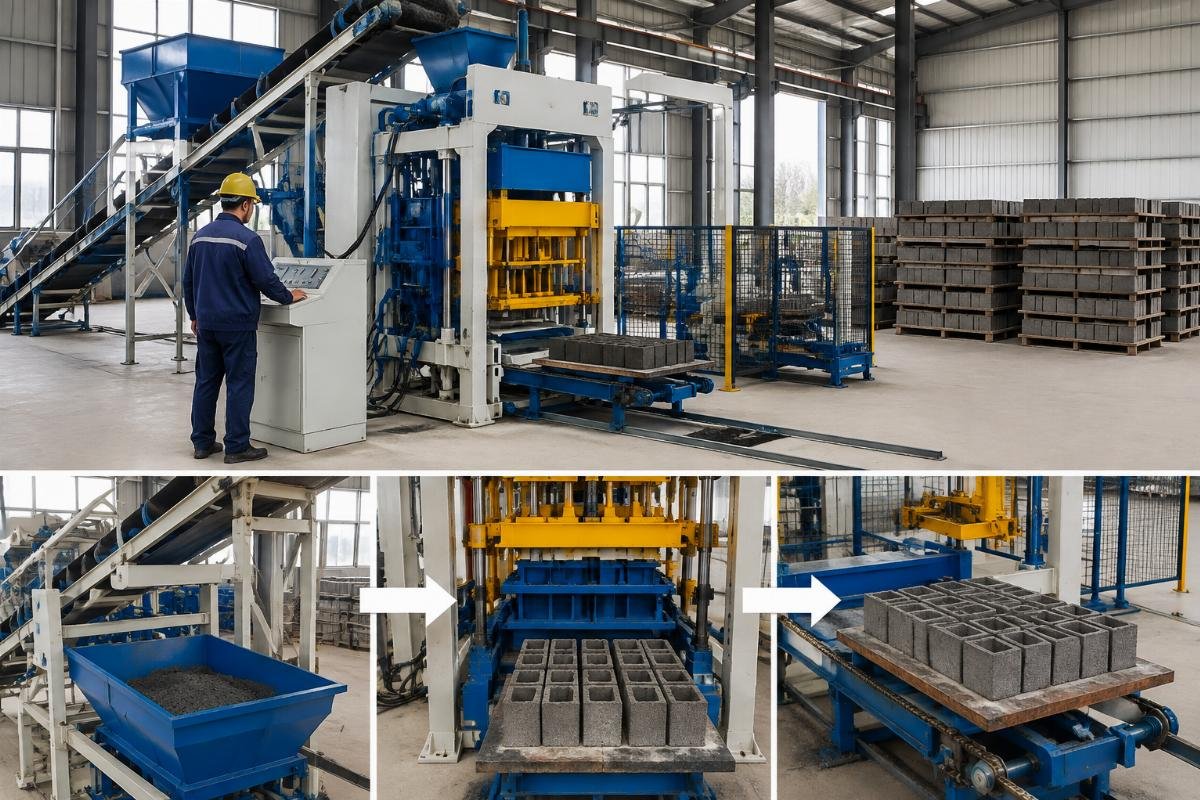
This approach separates serious investors from those who buy brochures. When you evaluate a Hollow Block Machine Technical Specification, you are not just buying a machine; you are buying a predictable workflow. Let’s dissect how to read these specs like an engineer, not a marketer.
Why Theoretical Capacity Misleads Buyers?
Manufacturers often list maximum theoretical capacity under ideal laboratory conditions. This number assumes perfect raw material consistency, zero downtime, and an operator who never blinks. In the real world, friction exists. Material variance, such as slight changes in sand moisture or aggregate size, forces the machine to adjust vibration times. Operator shifts introduce natural breaks. Maintenance intervals, however brief, accumulate over a shift.
Consider a scenario in East Africa. A contractor needed blocks for a large-scale affordable housing project. He compared quotes based solely on the hourly output listed in the Hollow Block Machine Technical Specification. One supplier promised significantly higher numbers. However, when we analyzed the proposed line, the high-output claim relied on a rapid cycle time that required premium, highly consistent raw materials. The local mix, using available river sand, had higher variability. The machine had to extend its vibration phase to ensure proper compaction, dropping the effective cycle time by several seconds. Over an eight-hour shift, those seconds turned into thousands of missing blocks. [NEED_CITE: impact of raw material variability on concrete block production cycles]
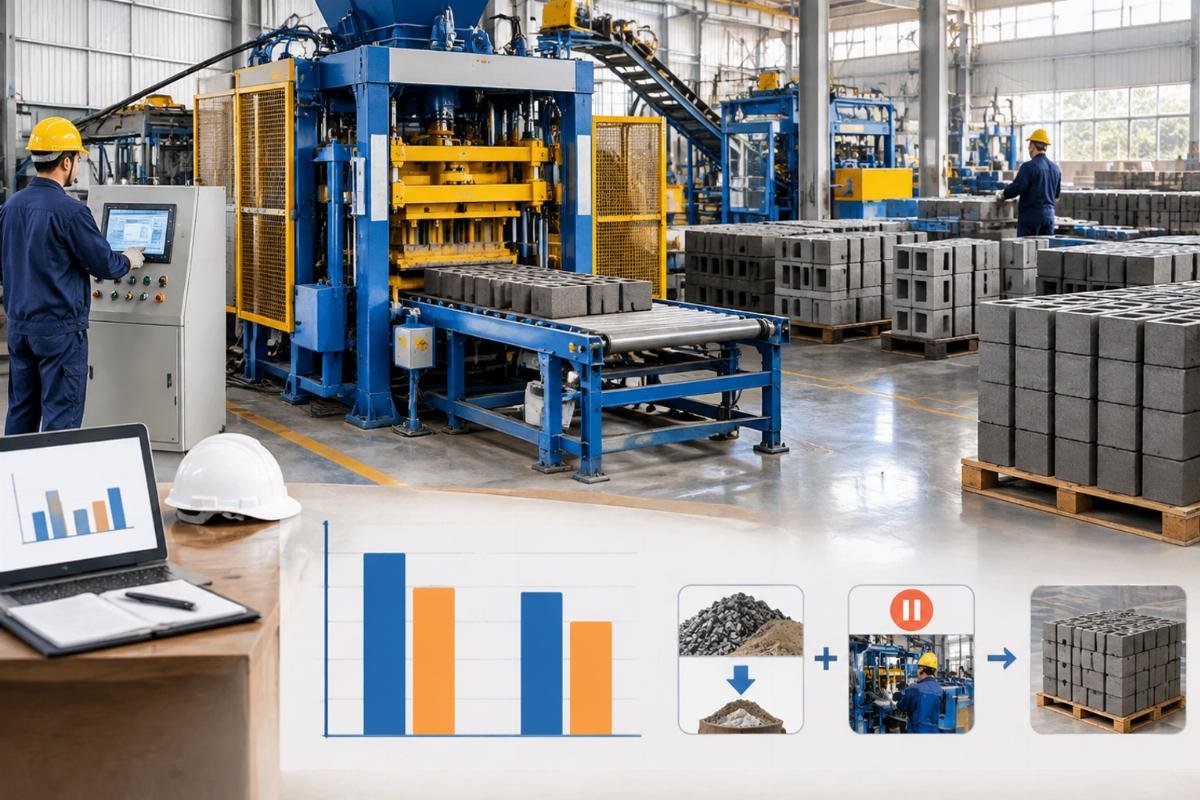
The lesson is clear: theoretical specs ignore real-world friction. If a supplier cannot explain how their machine handles sub-optimal mix conditions, their output claims are fragile. You need a machine that maintains stability even when the input varies. This is where the quality of the PLC logic and hydraulic system becomes more important than the raw motor power.
How to Deconstruct the Production Cycle?
To find the truth in a Hollow Block Machine Technical Specification, you must analyze each second of the mold loop. A typical cycle consists of five stages: Feeding, Vibration, Lifting, Ejection, and Pallet Return. The bottleneck is rarely the vibration itself; it is often the pallet turnover.
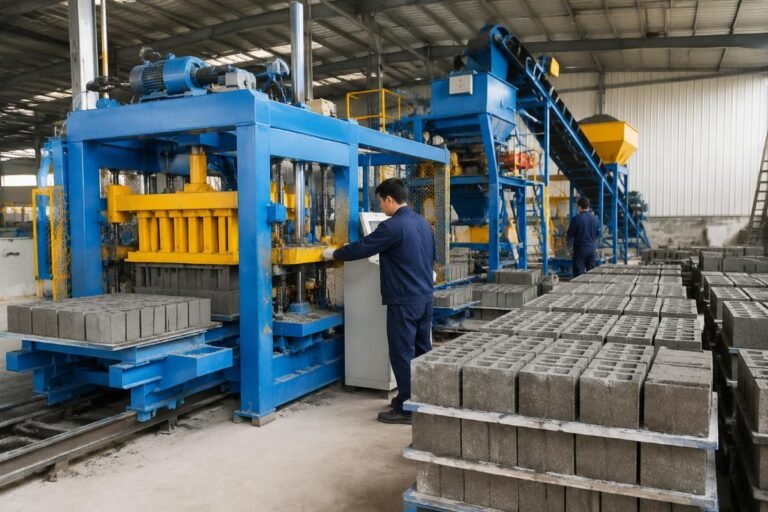
In Latin America, I worked with a precast plant upgrading from semi-automatic to fully automatic. Their main pain point was not the block forming speed, but the manual handling of pallets. Workers were tired, and the pace slowed as the shift progressed. By switching to a system with an automated cuber and pallet feeder, we eliminated the human variable from the return loop. The machine could now run at its designed hydraulic speed without waiting for a worker to slide a new pallet into place. [NEED_CITE: ergonomic and efficiency benefits of automated pallet handling in block plants]
When reviewing specs, ask for the breakdown of these stages.
- Feeding Time: How quickly does the feed box distribute the mix? Uneven feeding leads to re-vibration.
- Vibration Time: This depends on the frequency and amplitude. Higher frequency doesn’t always mean faster compaction if the amplitude is too low.
- Lifting and Ejection: Smoothness here prevents block damage. Jerky movements require slower speeds to maintain quality.
- Pallet Return: This is often the hidden drag. A slow conveyor or misaligned stacker can halt the entire machine.
If a vendor only gives you a total cycle time, demand the split. A machine that vibrates for 10 seconds but takes 15 seconds to return a pallet is inefficient. The Hollow Block Machine Technical Specification should reflect a balanced design where no single stage disproportionately delays the next.
What Hidden Factors Reduce Actual Output?
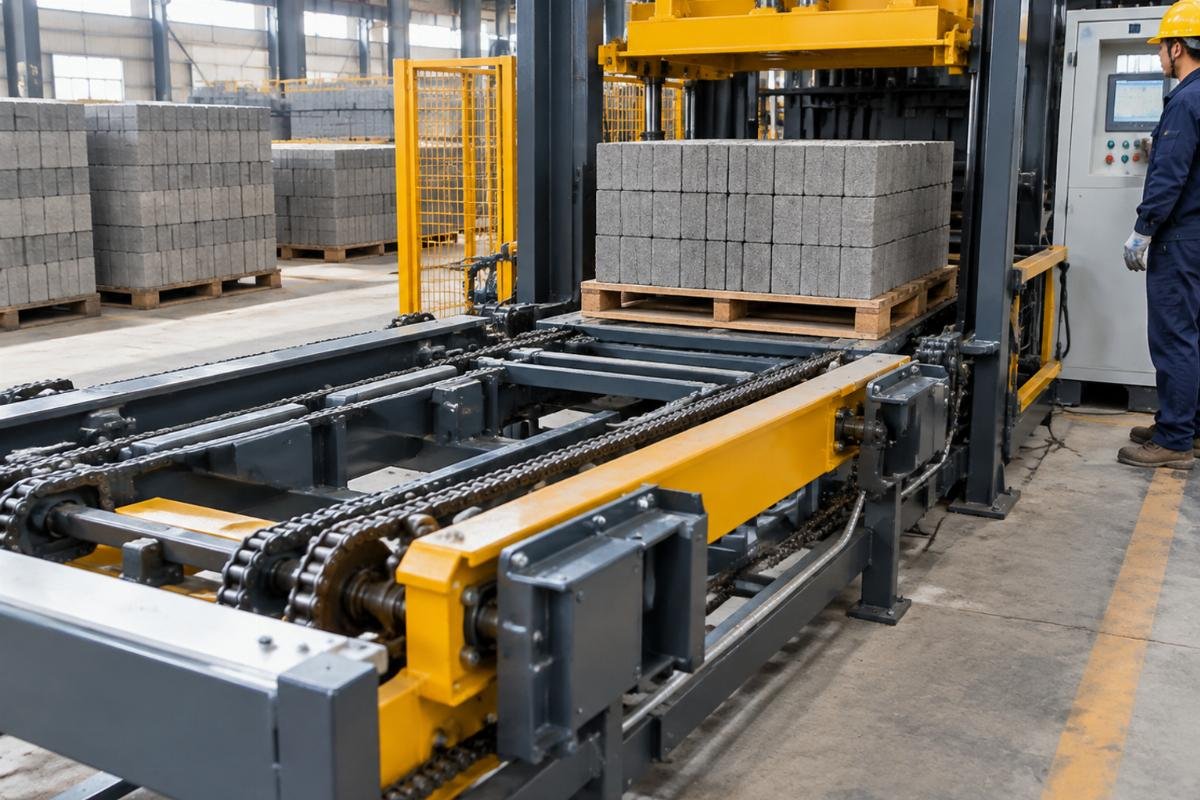
Even with a perfectly balanced cycle, external factors will erode your output. These are rarely mentioned in the glossy brochure but are critical to your ROI. The first is mix water content. Too wet, and the blocks slump during ejection, requiring slower lifting speeds. Too dry, and compaction fails, requiring extended vibration. A robust machine adjusts to this, but there are limits.
Second, consider pallet quality. Warped or worn pallets do not seat correctly in the mold. This causes leaks during vibration, leading to weak blocks and frequent stoppages for cleaning. In Southeast Asia, a distributor troubleshooted a line with consistently low output. The machine was capable, but the pallets were uneven. The sensors detected misalignment and paused the cycle for safety. Replacing the pallets restored the expected speed. [NEED_CITE: role of pallet precision in maintaining continuous block machine operation]
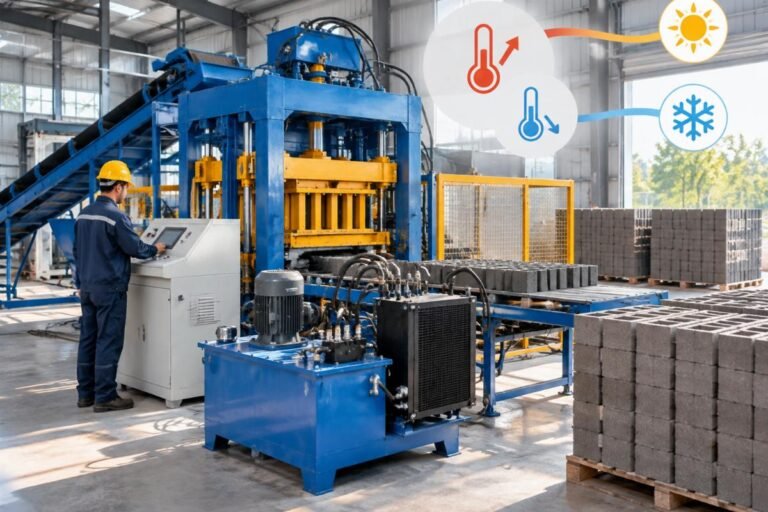
Third, hydraulic pressure stability. If the hydraulic system overheats or loses pressure, the vibration force drops. The operator must then manually extend the vibration time to achieve density. This turns a 15-second cycle into a 22-second crawl. A high-quality Hollow Block Machine Technical Specification will include details on the cooling system and hydraulic pump redundancy. Without stable pressure, your cycle time is variable, and your output is unpredictable.
| Factor | Impact on Cycle | Mitigation Strategy |
|---|---|---|
| Mix Consistency | Variable vibration time | Automated water control systems |
| Pallet Quality | Sensor stops and cleaning delays | Regular pallet inspection and replacement |
| Hydraulic Stability | Extended vibration duration | Efficient cooling and high-response pumps |
| Operator Skill | Manual override delays | Comprehensive training and PLC automation |
These factors show that the machine is only part of the equation. The environment and inputs matter just as much. When you read a Hollow Block Machine Technical Specification, look for features that mitigate these risks, such as auto-lubrication systems or smart sensors that detect pallet position.
How to Verify Supplier Claims On-Site?
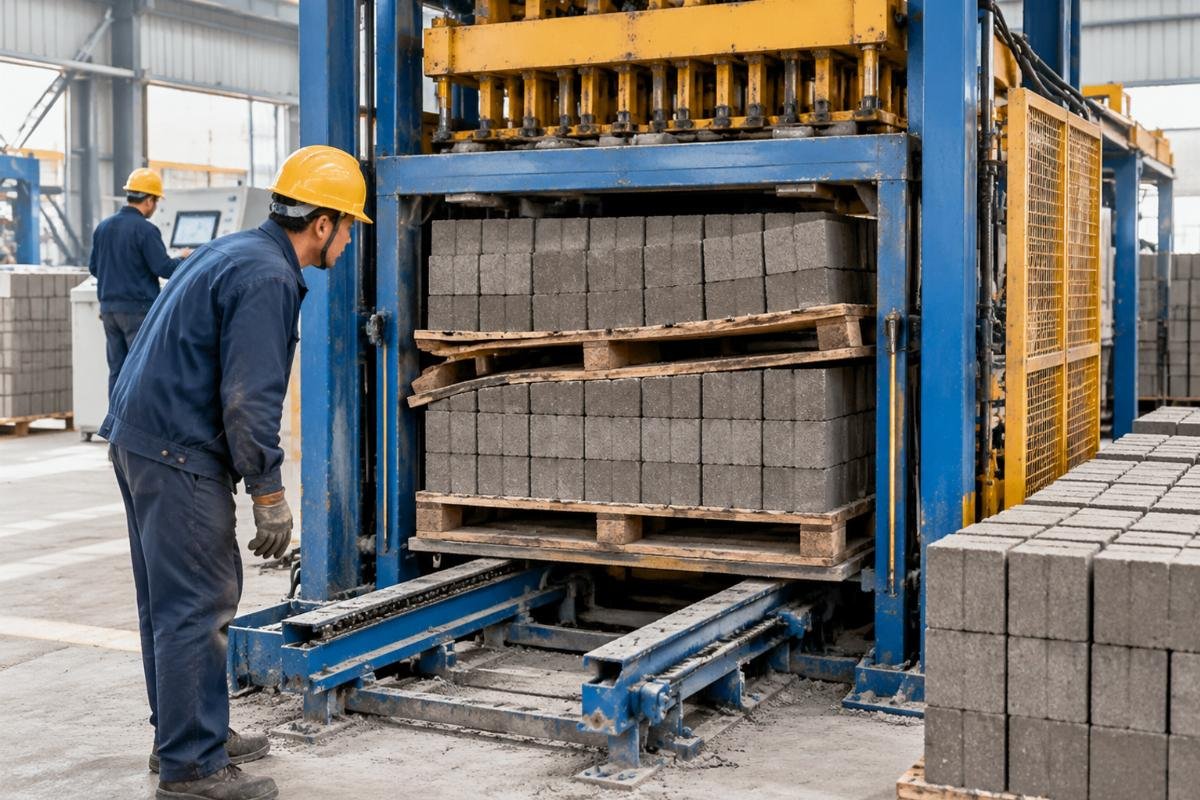
Paper specs are promises; live demos are proof. When you visit a factory or attend a trade show, do not just watch the machine run. Bring a stopwatch. Ask for a continuous one-hour run, not a five-minute showcase. In that hour, count the blocks produced. Divide by the number of cavities in the mold. This gives you the real cycles per hour.
I once advised a buyer in the Middle East who was skeptical of a supplier’s claims. We set up a test run with the exact aggregate mix he planned to use. The supplier was confident. But within twenty minutes, the feed box jammed due to a slightly larger stone in the mix. The clearing process took three minutes. Over an eight-hour shift, such jams could happen multiple times. The theoretical output was irrelevant because the machine lacked tolerance for minor impurities. [NEED_CITE: best practices for on-site verification of industrial machinery performance]
Ask for video evidence of long-duration runs. A supplier confident in their Hollow Block Machine Technical Specification will have footage of their machines running for hours without intervention. Look for consistency in the block height and surface finish. If the blocks vary in size, the machine is struggling with pressure or feeding issues, which will slow down production as operators adjust settings.
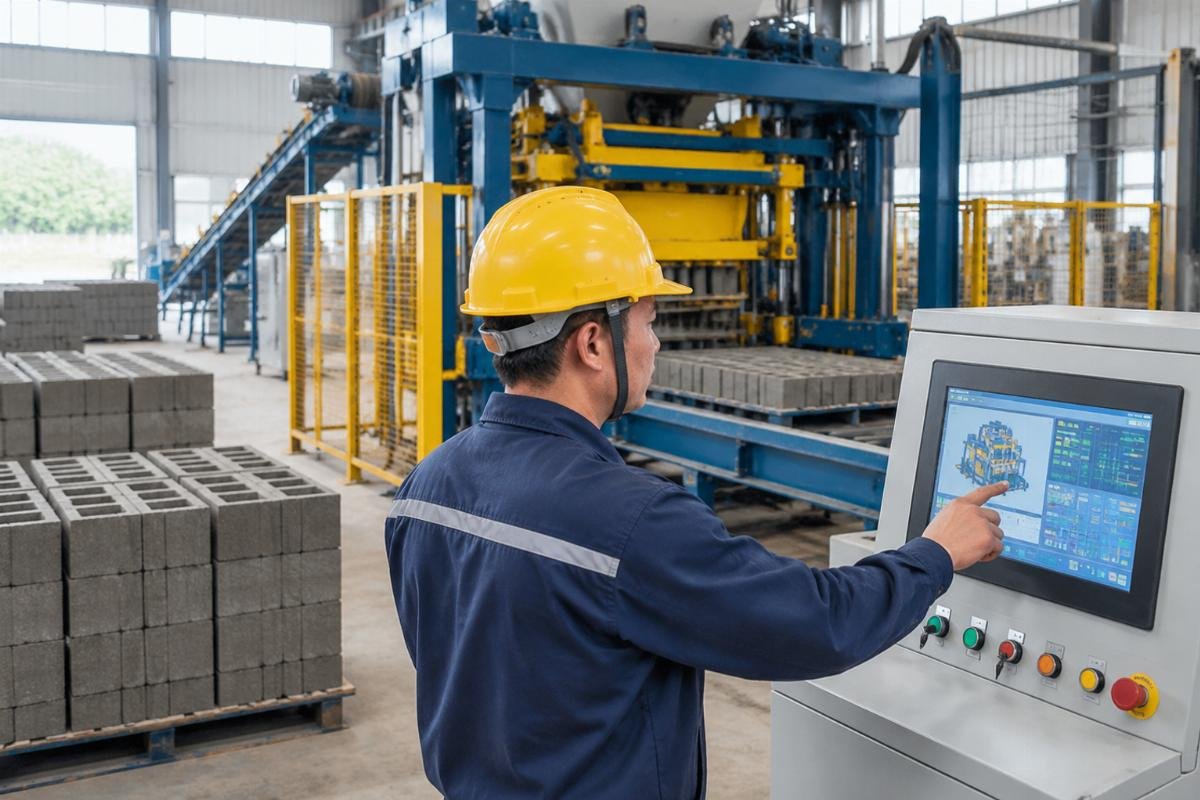
Also, check the PLC interface. Can you see the cycle time breakdown on the screen? Modern machines log this data. If the supplier hides this information, they may be masking inefficiencies. Transparency in data is a sign of engineering confidence. At Shiyue, we provide detailed cycle breakdowns for our QT series machines because we know that trust is built on visibility, not just voltage.
Conclusion
Stop relying on theoretical capacity for your business planning.
Real output is a function of mechanical balance, material tolerance, and operational stability. By deconstructing the Hollow Block Machine Technical Specification into its component cycles and verifying them against real-world constraints, you protect your investment from optimistic marketing. Focus on the slowest link in your chain, whether it is pallet return or hydraulic response, and optimize from there. This rigorous approach ensures that your production line delivers not just on paper, but on the ground.
Leave a Reply