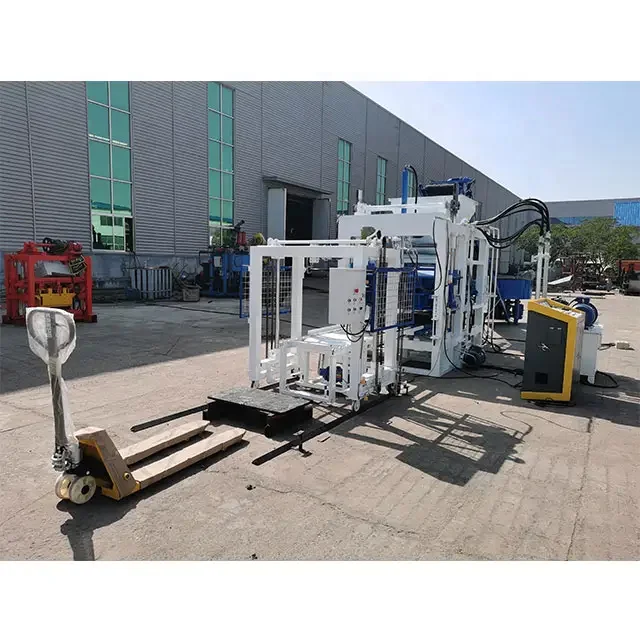
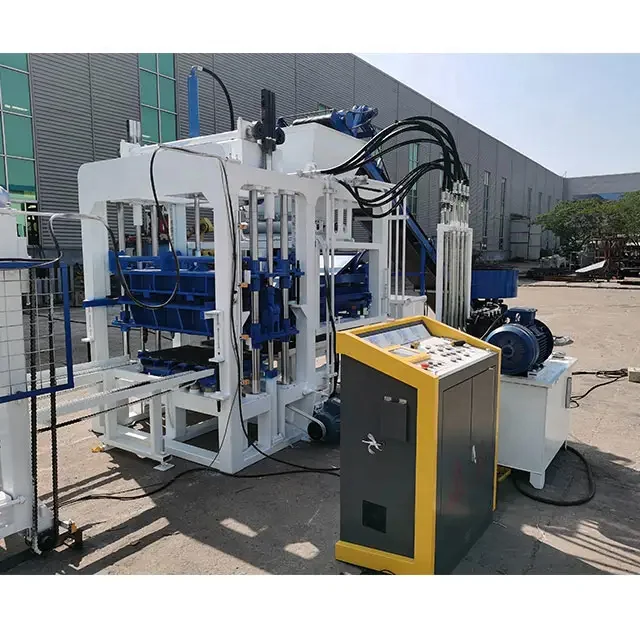


Description
Stocked models dispatched fast — QT4-18 machines ready in our warehouse with pallet size, loading plan and arrival estimate quoted before you commit, so site work starts on schedule.
Technical Specifications
| Parameter | Value |
|---|---|
| Model | QT4-18 |
| Product Type | Automatic Concrete Block Making Machine |
| Overall Dimension | 2500×1750×2200 mm |
| Rated Pressure | 16 MPa |
| Vibration Form | Platform Vibration |
| Pallet Size | 950×550 mm |
| Molding Cycle | 18–25 s (basis to be confirmed) |
| Overall Power | 27.5 kW |
| Control System | PLC with Frequency Converter |
| Electrical Components | Schneider |
| Mold Lifting Mechanism | Double-sided Synchronous Gears |
| Material Feeder System | Hopper, Feeding Box, Feeding Platform, Conveyor |
| Block Receiver | Frame, Conveyor System, Idler Wheels with Motor & Reducer |
| Supporting Equipment Options | JQ500 Pan Mixer, 8 m / 6 m Belt Conveyor, Stacker, Block Clamper, Cement Silo, Batching Plant, Trolley |
| Mould Configuration | One Free Hollow Mold Included; Extra Moulds Available and Customizable |
| Assembly State | Requires On-site Installation with Cement Foundation |
| Standards | CE Declaration Where Applicable |
Application Suitability
| Application | Material or Output |
|---|---|
| Hollow block production | Crushed stone, sand, cement, fly ash blends |
| Solid block manufacturing | Dense aggregate and cement mixes |
| Paving block forming | Fine aggregate surface layer with base mix |
| Kerbstone production | High-strength concrete with coarse aggregate |
| Interlocking brick shaping | Graded sand and cement combinations |
| Porous brick forming | Lightweight aggregate and permeable mix designs |
| On-site contractor production | Locally sourced aggregate at project locations |
Why "QT4-18 Automatic Block Machine in Stock" Must Mean More Than a Warehouse Label
A stocked machine only saves time if every specification is confirmed before it leaves the yard.
I have watched containers arrive at project sites where the buyer was told the machine was ready to ship, only to discover the pallet size did not match the curing racks already built on the ground. The QT4-18 automatic block machine in stock here leaves the warehouse only after the pallet dimensions, voltage, and control language are written into the dispatch checklist. Rushing a machine out the door without those confirmations costs more days on site than the buyer ever saved in the factory [NEED_CITE: common dispatch verification oversights in block machinery exports].
What Stock Availability Actually Covers
Having a QT4-18 automatic block machine in stock means the main press frame, hydraulic station, vibration platform, and PLC cabinet are assembled and factory-tested. Standard hollow moulds that match the 950×550 mm pallet are also held in inventory. Buyers working against a project deadline can confirm a dispatch window once the supporting equipment list and electrical specifications are locked in.
Dispatch Timing Depends on the Line, Not Just the Press
The press itself may be ready, but the belt conveyor, stacker, and block clamper are configured to the buyer’s line layout. Container loading plans differ depending on whether the JQ500 pan mixer and cement silo ship in the same consignment or follow separately. I always map the dismantling sequence against container dimensions before booking the slot, because a loading surprise at the port adds delays that no stock status can fix [NEED_CITE: container loading best practices for heavy industrial machinery].
Reading the Numbers That Matter on Site
The 16 MPa rated pressure and platform vibration together determine how densely the concrete is compacted inside the mould cavity. Higher pressure with matched vibration produces blocks that hold their edge when stripped, while a mismatch leads to crumbling corners before the pallet even reaches the curing area. The 950×550 mm pallet size must align with the buyer’s existing forklift fork width and curing rack spacing, otherwise the entire handling flow stalls at the press exit. The double-sided synchronous gear lifting mechanism keeps the mould box level during extraction, reducing drag marks on the block surface. Schneider electrical components paired with the PLC and frequency converter allow the operator to adjust vibration duration and feed timing from the control panel without rewiring the cabinet.
The Cost of Skipping the Dispatch Checklist
When voltage and frequency are assumed instead of confirmed, the machine arrives and the motor will not start, or worse, runs at the wrong speed and burns out the frequency converter within the first shift. I have seen buyers lose an entire commissioning week waiting for a replacement transformer that should have been specified before production started. Pallet size mismatches are equally costly: the curing yard is already poured, the forklift is already on site, and now every pallet has to be resized or the racks rebuilt [NEED_CITE: electrical specification mismatches in exported machinery].
Why Buyers Source This Machine Here
Block machinery is our single focus, so the QT4-18 press, mould, pallet, and handling equipment are specified as one matched system. Each machine is configured against the buyer’s actual mix design and local aggregate, not pulled from a generic catalogue line. Standard moulds ship with the press, and custom mould drawings are processed in parallel so format changes are available from day one. Automation level is selectable, meaning a buyer can take delivery of a semi-automatic setup and add a stacker or clamper later without replacing the core press. Installation support includes operator training on the specific control language and voltage confirmed at order.
Documentation & Verification
- Factory test record running the buyer’s specified block format before dispatch
- Machine specification sheet with confirmed pallet size and molding cycle noted
- Mould drawing and format list for every cavity shipped with the press
- Voltage, frequency, and PLC display language confirmation signed before production
- Hydraulic and electrical schematic matching the as-built configuration
- Packing photographs and container loading plan for customs clearance support
Installation, Commissioning & Support
- Cement foundation must be poured to match the 2500×1750×2200 mm footprint before arrival
- Dedicated electrical circuit sized for the 27.5 kW total load with correct voltage and phase
- Machine shipped dismantled; on-site reassembly includes platform leveling and gear alignment
- PLC parameters set during commissioning to match the confirmed molding cycle and block format
- Operator training covers frequency converter adjustment and Schneider component troubleshooting
- Wear parts and mould list provided with reorder codes for the first replacement cycle
What to Include in Your Inquiry
Tell us the block format you need to produce and the daily output target so we can confirm which stocked moulds apply. Share your local aggregate type and available voltage and frequency, along with the PLC display language your operators require. If you already have curing racks and forklifts on site, send the pallet dimensions and fork spacing so we match the 950×550 mm standard or adjust accordingly.
Frequently Asked Questions
Q: What is the dispatch lead time for stocked QT4-18 machines?
A: The main press and standard hollow mould are held in inventory, so the dispatch date depends on how quickly the supporting equipment list, voltage, and control language are confirmed. Once those details are locked, a container loading plan and arrival estimate are provided before the machine leaves the yard.
Q: Which supporting equipment is included and which is optional?
A: The quotation specifies exactly which items ship with the press. The JQ500 pan mixer, belt conveyor, stacker, block clamper, cement silo, and batching plant are all available as line additions. Every optional item is listed separately so the buyer sees the complete line cost before committing.
Q: How is the machine dismantled and loaded for shipment?
A: The press frame, hydraulic station, and PLC cabinet are dismantled into sections that fit standard container dimensions. A loading plan is prepared showing the sequence and securing method for each component, and this plan is shared with the buyer before the container is booked.
Q: When must voltage and control language be confirmed?
A: Both must be confirmed before the machine enters final assembly or leaves stock. The PLC display language and frequency converter settings are written to the buyer’s specification, and any change after this point delays dispatch.
Q: Can standard moulds ship with the machine, or do custom moulds take longer?
A: Standard hollow moulds matching the 950×550 mm pallet are stocked and load into the same container as the press. Custom moulds designed to buyer drawings follow a separate production timeline, and that lead time is quoted alongside the machine dispatch date.