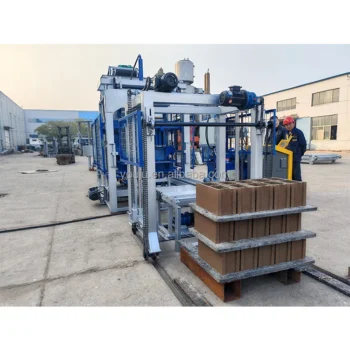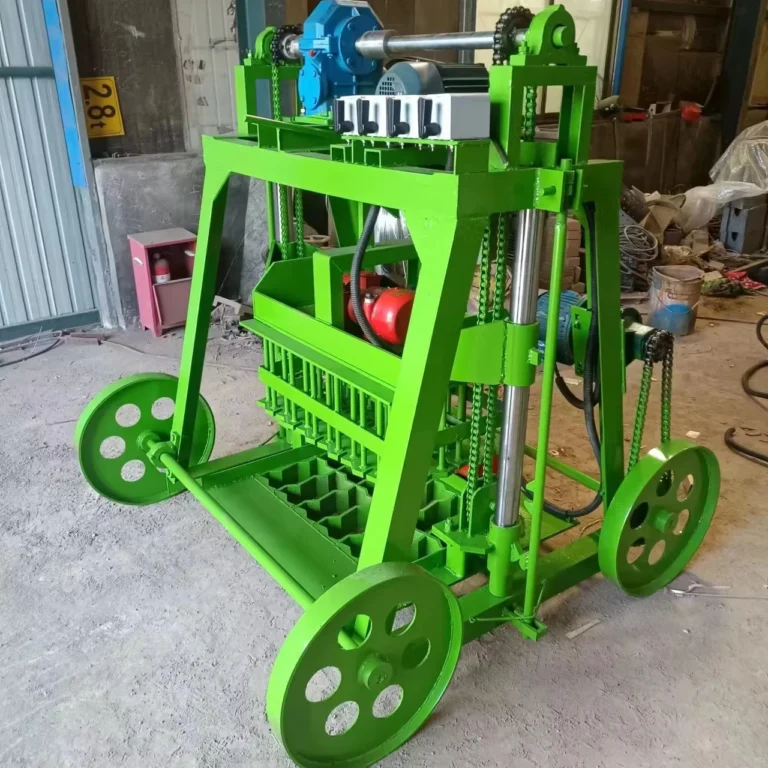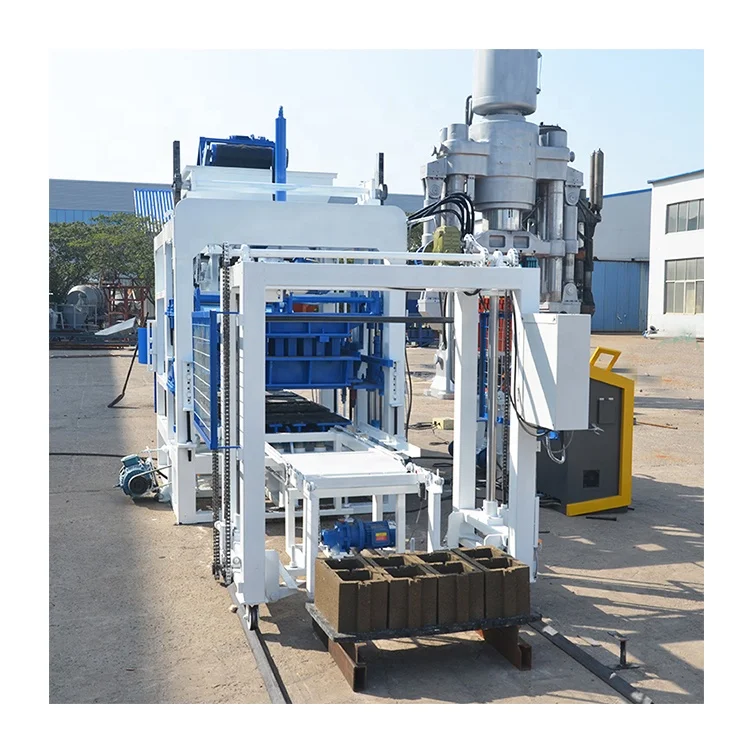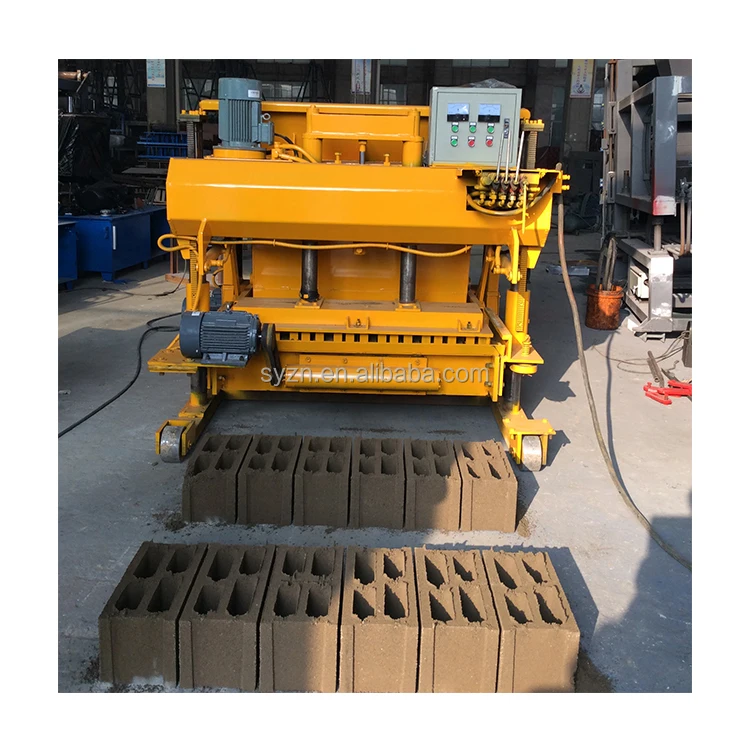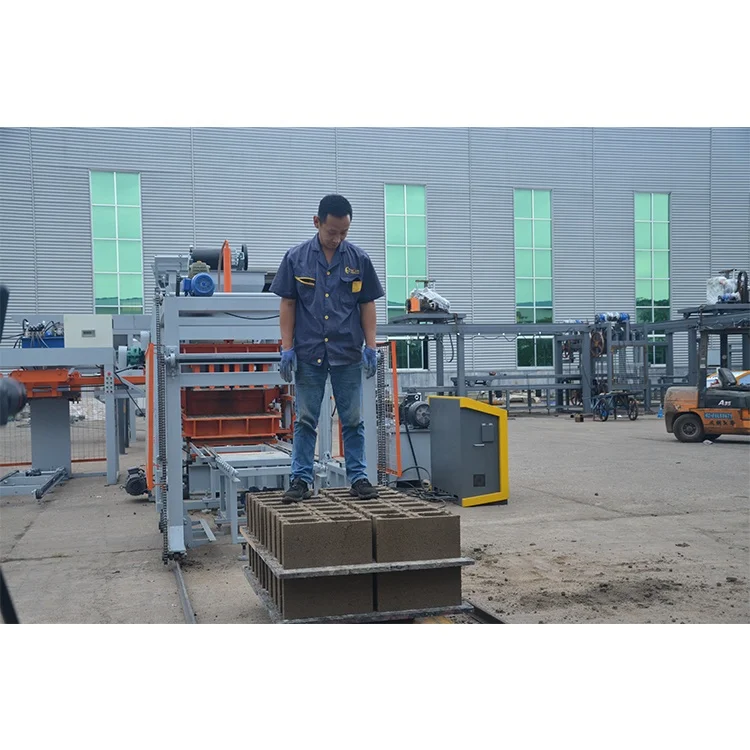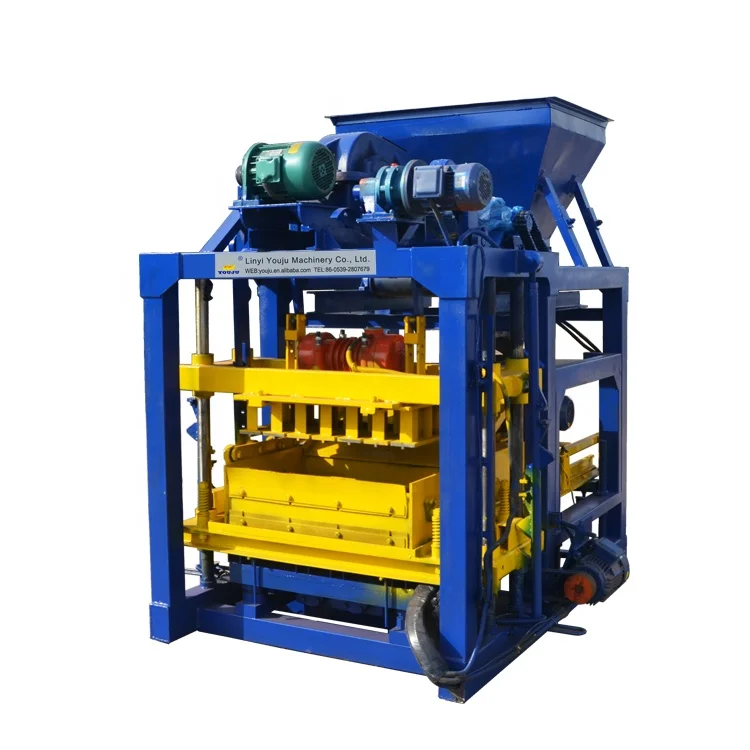
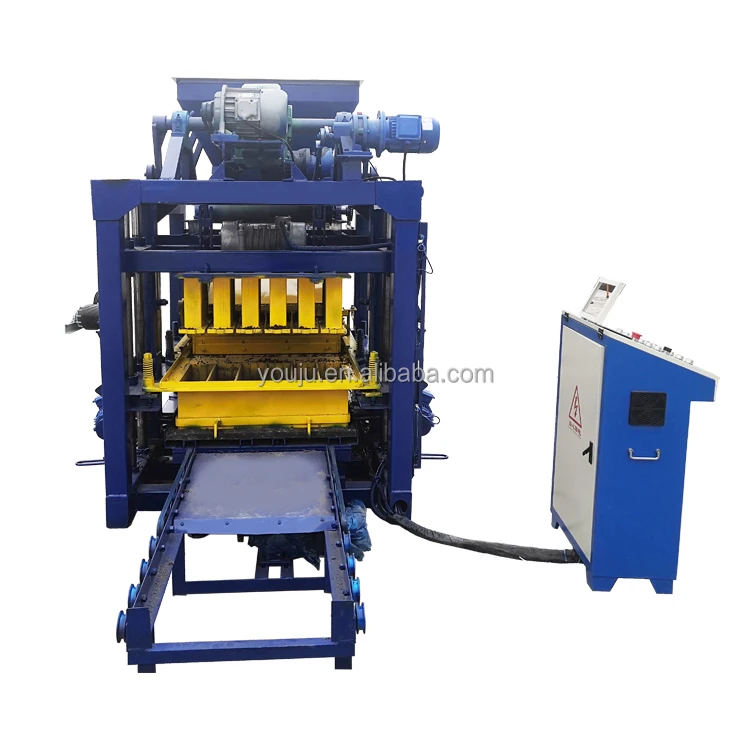

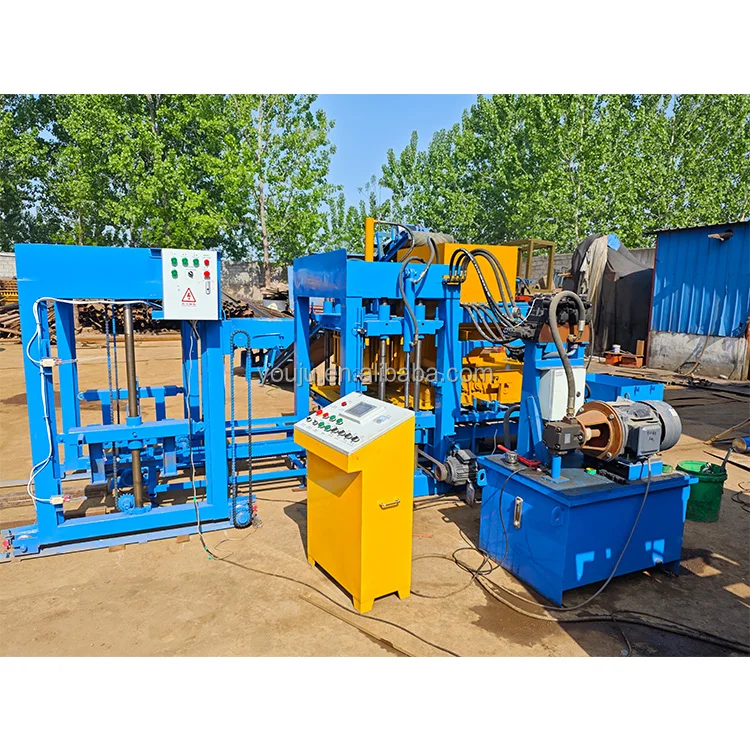

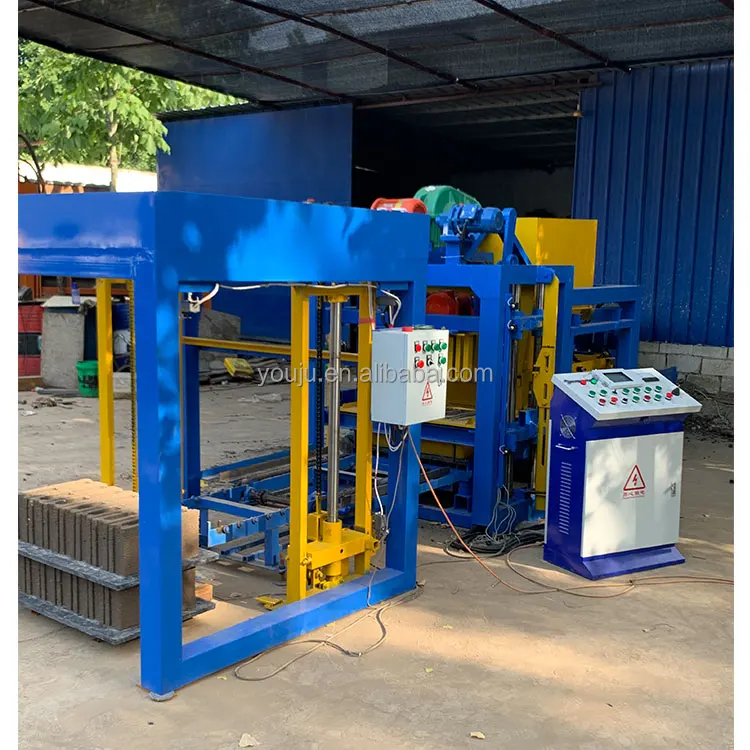
Description
Stocked Machine Dispatch — QTJ4-25 units sit in our Linyi yard ready for container loading, not waiting on a production schedule, so your project deadline does not slip while a factory builds to order.
Technical Specifications
| Parameter | Value |
|---|---|
| Model | QTJ4-25 |
| Product Type | Semi-Automatic Concrete Block Making Machine |
| Rated Power | 17.9 kW |
| Voltage & Frequency | Configurable to destination (to be confirmed before crating) |
| Control System | Semi-automatic, motor-driven relay logic |
| Overall Dimensions (L×W×H) | 6400 × 1500 × 2700 mm |
| Net Weight | 2500 kg |
| Output Capacity | 960 pcs/h, 7680 pcs/day based on 400×200×200 mm hollow block, 4 pcs per mould |
| Molding Cycle | 25 s |
| Pallet Size | 850 × 550 × 20 mm |
| Vibration Frequency | 2800 r/min |
| Exciting Force | 60 kN |
| Vibration Force | 60 kN |
| Mould Format | Hollow, solid, paver, curbstone (8/6/5/4 inch standard sizes) |
| Automation Level | Semi-automatic |
| Stacking Method | Manual — pallet and trolley to curing area |
| Configuration Included | Host machine 1 set, block mould 1 set, JQ350 mixer |
Application Suitability
| Application | Material or Output |
|---|---|
| Hollow block production for masonry walls | Crushed stone, sand, cement, water |
| Solid block manufacturing for load-bearing structures | Dense aggregate mix with cement binder |
| Paving block and curbstone casting | Fine aggregate blend with colour oxide additive |
| On-site contractor block making for housing projects | Locally sourced river sand and quarry dust |
| Small block yard startup with limited automation budget | Standard concrete mix designs across multiple formats |
What "960 Pieces per Hour" Leaves Out When You Size Your Plant
The quoted output only holds true when the block format, mix consistency and pallet cycle match the test conditions exactly.
A capacity figure printed on a spec sheet means little when the actual block you sell is a 6-inch solid rather than a 400×200×200 hollow. Mould cavity count drops, cycle time shifts, and the daily total falls well short of what the brochure promises. I have watched plant owners in West Africa order a stationary block machine in stock based on the headline number, then discover on the first production day that their real output covers only half the orders they committed to. That mismatch is not a machine fault — it is a quoting fault [NEED_CITE: block output calculation methods by format]. When we send you a capacity sheet, the block format assumed is written in the first row, and a second row shows the recalculation for whichever format your market actually buys.
Dispatch Timing and Container Loading for the QTJ4-25
The QTJ4-25 ships from our Linyi stockyard rather than from a production queue. That distinction matters when a contractor has a pour schedule or a distributor needs to fill a container alongside other goods. Before you pay the deposit, you receive a written dispatch lead time and a container loading plan showing whether the frame is dismantled for a 20GP or shipped assembled into a 40HQ. A stationary block machine in stock means the packing photographs are taken of the actual unit you will receive, not a catalogue rendering.
Arrival Estimate Quoted Before the Invoice
Speed is only useful if the machine actually fits the vessel booking and clears customs without rework. Every QTJ4-25 quotation from this site includes an arrival estimate based on the destination port, the shipping line’s current rotation and the HS code classification we file. When a buyer in East Africa needed the machine on the ground before the rainy season made the access road impassable, we confirmed the vessel cut-off date in writing before the order was signed [NEED_CITE: ocean freight scheduling for industrial machinery to African ports]. That is the level of detail a stock-and-delivery focus adds.
How 60 kN Vibration and Pallet Size Shape Your Daily Output
The 60 kN exciting force at 2800 r/min compacts concrete into the mould cavity with enough energy to produce a dense hollow block, but vibration alone does not determine strength — the mix water content and aggregate grading must sit within a window that the force can consolidate. If the local sand is too fine or the moisture drifts high, the same vibration setting produces blocks that crack during curing. The 850 × 550 × 20 mm pallet is the interface between the press and your curing area; if your existing racks are 800 mm wide or your forklift tines are spaced for a different footprint, pallets pile up on the floor instead of sliding into the rack. We confirm pallet dimensions against your curing layout before the crate is nailed shut.
The Real Cost of Skipping the Voltage Photo
A motor-driven block press does not negotiate with electricity. I once shipped a fully automatic hydraulic unit to a job site in Nigeria where the supply was 380V/60Hz while the motor nameplate read 415V/50Hz — the pump would not start, and the site sat idle for three weeks while a replacement motor was air-freighted. With the QTJ4-25, the voltage and frequency are configurable, but only if you send a photo of the site meter or a utility bill before we build the control panel. Getting that detail wrong on a stationary block machine in stock turns a fast delivery into a very expensive delay [NEED_CITE: voltage and frequency standards by export market].
Why Buyers Source This Model From a Stock-Focused Yard
The machine, mould, pallet and JQ350 mixer are specified as a matched set, so nothing is left to a separate supplier who ships late. Stock status and the dismantling dimensions for container loading are confirmed in writing before the proforma is issued. Dispatch lead time and the arrival estimate at your port are quoted as dates, not approximations. Voltage, frequency and the control panel language are locked in against your destination country before crating begins. Factory test records and packing photographs of your exact unit are shared before the container is sealed.
Documentation & Verification
- Capacity calculation sheet stating 400×200×200 hollow block basis and your target format
- Voltage and control language confirmation signed before crating
- Factory test record with block sample photographs from your mould
- Container loading plan with dismantling dimensions for 20GP or 40HQ
- Packing photographs of your specific QTJ4-25 before container seal
- CE declaration scope verified against your destination market requirements
Installation, Commissioning & Support
- Foundation pad to suit 6400 × 1500 mm footprint and 2500 kg static load
- Dedicated 17.9 kW circuit with confirmed voltage and frequency at your site
- Machine arrives in agreed assembly state with bolt-hole template for re-erection
- First-day production run supervised to set vibration timer and cycle to 25 s
- Mould change procedure demonstrated on your hollow and paver formats
- Wear parts list covering vibration springs, pallet guides and mixer blades
What We Need From You Before Quoting
To give you a meaningful dispatch date rather than a generic lead time, send us the block format your market sells, the daily output you need to hit, and a photo of your site electrical supply showing voltage and frequency. If you already have curing racks or a forklift in place, share the pallet footprint those assets accept so the 850 × 550 mm pallet is either confirmed or resized before the order.
Frequently Asked Questions
Q: Is the QTJ4-25 currently in stock, and how soon can it ship?
A: Yes, QTJ4-25 units are held in our Linyi yard for immediate allocation. Once your voltage, frequency and mould format are confirmed in writing, the machine is crated and moved to the port within the dispatch lead time stated on your quotation — typically a matter of days, not weeks.
Q: What container does the QTJ4-25 load into, and is it dismantled?
A: The machine can load into a 20GP in dismantled form or a 40HQ assembled, depending on your preference and inland transport capacity at destination. A loading plan with dimensions is provided before you commit, so you know exactly what the haulage contractor is collecting from the port.
Q: Can you match 220V/60Hz or 415V/50Hz before the machine ships?
A: Voltage and frequency are configured to your site supply before the control panel is wired. We require a meter photo or utility document so the motor, vibration system and mixer are all matched to your grid — no rewiring or transformer rental on arrival.
Q: What is the realistic daily output for my block format?
A: The 960 pcs/h figure applies to 400×200×200 mm hollow blocks at 4 pcs per mould. For your actual format — say a 6-inch solid or an interlocking paver — we recalculate based on cavity count and cycle time, then quote the daily total with the format named in the capacity sheet.
Q: Which moulds ship with the machine versus what is made to order?
A: One standard mould set is included in the stocked configuration. Additional formats or custom cavity layouts are manufactured to order, and the mould lead time is quoted separately so you can decide whether to add them to the first container or order later.