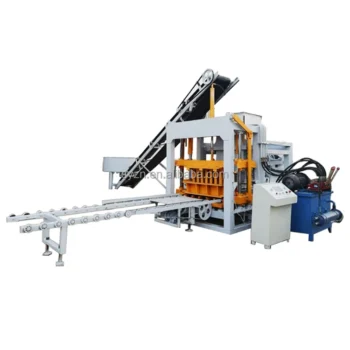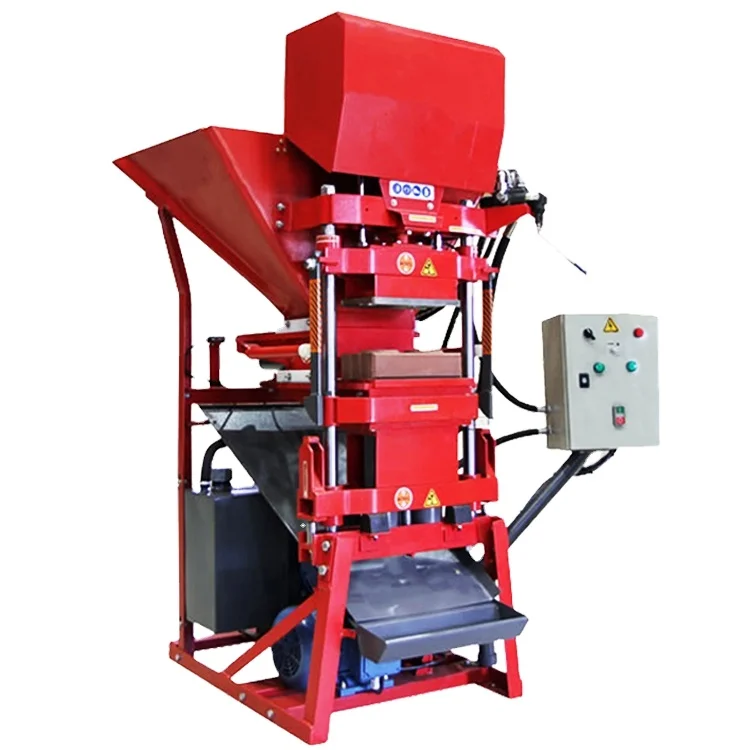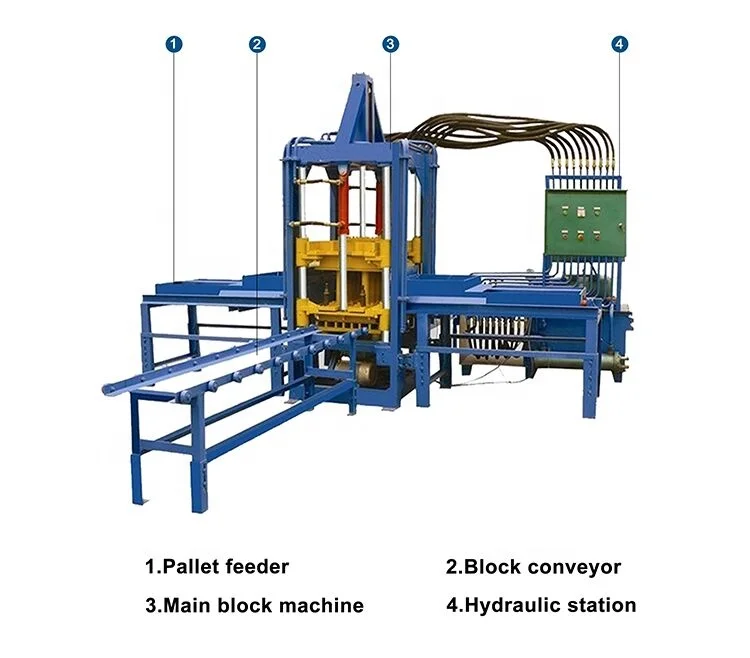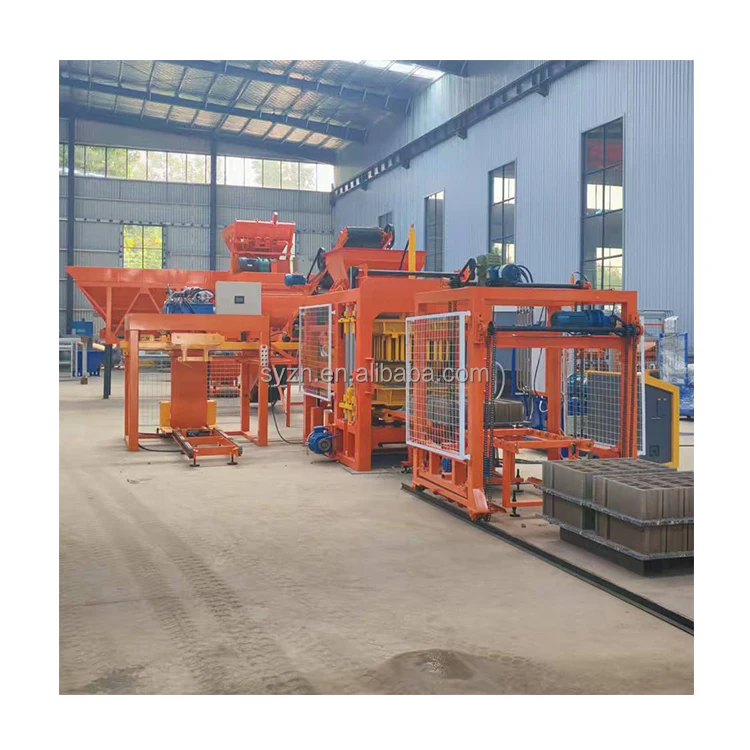
Description
Ready Stock Dispatch — the QT12-15 block machine in stock is pre-configured for container loading, eliminating typical multi-week manufacturing delays for urgent project deadlines.
Technical Specifications
| Parameter | Value |
|---|---|
| Model | QT12-15 |
| Product Type | Fully Automatic Block Production Line |
| Forming Method | Hydraulic pressure (20 MPa) |
| Overall Dimensions (L×W×H) | 935025202950mm |
| Net Weight | 11000 kg |
| Mould Format Compatibility | 400100200mm to 400200200mm (standard hollow/solid sizes) |
| Cycle Time | 15-20s (basis to be confirmed per block format) |
| Voltage | Local Voltage (configurable pre-dispatch) |
| Power Source | Electric motor |
| Control System | PLC |
| Core Components | PLC, Motor, Pump |
| Raw Material Compatibility | Crushed stone, sand, cement, fly ash, cinder, slag, gravel |
| Concrete Mixer | Optional |
| Worker Required | 1-3 people |
| Warranty | 1 Year (Core components: 1 Year) |
Application Suitability
| Application Scenario | Compatible Materials & Output Focus |
|---|---|
| On-site contractor block production | Crushed stone, sand, and cement for immediate structural hollow blocks |
| Paver and kerbstone manufacturing plants | Slag, gravel, and fly ash mixes for standard solid formats |
| Urgent housing project material supply | Cinder and dust blends for high-volume standard brick sizes |
Why the Voltage Question Must Precede the Shipment Date
Confirming the exact local voltage and frequency prevents a stranded machine at the port.
I learned this the hard way early in my career when a fully automatic line arrived in Southeast Asia, only to sit idle for three weeks waiting for a step-down transformer because the local grid frequency and phase were never verified against the motor nameplate. When you need a QT12-15 block machine in stock to meet a strict construction deadline, electrical mismatch is a luxury you cannot afford. We lock in your site’s exact power specifications and PLC display language before the crate is sealed [NEED_CITE: industrial voltage and frequency standards by export market].
Container Loading and Dismantling Strategy
Shipping a 9350mm long mainframe requires precise dismantling to fit standard maritime containers without compromising structural integrity. The QT12-15 block machine in stock is broken down into optimized modules, ensuring the hydraulic station, PLC cabinet, and main press frame are secured against transit vibration. This pre-planned loading scheme means your logistics team receives exact packing dimensions upfront, avoiding last-minute freight forwarding surprises.
Dispatch Lead Time and Arrival Estimation
When a project schedule slips, waiting for a custom build is not an option. Our inventory approach focuses on keeping core assemblies ready for rapid final configuration. Once the voltage and control language are confirmed, the dispatch lead time shrinks from typical multi-week manufacturing cycles to mere days for final testing and loading. We provide a realistic arrival estimate quoted upfront, aligning the shipping transit with your on-site foundation curing schedule [NEED_CITE: standard maritime transit windows for heavy machinery].
Decoding the Physical Footprint and Power Draw
The 935025202950mm overall dimension dictates your workshop layout, but the 20 MPa hydraulic pressure system defines your power infrastructure. Running a high-pressure hydraulic pump and the main vibration motors simultaneously creates significant peak current draws. Buyers must ensure their local transformer and dedicated circuits can handle this specific electric motor load without tripping during the initial compression stroke. Furthermore, the physical footprint requires adequate clearance around the mainframe for daily maintenance access to the pump and PLC panel.
The Hidden Cost of Overlooking Pre-Shipment Verification
Rushing a dispatch without verifying the PLC display language or the exact motor winding configuration leads to costly on-site troubleshooting. If the control interface is locked in an unsupported language, your operators cannot navigate fault codes, turning a minor sensor issue into days of downtime. Similarly, failing to confirm the container loading sequence means your forklift might not be able to unload the heaviest modules first, stalling the entire installation process [NEED_CITE: common machinery installation delays due to poor logistics planning].
Why Source This Equipment Through Our Dispatch Hub
Our single focus on block machinery means the mainframe, hydraulic station, and PLC are tested as a unified system before dismantling. We do not rely on catalogue defaults; the voltage and control parameters are set against your actual site conditions. Every stocked unit undergoes rigorous outgoing inspections, ensuring that when the container doors open, the components match the packing list exactly. This focus on logistics and electrical readiness keeps your project moving.
Documentation & Verification
- Factory test record verifying hydraulic pressure stability before dismantling.
- Video outgoing-inspection showing the specific PLC language and motor rotation.
- Container loading scheme detailing the exact placement of the 11000 kg mainframe.
- Customs documentation support with accurate HS codes for rapid port clearance.
- Machinery test report confirming core component functionality post-assembly.
Installation, Commissioning & Support
- Foundation curing must align with the arrival of the 9350mm mainframe.
- Dedicated circuits required to support the peak draw of the 20 MPa hydraulic pump.
- Dismantled modules are sequenced for logical on-site reassembly and alignment.
- PLC parameters are calibrated to your local voltage during the initial power-on.
- Operator training focuses on navigating the localized control interface and fault codes.
- Wear parts list provided to ensure immediate availability for the hydraulic system.
Preparing Your Site for Immediate Integration
To ensure the equipment integrates smoothly upon arrival, please provide your exact local voltage, frequency, and preferred PLC display language. We also need to know your available workshop dimensions and the type of forklift you have on-site to finalize the container unloading and placement strategy.
Frequently Asked Questions
Q: How is the dispatch lead time calculated for stocked units?
A: The lead time for a QT12-15 block machine in stock depends on finalizing the electrical configuration and PLC language. Once these are confirmed, the unit undergoes a final operational test, dismantling, and container loading. This process typically takes a few days, significantly shorter than building from scratch.
Q: How do you handle container loading for the mainframe?
A: The 9350mm mainframe and heavy hydraulic stations are dismantled into optimized modules. We provide a detailed container loading scheme upfront, ensuring the 11000 kg components are secured properly and sequenced logically so your site team can unload them efficiently with available equipment.
Q: What if my site voltage differs from standard industrial grids?
A: We must verify your exact local voltage and frequency before dispatch. The electric motors and PLC control system are configured or matched with the correct transformers to ensure the machine powers up correctly upon arrival, preventing idle time waiting for electrical adjustments.
Q: Are standard moulds included in the rapid dispatch package?
A: Yes, standard mould formats compatible with the machine are available from stock. We confirm the specific block sizes you need prior to loading, ensuring the correct moulds are packed in the same container for immediate production once the machine is commissioned.
Q: How do you verify the machine’s condition before shipping?
A: Every unit undergoes a strict outgoing inspection. We provide a video outgoing-inspection and a machinery test report showing the hydraulic pressure and PLC functions operating correctly. This guarantees the core components are fully verified before the equipment is dismantled for transit.