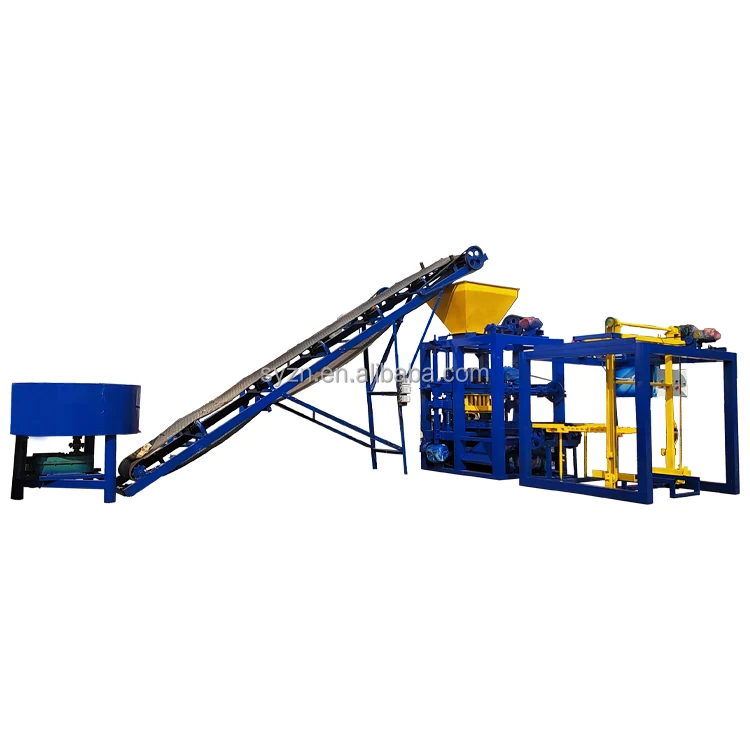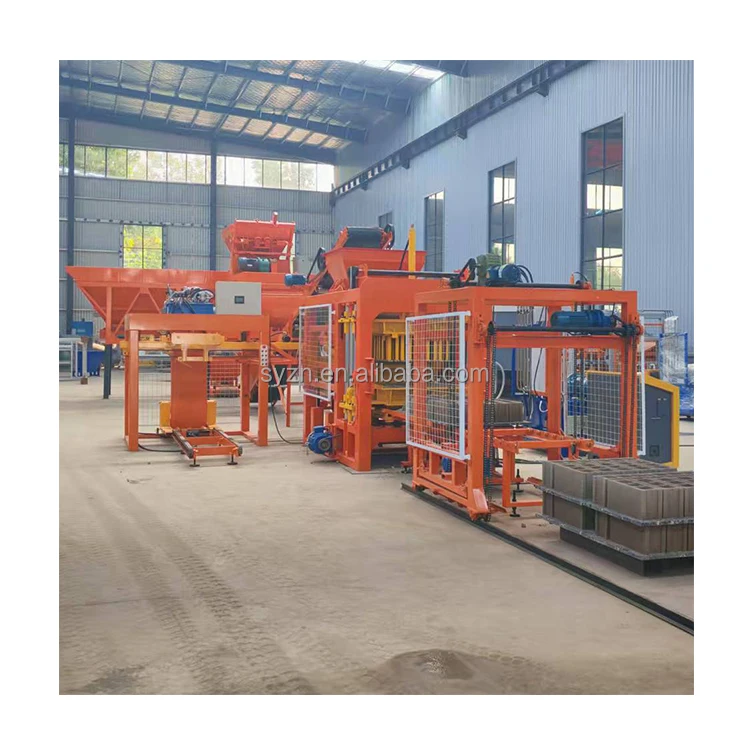


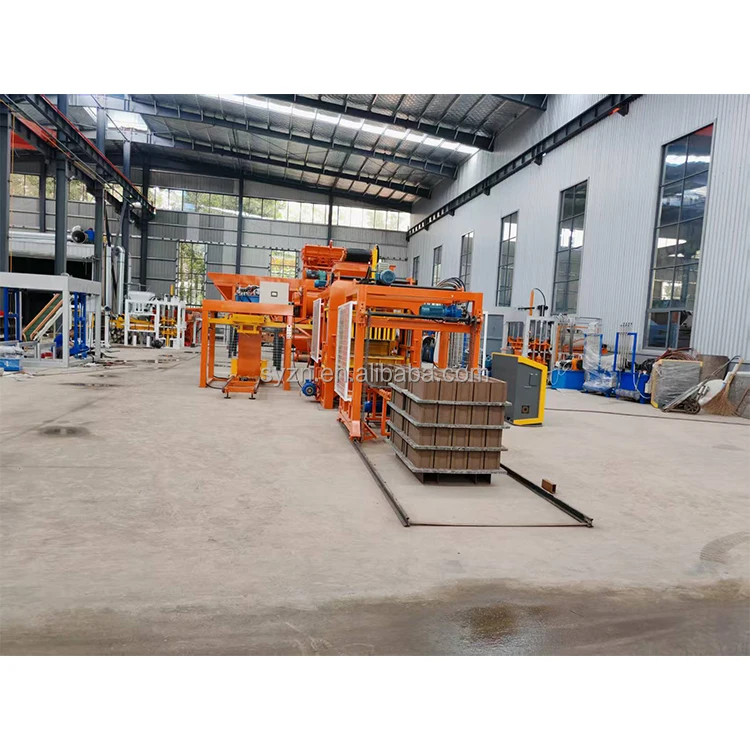

Description
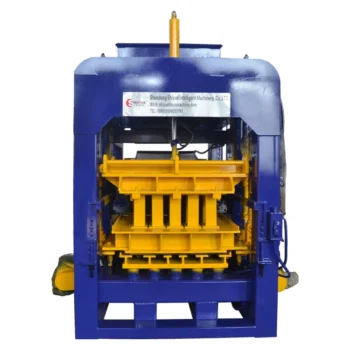
Stocked Dispatch Readiness — QT6-15 main machines and standard block moulds are held in inventory at our Shandong facility, so container loading plans and dismantling sequences are confirmed at order stage rather than after weeks of production.
Technical Specifications
| Parameter | Value |
|---|---|
| Product Type | Automatic Concrete Block Making Machine |
| Model | QT6-15 |
| Overall Dimensions (L×W×H) | 8200×1700×2950 mm |
| Vibration Form | Platform Vibration |
| Vibration Frequency | 0-60 Hz |
| Vibration Force | 45 kN |
| Moulding Mode | Load automatically, vibration moulding |
| Demolding Method | Hydraulic |
| Pallet Size | 880×850 mm |
| Molding Cycle | 15-20 s |
| Overall Power | 37 kW |
| Total Mass | 7 T |
| Control System | PLC (Programmable Controller) with touch screen interface and fault diagnosis |
| Output Capacity (Hollow block 400×200×200 mm, 6 pcs/mould) | 1080-1440 pcs/hour; 8640-11520 pcs/8hr |
| Output Capacity (Hollow block 400×150×200 mm, 8 pcs/mould) | 1440-1920 pcs/hour; 11520-15360 pcs/8hr |
| Output Capacity (Solid brick 240×115×53 mm, 32 pcs/mould) | 5760-7680 pcs/hour; 46080-61440 pcs/8hr |
| Output Capacity (Rectangular brick 200×100×60 mm, 21 pcs/mould) | 2160-2880 pcs/hour; 17280-23040 pcs/8hr |
| Output Capacity (Zigzag brick 225×112.5×60 mm, 15 pcs/mould) | 2160-2880 pcs/hour; 17280-23040 pcs/8hr |
| Block Compressive Strength | More than 15 MPa |
| Recommended Factory Area | 1200 m² |
| Raw Material Adaptability | Waste ash, slag, and various aggregates; reduces cement dosage |
| Automation Level | Automatic (mechanical-hydraulic-PLC controlled synthesis) |
| Warranty | 1 year for whole machine (excluding spare parts) |
| Assembly State | Fully assembled main machine |
Application Suitability
| Application | Material or Output |
|---|---|
| Hollow block production for building walls | Crushed stone, sand, cement, waste ash, slag |
| Solid brick production for load-bearing structures | Local aggregates, cement, industrial by-products |
| Rectangular paving brick production | Fine aggregates, cement, mineral pigments |
| Zigzag interlocking paving brick production | Graded aggregates, cement, color oxides |
| On-site block production for housing projects | Site-available aggregates blended with cement |
| Block plant restocking for distributors | Standard format hollow and solid blocks |
Why Dispatch Timing Matters More Than Quoted Cycle Speeds
A fast cycle time on paper means nothing if the machine is still on the production floor six weeks after you need it on site.
When buyers evaluate a QT6-15 block machine in stock, the first number they look at is pieces per hour. What often gets overlooked is the gap between placing the order and having the machine actually producing blocks at the destination. Construction contractors working against a project deadline and housing developers with phased handover dates cannot absorb a multi-week production delay. I have watched project sites in West Africa sit idle because a container was still waiting for customs clearance at the port of origin while the building schedule was already slipping [NEED_CITE: typical delays caused by incomplete export documentation in heavy machinery shipments]. With fast delivery block machine orders, the dispatch timeline should be the second question you ask, right after whether the pallet size matches your curing yard.
What Stocked Availability Actually Means for Your Schedule
Having a QT6-15 block machine in stock means the main press is fully assembled and has completed its factory test cycle before your order is confirmed. Standard moulds for hollow blocks, solid bricks, and paving formats are matched to the machine and packed alongside it. The container loading plan is worked out based on the machine’s 8200×1700×2950 mm overall dimensions and 7-tonne mass, so you know exactly how many units fit and whether a flat rack or open-top container is needed for any oversize components.
Container Loading and Dismantling Before You Commit
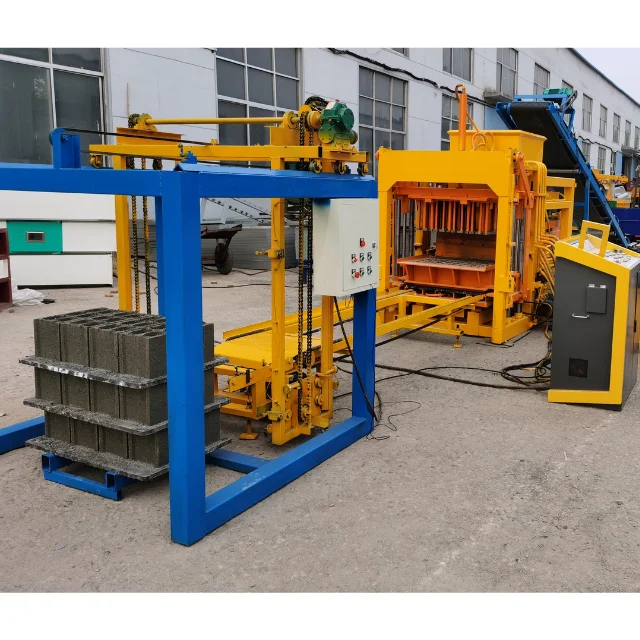
The QT6-15 is shipped as a fully assembled main machine, but the pallet feeding frame, hydraulic power unit, and control cabinet are typically detached for container stowage. Before you pay the deposit, the dismantling sequence and reassembly drawing set are confirmed so your site team knows what to expect when the container doors open. This is not a detail that should surface after the machine arrives at your port.
Specifying the Parameters That Affect Dispatch Readiness
The platform vibration system operates across a 0-60 Hz frequency range, delivering up to 45 kN of vibration force to compact the mix inside the mould cavity. This force, combined with the hydraulic demolding method, determines the density and compressive strength of the finished block — rated at more than 15 MPa across standard formats. The 880×850 mm pallet size is a fixed dimension that dictates how many blocks are pressed per cycle and must align with the curing racks and forklift capacity the buyer already has on site. A 37 kW overall power draw means the site electrical supply must be confirmed for both voltage and frequency before the machine leaves the factory. The PLC control system with touch screen interface manages the 15-20 second molding cycle and includes a fault diagnosis system, but the display language must be specified at order stage to avoid commissioning delays [NEED_CITE: PLC display language and voltage confirmation requirements for exported industrial machinery].
The Hidden Cost of Skipping Pre-Shipment Confirmation
When voltage and frequency are assumed rather than confirmed, the machine arrives and the motor will not start — or worse, it starts and burns out the first week. When the pallet size does not match the curing yard racking, blocks end up stacked by hand on the ground, and the daily output you planned for collapses. When the PLC display is in a language your operators cannot read, every fault code becomes a guess, and the fault diagnosis system that should save downtime instead creates it [NEED_CITE: common commissioning failures in exported block making equipment due to unconfirmed electrical specifications]. These are not manufacturing defects. They are specification gaps that could have been closed before the container was sealed.
Why Buyers Source This Fast Delivery Block Machine from Our Facility
The QT6-15 is held as a stocked model alongside its standard mould set, so dispatch lead time is measured in days for container loading rather than weeks for production. Block machinery is our single focus, which means the machine, pallet, and handling equipment are specified as a matched system — not assembled from separate suppliers after the order is placed. Every stocked unit ships with a factory test record showing actual cycle times and block output on the formats you are ordering. Pallet size and material are confirmed against your curing area layout and existing forklift before the loading plan is finalized. Voltage, frequency, and PLC display language are locked in at order stage so commissioning starts the day the machine is powered on site.
Documentation & Verification
- Factory test record showing cycle time and block output on your ordered format before dispatch
- Voltage and frequency confirmation sheet matched to your site supply specification
- PLC display language confirmation signed off prior to control cabinet packing
- Container loading plan with dismantling sequence and reassembly drawing set
- Packing photographs of machine, moulds, and pallets taken at container stuffing
- Customs documentation package prepared with HS code and export compliance support
Installation, Commissioning & Support
- Foundation pad prepared to 8200×1700 mm footprint with level tolerance per machine specification sheet
- Dedicated 37 kW power circuit installed at confirmed voltage and frequency before machine arrival
- Hydraulic power unit and control cabinet reconnected per dismantling sequence drawing set provided
- PLC touch screen parameters set to your block format and local raw material mix on first startup
- Operator training covers mould change procedure, fault diagnosis system use, and daily maintenance checks
- Wear parts list and mould inventory supplied with recommended reorder points for continuous production
What We Need to Confirm Your Dispatch Window
To provide an accurate arrival estimate, share your destination port, the block formats you plan to produce, and your site voltage and frequency. If you already have curing racks and a forklift on site, send the pallet dimensions you are currently using so we can confirm whether the 880×850 mm pallet matches your setup or whether adjustments are needed before loading.
Frequently Asked Questions
Q: Is the QT6-15 currently in stock, and what is the dispatch lead time?
A: The QT6-15 automatic block machine is held as a stocked model at our Shandong facility with standard moulds for hollow blocks, solid bricks, and paving formats available alongside it. Dispatch lead time covers container loading plan finalization, pre-shipment factory testing, and customs documentation preparation. Exact dispatch dates are confirmed at the order stage based on current inventory and your destination port schedule.
Q: How is the machine packed and dismantled for container shipment?
A: The QT6-15 main press ships fully assembled, while the hydraulic power unit, pallet feeding frame, and PLC control cabinet are detached for container stowage. A dismantling sequence document and reassembly drawing set are provided before shipment so your site team can plan the unloading and reconnection work. Container type is selected based on the overall dimensions and total mass.
Q: What voltage and frequency options are available for immediate dispatch units?
A: Stocked QT6-15 units can be configured to match your site electrical supply before dispatch. Voltage and frequency must be confirmed at the order stage so that motors, the hydraulic pump, and the PLC control system are all set correctly. This confirmation is completed before the machine enters the factory test cycle and before container loading begins.
Q: Which block formats and moulds are stocked alongside the QT6-15?
A: Standard stocked moulds cover 400×200×200 mm and 400×150×200 mm hollow blocks, 240×115×53 mm solid bricks, 200×100×60 mm rectangular paving bricks, and 225×112.5×60 mm zigzag interlocking paving bricks. Output capacity is stated per format based on the number of cavities per mould. Custom mould designs can be discussed separately if your market requires non-standard dimensions.
Q: Can arrival timing be estimated upfront based on my destination port?
A: Yes. Once your destination port is confirmed, we provide an estimated arrival window that accounts for inland transport from the factory to the port of loading, ocean transit, and standard port handling. This estimate is quoted before you commit to the order so that your project timeline and machine commissioning schedule can be planned with realistic dates.