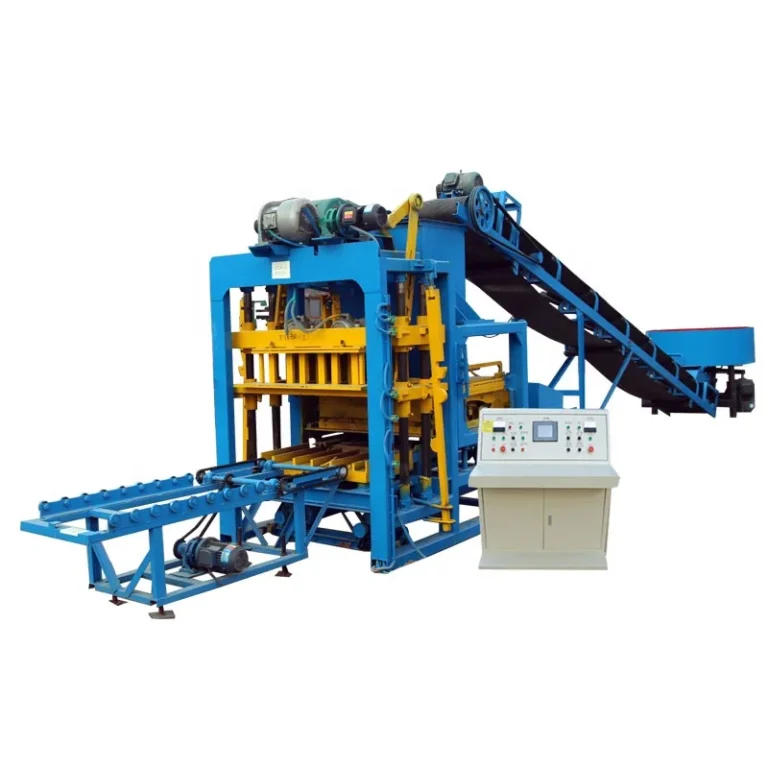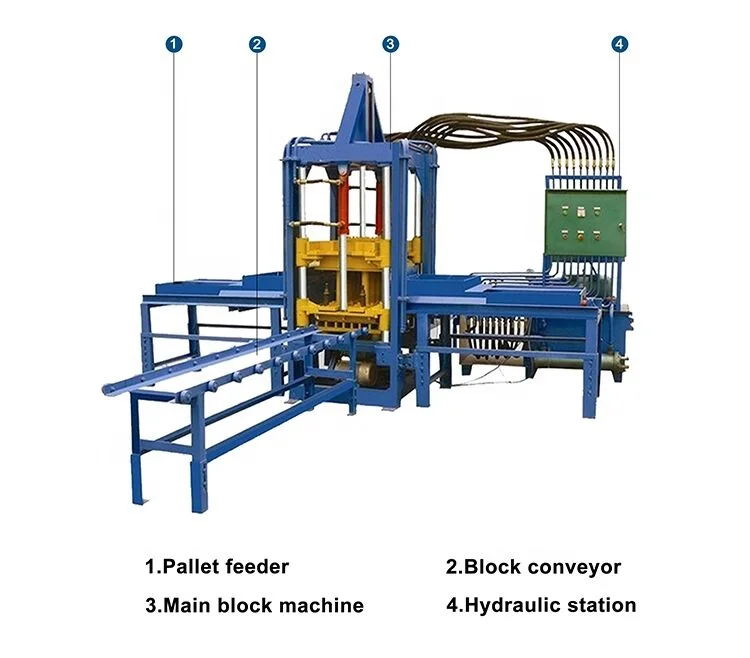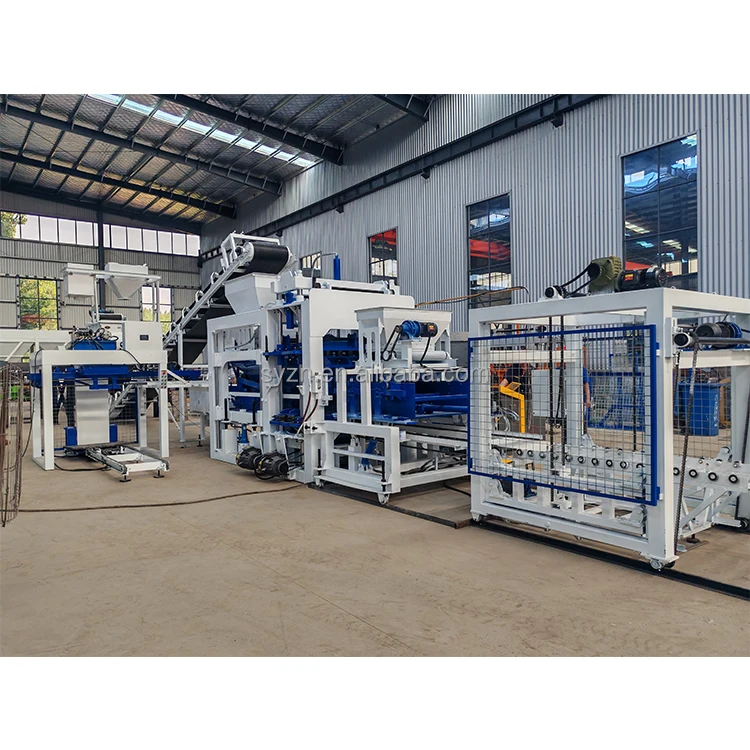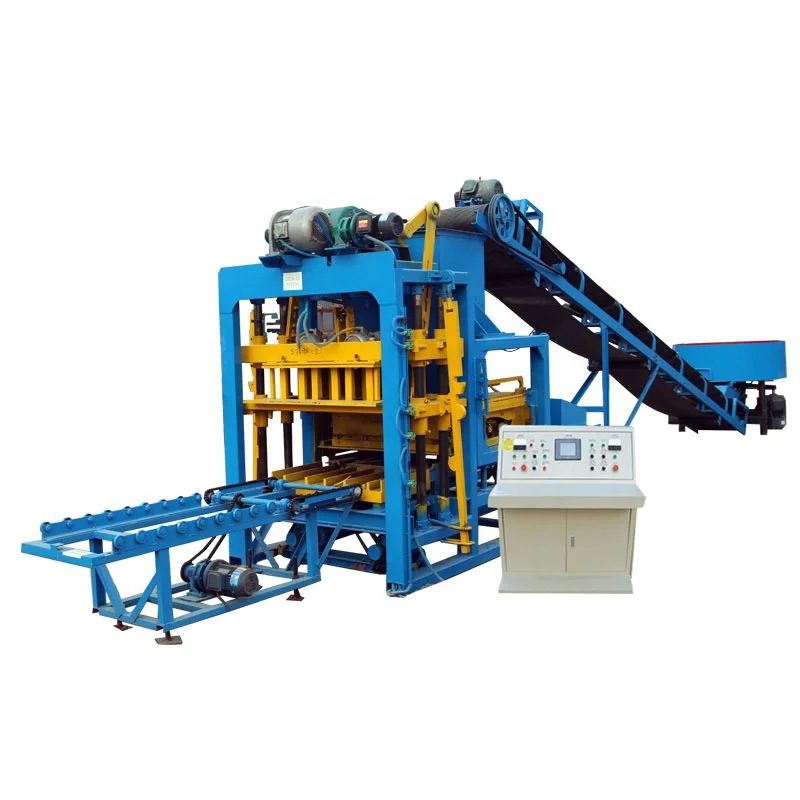
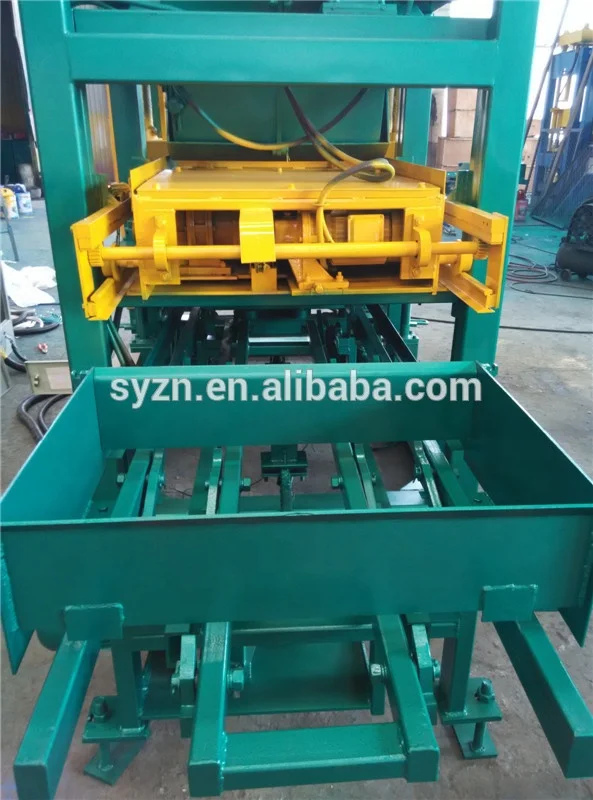


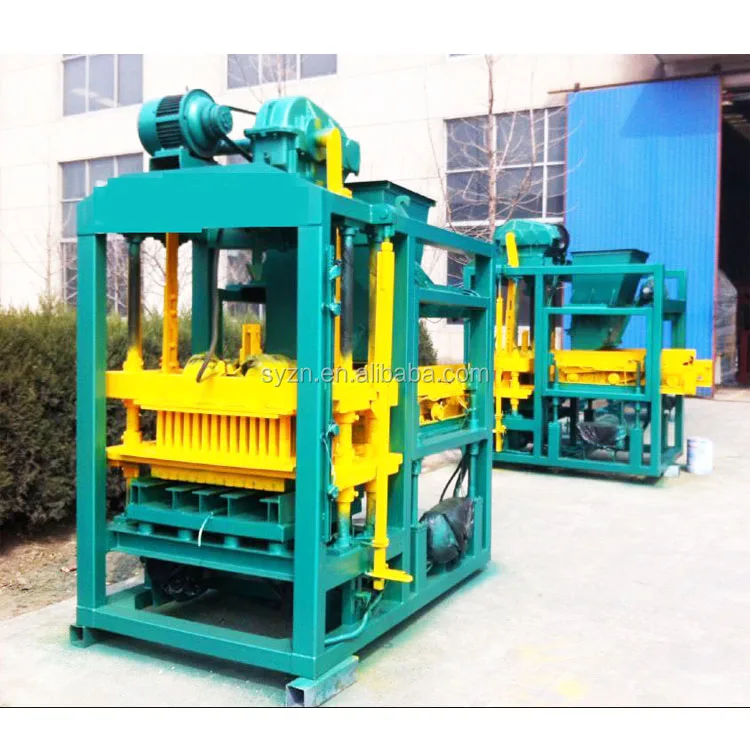
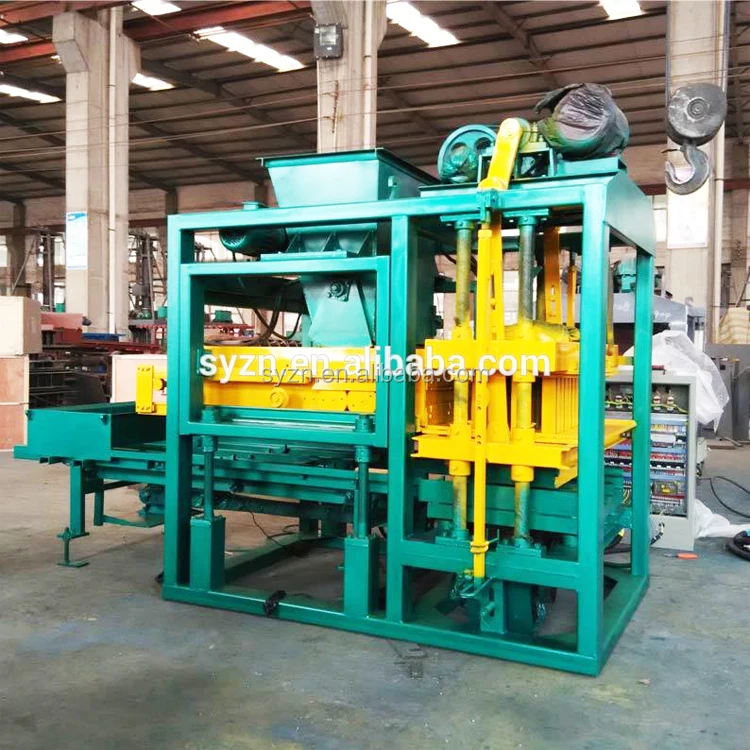
Description
Stock Readiness Over Catalog Promises — Dispatch timing quoted against actual container loading plans rather than a generic lead-time estimate, so your site schedule stays intact.
Technical Specifications
| Parameter | Value |
|---|---|
| Model | QTJ4-25 |
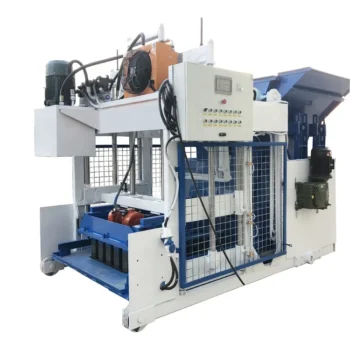
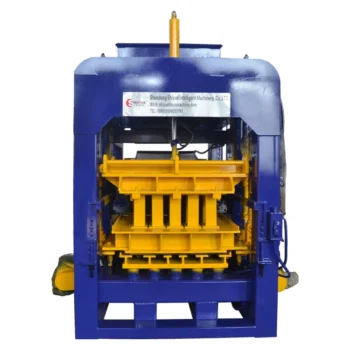
| Product Type | Automatic Concrete Block Making Machine |
| Overall Dimensions (L×W×H) | 6400×1500×2700 mm |
| Molding Cycle | 25 s |
| Vibration Frequency | 2800–5100 r/min |
| Exciting Force | 60 kN |
| Rated Power | 17.9 kW |
| Mixer Model | JQ350 |
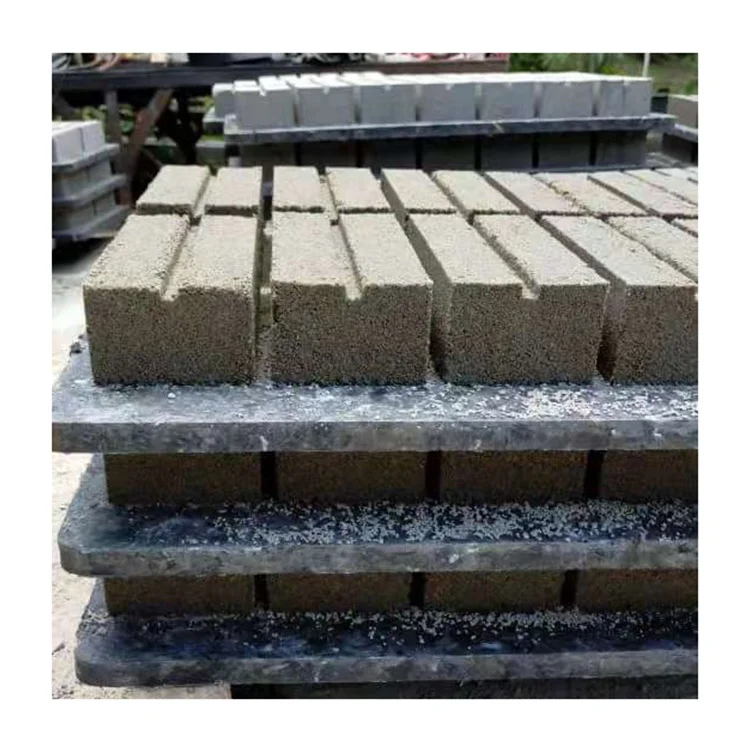
| Pallet Size | 850×550×20 mm |
| Net Weight | 2500 kg |
| Control System | PLC with automatic plate-supplying, material-disturbing, and brick-discharging |
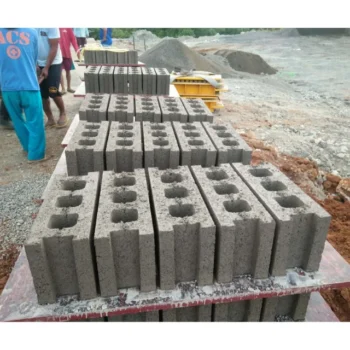
| Output (Hollow 390×190×190 mm) | 480 pcs/h, 3800 pcs/8hr (4 pcs/mould) |
| Output (Hollow 400×150×200 mm) | 600 pcs/h, 4800 pcs/8hr (5 pcs/mould) |
| Output (Solid 240×115×53 mm) | 2100 pcs/h, 17000 pcs/8hr (18 pcs/mould) |
| Voltage & Frequency | Configurable — confirm before dispatch |
| Applied Products | Concrete hollow blocks (8 inch, 6 inch), solid bricks |
| Raw Materials | Crushed stones, sand, cement, dust, fly ash |
| Automation Level | Semi-automatic with PLC-controlled material and pallet handling |
Application Suitability
| Application | Material or Output |
|---|---|
| Small to medium block plants | Hollow blocks and solid bricks from crushed stone, sand, and cement |
| On-site production for contractors | 8-inch and 6-inch hollow blocks using locally sourced aggregate |
| First plant for entrepreneurs | Standard hollow and solid formats with stocked moulds |
| Distributors adding capacity | Fly ash and dust blends for solid brick runs |
Why Voltage Confirmation Must Happen Before Dispatch
Asking about site voltage is not a courtesy — it is the single step that prevents a machine from sitting dead on arrival.
I once watched a QTJ4-25 block making machine in stock fast delivery container arrive at an African job site only to find the local grid ran a frequency the factory motor could not match. The crew had the foundation poured, the aggregate stockpiled, and a project milestone closing in three weeks. The machine sat under a tarp while a transformer was air-freighted across two borders. That QTJ4-25 block making machine in stock fast delivery scenario taught our dispatch team a permanent lesson: confirming voltage, frequency, and PLC display language before the container is sealed is non-negotiable [NEED_CITE: voltage and frequency standards by export market]. Every unit we release from stock now carries a voltage tag verified against the buyer’s grid, even if it costs an extra day on the dock.
Dispatch Timeline Buyers Can Actually Plan Around
The QTJ4-25 block making machine in stock ships nude-packed into a single 20GP container, with approximately 500 pallets loaded around the press to fill dead space and protect the frame during ocean transit. Standard moulds for 8-inch hollow blocks and solid bricks are typically on the shelf, meaning the gap between purchase order and port arrival is measured in weeks rather than the multi-month production runs custom machines demand.
What Container Loading Really Looks Like
The machine is dismantled at the mixing hopper and discharge conveyor so the 6400 mm frame fits the internal length of a 20GP. Pallets are strapped in bundles and wedged between the main frame and the container wall to prevent shift. A packing photograph set is sent to the buyer before the doors close, so you know exactly how the QTJ4-25 block making machine in stock was secured before it leaves the yard [NEED_CITE: standard container loading practices for heavy industrial machinery].
Vibration, Pressure, and the Density Equation
The 60 kN exciting force and 2800–5100 r/min vibration frequency work together to compact the concrete mix into the mould cavity. Higher frequency is useful for fine-aggregate mixes like fly ash and dust, where particle rearrangement requires rapid oscillation rather than brute force. The 25-second molding cycle gives the vibration enough dwell time to consolidate the full 190 mm depth of an 8-inch hollow block before the PLC triggers brick-discharging. Pallet size at 850×550×20 mm determines the footprint of every block produced, so curing rack spacing and forklift tine width must match before the first production run.
What Mismatched Pallets Cost on Day One
Ordering a machine without confirming pallet dimensions against the curing yard you already built means either cutting new racks or stacking blocks by hand on the floor. Hand-stacking a 3800-block daily output burns labour the semi-automatic design was supposed to eliminate, and uneven floor curing produces strength variation across the batch [NEED_CITE: curing conditions and block compressive strength consistency]. The 20GP container includes around 500 pallets — enough for roughly one full shift before rotation — so buyers planning longer runs must confirm additional pallet quantities before the container is stuffed.
Why Buyers Source This Model Here
Block machinery is the sole production focus, which means the press, mould, pallet, and handling stations leave the yard as one matched set rather than separate purchases bolted together on site. Stocked standard moulds cover the hollow and solid formats most markets move fastest, and custom mould design to buyer drawings is available when the product mix demands it. Configuration is set against the buyer’s actual aggregate and mix design, not a catalogue default that may not match local materials. Semi-automatic operation keeps the initial investment contained, and the PLC platform leaves a clear path to add automatic stacking later.
Documentation & Verification
- Factory test record run on your specified block format before dispatch
- Container loading photograph set showing pallet count and securing method
- Voltage and frequency confirmation sheet signed against your grid data
- PLC display language verification before control panel is sealed
- Operation manual in your confirmed language with wear parts list
Installation, Commissioning & Support
- Foundation pad sized to 6400×1500 mm footprint with anchor bolt template provided
- Dedicated 17.9 kW circuit with confirmed voltage and breaker rating before energizing
- On-site reassembly of hopper and discharge conveyor after container stripping
- First-run parameter tuning for local aggregate moisture and cement ratio
- Operator training covering PLC screen navigation and mould change sequence
- Wear parts list with reorder codes for vibration springs and mould liners
What to Share Before Requesting a Quote
Provide the block format your market moves fastest, the daily volume your project demands, and the aggregate blend you can source within hauling distance of the plant. Confirm your site voltage, frequency, and preferred PLC display language so the electrical cabinet is built correctly before the QTJ4-25 block making machine in stock leaves the yard. If you already own curing racks or forklifts, share the pallet dimensions they accept so the included pallets slot straight into your existing workflow.
Frequently Asked Questions
Q: What is the dispatch lead time for the QTJ4-25 and standard moulds currently in stock?
A: Stocked units with standard hollow block and solid brick moulds can typically be dispatched once voltage, frequency, and PLC language are confirmed. The confirmation step adds roughly one working day. Container booking and inland haulage then determine the exact port date, which is quoted at order placement rather than estimated from a generic lead-time table.
Q: How is the machine packed and loaded into a 20GP container?
A: The press frame ships nude-packed with the mixing hopper and discharge conveyor detached to fit the container length. Approximately 500 pallets are strapped in bundles and wedged around the frame. A full packing photograph set is provided before the doors are sealed so you can verify securing methods and pallet count prior to ocean transit.
Q: Which block formats are included as standard moulds?
A: Standard stock typically covers 390×190×190 mm and 400×150×200 mm hollow blocks plus 240×115×53 mm solid bricks. Additional formats or custom dimensions require mould production lead time, which is quoted separately. Confirm your target formats at inquiry stage so availability can be checked before the container is allocated.
Q: What happens if my site voltage differs from the standard configuration?
A: Voltage and frequency are confirmed against your grid data before the electrical cabinet is wired. If your site requires a non-standard supply, the motor and PLC components are specified accordingly during the pre-dispatch check. Shipping a unit without this step risks commissioning delays that no amount of on-site troubleshooting can resolve quickly.
Q: What spare parts ship with the initial container?
A: The initial shipment includes a wear parts set covering vibration springs, mould liners, and high-wear hydraulic seals identified during the factory test. A full wear parts and mould list with reorder codes is included in the documentation package so replacements can be requested by part number without sending photographs or measurements back to the factory.