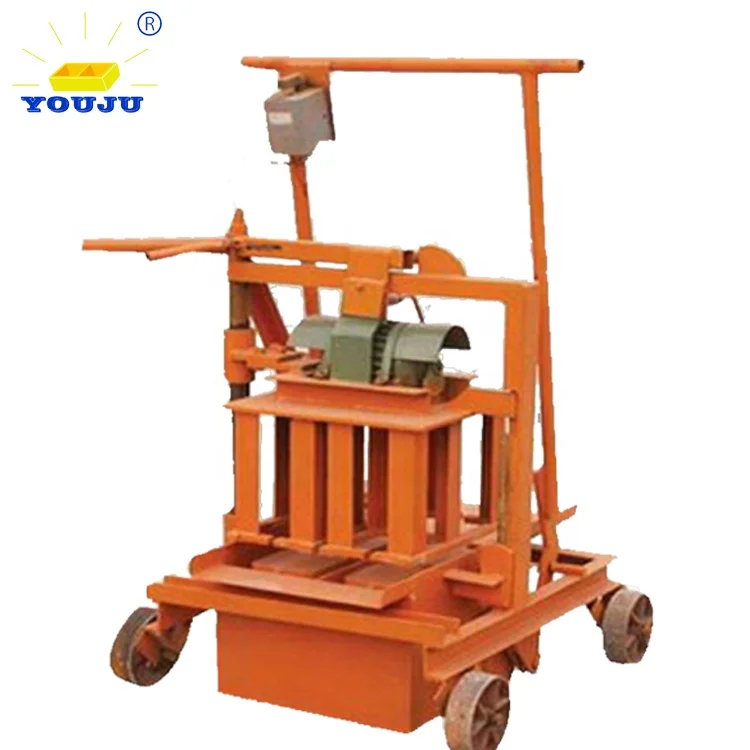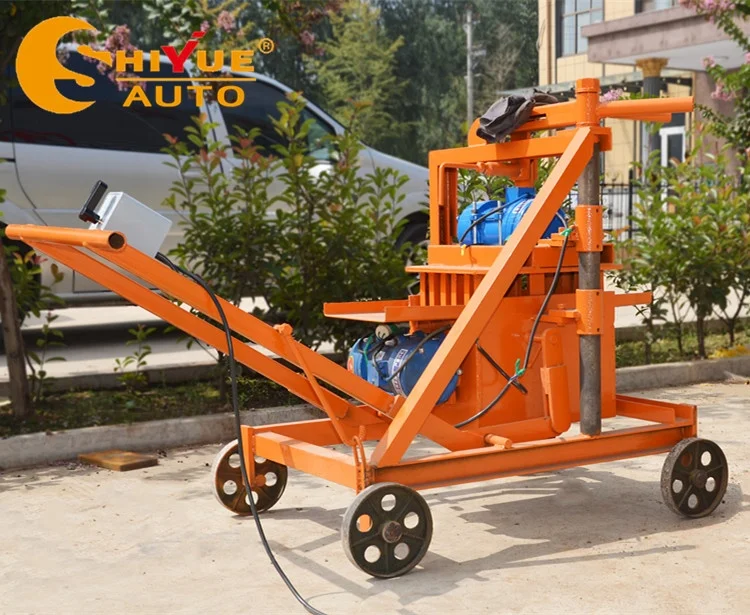
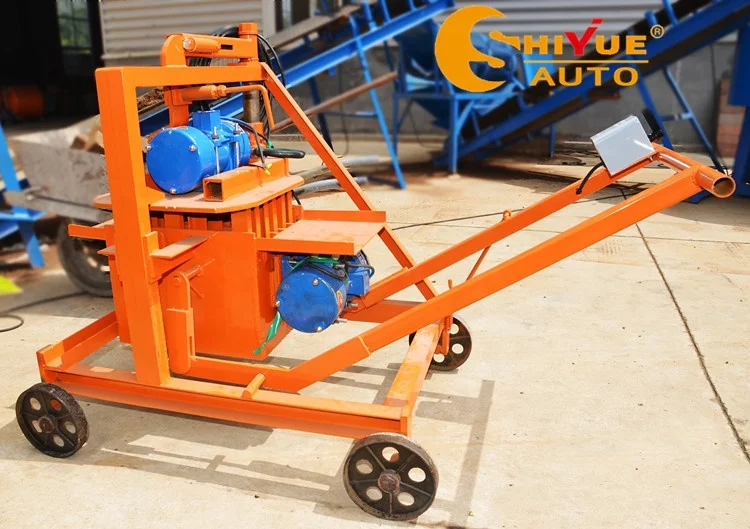
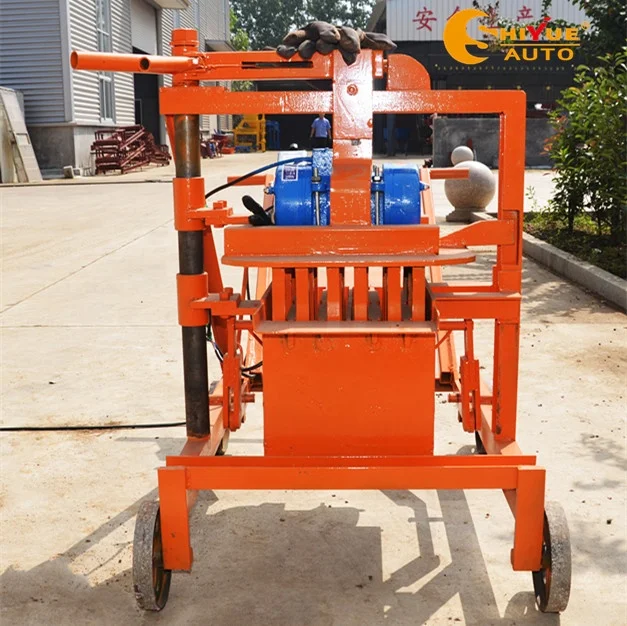
Description
Stock-Ready Mobile Block Machines — container loading and dispatch lead times quoted upfront so your project site does not wait for production slots.
Technical Specifications
| Parameter | Value |
|---|---|
| Model | QMJ2-45 |
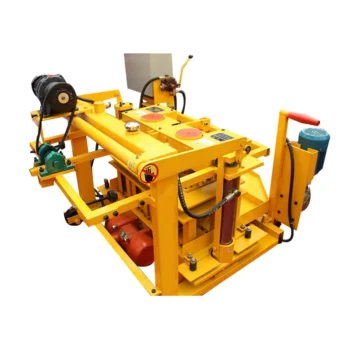
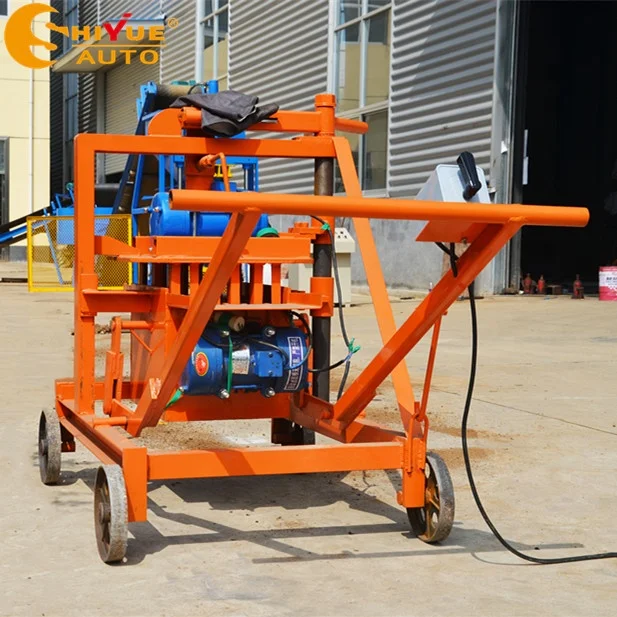
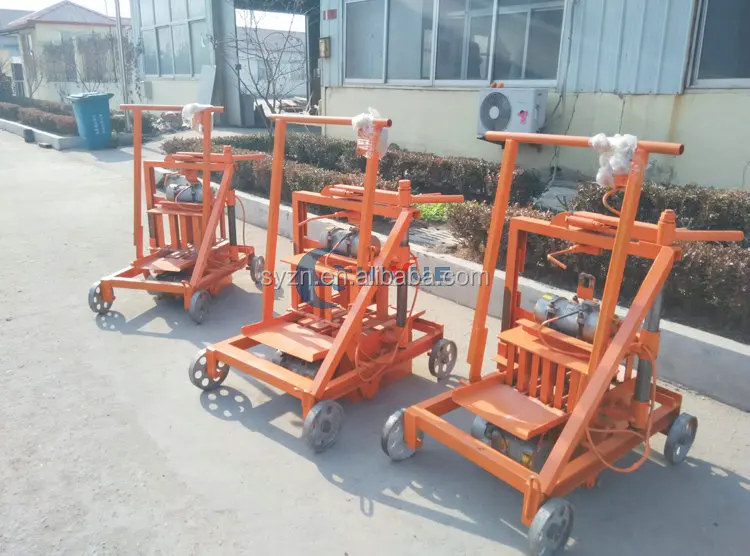
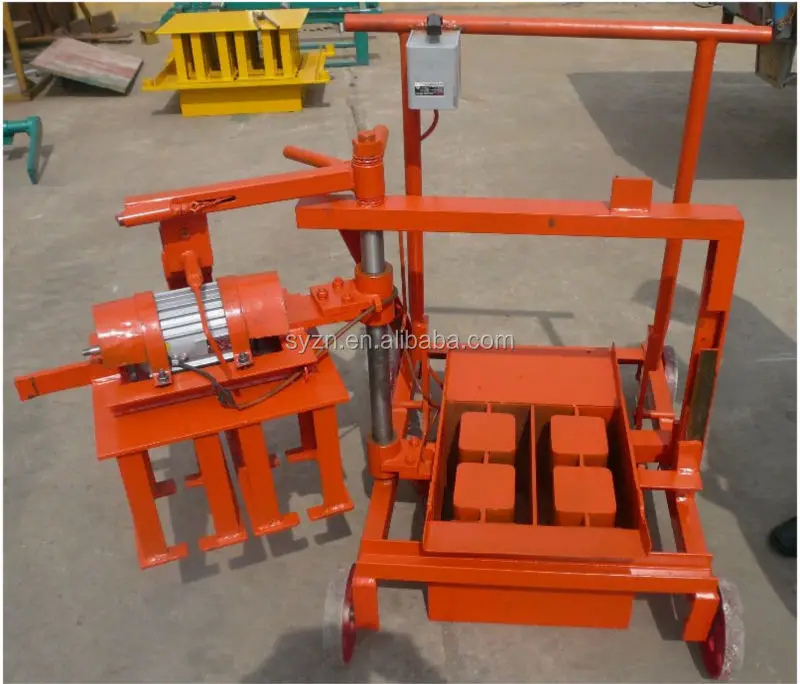
| Product Type | Mobile Concrete Block Making Machine |
| Operation Mode | Manual, egg-laying type |
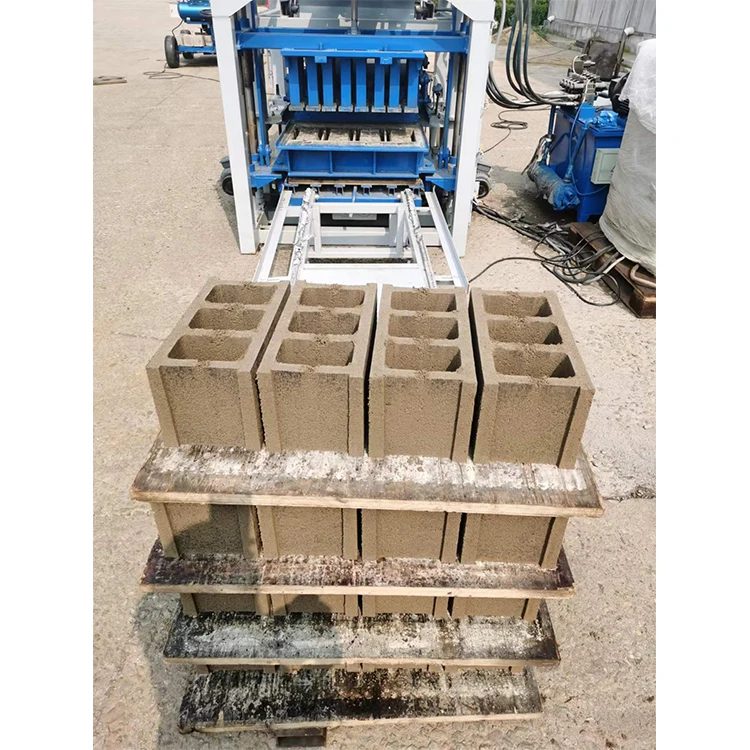
| Mould Options | 400×200×200 mm / 400×150×200 mm / 400×100×200 mm hollow brick |
| Pieces per Mould | 2 pcs (200 mm) / 3 pcs (150 mm) / 4 pcs (100 mm) |
| Cycle Time | 25–30 seconds per mould |
| Hourly Output | 160 pcs/h at 400×200×200 mm / 240 pcs/h at 400×150×200 mm / 320 pcs/h at 400×100×200 mm |
| Daily Output | 1,280 pcs/8 hr at 400×200×200 mm / 1,920 pcs/8 hr at 400×150×200 mm (basis to be confirmed for higher figures) / 2,560 pcs/8 hr at 400×100×200 mm |
| Pallet Requirement | None — blocks laid directly on ground |
| Power Source | Diesel engine (electric motor option available upon request) |
| Labor Requirement | 1–3 workers |
| Mobility | Freely movable across site, no fixed foundation |
| Control System | Manual operation, no PLC |
| Mould Change | Interchangeable moulds, manual swap |
| Overall Dimensions | To be confirmed at order |
| Net Weight | To be confirmed at order |
| Voltage & Frequency | Applicable to electric variant, confirm with destination grid |
Application Suitability
| Application | Material or Output |
|---|---|
| On-site hollow block production | Crushed stone, sand, cement and water mixed at project location |
| Small-scale block plants with no pallet infrastructure | Local river sand or manufactured sand with standard Portland cement |
| Remote or off-grid project sites | Engine-powered operation where grid electricity is absent or unreliable |
| First-time block production startups | Minimal capital entry with interchangeable hollow brick moulds |
| Multi-format hollow brick supply | Mould swaps between 200 mm, 150 mm and 100 mm wall thickness formats |
Why "Fast Delivery" Matters More Than Cycle Time When Your Site Is Waiting
A mobile block machine in stock that arrives next month is worth more than a faster machine still on the production floor.
Project contractors lose money every day a block supply gap stalls masonry crews. When the site engineer calls to ask where the bricks are, the answer cannot be "the factory is building the machine." Having the QMJ2-45 ready to ship means the machine is built, tested, crated, and waiting for container space. [NEED_CITE: construction project delay costs per day for masonry hold-ups in developing markets]
I once saw a housing project in Mombasa burn through two weeks of idle labor because the block machine was stuck in a six-week production queue. The contractor had compared cycle times across three quotes but never asked about the dispatch date. A mobile block machine with fast delivery from stock would have kept that crew laying blocks from week one.
Dispatch Timing That Matches Your Project Schedule
Buyers working to a project deadline need a mobile block machine in stock, not a catalogue lead time estimate. The QMJ2-45 is held as a stocked model along with its standard hollow brick moulds, so the gap between order confirmation and container loading stays short. Dispatch lead time is quoted upfront in the proposal, giving the buyer a realistic arrival estimate to plan around.
Container Loading and Machine Dismantling for Shipment
The egg-laying design means no pallet racks or curing systems need to fill the container alongside the press. The machine is dismantled into a compact shipping configuration, and container loading photographs are provided before the doors are sealed. Customs documentation is prepared to match the destination port’s clearance requirements. [NEED_CITE: standard container loading practices for manual mobile block machines]
How the Mould Range Covers Common Wall Thicknesses
The QMJ2-45 ships with interchangeable moulds for three hollow brick formats: 400×200×200 mm for load-bearing walls, 400×150×200 mm for partition walls, and 400×100×200 mm for non-structural applications. Each mould change is a manual swap done by the operator on site. The cycle time of 25–30 seconds per mould holds across all three formats, so switching between formats does not slow the crew down during a working shift.
Vibration, Mix Consistency and Local Aggregate
Block strength from an egg-laying machine depends on how well the vibration force consolidates the mix on the ground surface. A mix that works with standard graded sand may fail completely when the local aggregate is a high-clay red soil. I spent three days on a site in Kenya adjusting moisture content and vibration timing because the red soil stuck to the mould walls and tore the block faces on demoulding. Send a sample of your local sand and aggregate before shipment, and the machine is tested against your actual material. [NEED_CITE: effect of clay content in local aggregate on block demoulding quality]
What Happens When You Skip the Material Sample Step
Ordering without confirming the local mix design leads to blocks that crack during curing or crumble at the edges during handling. When the aggregate does not match what the machine was tested with, the operator spends days adjusting water ratios by trial and error while the site runs short on blocks. The waste from failed batches adds up quickly, especially on a manual machine where every block is lifted and placed by hand. [NEED_CITE: common causes of block rejection on small-scale mobile machines]
Why Stock Availability Beats Specification Shopping Here
Shandong Shiyue Intelligent Machinery keeps the QMJ2-45 as a stocked model because this machine serves buyers who cannot afford to wait. The dispatch timeline is confirmed at quotation stage, not after payment. Standard moulds ship with the machine, so the buyer does not face a second wait for tooling. Factory test records and packing photographs are shared before the container is sealed, and customs documentation is prepared to support clearance at the destination port.
Documentation & Verification
- Factory test record using buyer’s submitted aggregate sample before dispatch
- Machine specification sheet with confirmed mould format list and cycle times
- Container loading photographs showing dismantling configuration and securing
- Voltage and frequency confirmation document for electric motor variant
- Packing list and customs documentation matched to destination port requirements
- Operation and maintenance manual with wear parts list included in crate
Installation, Commissioning & Support
- No fixed foundation required; the QMJ2-45 operates on level compacted ground at your site
- Diesel engine variant runs independently of grid power; electric variant needs voltage confirmation before wiring
- Machine arrives partially dismantled; reassembly covers vibration motor, mould frame and wheels
- First production run supervised to set moisture ratio and cycle rhythm against your local aggregate
- Mould change procedure demonstrated for all supplied hollow brick formats during commissioning
- Wear parts list provided with recommended reorder intervals based on daily shift volume
What We Need to Move Forward
Tell us your target block format and daily output requirement so we match the correct mould to the machine before dispatch. Confirm whether the site has reliable grid electricity or needs the diesel engine variant. Share a sample or lab report of your local sand and aggregate so the factory test reflects your actual production conditions.
Frequently Asked Questions
Q: Which QMJ2-45 models and moulds are currently in stock, and how soon can they ship?
A: The QMJ2-45 is held as a stocked model with standard hollow brick moulds in 200 mm, 150 mm and 100 mm formats. Dispatch lead time is quoted in the proposal once the mould selection and power source are confirmed. Container booking follows shortly after factory testing is complete.
Q: How is the machine packed for shipping, and what documents come with it?
A: The machine is dismantled into a compact configuration for container loading. Photographs are taken before the container doors close. Shipping documents include a packing list, factory test record, operation manual, and customs clearance paperwork matched to your destination port.
Q: Should I choose the diesel engine or electric motor version?
A: The diesel engine suits remote sites with no grid connection or unreliable electricity. The electric motor variant requires confirmed voltage and frequency matching your local supply. Tell us your site conditions and we configure accordingly before production.
Q: Who handles setup after the machine arrives at my project site?
A: The QMJ2-45 requires no fixed foundation and can be reassembled by the crew using the included manual. Commissioning support covers first-run adjustments to match your local aggregate and mix proportions so the machine produces acceptable blocks from the first shift.
Q: Are spare moulds and wear parts included, and how fast can I reorder?
A: The machine ships with the moulds specified in your order. A wear parts list is included in the crate with recommended reorder intervals. Replacement moulds and parts are dispatched from stock, with lead time quoted at the time of your reorder request.