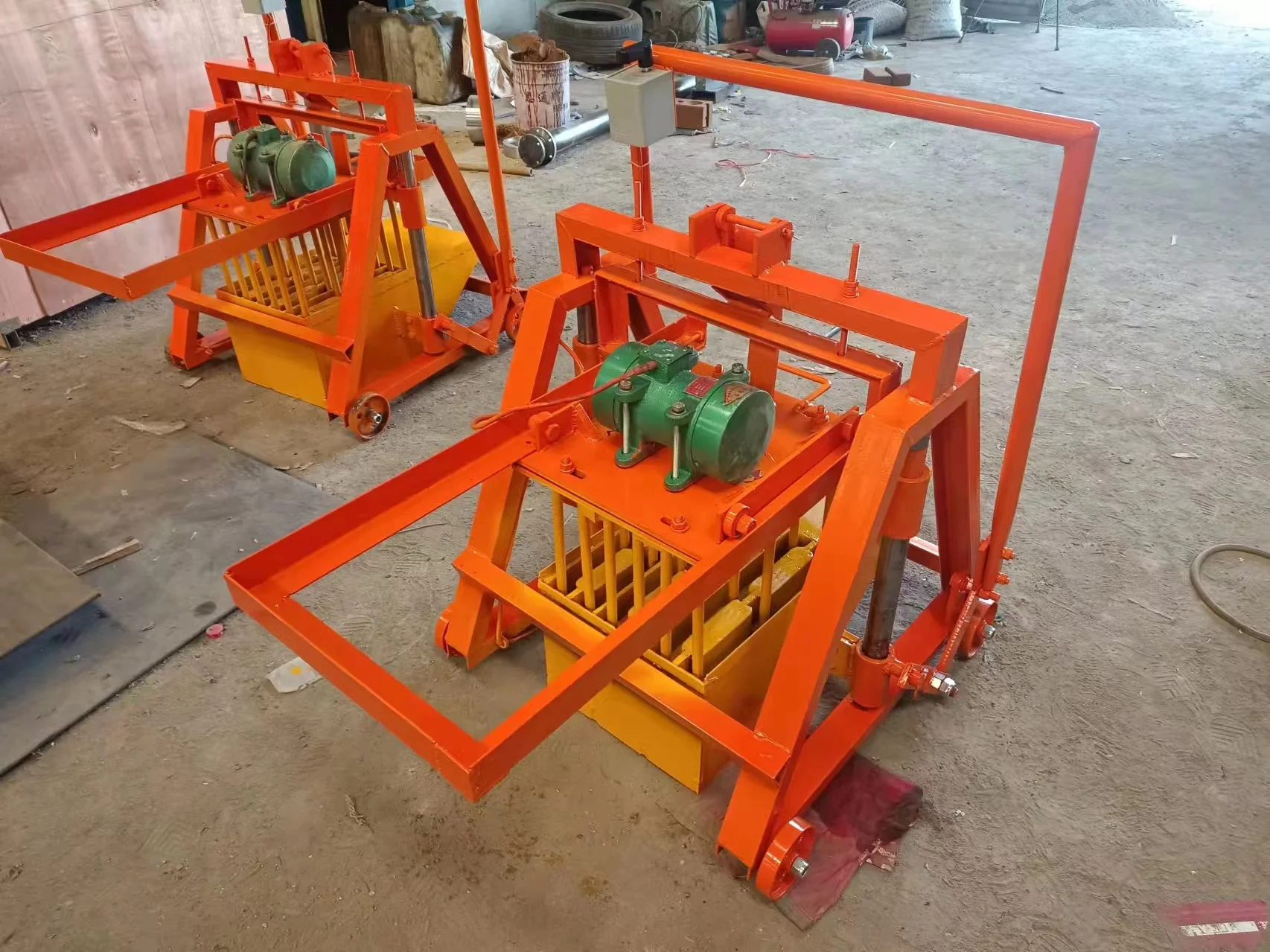

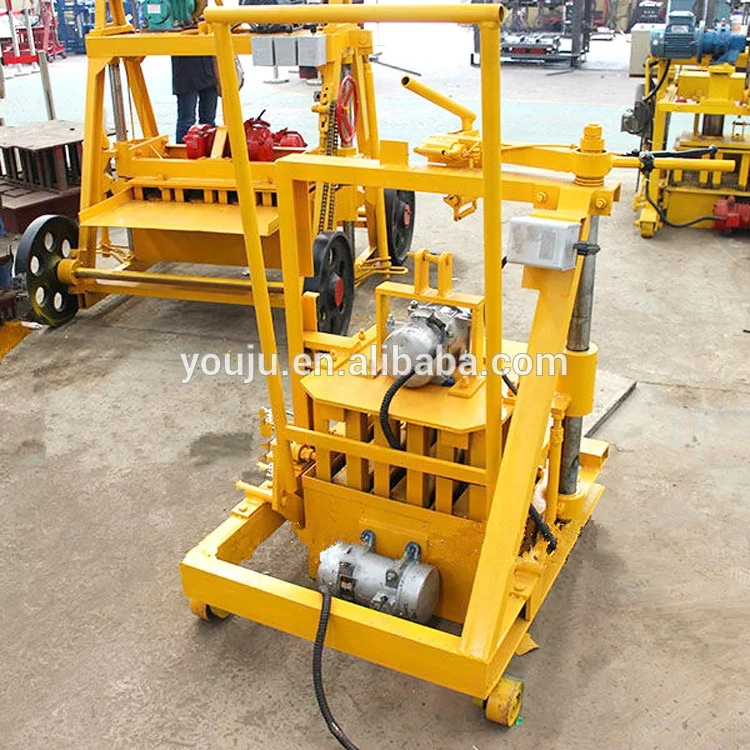
Description
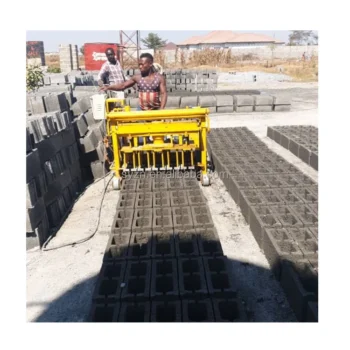
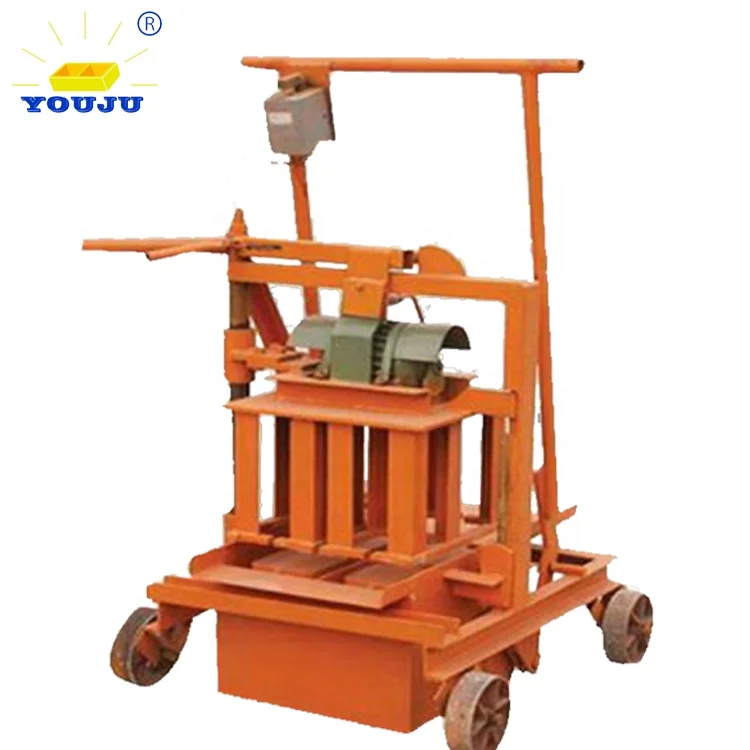
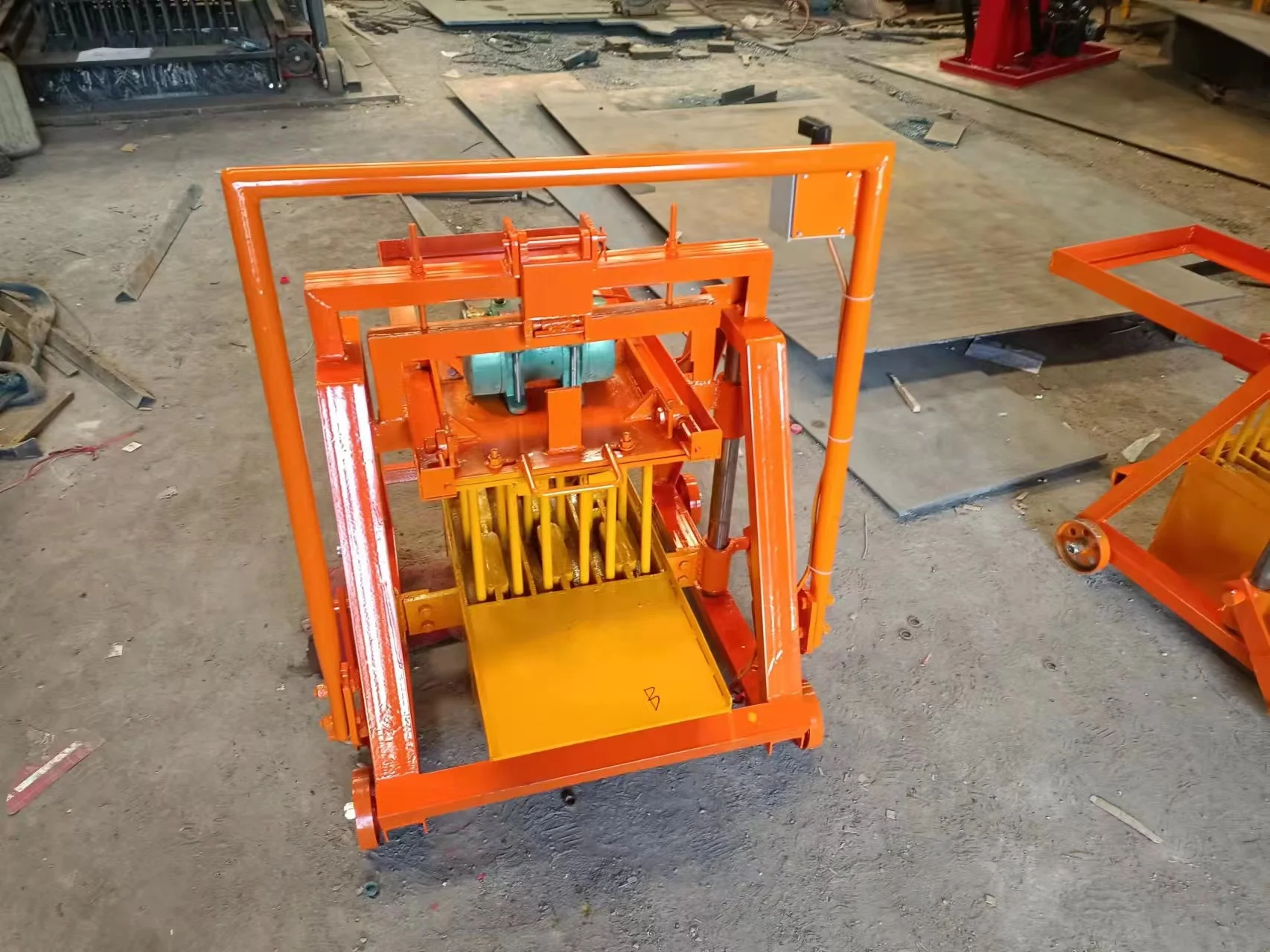
Stocked for fast dispatch — the QMJ2-45 mobile block machine sits in our Linyi warehouse ready for container loading, with standard hollow brick moulds and confirmed voltage matched to your project site before the crate is sealed.
Technical Specifications
| Parameter | Value |
|---|---|
| Model | QMJ2-45 |
| Product Type | Mobile Block Making Machine |
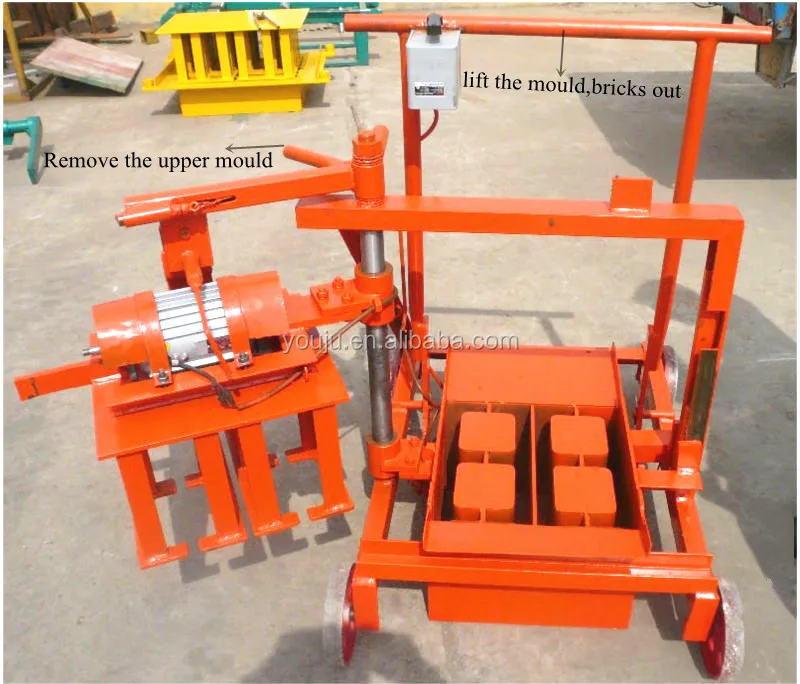
| Operation Mode | Manual mobile egg-laying, pallet-free |
| Mould Format | Hollow brick (multiple sizes supported via mould change) |
| Output Capacity | 160 pcs/h based on 400×200×200mm hollow brick (2 pcs/mould) |
| Output Capacity | 320 pcs/h based on 400×100×200mm hollow brick (4 pcs/mould) |
| Daily Output (8hr) | 1,280 pcs based on 400×200×200mm; 2,560 pcs based on 400×100×200mm |
| Cycle Time | 25–30s (basis to be confirmed depending on block format and mix) |
| Power Source | Electric motor |
| Labor Requirement | 1 to 3 workers |
| Pallet Requirement | None — egg-laying directly on the ground |
| Portability | Hand-pushed, free movement on-site |
| Certification | ISO 9001:2000, CE |
Application Suitability
| Application | Material or Output |
|---|---|
| Small-scale on-site hollow brick production | Crushed stone, cement, sand and water |
| Construction contractors producing blocks at project locations | Hollow bricks in 400×200×200mm, 400×150×200mm and 400×100×200mm |
| Entrepreneurs launching a first block plant | Low-investment setup with no fixed factory infrastructure required |
| Mobile production without a fixed plant | Pallet-free egg-laying directly on compacted ground |
Why Voltage Confirmation Must Happen Before the Crate Is Sealed
A mobile block machine in stock fast delivery means nothing if the motor cannot start when it arrives on your site.
I spent years on the assembly floor in Linyi before moving into order fulfillment and logistics. Early on, a QMJ2-45 shipped overseas without anyone double-checking the destination voltage. The machine sat idle for three weeks while a replacement motor was sourced locally. That delay ate into the contractor’s entire project timeline. Now, every QMJ2-45 leaving our warehouse has its voltage, frequency, and control panel language verified against the buyer’s actual site supply before packing begins [NEED_CITE: voltage and frequency standards by export market].
Pallet-Free Operation Eliminates a Hidden Cost
Traditional block lines require a fleet of pallets and a separate handling system to feed, collect, and return them. The QMJ2-45 removes that entire layer. The machine lays eggs — meaning it deposits blocks directly onto the ground as the operator pushes it forward. There is no pallet purchase, no pallet storage, and no pallet return cycle to manage. For a contractor working a tight construction deadline, this means fewer dependencies between the block machine and the rest of the site logistics.
Dispatch Speed Without Cutting Verification Corners
Having the QMJ2-45 stocked means the machine itself is ready, but a stocked unit still needs its mould set matched, its electrical system confirmed, and its packing plan finalized before it enters a container. The mobile block machine in stock fast delivery promise holds only when every one of those steps is completed before dispatch rather than discovered at the port of arrival. Our Linyi warehouse keeps standard hollow brick moulds alongside the machines so a complete set — machine plus moulds — can move together in a single shipment.
Reading the Specs That Actually Matter on Site
The cycle time of 25–30 seconds is often quoted, but it depends on block format, wall thickness, and the concrete mix being used. A denser mix with a higher aggregate ratio may slow the cycle, while a lighter mix may shorten it. That is why the output figures above each carry a specific block size as their basis. The hand-pushed mobility means the operator controls travel speed, which in turn affects block spacing on the ground. Adequate curing space must be planned so that freshly laid blocks are not disturbed before initial set. One to three workers can run the machine: one operating the controls, one or two handling raw material feed and site movement [NEED_CITE: concrete curing time and handling standards].
What Happens When Dispatch Is Rushed Past Verification
A machine that ships without confirmed electrical specs can stall an entire project. The contractor has already scheduled labor, ordered raw materials, and committed to a construction timeline. When the QMJ2-45 arrives and the local grid cannot power it, every downstream activity freezes. That idle period compounds into penalties on the construction contract. Similarly, if the mould set does not match the block size the local market actually buys, the buyer is stuck producing inventory that sits unsold [NEED_CITE: construction project delay costs from equipment mismatch].
Why Buyers Source This Machine Through Our Warehouse
The QMJ2-45 is one product in a focused block machinery range — we do not spread attention across unrelated equipment categories. Machine, mould, and handling are specified as a matched set rather than assembled from separate suppliers. Stocked units carry standard hollow brick moulds designed for the formats most commonly sold in export markets. Voltage, frequency, and control panel language are confirmed per order so that commissioning on arrival is straightforward. Container loading plans are prepared with dismantling points marked so reassembly on site requires no guesswork.
Documentation & Verification
- Line layout sketch showing production and curing area for the QMJ2-45 footprint
- Machine specification sheet with confirmed voltage and frequency per order
- Mould drawing and hollow brick format list included with each shipment
- Factory test record on your selected block size before dispatch
- Packing photographs showing dismantling and container loading
- Operation and maintenance manual with language matched to operator preference
Installation, Commissioning & Support
- QMJ2-45 requires compacted ground with no fixed foundation for egg-laying operation
- Electric motor confirmed to buyer’s site voltage and frequency before packing
- Machine arrives partially dismantled with reassembly markings on each joint
- First-run commissioning includes cycle timing on the buyer’s actual mix design
- Operator training covers mould change procedure and daily maintenance checks
- Wear parts list provided with reorder intervals for mould and motor components
What We Need to Move Your Order Forward
Share the block size your market sells, your target daily output, and the raw materials available locally so we can match the right mould and confirm realistic capacity. Confirm your site voltage and frequency, along with the language you need on the control panel, so we lock those in before packing. Let us know your project deadline and destination port so we can quote a container loading plan and arrival timeline.
Frequently Asked Questions
Q: What is the dispatch lead time for a stocked QMJ2-45 and standard mould set?
A: Stocked units are available for container loading once voltage, frequency, and mould selection are confirmed. Standard hollow brick moulds are kept alongside machines in our Linyi warehouse, so a matched set can move in a single dispatch cycle. Lead time depends on packing preparation and your chosen shipping schedule.
Q: How is the machine packed and loaded for container shipment?
A: The QMJ2-45 is partially dismantled at marked joints to fit container dimensions efficiently. Moulds and spare wear parts are packed alongside. Packing photographs are taken and shared before the container is sealed so the buyer can verify load condition and plan reassembly.
Q: What voltage and frequency options are available from stock?
A: The electric motor can be configured to match common international voltage and frequency standards. Confirmation must be completed before dispatch so the correct motor is installed and tested. This prevents the on-site delays that occur when electrical specifications are assumed rather than verified.
Q: Which hollow brick moulds are in stock and what is the lead time for custom formats?
A: Standard hollow brick moulds in 400×200×200mm, 400×150×200mm, and 400×100×200mm are kept in stock alongside machines. Custom mould formats are produced to buyer drawings, with lead time quoted after design confirmation. Standard moulds ship with the machine; custom moulds may follow separately if production timing requires it.