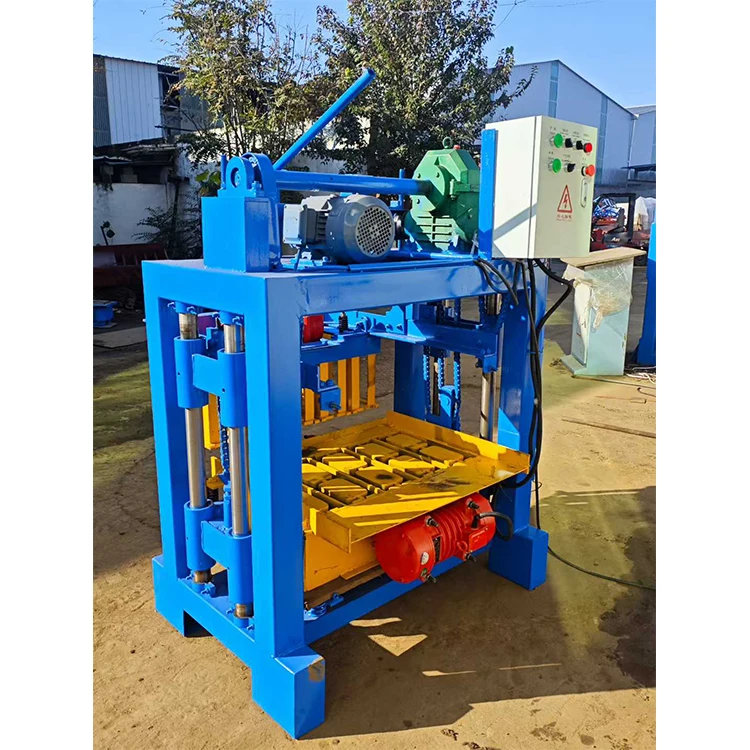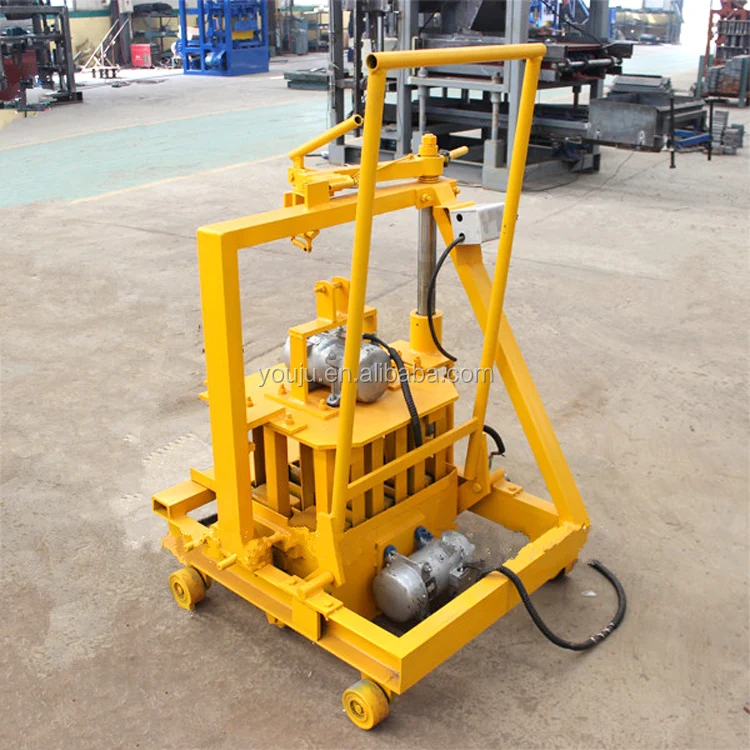


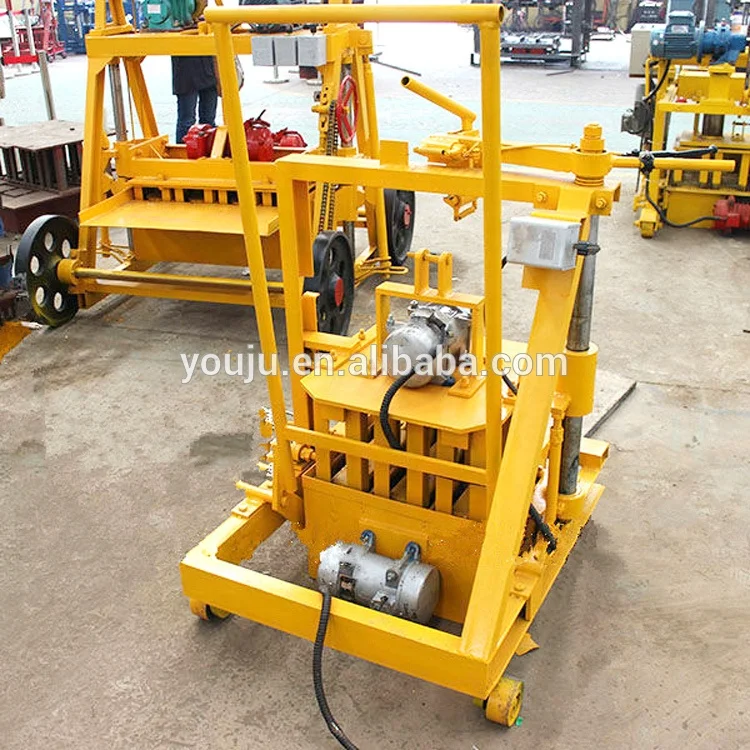

Description
Stocked and container-ready — the QMJ2-45 mobile block machine ships from inventory with confirmed dispatch lead times, so your project site is not left waiting for production slots to clear.
Technical Specifications
| Parameter | Value |
|---|---|
| Model | QMJ2-45 |
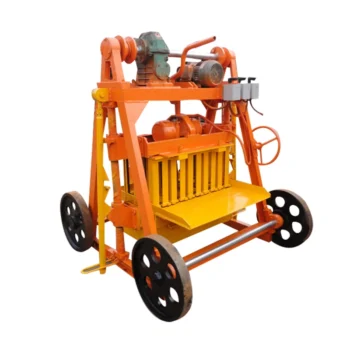
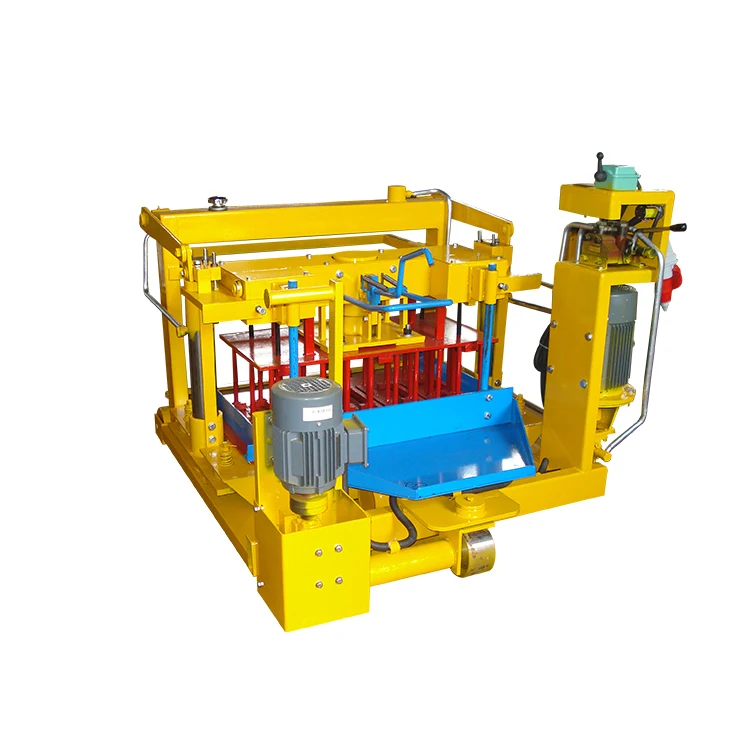
| Product Type | Mobile Egg-Laying Block Making Machine |
| Machine Type | Mobile / egg-laying (no pallets required) |
| Power Source | Electric engine |
| Operation | Manual mobile block machine |
| Labor Requirement | 1 to 3 workers |
| Mould Change | Capable of producing different hollow brick types through changing moulds |
| Cycle Time | 25–30 s per mould |
| Output (400×200×200 mm hollow) | 2 pcs/mould, 160 pcs/h, 1,280 pcs/8 hr |
| Output (400×100×200 mm hollow) | 4 pcs/mould, 320 pcs/h, 2,560 pcs/8 hr |
| Control System | Manual operation |
| Hydraulic Pressure | Not applicable (egg-laying type) |
| Pallet Size | Not applicable (pallet-free design) |
| Certification | ISO 9001:2000, CE |
Application Suitability
| Application | Material or Output |
|---|---|
| On-site construction block production | Crushed stone, sand, cement for hollow blocks laid directly on ground |
| First block plant with limited capital | Local aggregate and cement without pallet handling infrastructure |
| Remote or rural building projects | Electric-powered hollow block production without fixed plant setup |
| Contractor self-supply on housing developments | Multiple hollow brick formats from a single machine through mould changes |
What "Ready to Ship" Actually Means for Your Timeline
Stock availability only matters if the voltage, mould configuration, and container loading plan are confirmed before dispatch.
A mobile egg-laying machine sitting in a warehouse is not the same as a machine configured for your destination market. I have watched QMJ2-45 mobile block machine orders stall at the factory gate because the buyer assumed 380V/50Hz was universal, or because the moulds loaded into the container did not match the block format the local market actually buys. Dispatch speed collapses the moment a voltage mismatch or a wrong mould size is caught during pre-shipment inspection. [NEED_CITE: voltage and frequency standards by export market]
Container Loading and Dispatch Sequence
The QMJ2-45 mobile block machine in stock fast delivery status means the base unit is assembled and factory-tested, not that every order variation can leave the same week. Mould selection, voltage confirmation, and any additional moulds sharing container space must be locked in before the packing team starts dismantling. A standard 20-foot container typically holds the machine plus a set of moulds, but the exact loading plan depends on which hollow brick formats you confirm.
Arrival Estimate and What Controls It
Once the QMJ2-45 is loaded and customs documentation is filed, transit time depends entirely on the destination port and shipping line schedule. The variable that buyers often underestimate is the pre-dispatch window — the time between order confirmation and the machine actually entering the container. Voltage rewinding, mould fabrication for non-standard sizes, and control panel language changes all add days before the machine ever reaches the loading bay. [NEED_CITE: typical ocean freight transit windows by region]
Reading the Specs That Matter on Site
The 25–30 second cycle time applies per mould across all listed hollow brick formats, meaning the actual hourly output shifts depending on which block size you are running. At 400×200×200 mm, you get 2 pieces per mould cycle; at 400×100×200 mm, the same cycle yields 4 pieces. This is not a machine that produces one fixed output number — it produces what the mould dictates, and the labour team keeps pace with. The electric engine removes diesel supply logistics from remote sites, but it demands a stable power source at the voltage and frequency your destination market uses. Manual operation means 1 to 3 workers handle feeding, moving, and mould changes without PLC automation smoothing out the rhythm.
When the Wrong Configuration Costs You Weeks
Ordering a QMJ2-45 without confirming the destination voltage is the most common reason a supposedly fast-dispatch machine sits in a port warehouse awaiting an electrician. The second is specifying a single mould size when the local market demands two or three hollow block formats — the machine arrives, production starts, and then the buyer realises half their orders cannot be fulfilled until a second mould ships separately. These are not factory defects. They are configuration gaps that turn a stocked machine into a delayed project. [NEED_CITE: common export machinery commissioning delays]
Why Buyers Source This Machine Here
Block machinery is the single focus of this operation, so the QMJ2-45 is specified as a matched system — machine, mould, and handling logic confirmed together rather than assembled from separate suppliers. Stock availability is quoted against actual warehouse inventory, not production forecasts. Dispatch lead times include the pre-shipment configuration window, not just the day the crane lifts the container. Factory test records are generated before dismantling, so you see the machine running before it is packed. Mould design covers the formats your market sells, with custom drawings available if standard sizes do not match local demand.
Documentation & Verification
- Factory test record on your specified hollow brick format before dismantling
- Voltage and frequency confirmation sheet signed before production release
- Packing photographs showing machine condition and container loading method
- Mould drawing and format list matching your confirmed block sizes
- Operation manual covering mould change procedure and daily maintenance
Installation, Commissioning & Support
- Level ground surface required — no fixed foundation or curing rack infrastructure needed
- Electric power supply must match confirmed voltage and frequency before machine arrival
- Machine arrives partially dismantled for container loading — reassembly on site with basic tools
- First production run supervised to confirm cycle rhythm and block consistency with local aggregate
- Mould change training included so operators can switch hollow brick formats independently
- Wear parts list provided with recommended replacement intervals based on local material abrasiveness
What We Need to Confirm Your Dispatch Date
Provide the hollow block formats your market actually sells, the voltage and frequency at your project site, and whether additional moulds need to share the same container. If your local aggregate has high clay content or unusual grading, share a material sample description so the mix expectations are realistic before the machine ships.
Frequently Asked Questions
Q: Is the QMJ2-45 currently in stock and what is the dispatch lead time?
A: The base machine is held in stock, but dispatch lead time depends on voltage confirmation, mould selection, and any additional moulds added to the container. Once configuration is locked, the pre-shipment window covers factory testing, dismantling, and container loading. Typical dispatch follows within a standard multi-week window after all specifications are confirmed.
Q: How is the machine packed and loaded into a container for shipment?
A: The QMJ2-45 is partially dismantled to fit a standard shipping container, with moulds and any additional equipment loaded alongside. Packing photographs are taken before the container is sealed so you can verify machine condition and loading method. The exact container type depends on how many moulds and accessories are included.
Q: What voltage and frequency configurations are available from stock?
A: The base machine is configurable to different voltage and frequency standards, but the specific configuration must be confirmed before dispatch. Stock units are rewired or adjusted during the pre-shipment window to match your destination market requirements. Confirming this early prevents delays at the port of arrival.
Q: Which mould sizes ship with the machine and can additional moulds be included?
A: Standard hollow brick mould sizes are available, and additional moulds can share the same container if space allows. The mould format list must be confirmed against your actual market demand before loading. Custom mould drawings are also available if your local market requires non-standard block dimensions.
Q: What is the arrival estimate from order confirmation to port of destination?
A: Arrival timing depends on the pre-shipment configuration window plus ocean freight transit to your port. Once the QMJ2-45 is loaded and documentation is filed, the shipping line schedule determines the remainder. Confirming voltage, mould sizes, and any accessories early compresses the pre-dispatch portion of the timeline.