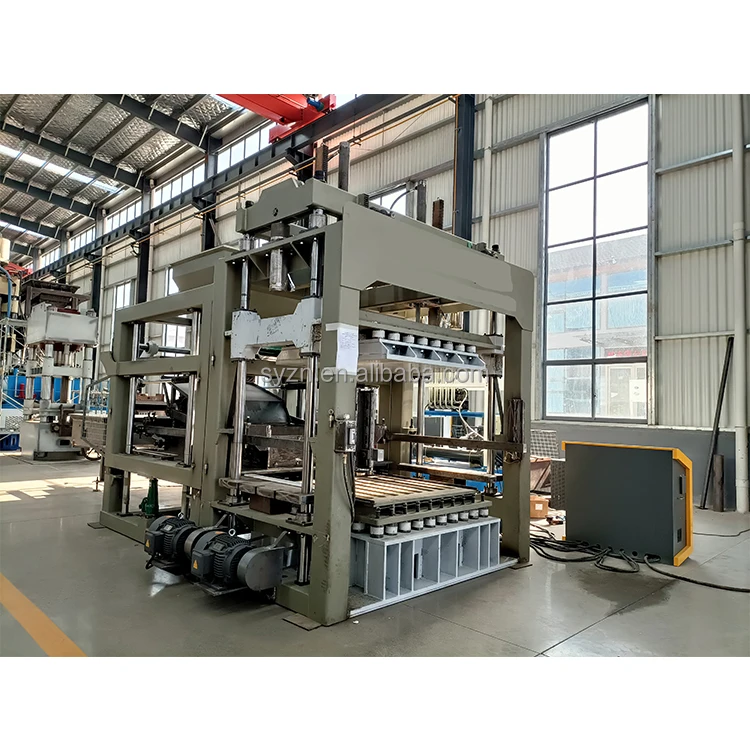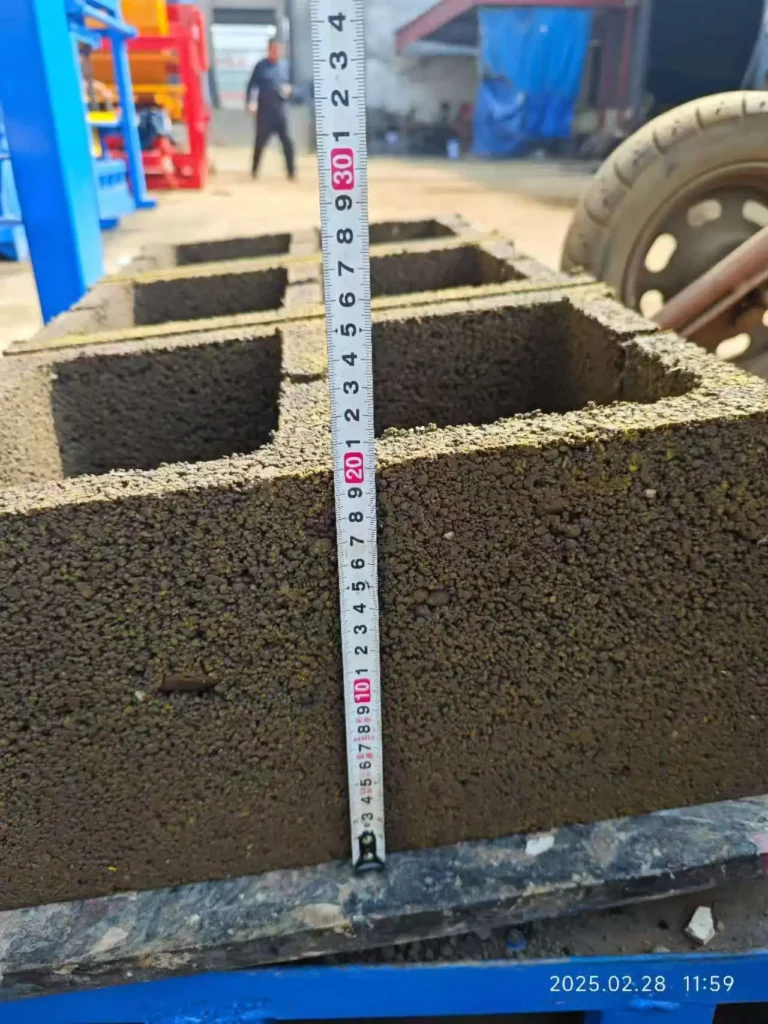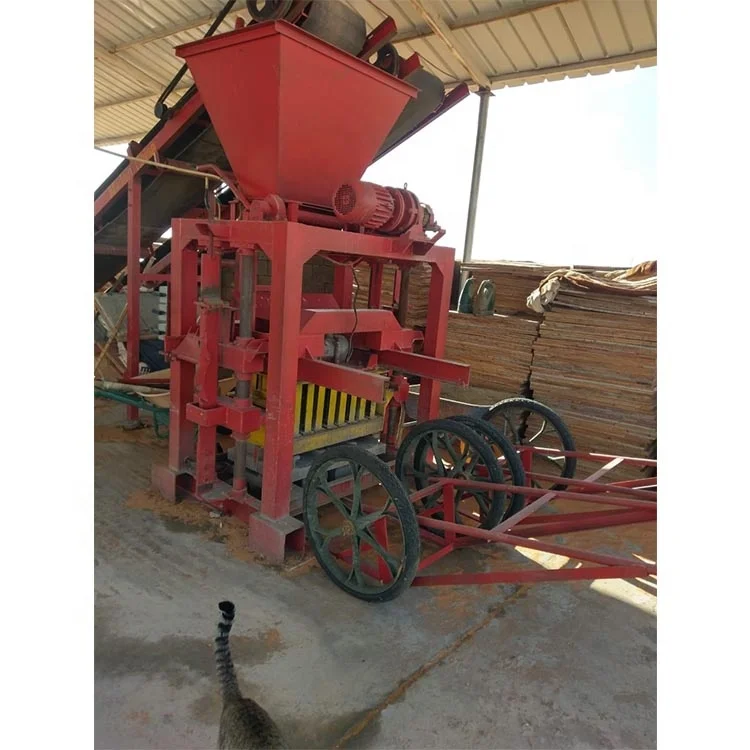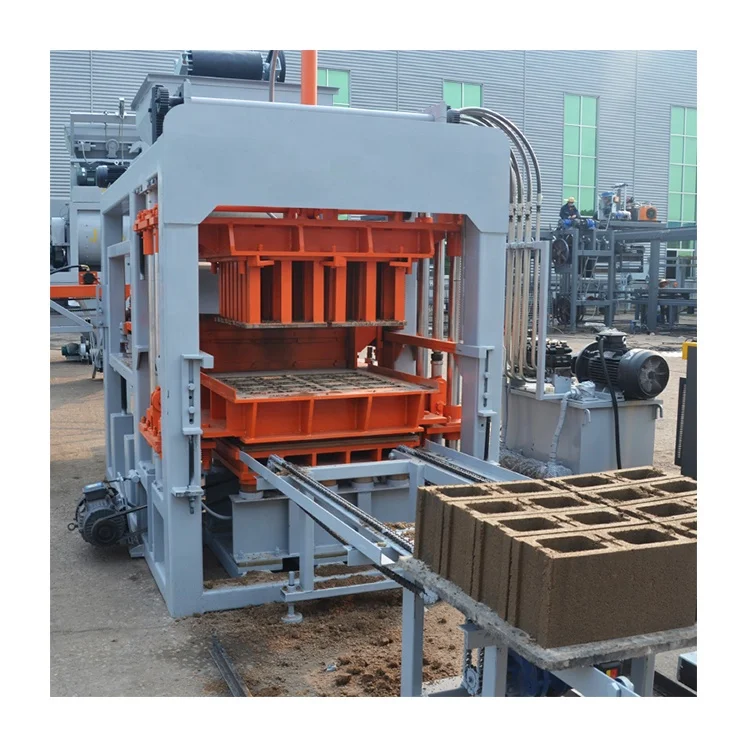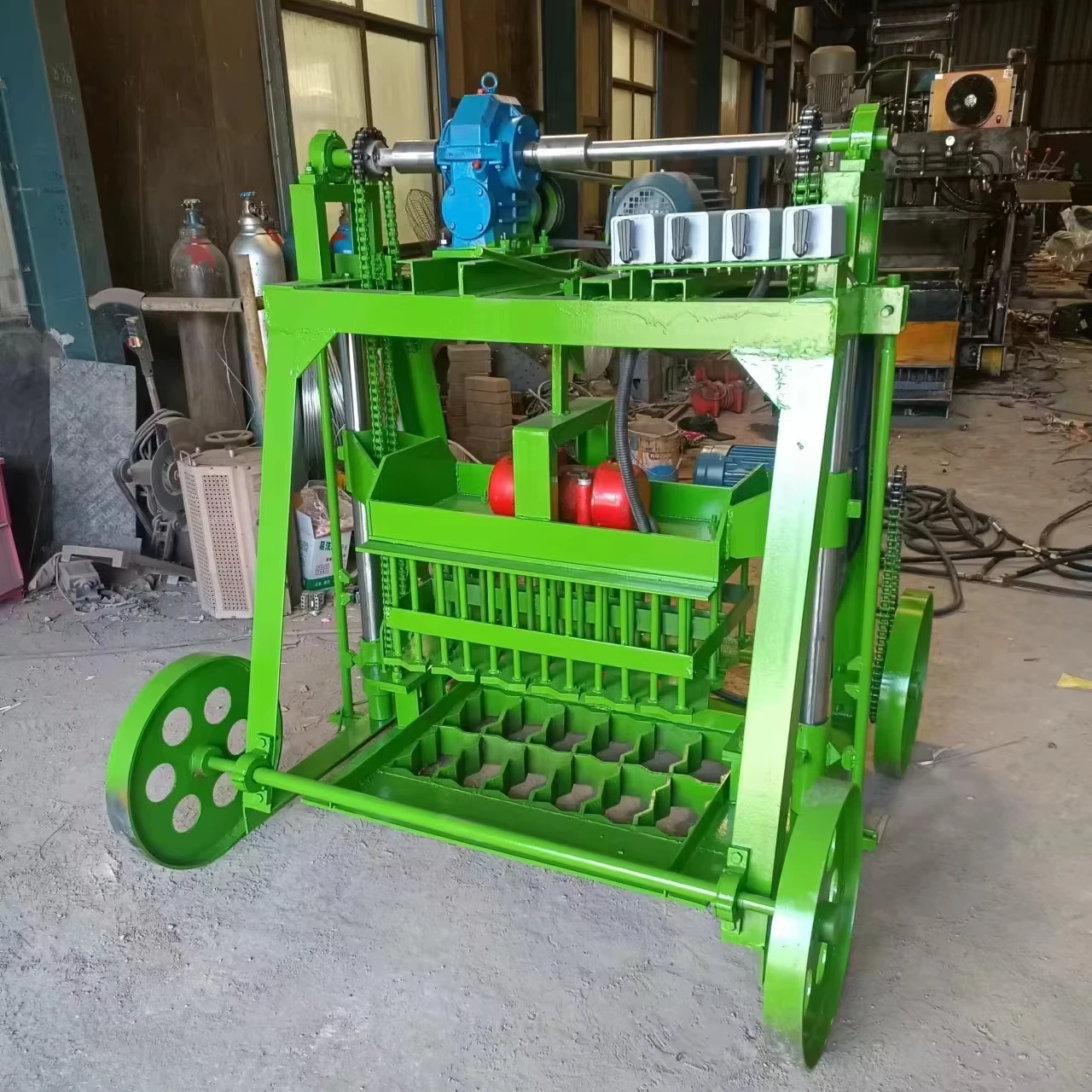
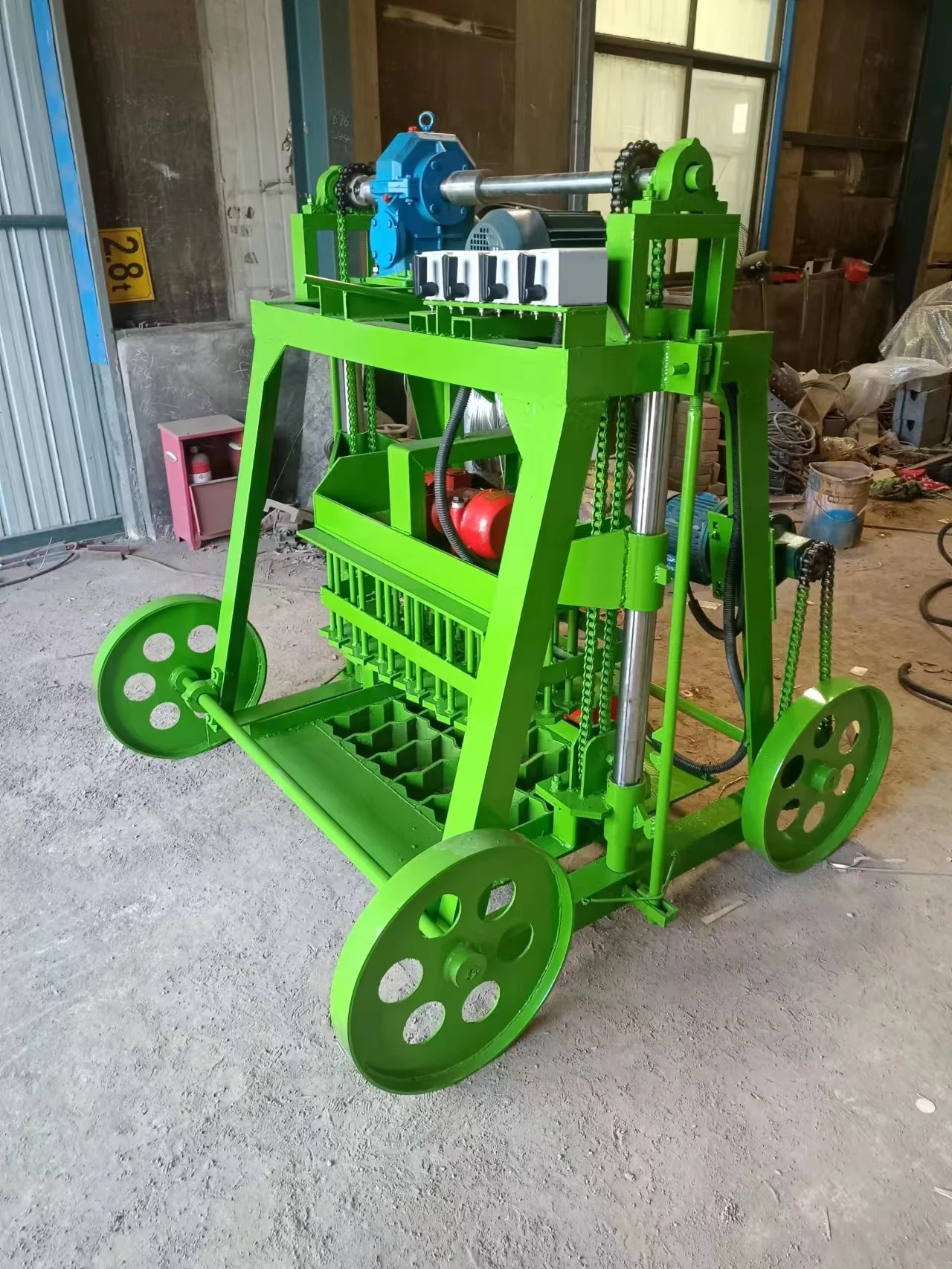
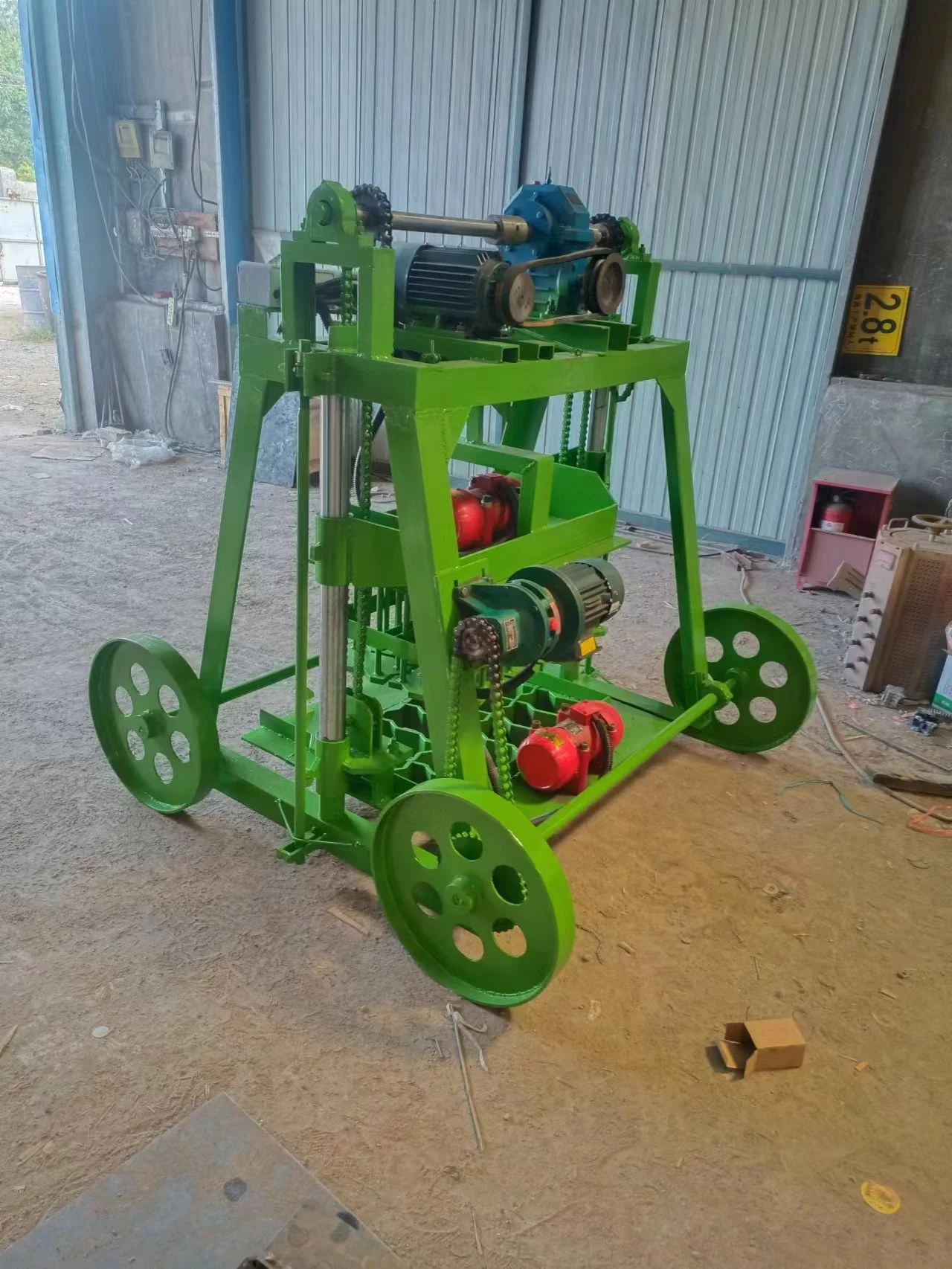
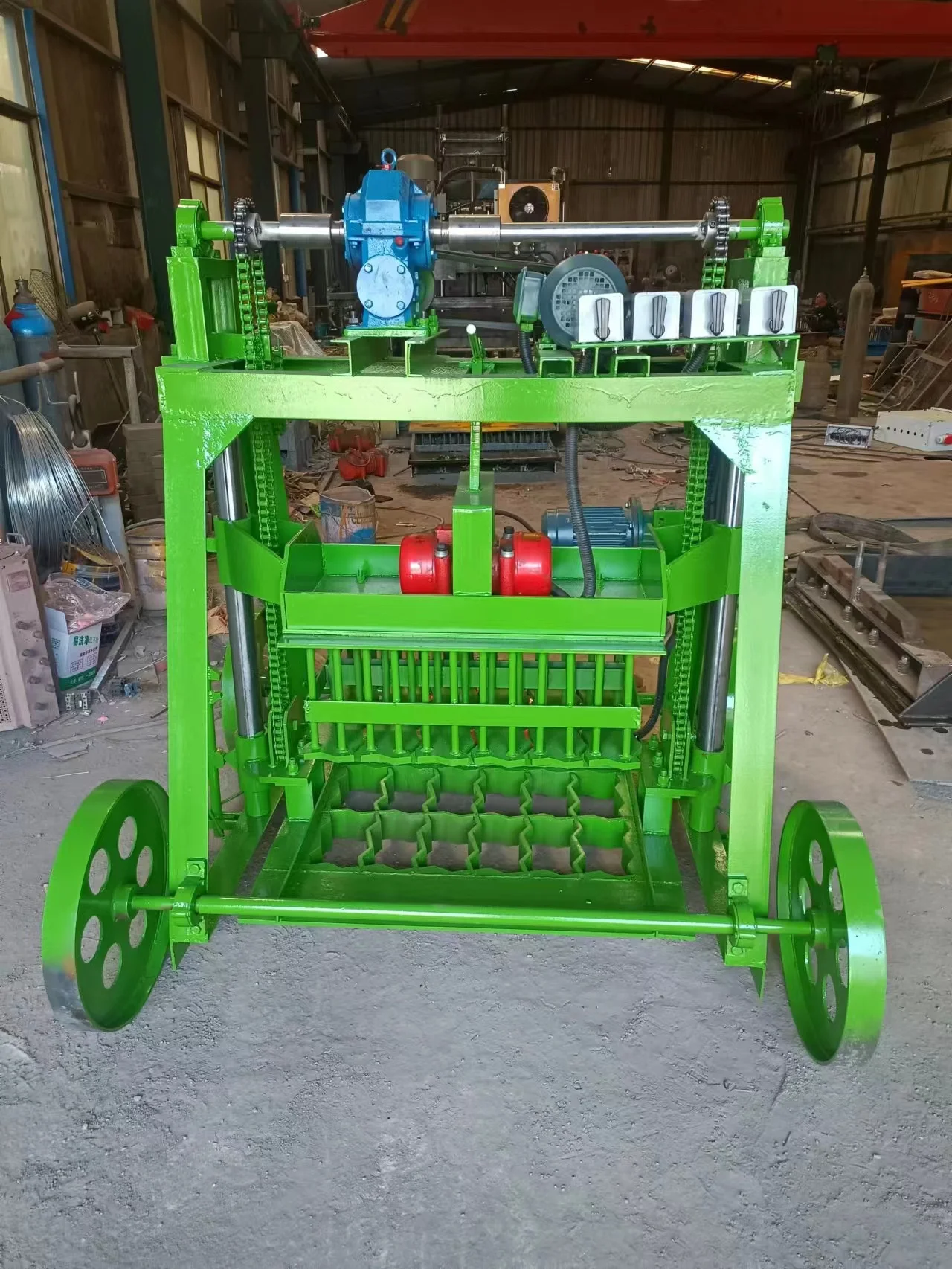

Description
Compact dispatch-ready block production — the QMJ4-45 mobile egg laying block machine in stock ships dismantled for single-container loading and runs on its own diesel or petrol engine, so site blocks are produced days after arrival rather than months after a fixed plant is built.
Technical Specifications
| Parameter | Value |
|---|---|
| Model | QMJ4-45 |
| Product Type | Mobile Egg Laying Block Making Machine |
| Molding Capacity | 4 pcs/mould (basis: 400×200×200mm hollow block) |
| Vibration Frequency | 2400 r/m |
| Daily Productivity | 2600–4000 pcs/day (basis not stated in source — confirm block format / material / thickness) |
| Vibration Method | Mold vibration |
| Demold Method | Manual |
| Turning Method | Manual |
| Total Power | 6 kW |
| Power Source | Diesel / Petrol engine |
| Molding Cycle | 40–45 s |
| Automation Level | Manual operation |
| Pallet Requirement | No pallets required (egg-laying type) |
Application Suitability
| Application | Material or Output |
|---|---|
| On-site hollow block production | Cement, crushed stone, river sand, and local aggregate mixes without fixed plant setup |
| Small-scale cement block manufacturing | Standard concrete mixes at existing construction sites with ground-level curing space |
| Paving block and standard brick production | Appropriate mould swaps on the same engine-driven chassis |
| Remote or off-grid project sites | Diesel or petrol engine operation where grid power is unavailable |
| Entrepreneur first block plant | Low initial investment entry with manual operation and no pallet inventory required |
What "Ready to Ship" Actually Means for a Mobile Egg Laying Block Machine in Stock
Dispatch speed only matters if the machine arrives configured for your site conditions.
Buyers working to a project deadline often assume a stocked machine is a solved problem. The reality is that a mobile egg laying block machine in stock still requires confirmation on engine type, mould format, and container loading plan before it leaves the factory floor. I have seen machines arrive at port only to discover the wrong voltage or an incompatible mould, turning a fast dispatch into a multi-week delay while replacements are sourced [NEED_CITE: common customs and specification mismatch delays in machinery imports]. The lead time advantage of a QMJ4-45 block machine fast delivery only holds when every specification is locked at the order stage.
Engine-Driven Independence for Remote Project Timelines
The QMJ4-45 runs on a 6 kW diesel or petrol engine, removing electrical grid dependency entirely. This is the defining advantage for construction contractors operating on housing developments or infrastructure projects where grid power is either unavailable or unreliable. The engine-driven configuration means the machine can be offloaded, fuelled, and producing hollow blocks within hours of site arrival, compressing the gap between container delivery and first block output to a single working shift.
Container Loading and Machine Dismantling for Fast Dispatch
The machine dismantles into a configuration that fits a standard shipping container, which simplifies freight booking and reduces the window between order confirmation and vessel departure. A QMJ4-45 block machine fast delivery depends on how the chassis, mould, and engine are secured and documented for transit. Packing photographs and a detailed packing list are essential verification steps before the container is sealed, ensuring nothing arrives loose or missing at destination [NEED_CITE: standard container loading practices for heavy machinery].
Mould Formats and Cycle Times Available From Stock
The QMJ4-45 ships with hollow block moulds in three standard formats: 400×200×200mm producing 4 pcs/mould, 400×150×200mm producing 5 pcs/mould, and 400×120×200mm producing 6 pcs/mould. Each format runs a 40–45 second molding cycle. Buyers need to confirm which format their local market actually sells before the machine is dispatched, because swapping moulds after arrival still requires manual changeover and a production pause. The 2400 r/m vibration frequency is set at the factory and works across all three formats, but the aggregate mix must be confirmed separately to avoid strength issues on site.
Specification Interpretation for On-Site Block Production
The 2400 r/m vibration frequency works in combination with mold vibration as the consolidation method, meaning the concrete mix is compacted directly through the mould walls rather than through a table or platform. For hollow block production, this requires a mix design with sufficient fine aggregate to flow into narrow mould cavities under vibration without segregating. The 6 kW total power rating covers both the engine and the vibration motor, which is a modest power envelope suited to the machine’s manual operation and single-mould output. Manual demolding and turning mean the operator physically handles each cycle step, which keeps the machine mechanically simple but limits the sustainable daily rhythm to what one operator can maintain over an eight-hour shift. The absence of any pallet requirement — blocks are laid directly on prepared ground — eliminates an entire logistics chain of pallet procurement, handling, and return, but demands a flat, level curing area adjacent to the production position.
The Cost of Skipping Configuration Confirmation Before Dispatch
A stocked machine shipped without confirming the buyer’s local aggregate, target block format, and site conditions arrives as a mechanical problem rather than a production solution. I have seen QMJ-class machines arrive with a mould format the buyer’s market did not purchase, forcing a second mould order while the original sat idle. Vibration frequency mismatch with the buyer’s mix design produces blocks that crumble at the curing stage, requiring on-site parameter adjustment that delays the project timeline by weeks [NEED_CITE: aggregate and vibration frequency matching in concrete block production]. The fast delivery advantage evaporates when the machine needs commissioning intervention that should have been resolved at the quotation stage.
Why Source This Machine Through a Stock-and-Delivery Focused Supplier
Stock confirmation is provided in writing with the specific models and moulds available, not a generic catalogue promise. Container loading plans include dismantling configuration, securing methods, and packing photographs before the container is sealed. Arrival estimates are quoted upfront based on the destination port, giving the buyer a timeline to build a project schedule around. Customs documentation including HS code and commercial invoice is prepared in advance to prevent clearance delays [NEED_CITE: HS code classification and customs documentation for block making machinery]. Mould and wear parts availability is confirmed at order stage so that the first replacement cycle does not interrupt production.
Documentation & Verification
- Stock confirmation letter listing specific QMJ4-45 units and mould formats currently available for dispatch
- Container loading plan with dismantling configuration, securing method, and packing photographs
- Commercial invoice and HS code prepared for destination customs clearance
- Factory test record demonstrating cycle timing on the buyer’s confirmed block format before shipment
- Operation manual covering engine starting procedure, mould change sequence, and daily maintenance checkpoints
Installation, Commissioning & Support
- Flat, compacted ground area required adjacent to production zone for egg-laying block curing without pallets
- Diesel or petrol fuel supply arranged on site before machine arrival to enable immediate engine start
- Machine reassembly from container-dismantled state using basic hand tools and the supplied chassis bolt pattern
- First production run supervised to confirm 40–45 second cycle timing against the buyer’s local aggregate mix
- Operator training covering manual demold technique, mould format changeover, and vibration motor inspection
- Wear parts list provided at order stage identifying mould liners and vibration motor brushes as priority spares
What to Prepare Before Requesting a Dispatch Quote
Buyers should confirm their target block format, the local aggregate type available at the project site, and whether diesel or petrol engine operation is preferred for their operating conditions. Providing the destination port allows an estimated arrival timeline to be quoted alongside the dispatch lead time. Confirming site ground conditions for egg-laying block curing ensures the machine is suited to the project environment before the order is placed.
Frequently Asked Questions
Q: Which QMJ4-45 configurations and moulds are currently in stock and ready to ship?
A: Available stock is confirmed in writing at the time of inquiry, specifying which engine type (diesel or petrol) and which hollow block mould formats (400×200×200mm, 400×150×200mm, or 400×120×200mm) are ready for immediate container loading. Buyers should request this written confirmation rather than relying on catalogue listings.
Q: What is the dispatch lead time from order confirmation to container loading?
A: Once the machine configuration and mould format are confirmed and the order is placed, the machine is dismantled and secured for container loading within a typical dispatch window. The exact loading date is provided in writing at order confirmation so the buyer can coordinate vessel booking and project timelines accordingly.
Q: How is the machine dismantled for shipment, and what container size is required?
A: The QMJ4-45 dismantles into a configuration suitable for a standard shipping container. A detailed loading plan with securing methods and packing photographs is shared with the buyer before the container is sealed, ensuring all components arrive intact and accounted for at destination.
Q: Can an estimated arrival date be quoted at the time of order?
A: An estimated arrival timeline is provided based on the buyer’s destination port and current shipping schedules. This allows the buyer to lock the machine delivery into their project schedule and coordinate site preparation, fuel supply, and operator availability before the container arrives.
Q: What customs and shipping documentation is provided to support clearance at destination?
A: The shipment includes a commercial invoice, packing list, HS code classification, and bill of lading. Any applicable declarations are prepared to match destination import requirements, reducing the risk of customs delays that would push back the project start date.