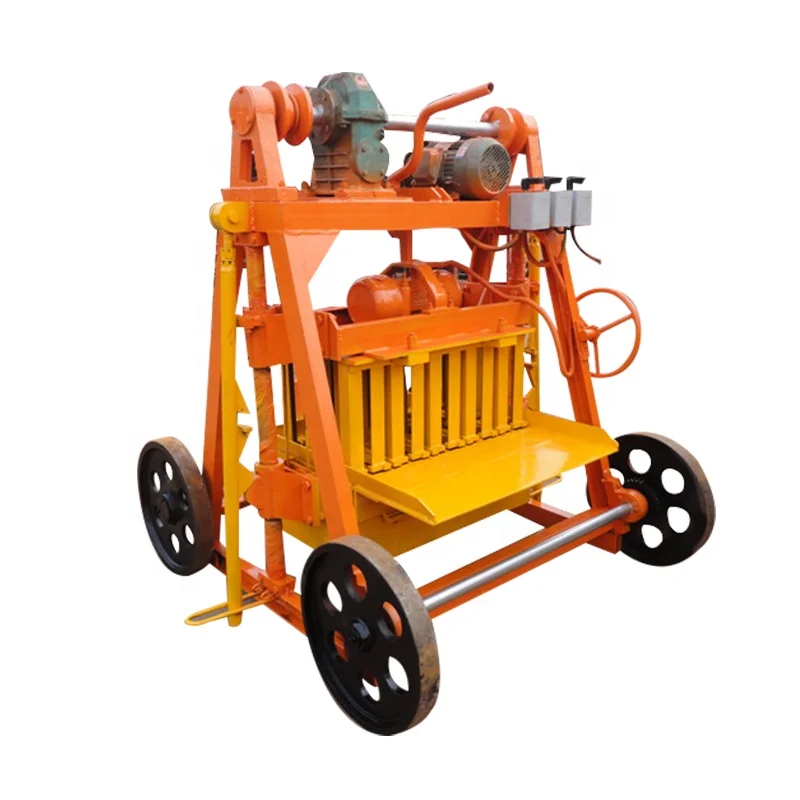
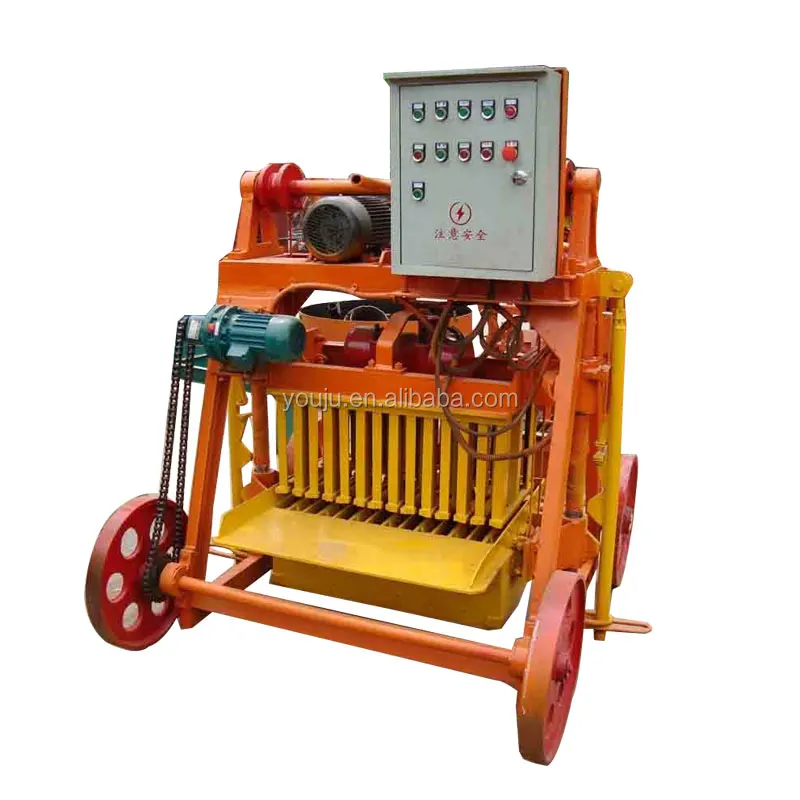
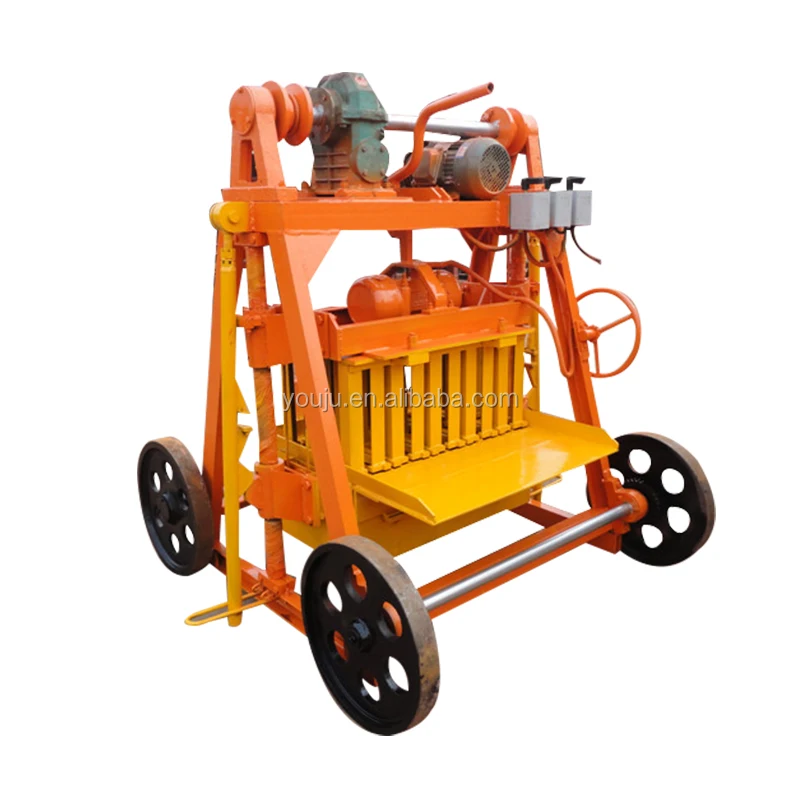
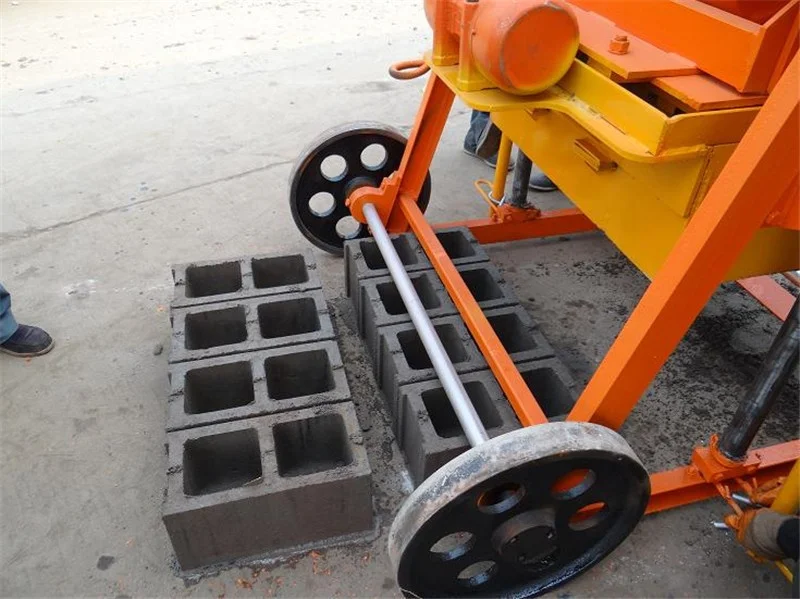
Description
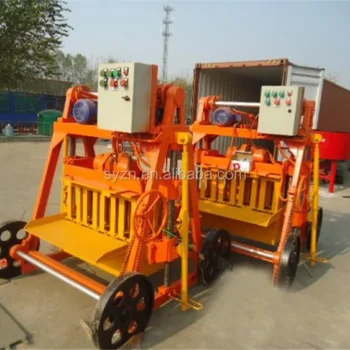
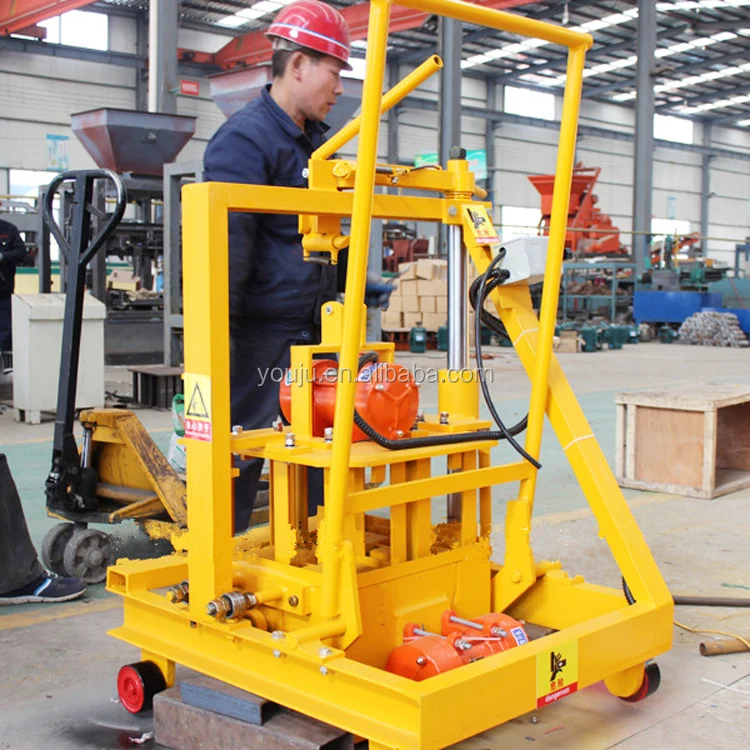
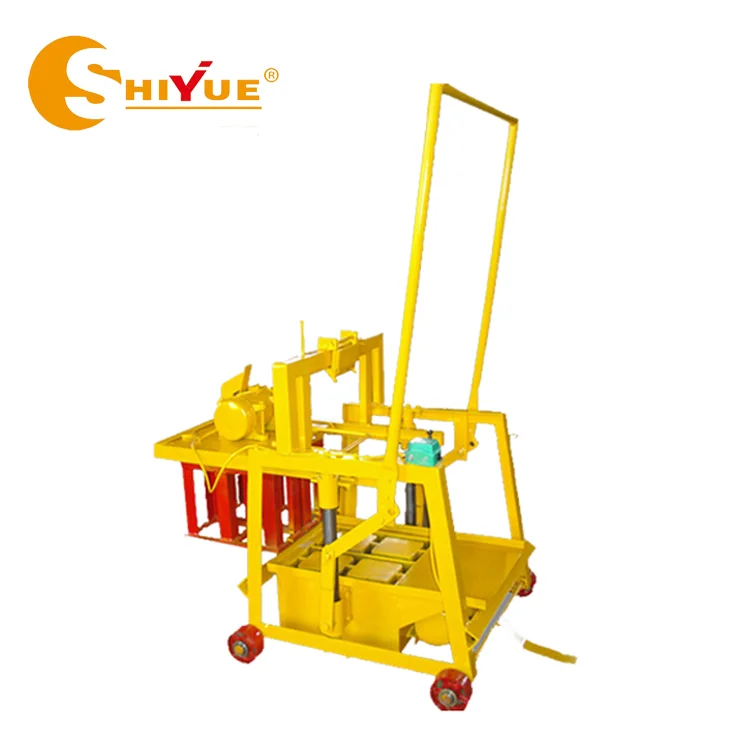
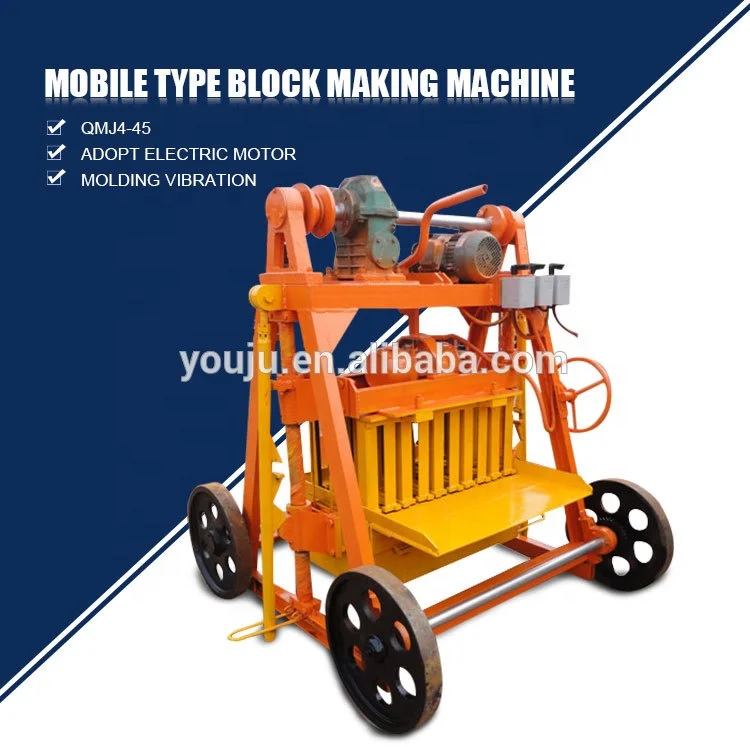
Matched system supply — The QMJ4-45 mobile block machine, pallets, and moulds are specified together so nothing is left to chance when your site has no fixed plant.
Technical Specifications
| Parameter | Value |
|---|---|
| Model | QMJ4-45 |
| Product Type | Egg Laying Block Making Machine |
| Molding Capacity | 4 pcs/mold |
| Vibration Frequency | 2400 r/m |
| Hydraulic Method | Mold vibration |
| Demold Method | Manual |
| Turning Method | Manual |
| Total Power | 6 kW |
| Power Resource | Diesel or petrol engine option |
| Molding Cycle | 45 seconds |
| Productivity (400×200×200mm hollow block) | 3000 pcs/day (8 hours) |
| Productivity (400×150×200mm hollow block) | 3500 pcs/day (8 hours) |
| Productivity (400×120×200mm hollow block) | 4500 pcs/day (8 hours) |
| Output Capacity | 2600–4000 pcs/day (basis not stated in source — confirm block format and material) |
Application Suitability
| Application | Material or Output |
|---|---|
| On-site hollow block production for housing projects | Cement, river sand, crushed stone, and local aggregate |
| Garden and landscaping paver production | Concrete mixes with fine aggregate and pigment additives |
| Remote construction camps without grid power | Diesel-powered operation for off-grid block laying |
| Small-scale block yards for local supply | Solid and hollow formats using regional sand and gravel |
Why "Output Up to 4500 Pieces" Is Only Half the Story
A machine’s daily figure is meaningless without naming the block format, material, and shift length behind it.
A buyer comparing two mobile machines on a single headline number often discovers that the higher figure assumes a thinner wall block, a lighter mix, or a longer shift than their site can sustain. The QMJ4-45 is no exception — the daily range shifts noticeably depending on whether you are running a 400×200×200mm hollow block or a 400×120×200mm partition block. When your project deadline is measured in weeks, knowing the exact format behind the quoted output prevents costly rescheduling [NEED_CITE: capacity calculation methods for concrete block machinery]. That is why every dispatch from stock starts with a format-by-format output sheet rather than a single brochure number, ensuring the mobile block machine in stock you receive matches the block your market actually buys.
Dispatch Timing and What "Ready to Ship" Actually Covers
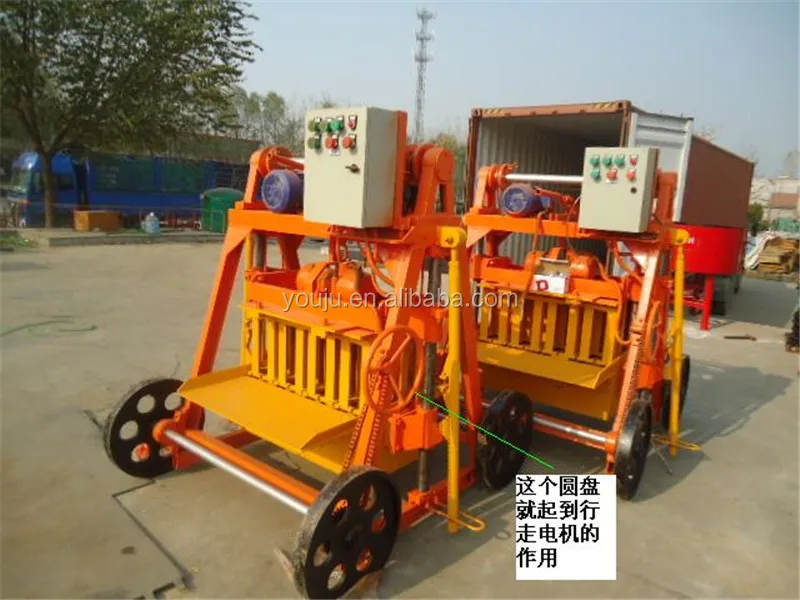
A stocked QMJ4-45 is more than a machine sitting in a yard. Before any mobile block machine in stock leaves the factory, it goes through a pre-dispatch checklist that includes a wet run with the buyer’s confirmed block format, a vibration frequency verification at 2400 r/m, and a full electrical continuity test on the 6 kW circuit. The diesel engine option, where selected, is run-in and oil-checked. This preparation means the gap between order confirmation and container loading is measured in days, not production weeks, which matters when a housing project is waiting on blocks to start walling.
Container Loading and Arrival Certainty
The QMJ4-45 is compact enough to share container space with a set of spare moulds and a pallet of wear parts, but the loading plan must account for the manual demold frame and the engine cradle if a diesel unit is specified. Every shipment receives a dismantling photograph set and a packing list that matches the container seal number [NEED_CITE: container loading standards for heavy machinery exports]. The arrival estimate is quoted at order confirmation, not revised after the machine reaches port, so contractors working against penalty clauses can plan their crane hire and site preparation around a known date.
Reading the Specs That Determine Real Site Performance
The 45-second molding cycle applies to standard hollow block formats under consistent material feed. On site, that cycle stretches if the operator is hand-feeding a stiff mix or shortens slightly with a well-graded, moist aggregate. The 2400 r/m vibration frequency is tuned for general concrete mixes; if your local aggregate is unusually porous or lightweight, the effective compaction per cycle will differ, and the daily output must be recalculated against your actual mix design. The diesel or petrol engine option removes dependence on grid reliability, but fuel consumption and service intervals become part of the operating cost — a factor often overlooked when comparing against electric-only quotations. The manual demold and turning methods keep the initial investment low, yet they set the labour requirement for the shift, typically two operators working in rotation to sustain output through an eight-hour day.
What Happens When the Wrong Configuration Ships
A QMJ4-45 sent to a site without confirming the local voltage and frequency will sit idle until a step-down transformer or a replacement motor arrives, adding weeks to a project that chose a stocked machine precisely to save time. Equally, specifying an electric motor for a site where the generator cannot sustain the 6 kW starting surge leads to repeated breaker trips and burnt windings. The manual demold frame, if not aligned to the buyer’s chosen pallet size, forces operators to scrape half-cured blocks off edges, damaging both the block and the mould liner [NEED_CITE: mould wear causes in egg laying block machines]. These are not manufacturing defects — they are specification gaps that a pre-dispatch confirmation step prevents entirely.
Why Buyers Source This Machine Through Our Stock Channel
Our single focus on block machinery means the QMJ4-45 is never treated as a standalone press; the mould, pallet, and handling tools are matched as one package before it enters stock. Configuration is set against your actual mix design and target block format, not a catalogue default, so the productivity figures you see on arrival reflect what your site can produce. Standard and custom moulds are drawn and held in inventory alongside the machine, cutting the wait for a format your local market demands. Pre-dispatch testing records, including a factory run on your confirmed block size, ship with the container so there are no surprises during commissioning. Dispatch lead times and container loading plans are provided at quotation, giving project planners a reliable date to build around.
Documentation & Verification
- Factory test record on your confirmed hollow block format before dispatch
- Machine specification sheet stating output per block size and shift length
- Mould drawing and format list for all stocked and custom dies included
- Voltage, frequency, and engine type confirmation signed off before packing
- Operation and maintenance manual in your chosen control language
- Packing photographs matched to container seal number for customs clearance
Installation, Commissioning & Support
- Level ground pad required; the QMJ4-45 egg-laying method eliminates fixed foundation work
- Diesel engine run-in and fuel line check completed on site before first production run
- Manual demold frame alignment verified against your chosen pallet dimensions during commissioning
- Vibration motor and 6 kW circuit continuity tested before operator handover
- Spare mould liners and vibration belt included in the first shipment for early replacements
- Operator training covers mix consistency, cycle pacing, and daily greasing points
What We Need to Confirm Before Dispatch
To lock in your machine and hold the dispatch slot, share the block format and wall thickness your market sells, the aggregate type available on your project site, and whether grid power is stable enough for the electric option or if a diesel engine is required. With those details, the output calculation, mould selection, and container loading plan are finalised in one step rather than through a chain of revisions.
Frequently Asked Questions
Q: Which QMJ4-45 models are currently in stock and ready for dispatch?
A: Stocked units include the standard electric configuration and the diesel engine variant for off-grid sites. Each machine is held with a matched set of standard hollow block moulds. Custom mould formats can be added from inventory before loading. Exact stock levels and available engine options are confirmed at the time of inquiry to reflect real-time allocation.
Q: What is the typical lead time from order confirmation to port arrival?
A: For a stocked QMJ4-45, the interval from order confirmation to container loading is measured in days once the block format and power source are verified. Sea freight duration then depends on the destination port. The arrival estimate is quoted at order confirmation, not revised after sailing, so project timelines can be planned around a fixed date.
Q: Can the machine be configured with a diesel engine for sites without reliable grid power?
A: Yes, the QMJ4-45 is available with a diesel or petrol engine option that replaces the standard electric motor. This configuration is verified during the pre-dispatch run-in so fuel consumption and starting behaviour are documented before the machine ships. Buyers must confirm fuel grade availability at their site to match the engine specification.
Q: What block formats can the standard mould produce, and are custom moulds available from stock?
A: The standard mould set covers common hollow block sizes including 400×200×200mm and 400×150×200mm formats. Custom moulds for interlocking or solid formats can be drawn from buyer specifications and added to the stock machine before dispatch. Output figures are recalculated for each custom format to reflect the actual molding cycle and wall thickness.
Q: How is the machine packed for container shipment, and what is included in the delivery?
A: The QMJ4-45 is dismantled into its main frame, engine cradle, and mould assembly for container loading. The shipment includes the matched mould set, a spare vibration belt, and a packing photograph set tied to the container seal number. A loading plan is provided at quotation so buyers know exactly which components fill the container and what space remains for spare parts.