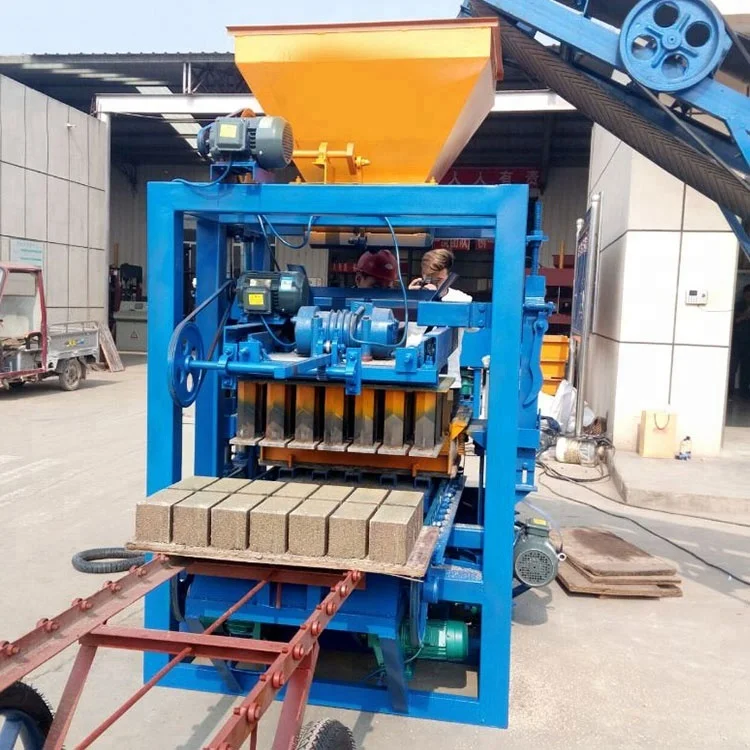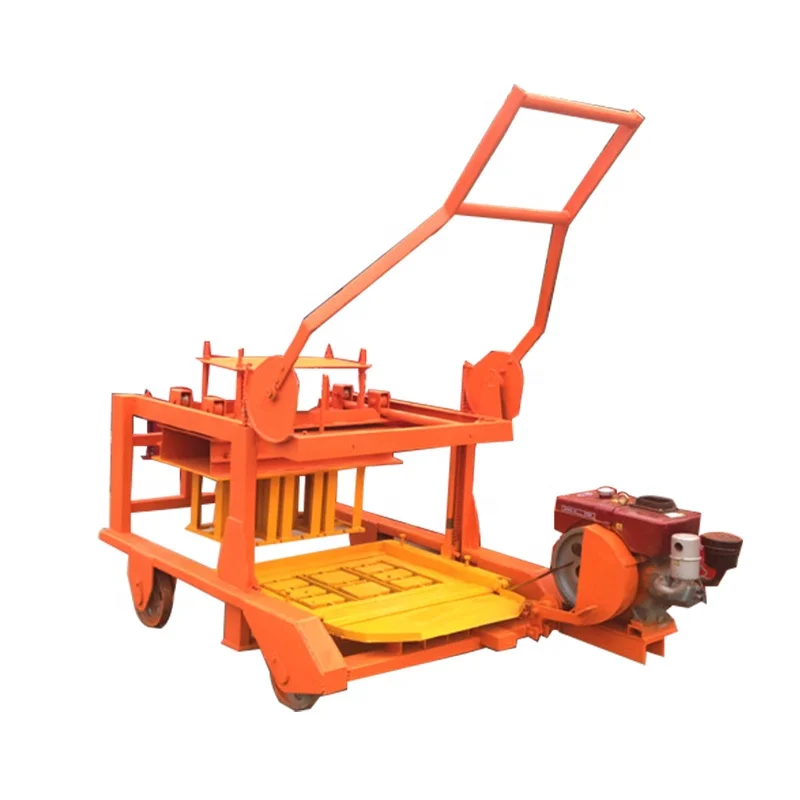
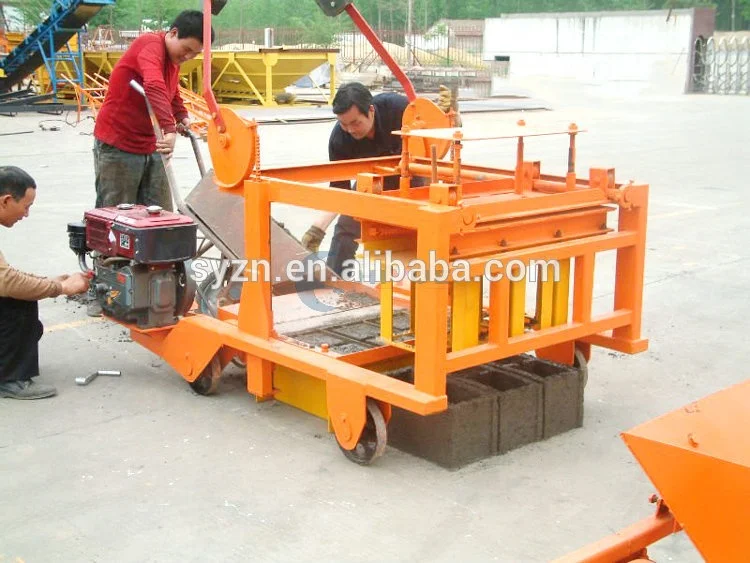
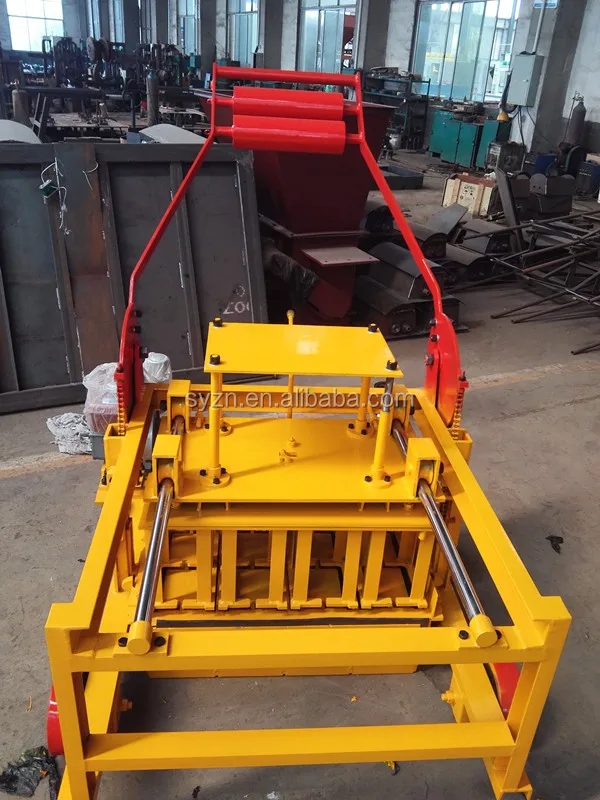


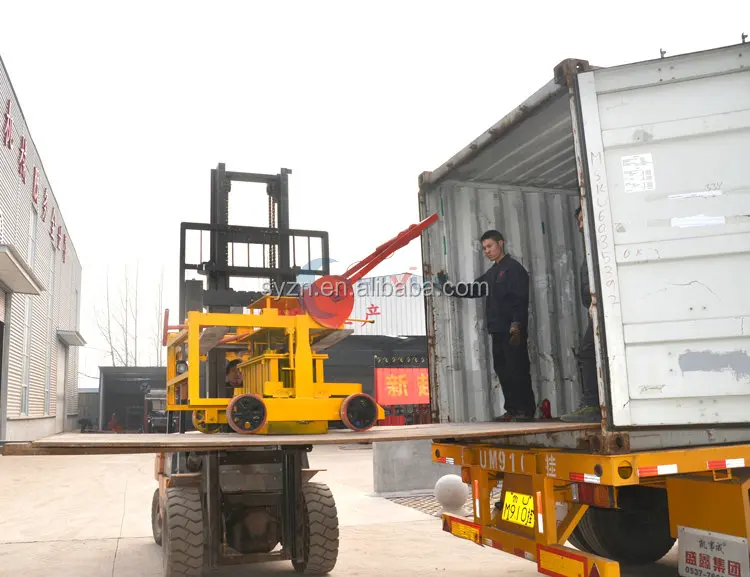
Description
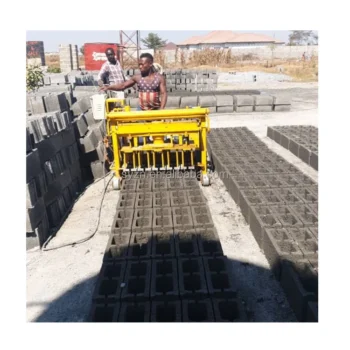
Stocked for Dispatch — the QMR4-45 diesel mobile block machine sits in our Linyi yard ready to load, so your on-site production starts weeks sooner than a built-to-order alternative.
Technical Specifications
| Parameter | Value |
|---|---|
| Model | QMR4-45 |
| Product Type | Mobile Block Machine |
| Power Source | Diesel |
| Rated Power | 8 hp |
| Molding Cycle | 45 s (basis not stated in source) |
| Molding Form | Vibration and Pressure |
| Vibration Force | 60 kN |
| Total Weight | 800 kg |
| Overall Dimensions | 2420 × 1320 × 1650 mm |
| Pallet Requirement | No pallet needed |
| Block Formats | Paver brick, hollow block, concrete block, solid brick, fly ash brick |
| Basic Equipment | JZC350 or JQ350 Diesel Concrete Mixer; Trolley |
Application Suitability
| Application | Material or Output |
|---|---|
| On-site block production for building contractors | Crushed stone, sand, and cement mixes laid directly on compacted ground |
| Housing project supply against a tight deadline | Hollow and solid concrete blocks produced at the construction perimeter |
| Remote or off-grid construction sites | Diesel-powered operation independent of local grid availability |
| First block plant with minimal capital | Fly ash brick and paver production without fixed factory infrastructure |
What "45-Second Cycle" Actually Means on Your Site
The cycle time only matters once you know which block format and mix design it was measured against.
A mobile egg-laying machine like the QMR4-45 quotes a molding cycle in seconds, but that figure shifts depending on whether you are pressing a thin paver or a deep-cavity hollow block. When buyers take the headline number and multiply it by an eight-hour shift, the daily total almost never matches what arrives on the curing ground. I have watched project schedules slip because the output assumption was never tied to the actual format the site needed [NEED_CITE: block format assumptions in mobile machine cycle ratings]. Before the machine leaves our yard, we confirm the block drawing you intend to run and state the cycle against that specific cavity depth and mix.
Diesel Independence for Off-Grid Production
Grid electricity is unreliable or absent on many project sites where the QMR4-45 earns its keep. The 8 hp diesel engine removes the dependency entirely, letting contractors start block production the day the machine is offloaded. No transformer wait, no generator rental negotiation, no voltage-drop arguments with the local utility. A Mobile Block Machine in stock fast delivery means the diesel variant is already configured and fueled for a test run before it enters the container.
No-Pallet Egg-Laying Design
Traditional stationary presses demand a pallet return system, curing racks, and a forklift fleet just to move wet blocks to the yard. This machine lays each block directly on the ground and walks forward to the next position. That eliminates pallet purchase, pallet storage, and pallet replacement from your operating cost. For a contractor setting up a temporary yard beside a housing development, the reduced footprint and handling labor are often the deciding factor [NEED_CITE: pallet elimination in mobile egg-laying block production].
Reading the Vibration and Pressure Figures
The 60 kN vibration force works together with the mechanical pressure head to compact the concrete mix inside the mould box. Higher vibration alone will not produce a strong block if the pressure head cannot follow through, and vice versa. On a lightweight fly ash mix, the operator may need to adjust the vibration duration compared to a dense crushed-stone mix. Understanding this relationship prevents the common complaint of blocks crumbling at the corners when they are first moved. The 800 kg total weight of the machine also contributes to stability during the vibration stroke, reducing the chance of the unit walking across uneven ground.
The Cost of Skipping the Voltage Conversation
Buyers who focus entirely on the press itself sometimes forget that the supporting mixer and any electric generating unit still need correct voltage and frequency. Shipping a 380 V / 50 Hz motor to a 220 V / 60 Hz site means production halts until a replacement arrives. We verify the destination country’s electrical standard and confirm the control panel language before the QMR4-45 is bolted to the container floor. That single check has saved more commissioning weeks than any other step in our dispatch process [NEED_CITE: voltage and frequency mismatches in exported construction machinery].
Why Buyers Source This Machine from Our Stock Yard
Block machinery is our single focus, so the QMR4-45 is specified as a matched set: machine, mould, mixer, and trolley leave together rather than arriving from separate vendors. We set the configuration against the buyer’s actual aggregate and target block format, not a catalogue default. Moulds for the formats your local market sells, including custom drawings, ship in the same container. Stock availability means the dispatch lead time is measured in days, not months, and the arrival estimate is quoted before you commit.
Documentation & Verification
- Factory test record on your specific block format before dispatch
- Mould drawing and format list matching the shipped cavity plates
- Voltage and control language confirmation sheet signed at inspection
- Operation and maintenance manual in the operator’s working language
- Packing photographs showing dismantling and container loading sequence
Installation, Commissioning & Support
- Ground preparation guide for the 2420 × 1320 mm working footprint
- Diesel engine break-in procedure for the 8 hp power unit
- Mould change walkthrough using the shipped format set
- Vibration force adjustment for local aggregate density
- Wear parts list with first-replacement intervals for the 60 kN vibrator
Before You Request a Quote
Tell us the block format you intend to produce, the daily volume your project schedule demands, and the raw materials available within hauling distance of your site. Confirm the local voltage and frequency even though this is a diesel machine, because the companion mixer or generating unit may still require it. With those details we can state a realistic output figure tied to your actual mould, and confirm whether the QMR4-45 in our stock yard is the right tier or whether a higher-capacity unit should be considered.
Frequently Asked Questions
Q: What is the realistic daily output and for which block format is the 45 s cycle stated?
A: The 45-second molding cycle is a source value whose block-format basis is not stated in the original specification sheet. We confirm the exact cavity plate you intend to run — whether a 100 mm paver or a 200 mm hollow block — and then state a daily output tied to that format, your mix design, and the crew’s working hours.
Q: Is the QMR4-45 currently in stock, and what is the dispatch lead time?
A: Yes, the QMR4-45 diesel mobile block machine is held in our Linyi stock yard as a stocked unit. Once your block format, mould set, and destination port are confirmed, the machine is dismantled, container-loaded, and dispatched within a short lead window, with the arrival estimate quoted before you place the order.
Q: How is the machine dismantled and loaded into a container for shipment?
A: The 800 kg unit is broken down into its main frame, mould box, diesel engine, and companion mixer. Each component is secured against container walls with steel bracing, and packing photographs are sent to you before the doors are sealed so you know exactly how to reverse the process on arrival.
Q: Can the diesel engine be switched to an electric motor variant later?
A: The QMR4-45 is designed around its diesel power source, but the companion mixer and any electric generating unit can be specified with an electric motor if grid power becomes available at your site later. We would supply the motor, mounting plate, and wiring diagram as a field-conversion kit rather than replacing the entire machine.
Q: Which moulds ship with the machine and how fast are replacement wear parts dispatched?
A: The machine ships with the mould format you select during the ordering conversation, plus a wear parts list covering vibrator springs, pressure head shoes, and mould liners. Replacement parts are dispatched from our Linyi warehouse on the same courier routes used for the original machine, keeping you producing while the parcel is in transit.