Description
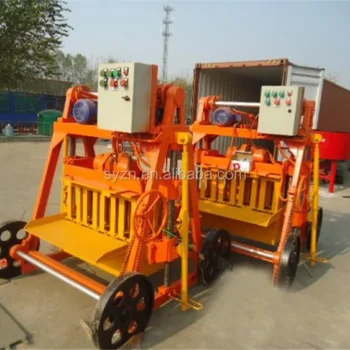
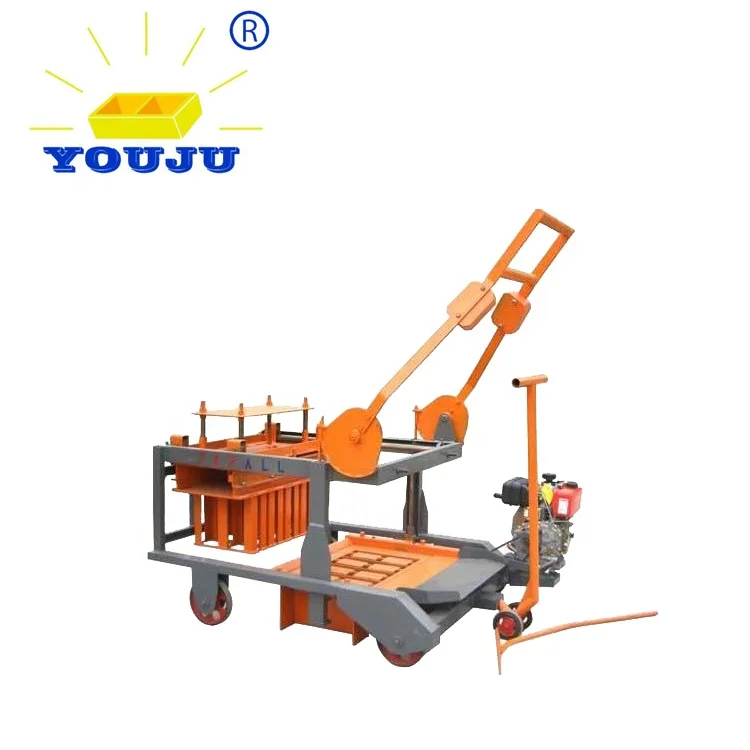
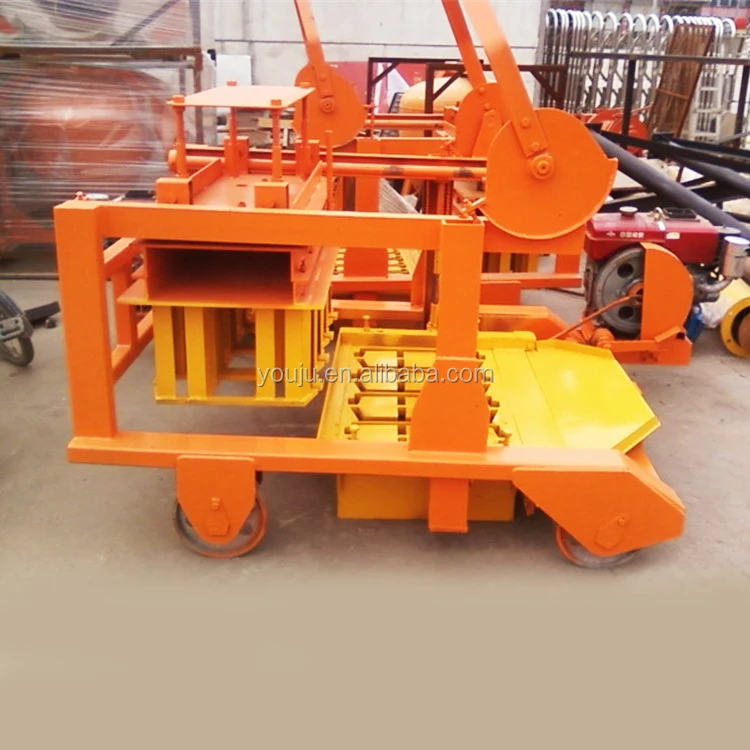
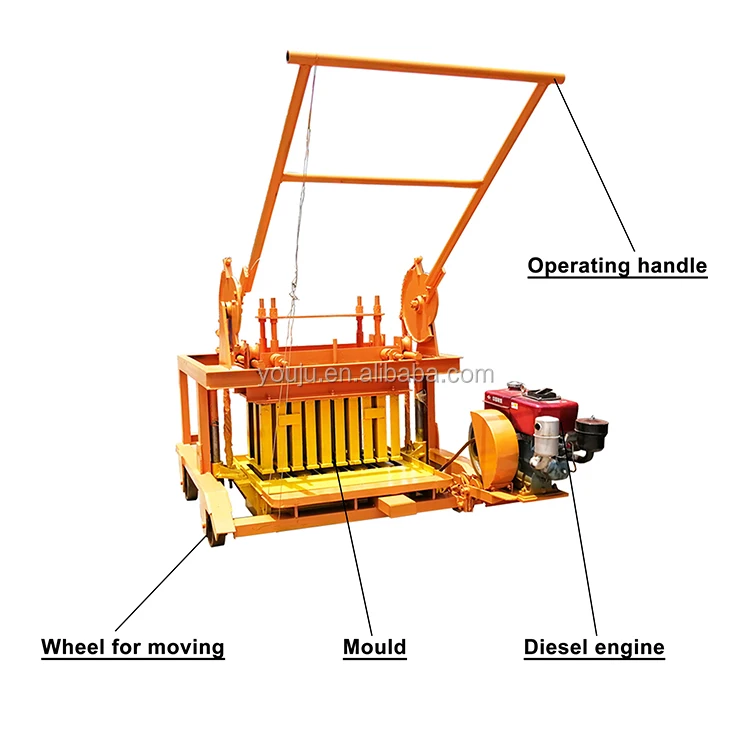
Stocked QMR4-45 mobile block machine — dispatch window quoted in days from deposit, not weeks, because the machine and its standard hollow block moulds are built and held ready before your inquiry lands.
Technical Specifications
| Parameter | Value |
|---|---|
| Model | QMR4-45 |
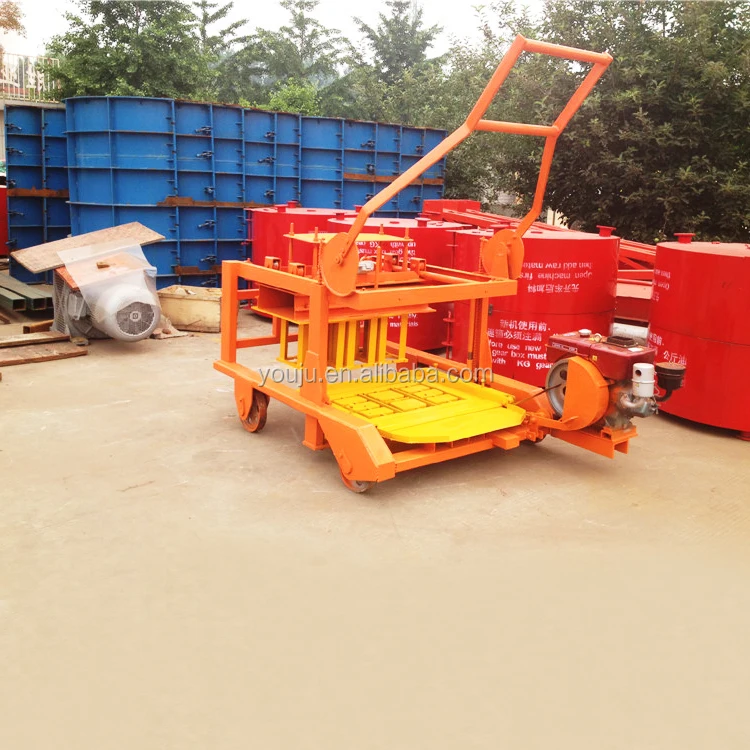
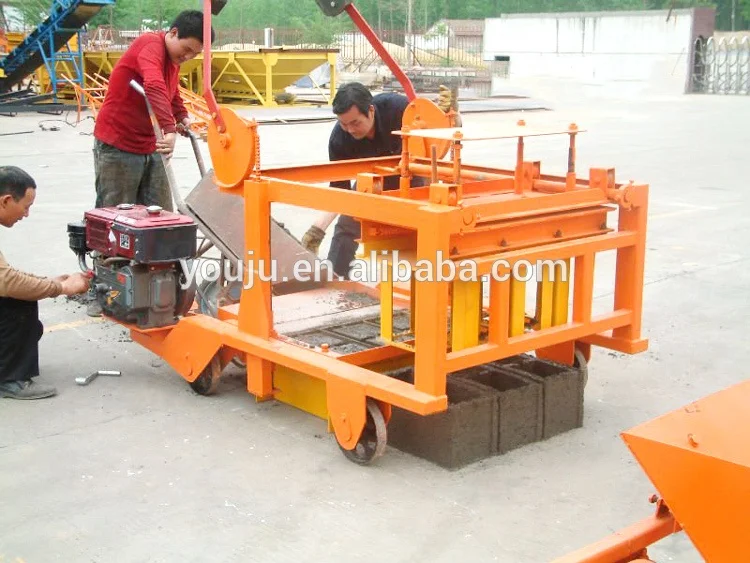
| Product Type | Mobile Egg Laying Block Making Machine |
| Rated Power | 6 kW |
| Diesel Engine Option | 6 kW or 6-8 HP |
| Voltage & Frequency | 220V or 380V, or configurable to client local standard |
| Control System | Manual / mechanical operation |
| Overall Dimensions (L×W×H) | 2420 × 1320 × 1650 mm |
| Net Weight | 810 kg |
| Moulding Cycle | 40–45 s |
| Pallet Requirement | None (egg-laying operation) |
| Mould Formats Supported | 400×200×200 mm / 400×150×200 mm / 400×120×200 mm hollow block |
| Output Capacity (400×200×200 mm, 4 pcs/mould) | 3000 pcs per 8-hour day |
| Output Capacity (400×150×200 mm, 5 pcs/mould) | 3500 pcs per 8-hour day |
| Output Capacity (400×120×200 mm, 6 pcs/mould) | 4500 pcs per 8-hour day |
| Automation Level | Manual pallet handling, mobile egg-laying type |
| Assembly State | Shipped as single unit |
| Standards | CE declared |
Application Suitability
| Application | Material or Output |
|---|---|
| Remote construction site block production | Hollow blocks from crushed stone, sand and cement without fixed plant |
| Off-grid housing project supply | Diesel-powered operation where grid connection is unavailable or unreliable |
| Small-scale block yard start-up | Egg-laying production eliminating pallet and curing rack investment |
| Contractor self-supply on development sites | Local hollow block manufacturing avoiding long-distance transport of purchased blocks |
Why "3000 Pieces per Day" Needs a Format Attached
Output figures only hold meaning when the block format, mould cavity count and shift length are stated alongside them.
I have watched contractors arrive at a job site expecting a certain daily volume, only to find the number they were quoted assumed a smaller block than the one their market actually buys. A mobile block machine fast delivery promise means little if the capacity behind it was calculated on a format you will never run. The QMR4-45 produces 3000 pieces per 8-hour day on 400×200×200 mm hollow blocks at 4 pieces per mould, 3500 on 400×150×200 mm at 5 pieces per mould, and 4500 on 400×120×200 mm at 6 pieces per mould [NEED_CITE: block format and mould cavity relationship to daily output]. When a supplier quotes a single number without naming the format, ask which block they measured it on before you commit.
What Dispatch Lead Time Actually Means on a Stocked Machine
When a project deadline is closing in, the gap between paying the deposit and seeing the machine on a truck is the only number that matters. The QMR4-45 mobile block machine fast delivery model works because the base unit and its three standard hollow block moulds are manufactured and warehoused before an order arrives, rather than built from scratch after one is placed. This means the dispatch window is measured in days from deposit receipt, with the container loading plan and machine dismantling points already defined.
Container Loading and Arrival Timing Clarity
A compact footprint of 2420 × 1320 × 1650 mm and a net weight of 810 kg allow the QMR4-45 to fit inside a standard 20-foot container along with its accompanying moulds and spare wear parts. The machine is dismantled at defined points for loading, and packing photographs are taken before the container doors seal. For a buyer working against a project schedule, knowing the QMR4-45 in stock status at the moment of inquiry and receiving an arrival estimate quoted upfront removes the uncertainty that stretches timelines [NEED_CITE: typical ocean freight transit times from Chinese ports to West African and South Asian destinations].
How Diesel Power and Moulding Cycle Shape On-Site Output
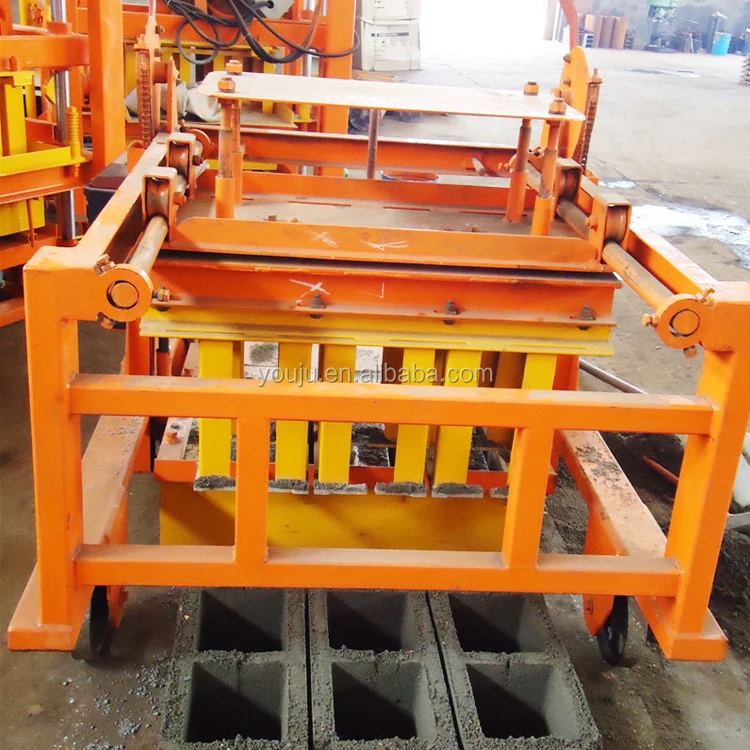
The 6 kW diesel engine option exists for one practical reason: many construction sites in West Africa and South Asia do not have grid power available when block production needs to start. A diesel-driven QMR4-45 can begin laying blocks the week the machine arrives, without waiting for a transformer installation or a generator rental. The 40–45 second moulding cycle applies across all three hollow block formats, which means the operator rhythm stays consistent when switching from 200 mm to 150 mm or 120 mm wall thickness. Vibration is mechanical, transmitted directly through the mould box to the concrete mix, and the egg-laying design deposits each block onto the ground surface without requiring a pallet underneath.
The pallet-free operation deserves emphasis because it removes two cost items that catch first-time buyers off guard: the pallets themselves, and the curing racks needed to store them. On a remote site with limited capital for auxiliary equipment, this simplification keeps the focus on the concrete mix and the block format the local market demands. Hydraulic pressure and vibration force specifications should be confirmed with the manufacturer at inquiry stage to ensure they match the buyer’s specific aggregate and mix design [NEED_CITE: relationship between vibration force, hydraulic pressure and block compressive strength].
The Voltage and Frequency Question That Delays Commissioning
Voltage and frequency are not details to sort out after the machine ships. The QMR4-45 supports 220V or 380V configurations, or can be built to match a client’s local standard, but this selection must be locked before the motor is mounted. A machine wired for 380V/50Hz arriving at a site running 220V/60Hz will not start, and rewinding or replacing the motor on-site adds a multi-week delay to a project that was already behind schedule. This confirmation belongs in the pre-shipment documentation, not in a conversation after the container is on the water.
Why Procurement Verification Matters Before the Deposit
Confirming stock status for the QMR4-45 and its standard hollow block moulds at the time of inquiry is the first step in a fast dispatch process. The container loading plan should specify dismantling points and include packing photographs before sealing. Dispatch lead time must be quoted in days from deposit receipt rather than left open-ended. Voltage and control language confirmation before shipment prevents commissioning delays on arrival. Spare moulds and hydraulic wear parts shipped inside the same container avoid first-replacement downtime, which otherwise means waiting for a separate parcel while the machine sits idle [NEED_CITE: spare parts availability and first replacement timing for mobile block machines].
Stocked Configuration and Known Lead Times
This is not a machine built from a catalogue after an order is placed. The QMR4-45 is held in stock with its standard hollow block mould formats, so the dispatch timeline is known at the point of inquiry rather than estimated after production scheduling. Machine, mould and supporting equipment are specified as one matched system. Configuration is set against the buyer’s actual site conditions, including available power source and local aggregate. Mould design covers the hollow block formats the buyer’s market sells. The automation level is manual and mechanical, appropriate for sites where simplicity and reliability outweigh production volume. Installation support and operator training are part of the delivery scope.
Documentation & Verification
- Dispatch timeline stated in calendar days from deposit receipt for the stocked QMR4-45
- Container loading plan with dismantling points and packing photographs before sealing
- Voltage and frequency confirmation document locked before motor mounting
- Factory test record run on standard hollow block formats before shipment
- Mould drawing and format list for all three included hollow block sizes
- Operation and maintenance manual with wear parts identification list
Installation, Commissioning & Support
- Level compacted ground required; no fixed foundation needed for the 810 kg mobile unit
- Diesel engine option eliminates dependency on site electrical infrastructure at start-up
- Shipped as single unit; reassembly limited to mould mounting and handle attachment on arrival
- First-run commissioning includes vibration timing adjustment to match local aggregate and mix
- Operator training covers mould change procedure across all three hollow block formats
- Wear parts list included in container to cover first replacement cycle without downtime
What to Include in Your Inquiry
To match the right configuration and confirm the dispatch window, share your target hollow block format and wall thickness, the daily output volume your project requires, and your site’s available power source including voltage and frequency if grid connection exists. If your local aggregate differs from standard sand and crushed stone, describe its characteristics so the vibration and mix guidance can be adjusted before the machine ships.
Frequently Asked Questions
Q: Is the QMR4-45 currently in stock, or is it built after the order is placed?
A: The QMR4-45 base unit and its standard hollow block moulds in 400×200×200 mm, 400×150×200 mm and 400×120×200 mm formats are manufactured and held in warehouse stock. This means dispatch lead time is quoted in days from deposit receipt rather than weeks of production scheduling. Confirm stock status at the time of your inquiry for the exact dispatch window.
Q: How is the QMR4-45 packed, and does it fit a 20-foot container with moulds?
A: The machine dimensions of 2420 × 1320 × 1650 mm and net weight of 810 kg allow it to load inside a standard 20-foot container along with all three standard hollow block moulds and spare wear parts. The machine is dismantled at defined points for loading, and packing photographs are taken before the container is sealed for shipment.
Q: Can the diesel engine be replaced with an electric motor later if grid power becomes available?
A: The QMR4-45 is available with either a 6 kW diesel engine or an electric motor configuration from the factory. If grid power arrives at the site after initial diesel operation, the motor swap is possible but requires confirmation of the site voltage and frequency before sourcing the replacement electric motor to ensure compatibility.
Q: What voltage options are kept in stock versus built to order?
A: Standard stock configurations cover 220V and 380V options. Voltage requirements outside these two standards can be accommodated but may require a short additional build period to source the correct motor winding. Voltage and frequency must be confirmed and documented before the machine leaves the factory to avoid commissioning delays.
Q: How are spare moulds and wear parts shipped to avoid first-replacement downtime?
A: Spare moulds and hydraulic wear parts are loaded inside the same container as the QMR4-45 machine at the time of dispatch. This ensures that when the first replacement cycle arrives during on-site operation, the necessary parts are already at the project location rather than waiting on a separate international shipment.