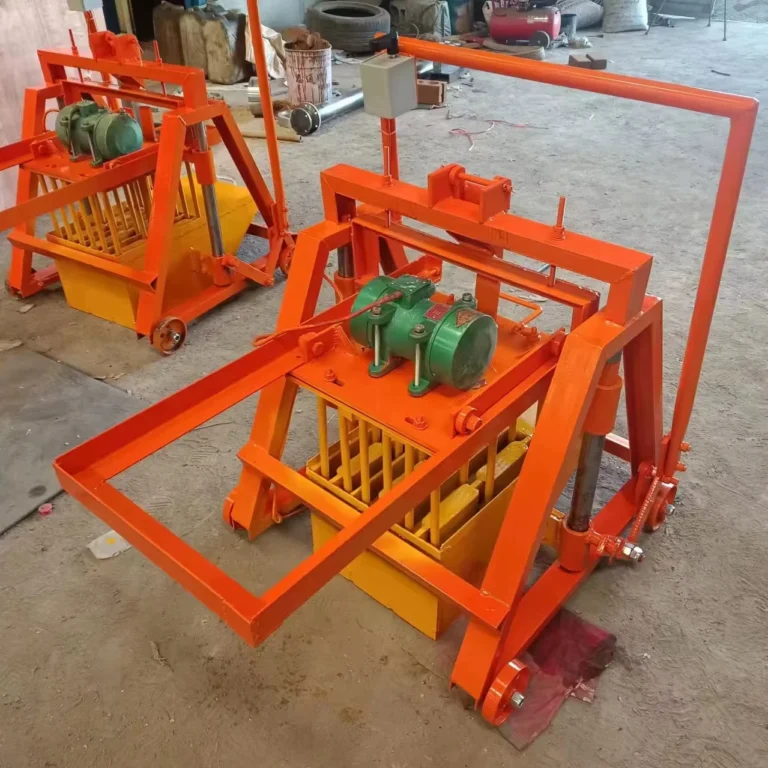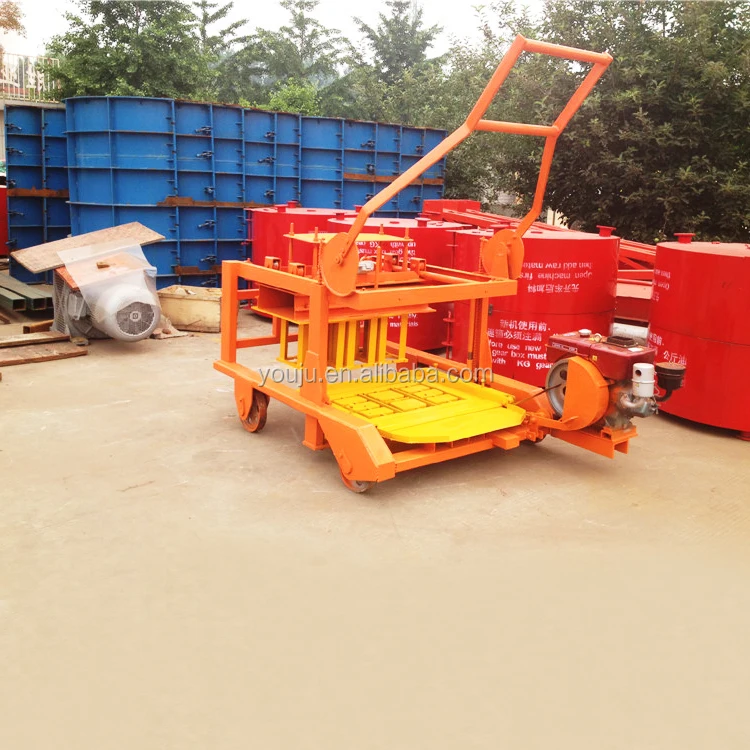
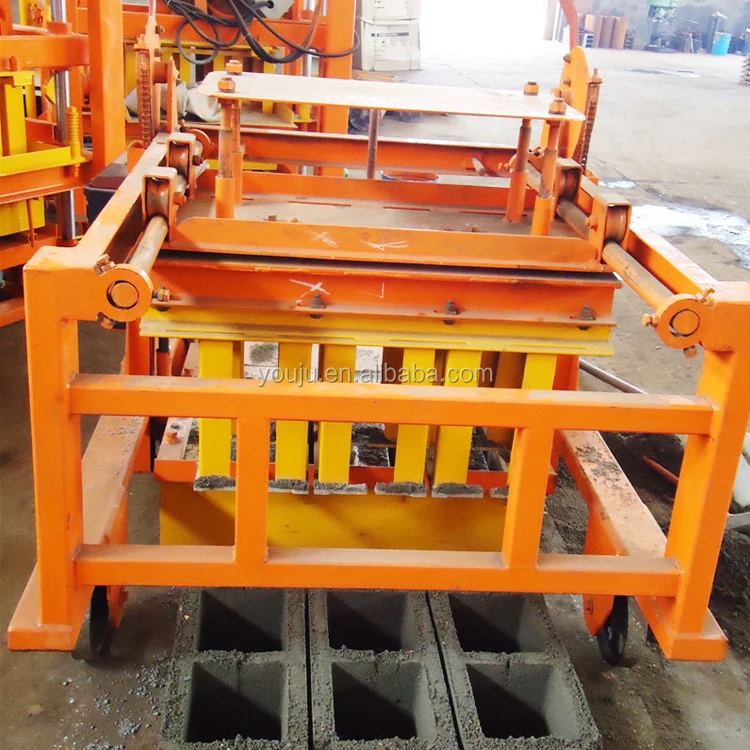
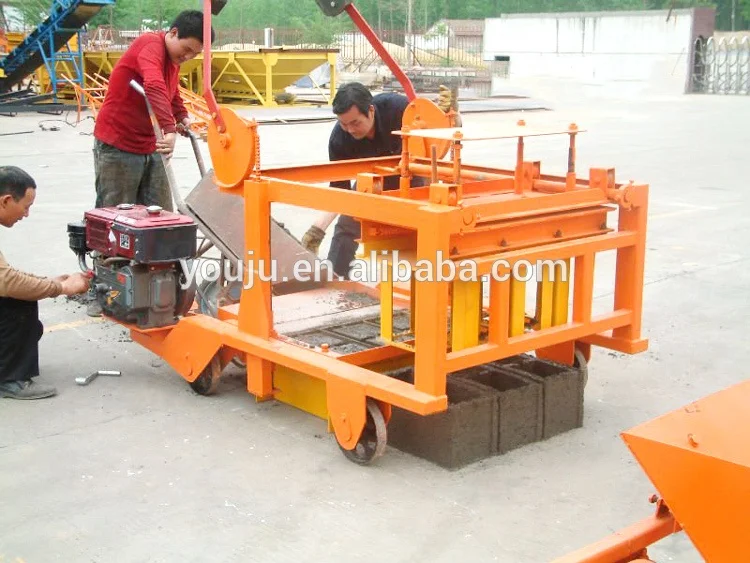
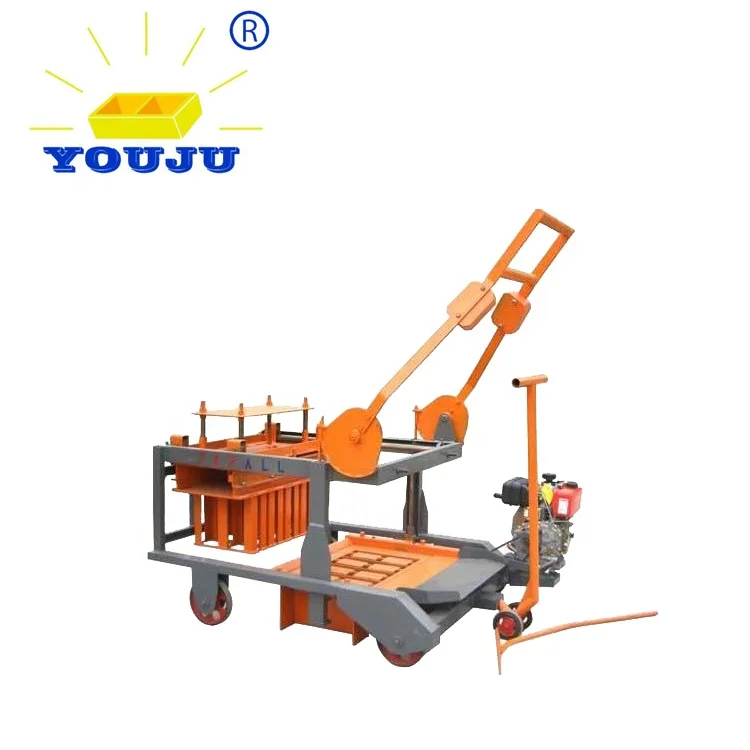
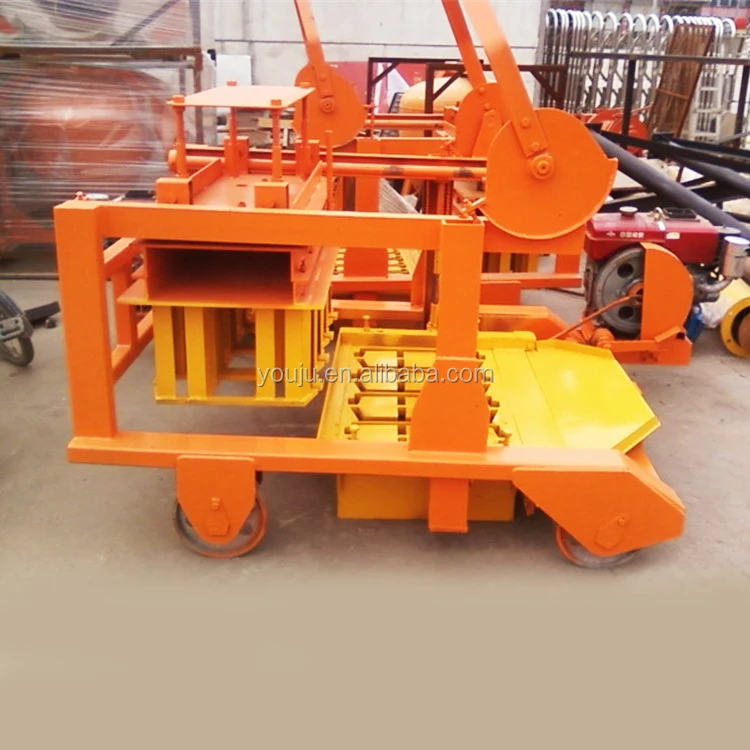
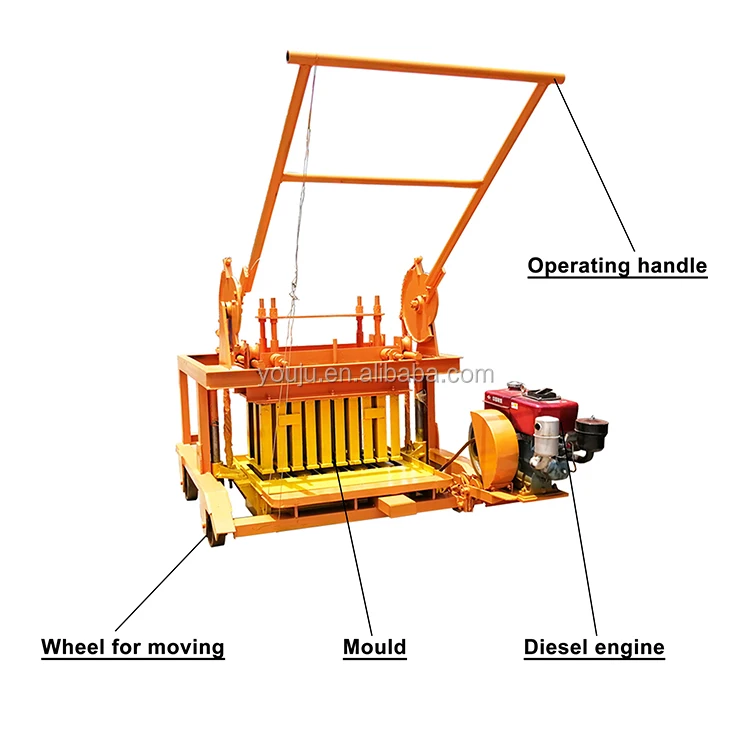
Description
Proven Dispatch Reliability — QMR4-45 mobile block machine in stock and prepared for container loading the same week your order is confirmed, with dismantling details agreed before payment.
Technical Specifications
| Parameter | Value |
|---|---|
| Model | QMR4-45 |
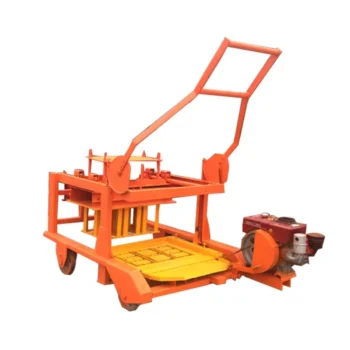
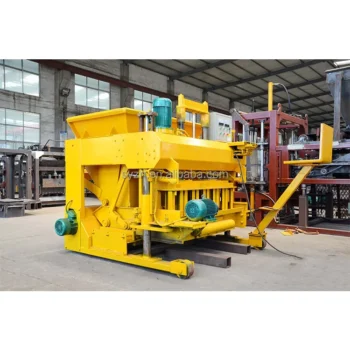
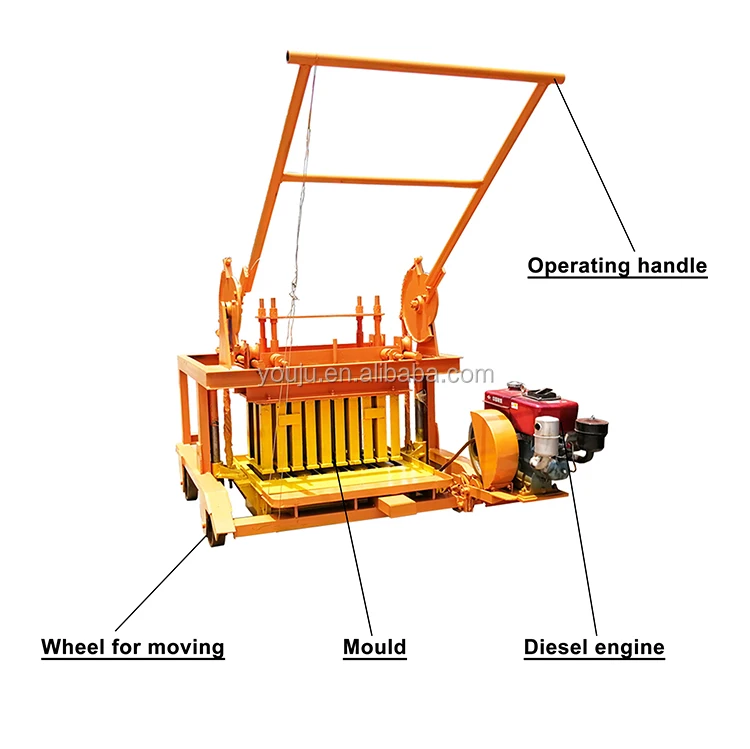
| Product Type | Mobile Egg Laying Block Making Machine |
| Overall Dimensions (L×W×H) | 2420 × 1320 × 1650 mm |
| Net Weight | 810 kg |
| Moulding Cycle | 40–45 s |
| Power Source | 6 kW electric motor or 6–8 HP diesel engine |
| Voltage Options | 220 V / 380 V / configurable to local supply |
| Pallet Requirement | None (egg laying directly on ground) |
| Output Capacity | 3000 pcs/day based on 400×200×200 mm hollow block, 4 pcs/mould |
| Output Capacity | 3500 pcs/day based on 400×150×200 mm hollow block, 5 pcs/mould |
| Output Capacity | 4500 pcs/day based on 400×120×200 mm hollow block, 6 pcs/mould |
| Mould Formats Included | Hollow blocks in three standard widths |
| Automation Level | Manual operation, mobile egg laying type |
| Assembly State | Fully assembled at factory, dismantled for container loading |
| Warranty | One year for the whole machine |
Application Suitability
| Application | Material or Output |
|---|---|
| Remote construction sites without grid power | Diesel-powered hollow block production from crushed stone, sand, and cement |
| Housing project on-site manufacturing | Daily hollow block output laid directly on prepared ground |
| First-time block plant entrepreneurs | Low-infrastructure hollow and solid block runs with minimal capital |
| Contractor block supply for masonry walls | Multiple hollow block formats from a single machine via mould change |
| Rural or off-grid building material supply | Independent production using locally sourced aggregate and cement |
Why "In Stock" Only Matters When Loading Plans Are Clear
A mobile block machine in stock means little if the container loading plan is still being figured out after you pay.
I have handled orders where the buyer was told the machine was ready, only to wait extra weeks while the workshop decided how to dismantle the frame for a 20-foot container. With the QMR4-45, the dismantling sequence, bolt locations, and lifting points are agreed before the proforma invoice is signed, because this 810 kg unit has to be broken down into sections that fit standard container doors. A rushed teardown damages paint and hydraulic lines, and that damage shows up as rust and leaks when the machine arrives at a tropical port weeks later [NEED_CITE: typical container transit conditions for machinery exports].
Dispatch Timeline You Can Build a Project Schedule Around
When we confirm a QMR4-45 is available, the dispatch lead time is stated in the quotation — not a vague "soon" or "after production." This mobile block machine in stock status includes the standard mould set you selected, so there is no separate mould production delay holding up your shipment. The machine is test-run with a representative mix before teardown, which is the same reason I started insisting on trial runs after watching a batch struggle with local red soil in West Africa last year.
Container Loading and Arrival Estimate Quoted Before You Commit
The dismantling method for this 2420 × 1320 × 1650 mm frame is documented so the loading team knows exactly which sections go where. Arrival estimates are quoted based on your destination port at the order stage, giving your site manager a realistic date to prepare the ground and gather aggregate [NEED_CITE: ocean freight transit variability by destination region]. No one benefits from a machine sitting at a port because the buyer was not told when to expect it.
Reading the Specs That Actually Determine Your Daily Output
The 40–45 second moulding cycle applies across the three hollow block formats, but the daily output difference — from 3000 to 4500 pieces — comes entirely from how many cavities the mould holds. A 400×200×200 mm block uses a 4-cavity mould while a 400×120×200 mm block uses 6 cavities, so the same cycle time produces different daily totals. The 6 kW motor or 6–8 HP diesel engine choice depends on your site’s grid reliability; I have seen diesel units keep projects running through week-long power outages that would have stopped an electric-only machine completely. The 810 kg weight is light enough for a site forklift or small crane to relocate between work zones, which matters when your project covers multiple building plots. Voltage must be locked before teardown because rewiring a motor at destination adds days and cost that nobody budgeted for.
What Happens When Dispatch Speed Is Promised Without the Details
Machines shipped without a confirmed voltage arrive at sites where the electrician discovers a 380 V motor connected to a 220 V supply, and the first startup burns the winding. I have seen this exact failure on a smaller egg layer sent to a region where the local grid runs at a frequency the buyer never mentioned during ordering [NEED_CITE: voltage and frequency mismatches in exported machinery]. Pallet-free designs like the QMR4-45 eliminate a major cost, but only if the ground at your site is leveled and compacted before the machine arrives — soft ground causes blocks to crack during the egg laying drop, and no amount of mix adjustment fixes that.
Why Buyers Come Back for the Second Machine
Block machinery is the only thing this workshop builds, so the QMR4-45 is not adapted from a paver line or a static press — it was designed as a mobile unit from the frame up. Every machine is configured against the buyer’s actual mix and aggregate, not shipped with a default setting that may not suit local sand or crushed stone. Moulds are designed for the block formats your market actually buys, including custom drawings if your region uses a non-standard hollow block dimension. The automation level is manual on this model, but buyers who start with a QMR4-45 often move to semi-automatic or fully automatic lines as their business grows, and the supplier already knows their material and market. Installation support and operator training are included, because a mobile machine that is operated incorrectly on day one produces weak blocks that damage your reputation with local builders.
Documentation & Verification
- Factory test record using your specific aggregate mix before dismantling
- Voltage and control language confirmation sheet signed before shipment
- Machine specification sheet with all three hollow block mould formats listed
- Packing photographs showing each dismantled section in the container
- Operation and maintenance manual with wear parts and mould list
- Customs documentation support for your destination country
Installation, Commissioning & Support
- Ground must be leveled and compacted across the full work area before the 810 kg machine arrives
- Power supply must match confirmed 220 V or 380 V specification with a dedicated circuit breaker
- Machine arrives dismantled; reassembly requires basic hand tools and a site forklift or crane
- First commissioning run uses your local aggregate to verify moulding cycle and block density
- Operator training covers mix moisture control, which prevents the sticking failures I have seen on-site
- Wear parts list and mould spares included so replacements are available when first needed
Before You Request a Quote
Send your target block format and the daily output your project requires, along with the raw materials available locally — sand type, aggregate size, and cement grade. Confirm your site’s voltage and frequency, and whether grid power is reliable enough for the electric motor or if the diesel engine option suits your conditions better. Let us know your destination port so the arrival estimate can be calculated before the quotation is issued.
Frequently Asked Questions
Q: What is the current stock status and dispatch lead time for QMR4-45?
A: Stock availability is confirmed at the quotation stage with a stated dispatch lead time. The machine is test-run with your mix before dismantling, so lead time includes that trial — not just warehouse retrieval. We do not quote dispatch dates we cannot meet, because a delayed shipment disrupts your entire construction schedule.
Q: How is the machine dismantled and loaded into a container for shipment?
A: The 2420 × 1320 × 1650 mm frame is broken into sections at predefined bolt points, and the dismantling plan is shared with you before loading. Each section is secured in the container to prevent movement during transit, and packing photographs are provided so you can verify condition before the container is sealed.
Q: What arrival timeline should I expect after order confirmation?
A: Arrival estimates are quoted based on your destination port at the order stage, accounting for typical ocean freight transit times. We build in the test-run period before dispatch so the date you receive is realistic. Port congestion or customs delays at destination are outside our control but are flagged early when possible.
Q: Can I order standard moulds from stock along with the machine?
A: Standard hollow block moulds in the three listed formats are available from stock and ship with the machine. If your market requires a non-standard block dimension, custom mould production runs in parallel with machine preparation so both are ready for the same container, avoiding split shipments and extra freight costs.