Description
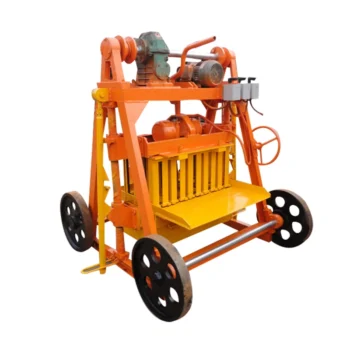
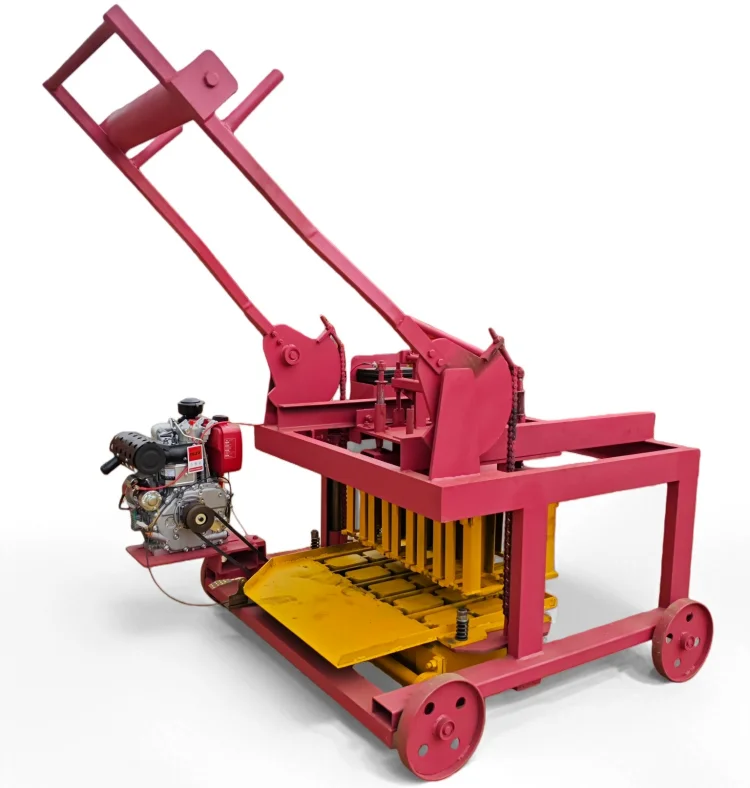
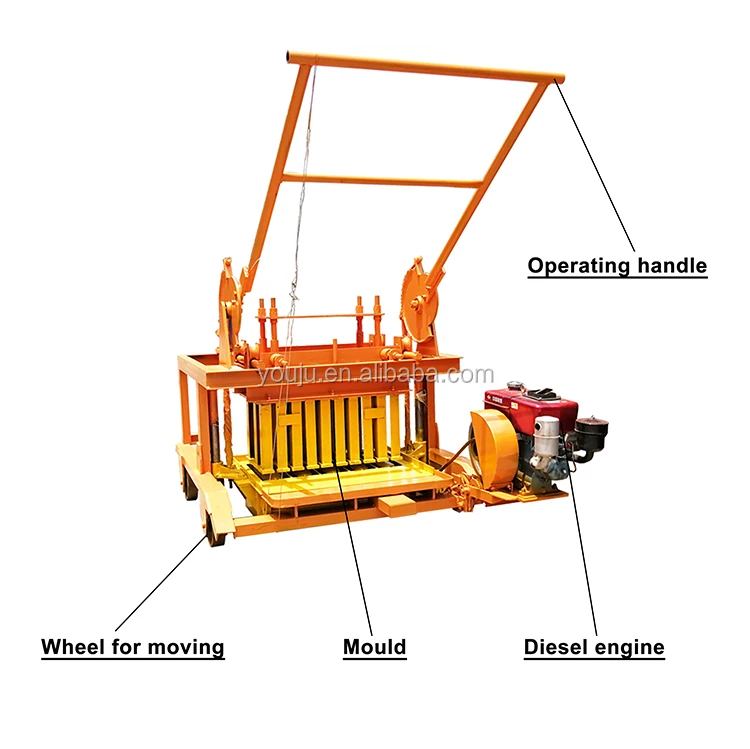
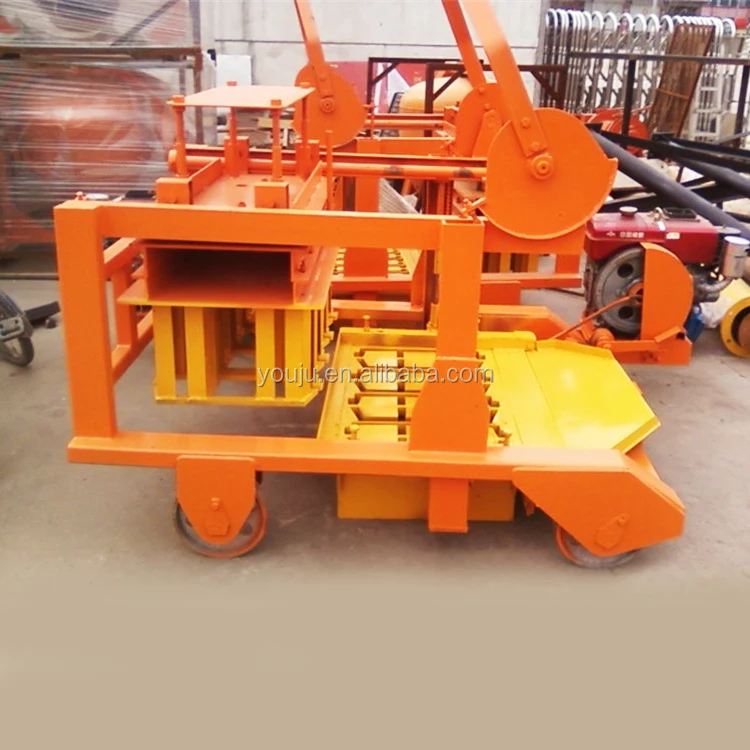
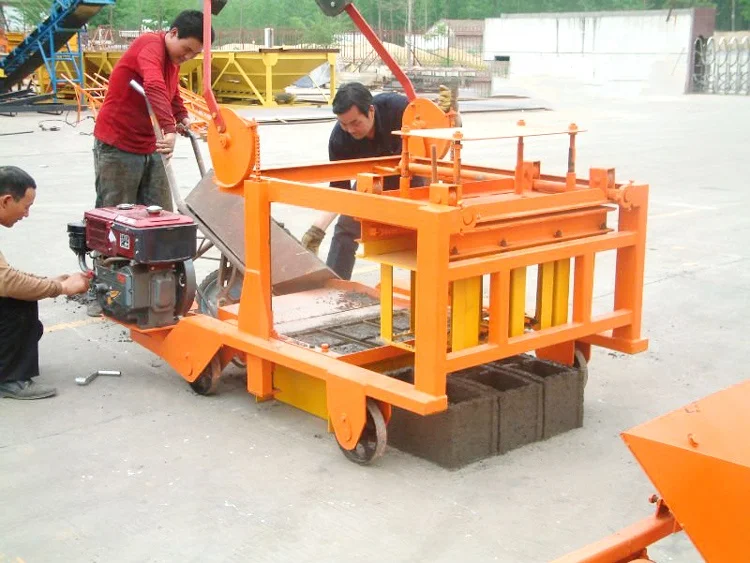
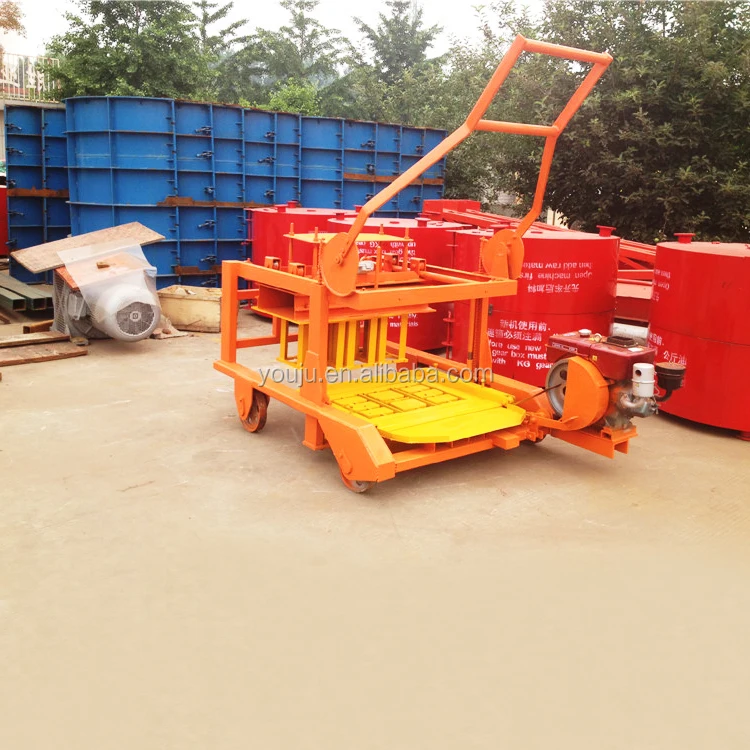
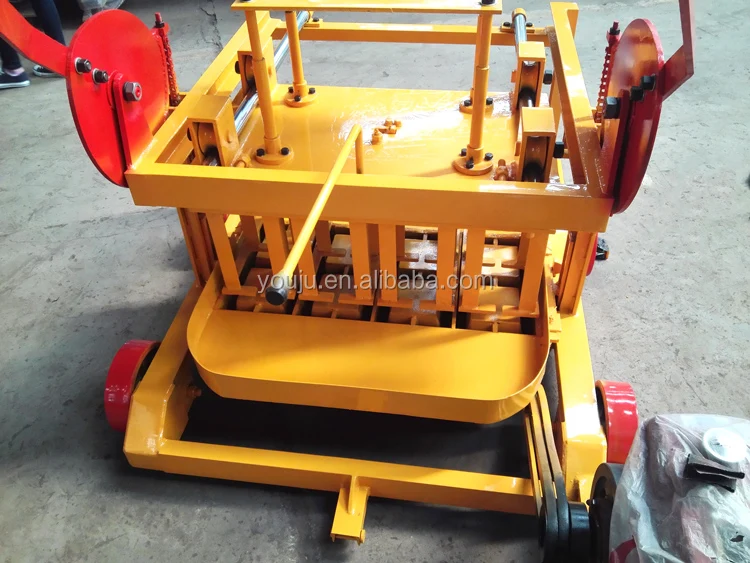
Stocked configuration — QMR4-45 mobile block machine units held ready for dispatch, matched to your site voltage and block format before crating.
Technical Specifications
| Parameter | Value |
|---|---|
| Model | QMR4-45 |
| Product Type | Mobile Egg Laying Block Making Machine |
| Overall Dimensions (L×W×H) | 2420 × 1320 × 1650 mm |
| Net Weight | 810 kg |
| Rated Power | 6 kW |
| Diesel Engine Option | 6 kW or 6–8 HP |
| Voltage | 220V / 380V / configurable to local supply |
| Moulding Cycle | 40–45 s |
| Pallet Size | No pallet required |
| Productivity (400×200×200 mm hollow block, 4 pcs/mould, 8 h) | 3,000 pcs/day |
| Productivity (400×150×200 mm hollow block, 5 pcs/mould, 8 h) | 3,500 pcs/day |
| Productivity (400×120×200 mm hollow block, 6 pcs/mould, 8 h) | 4,500 pcs/day |
| Automation Level | Semi-automatic |
| Power Source | Diesel engine or electric motor |
| Certification | CE |
Application Suitability
| Application | Material or Output |
|---|---|
| On-site hollow block production at construction projects | Crushed stone, river sand, cement, water |
| Temporary block yard for housing developments | Local aggregate, cement, graded sand |
| Small-scale paving brick and standard brick runs | Quarry dust, fly ash, cement blends |
| Remote site production where grid power is unreliable | Diesel-powered operation with locally sourced mix |
What "3,000 Blocks a Day" Actually Means on Your Site
Daily output figures only hold true when the block format, mould cavity count, and shift length are stated together.
When a supplier quotes a mobile block machine based on a single cycle time without naming the block size behind that number, buyers arrive on site expecting one throughput and get another. The QMR4-45 mobile block machine in stock runs a 40–45 second cycle, but the daily count shifts from 3,000 to 4,500 depending on whether you are pressing four, five, or six cavities per stroke. That gap matters when your project schedule is built around a fixed block delivery rate [NEED_CITE: block output calculation methods for mobile egg laying machines]. From my years coordinating dispatch out of Linyi, the calls I dread most come from buyers who planned a pour schedule around a number that never matched their actual block format.
Dispatch Timing You Can Build a Schedule Around
Project contractors do not have the luxury of flexible start dates. When a housing development breaks ground, every week of equipment delay cascades through labour bookings, material deliveries, and milestone payments. The QMR4-45 mobile block machine in stock is held in configurations that ship within confirmed lead windows, not estimated production queues. Before crating, we verify the destination voltage and frequency so the machine powers up on arrival rather than sitting idle while a transformer is sourced locally.
Container Loading and Machine Dismantling
At 810 kg and 2,420 mm in length, the QMR4-45 fits standard container loading without oversized freight surcharges. The machine is partially dismantled for transit — hopper, mould assembly, and power unit are secured separately to prevent shift damage during ocean freight. Buyers receive a loading plan showing lashing points and bracing positions before the container doors close. This matters because a mobile block machine in stock that arrives with cracked welds from poor bracing is not a fast delivery at all [NEED_CITE: container loading standards for heavy industrial machinery].
Reading the Specs That Matter on Site
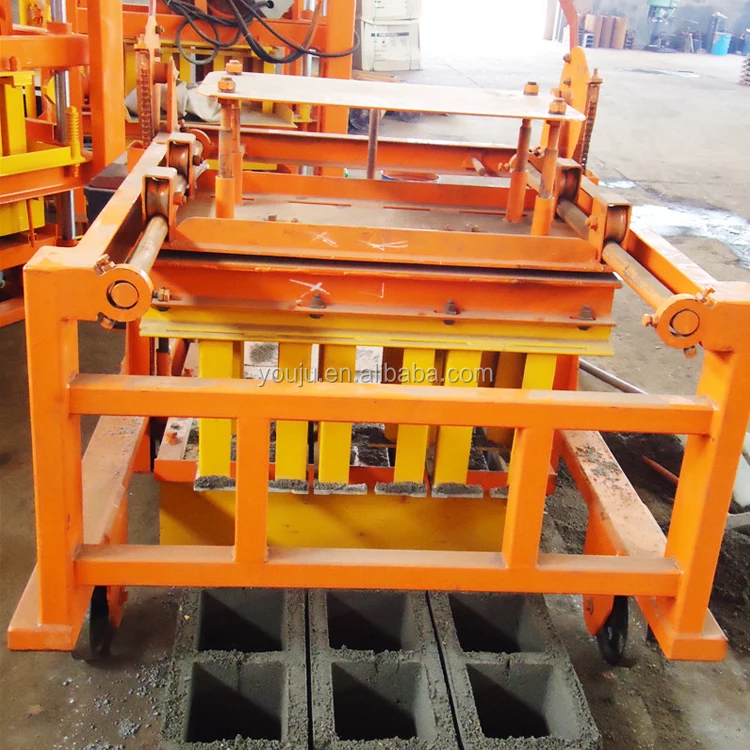
The 40–45 second moulding cycle governs your rhythm, but real daily throughput depends on how fast your crew feeds the mix and moves the machine forward after each lay. The egg-laying design means no pallets are required — blocks are deposited directly onto a level concrete floor, which eliminates pallet procurement, return logistics, and the curing rack space that pallet-based systems demand. The dual power option (6 kW electric or 6–8 HP diesel) determines whether you tie into site mains or run independently, a decision that should be made before the machine ships, not after. Voltage at 220V or 380V must match the destination country’s grid; running a 380V motor on a 220V supply will burn the winding within hours.
The Cost of Skipping the Voltage Conversation
I have watched machines sit on a dock for weeks because nobody confirmed whether the destination country runs 50 Hz or 60 Hz before the motor was wired. A mobile block machine configured for 380V/50Hz shipped to a 220V/60Hz market cannot be fixed with an adapter — the motor needs rewinding or replacement, and your project clock keeps ticking while that happens. Voltage and frequency confirmation must happen before production release, not after the bill of lading is issued [NEED_CITE: voltage and frequency standards by export market]. The same logic applies to control panel labelling and wiring diagrams: if your operator reads Portuguese, English-only stickers create confusion on the first day of production.
Why Source This Machine Here
Block machinery is the only product line in this factory, which means the QMR4-45 is not assembled from a catalogue of generic frames and third-party moulds — the press, mould, and power unit are specified as one matched system. Stocked configurations are built around the hollow block formats that sell in active markets, not the formats that happen to be convenient to produce. Dispatch lead times are quoted in writing before order confirmation, so you can align equipment arrival with your project mobilisation date. Factory test records are run on the specific block format you intend to produce, not a generic demo cycle. Mould and wear parts lists ship with every machine so the first replacement order does not require a guess.
Documentation & Verification
- Factory test record on your target hollow block format before dispatch
- Machine specification sheet with confirmed voltage and frequency
- Mould drawing and supported format list per cavity count
- Voltage and control language confirmation signed off pre-shipment
- Packing photographs showing bracing and lashing inside container
Installation, Commissioning & Support
- Level concrete floor required — no fixed foundation for the 2,420 × 1,320 mm footprint
- Diesel engine option removes need for dedicated 380V circuit on remote sites
- Partial dismantling for shipment means on-site reassembly of hopper and mould head
- First-day commissioning includes moulding cycle timing and mix adjustment to local aggregate
- Operator training covers mould change procedure between hollow block sizes
- Wear parts list included for hydraulic seals and mould wear surfaces
What to Share Before Requesting a Quote
To match a stocked QMR4-45 to your project, send the target block format and dimensions, your destination port, and the local voltage and frequency. If you plan to run diesel, confirm the engine HP preference. Share your intended daily output so the correct mould cavity count can be loaded before dispatch.
Frequently Asked Questions
Q: Is the QMR4-45 currently in stock, and what is the dispatch lead time?
A: Stocked units are held in standard configurations. Exact dispatch timing depends on the voltage and mould format you require, as pre-shipment verification and factory testing add lead days. We confirm the dispatch date in writing before you commit.
Q: How is the machine packed and loaded into a container for shipment?
A: The QMR4-45 is partially dismantled — hopper, mould assembly, and power unit are secured separately. A loading plan with lashing and bracing details is shared before container doors close so you can verify transit protection.
Q: What arrival estimate can I expect at my destination port?
A: Ocean freight transit time depends on the destination port and sailing schedule at the time of booking. We quote the estimated arrival date upfront in writing alongside the dispatch date so your project timeline stays aligned.
Q: Can I confirm voltage before the machine ships?
A: Yes. Voltage and frequency must be confirmed before production release. The QMR4-45 supports 220V, 380V, or custom configurations. Wiring a motor for the wrong supply will damage the winding, so this step is non-negotiable.
Q: What is the warranty coverage and when does it start?
A: Warranty terms are confirmed in the sales contract. Coverage start date — whether from dispatch or arrival — is specified in writing so there is no ambiguity about claim eligibility during the transit period.