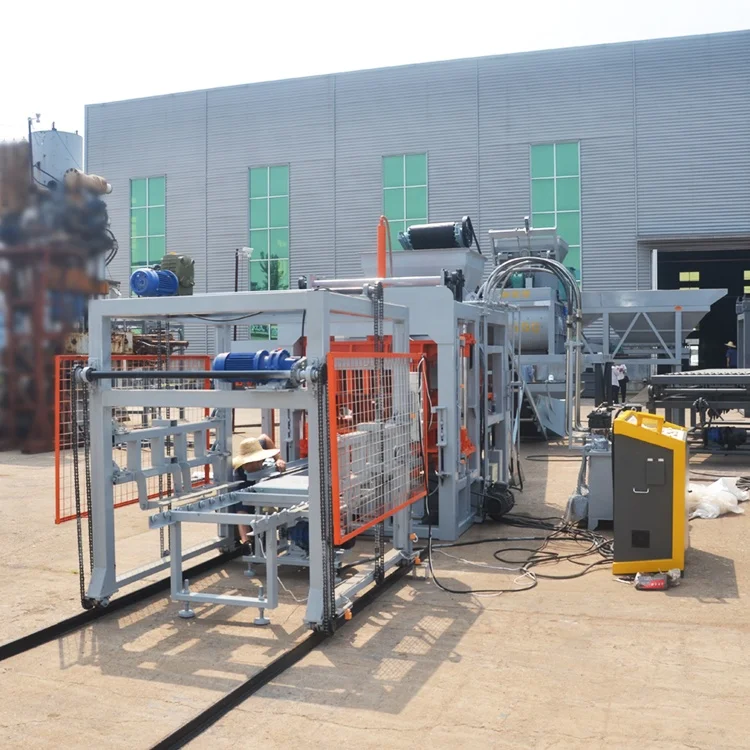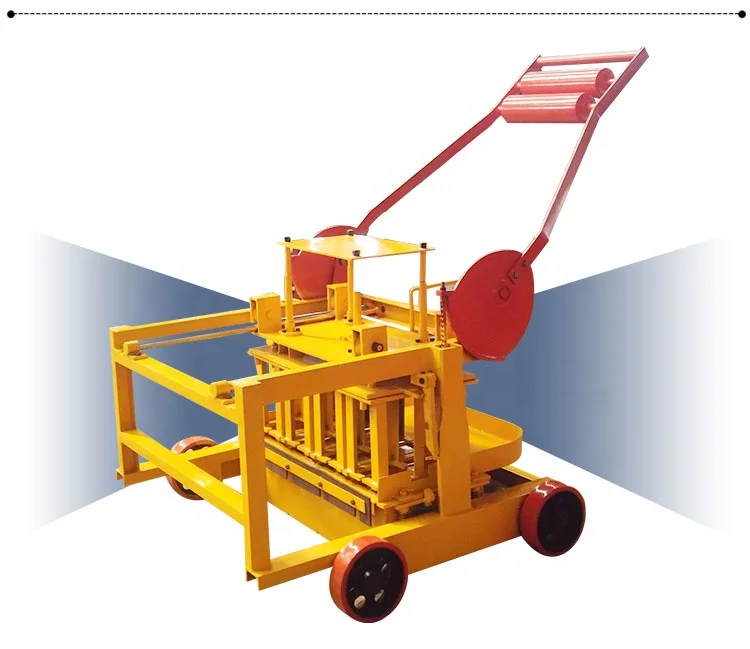

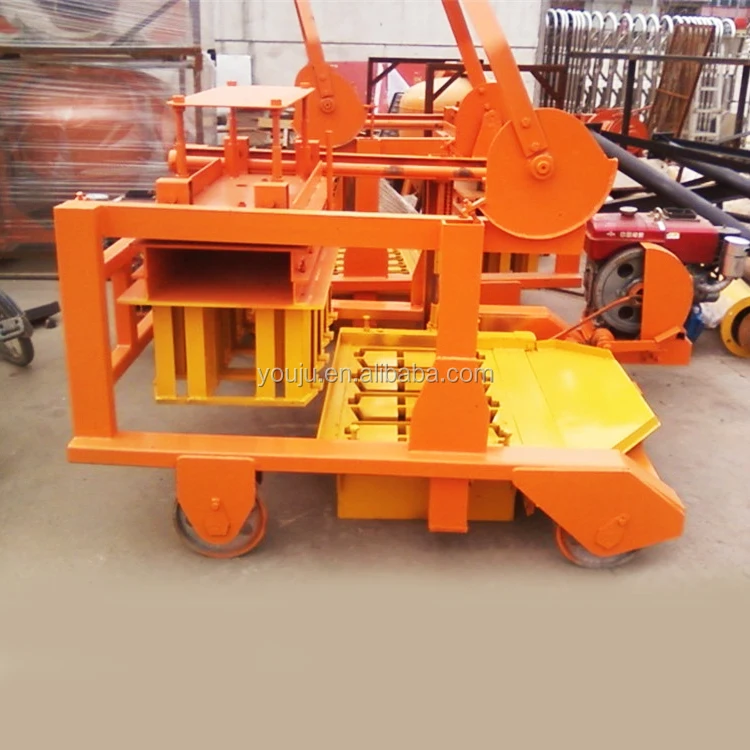
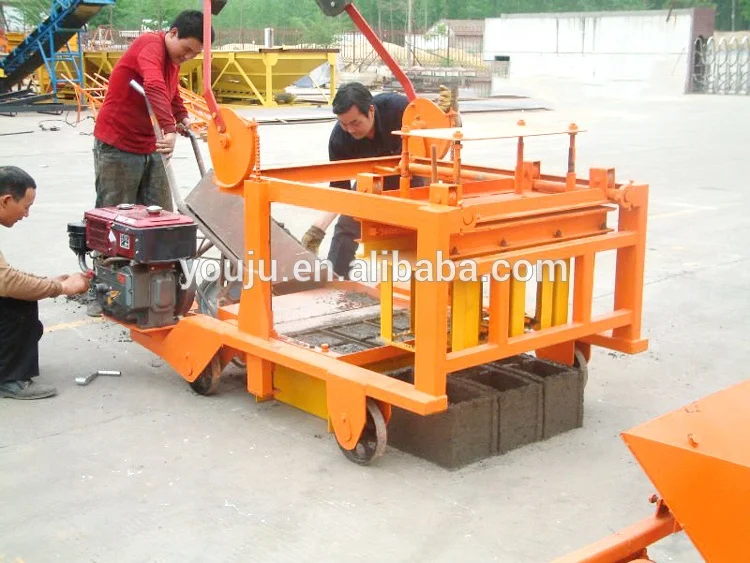
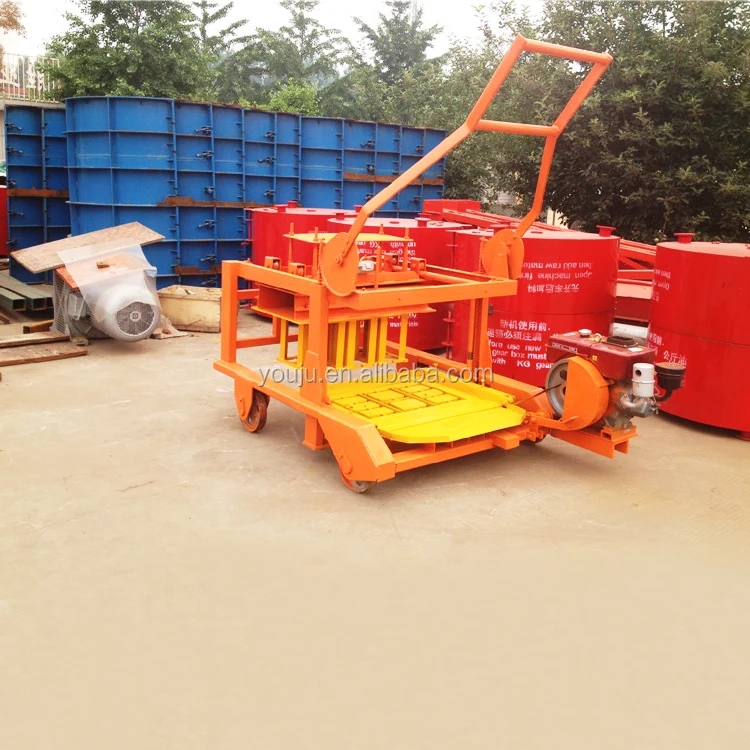

Description
Diesel-Ready Dispatch — every QMR4-45 leaves our Linyi yard with matched hydraulic lines and spare fuel filters already in the crate.
Technical Specifications
| Parameter | Value |
|---|---|
| Model | QMR4-45 |
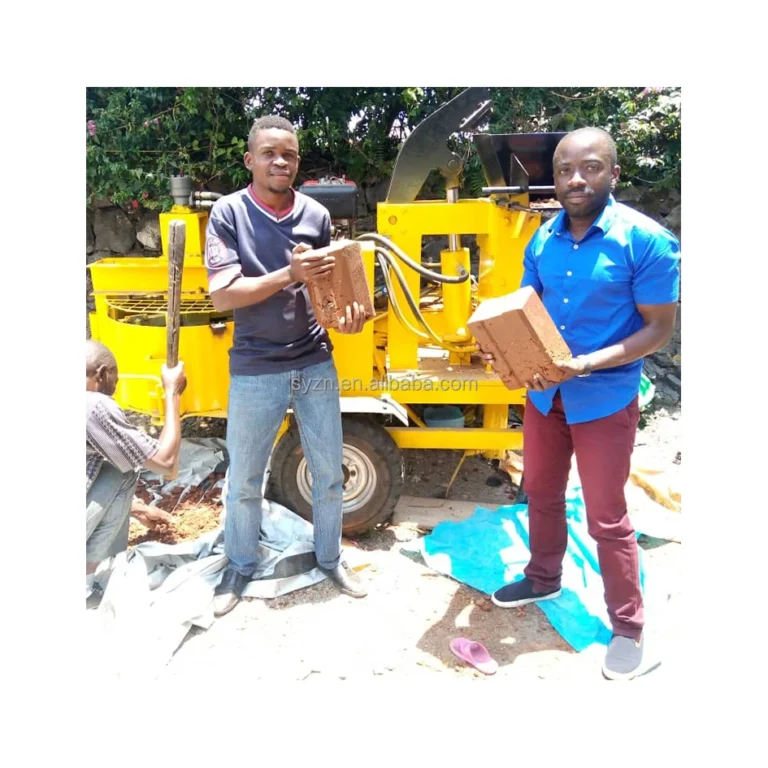
| Product Type | Mobile Egg-Laying Block Making Machine |
| Overall Dimensions (L×W×H) | 2420×1320×1650 mm |
| Net Weight | 810 kg |
| Moulding Cycle | 40–45 s |
| Pallet Requirement | None (egg-laying type) |
| Rated Power | 6 kW |
| Diesel Engine Option | 6 kW or 6–8 HP |
| Voltage | 220 V / 380 V or customized to local supply |
| Hydraulic Pressure Source | Diesel engine driven |
| Output Capacity | 3000 pcs/day (basis not stated in source — confirm block format) |
| Productivity — 400×200×200 mm Hollow Block | 4 pcs/mould, 40–45 s cycle, approx. 3000 pcs per 8-hour shift |
| Productivity — 400×150×200 mm Hollow Block | 5 pcs/mould, 40–45 s cycle, approx. 3500 pcs per 8-hour shift |
| Productivity — 400×120×200 mm Hollow Block | 6 pcs/mould, 40–45 s cycle, approx. 4500 pcs per 8-hour shift |
| Assembly State | Fully assembled, mobile on-site |
| Warranty | 1 year |
Application Suitability
| Application | Material or Output |
|---|---|
| On-site hollow block production | Crushed stone, sand, cement, water |
| Remote construction sites with unstable grid | Diesel-powered operation, no fixed plant |
| Small-scale block yards | Interchangeable hollow block moulds |
| First-operation entrepreneurs | Low site preparation, no pallets required |
Why the Diesel Filter Matters More Than the Price Tag
A mobile block machine fast delivery means nothing if the engine chokes on local fuel within the first week.
I once shipped a batch of QMR4-45 units to Nigeria and the buyer ran them on locally sourced diesel with high particulate content. The engines threw black smoke and shut down within days, waiting for replacement filters air-freighted from China. That downtime cost the contractor more than the machines themselves. Since then, every diesel-equipped QMR4-45 that rolls out of our yard carries two extra sets of fuel filters and we confirm oil specifications before dispatch [NEED_CITE: diesel fuel quality standards by region for small industrial engines]. A mobile block machine fast delivery only works when the machine actually runs on arrival.
Stock Positioning and Container Loading
The QMR4-45 sits at 810 kg and 2420×1320×1650 mm, which means multiple units can share a single 20-foot container alongside their standard mould sets. We dismantle only what is necessary — typically the mould carriage and hopper — so reassembly on-site takes a small crew a few hours rather than a full day. Buyers working to a project deadline need the machine on the ground producing blocks, not sitting in a partially assembled state while waiting for a missing bracket. This mobile block machine fast delivery model keeps standard configurations pre-built in our Linyi warehouse, so lead time is measured in days for packing and trucking to port, not weeks for fabrication.
Dispatch Verification Before the Crate Closes
Before any QMR4-45 is bolted to the container floor, we run the diesel engine through a loaded cycle with the heaviest mould installed. The test confirms hydraulic pressure holds through the full 40–45 second moulding stroke and that the vibration motor draws within tolerance [NEED_CITE: hydraulic system testing procedures for mobile block making equipment]. Voltage confirmation for electric-start models happens at this stage as well — a 380 V unit landing in a 220 V market without advance warning becomes a paperweight until a transformer arrives. Packing photographs are shared with the buyer before the container seal is applied, so you know exactly how your machine is braced and which moulds are in which crate.
Reading the Specs That Actually Matter
The 40–45 second moulding cycle applies across all three standard hollow block formats, but daily output shifts because each mould produces a different number of cavities per stroke. A 400×200×200 mm mould yields four blocks per cycle, while the 400×120×200 mm mould yields six — that is why the daily range spans from roughly 3000 to 4500 pieces per eight-hour shift. The 6 kW rated power must cover both the hydraulic pump and the vibration motor simultaneously, which is why we match the diesel engine option at 6–8 HP to provide adequate headroom for continuous operation in hot climates where engine output drops. The egg-laying design eliminates pallet cost entirely — blocks are deposited directly on a level concrete ground surface and left to cure in place, which removes pallet handling, stacking labour and curing rack investment from the equation.
The Hidden Cost of Skipping the Voltage Conversation
We have seen containers arrive at port only for the buyer to discover the control panel is wired for a voltage their site does not supply. Rewiring on-site in a country where the QMR4-45 has no local representation means either flying in an electrician or running the machine through an undersized transformer that burns out the vibration motor within a season [NEED_CITE: electrical equipment failure rates from voltage mismatch in export markets]. Confirming 220 V or 380 V — and whether the destination uses 50 Hz or 60 Hz — before production starts costs nothing. Discovering the mismatch after the machine clears customs costs a project its timeline.
What Buying From Our Yard Actually Gets You
Block machinery is our single focus, which means the QMR4-45 leaves as a matched system — engine, hydraulics, mould and vibration mechanism all tuned together rather than sourced from separate suppliers and bolted together on the warehouse floor. Configuration is set against the buyer’s actual block format and target output, not a catalogue default that looks impressive on paper but underdelivers on site. Standard moulds for the three hollow block sizes listed above ship with the machine, and custom mould drawings can be quoted alongside the same order. Automation level on this model is manual with diesel hydraulic assist, which is the right starting point for contractors who want low complexity and can add handling equipment later as volume justifies it. Our dispatch team in Linyi handles container loading plans, customs documentation support and packing photographs so the buyer knows the arrival timeline before the deposit clears.
Documentation & Verification
- Factory test record confirming loaded moulding cycle on your chosen block format before dispatch
- Machine specification sheet listing diesel engine rating and voltage configuration matched to destination
- Mould drawing and format list showing cavity count and dimensional tolerances for each block size
- Packing photographs documenting bracing, mould placement and container seal number before departure
- Operation and maintenance manual covering daily greasing points and fuel filter replacement intervals
Installation, Commissioning & Support
- Level concrete ground surface required; no fixed foundation or curing racks needed for egg-laying operation
- Diesel fuel specification confirmed before dispatch to match local supply quality and filter grade
- Fully assembled on wheels; reassemble hopper and mould carriage after container unload
- First production run supervised via remote video call to verify cycle timing and block density
- Two spare fuel filter sets included in the crate for early operation in high-particulate diesel environments
- Wear parts list with hydraulic seal and vibration motor brush specifications for local sourcing
What We Need From You to Confirm Stock
To lock a QMR4-45 from current inventory, we need your target hollow block format and the daily volume your site demands, your local voltage and frequency, and the port of destination so we can quote arrival timing. Let us know whether you need additional mould formats added to the same container.
Frequently Asked Questions
Q: Which QMR4-45 units and moulds are currently in stock for fast dispatch?
A: Standard diesel-equipped QMR4-45 machines with the three hollow block mould sets — 400×200×200 mm, 400×150×200 mm and 400×120×200 mm — are held in our Linyi yard. Stock levels fluctuate with seasonal demand, so we confirm availability against your order date before issuing a proforma.
Q: What is the dispatch lead time and how is the machine packed?
A: Stocked QMR4-45 units are typically ready for container loading within days of payment confirmation. The machine is partially dismantled for transport, braced inside the container, and packing photographs are sent before the seal is applied so you can verify the loading arrangement.
Q: Can the voltage be matched to my country’s standard before shipment?
A: Yes. We confirm your local voltage and frequency — 220 V or 380 V, 50 Hz or 60 Hz — during the order process and wire the electric-start components accordingly. This confirmation happens before production or packing to avoid costly on-site rewiring after arrival.
Q: What standard moulds ship with the machine, and can I add more?
A: Each QMR4-45 ships with interchangeable moulds for the hollow block formats listed in the specification table. Additional moulds for other block sizes can be added to the same container order if drawings are confirmed before the packing deadline.
Q: What arrival estimate should I plan for after order confirmation?
A: Sea freight transit depends on the destination port and current shipping schedules. We provide a port-to-port arrival estimate at the quotation stage so you can align site preparation and crew scheduling around a known delivery window.