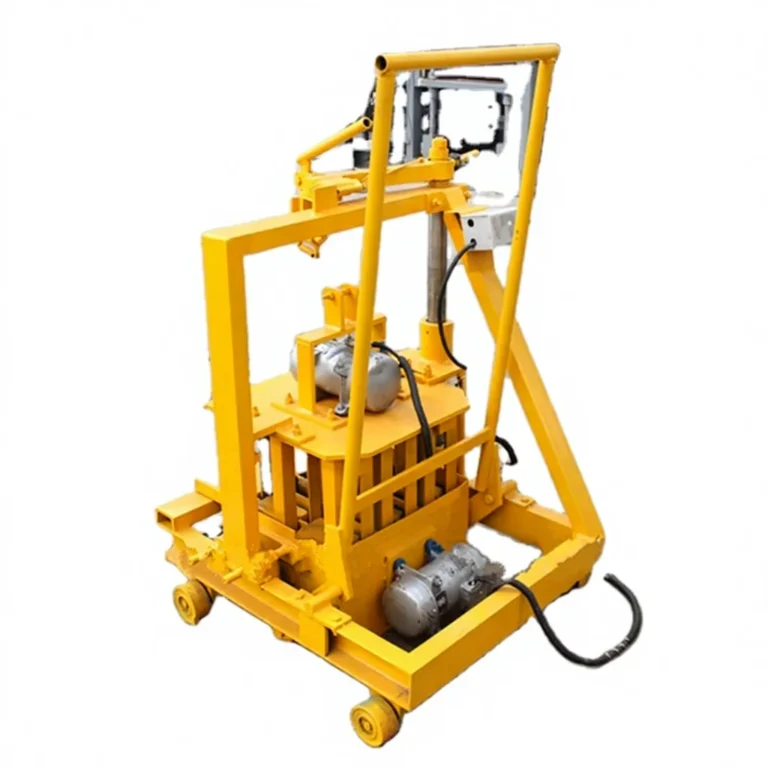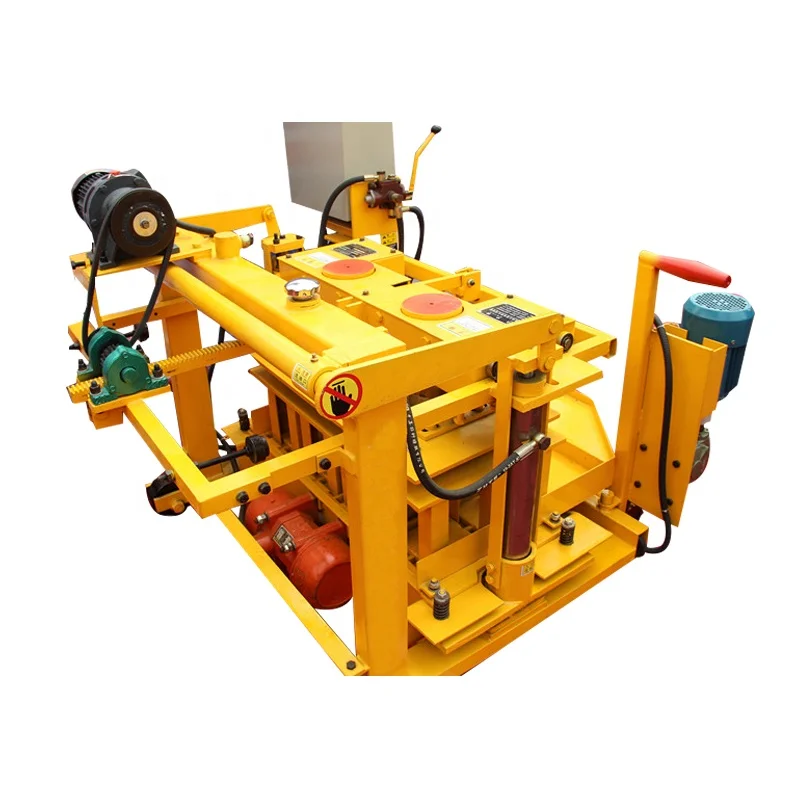

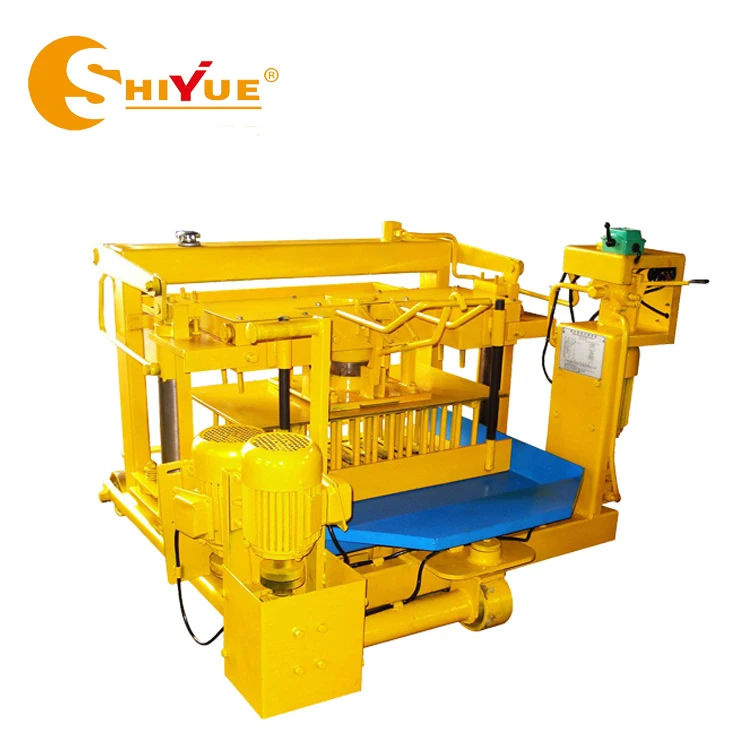
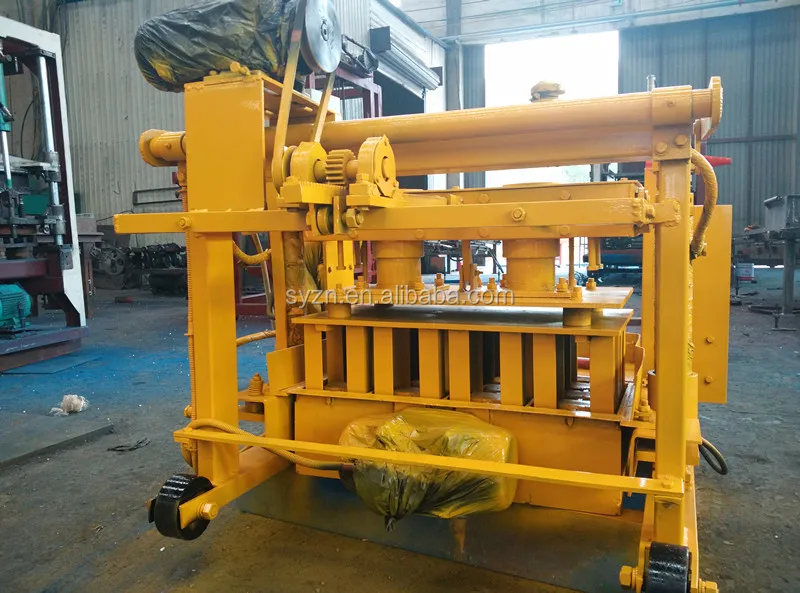


Description
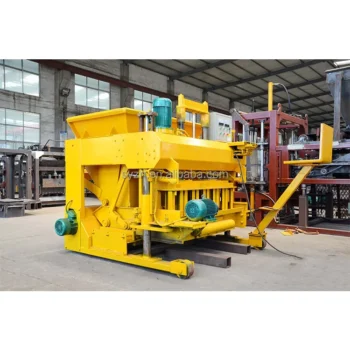
Stocked Configuration Match — the QMY4-30 mobile egg-laying block machine ships from inventory with mould formats and electrical parameters verified against your destination market before container loading.
Technical Specifications
| Parameter | Value |
|---|---|
| Model | QMY4-30 |
| Product Type | Mobile Egg-Laying Block Making Machine |
| Overall Dimensions (L×W×H) | 1300 × 1500 × 1000 mm |
| Net Weight | 950 – 1000 kg |
| Total Installed Power | 5.95 kW |
| Vibration Force | 28.6 kN |
| Excitation Frequency | 4500 r/min |
| Vibration Method | Mold Vibration |
| Molding Cycle | 30 s |
| Output Capacity | 3000 pcs/day (8 h) (basis not stated in source — confirm block format and material) |
| Raw Materials | Concrete, sand, cement, fly ash, lime, gypsum, stone dust, slag, river sand, construction waste, mine tailings, coal gangue |
| Automation Level | Manual / Semi-manual with hydraulic transmission |
| Pallet Requirement | None (egg-laying type lays directly on ground) |
| Control System | Manual handles with hydraulic pump motor and vibratory motor |
| Voltage & Frequency | Configurable to buyer destination — confirm before dispatch |
Application Suitability
| Application | Material or Output |
|---|---|
| On-site hollow block production at housing developments | Crushed stone, cement, sand, stone dust |
| Small contractor production in remote or mountainous areas | Fly ash, river sand, cement, lime |
| Coastal or desert site block manufacturing | Stone nitrate, gypsum, porcelain granule |
| Individual owner producing solid blocks for local sale | Construction waste, slag, coal gangue |
| First-time plant entrepreneur restocking for resale | Sandrock, carpolite, mine tailings |
Why Voltage Confirmation Must Happen Before Loading the Container
A mismatched voltage specification is the single most common reason a stocked machine sits idle after arrival.
I was in Nigeria last month when a QMY4-30 mobile block machine arrived at a job site wired for 220V/50Hz while the machine had been dispatched at 380V. The buyer spent three weeks sourcing a step-up transformer while the housing project schedule slipped and subcontractors stood around. That delay was not a logistics failure — it was a specification gap that a single phone call during the order stage would have prevented. Every stocked mobile block machine in stock now has its voltage and frequency locked to the buyer’s destination grid before it is cleared for container loading. [NEED_CITE: voltage and frequency standards by export market]
Dispatch Lead Time Versus Production Slot Waiting
Buyers working to a project deadline cannot absorb a production queue on top of ocean transit. The QMY4-30 mobile block machine in stock is pre-assembled, factory-tested, and staged for dismantling into a standard container. From order confirmation, the machine moves to packing and dispatch within a matter of days rather than weeks, removing one variable from a timeline that already depends on port clearance and inland transport.
Container Loading Without Special Dismantling
The sub-1000 kg weight and compact footprint mean the QMY4-30 fits inside a standard dry container without requiring open-top or flat-rack arrangements. Pallet-free egg-laying operation eliminates a separate pallet shipment, keeping the first container load focused on the machine and its moulds. This reduces freight complexity and lets buyers on tight schedules receive a complete production-ready package in a single consignment. [NEED_CITE: container loading practices for compact industrial machinery]
How Vibration Force and Molding Cycle Shape On-Site Output
The 28.6 kN vibration force delivered through mold vibration at 4500 r/min compacts the concrete mix inside the mould cavity within a 30-second cycle. For an egg-laying machine that moves forward after each press, a shorter cycle directly translates to more blocks laid per shift, provided the operator can keep pace with feeding and repositioning. The hydraulic pump motor assists the mould release, which matters when working with sticky fly ash or high-clay sand mixes that tend to adhere to mould walls.
What Pallet-Free Operation Removes from the First Shipment
A conventional static block line requires hundreds of curing pallets, a pallet return system, and a forklift that matches the pallet dimensions. The QMY4-30 eliminates that entire infrastructure from the initial purchase. Blocks are laid directly onto a prepared ground surface and the machine rolls forward, so the buyer’s first container needs to carry only the machine, moulds, and a basic tool kit. This makes the mobile block machine in stock an option for contractors who want production capability at a site that has no existing plant infrastructure.
Reading the Specification Sheet Against Your Local Conditions
Total installed power of 5.95 kW means the machine can run from a portable generator on a remote site, but the generator must be sized for motor starting current, which is higher than running load. The raw material list covers most locally available aggregates, yet the actual block strength depends on matching vibration force to the specific mix design — a sandy mix with low cement content will not compact the same way as a crushed-stone blend. Before dispatch, we confirm the buyer’s available aggregate and target block format so the stocked moulds and vibration settings correspond to real production conditions rather than catalogue defaults. [NEED_CITE: CE machinery directive requirements for industrial equipment]
What Happens When Electrical Parameters Are Assumed Instead of Verified
A machine wired for the wrong voltage will either fail to start or draw excessive current and trip breakers repeatedly. In the worst case, the vibratory motor winding overheats during commissioning, requiring a rewind that takes weeks in a market where motor repair shops are scarce. The cost of the repair is secondary to the project delay that accumulates while the machine sits non-operational. [NEED_CITE: industrial motor failure from voltage mismatch in emerging markets]
Why This Procurement Channel Fits a Deadline-Driven Buyer
Block machinery as a single focus means the machine, mould, and handling specification are evaluated together before the unit is staged for shipment. Stocked mobile block machine in stock configurations are matched to buyer destination voltage and frequency at the quotation stage, not after the deposit is paid. Container loading plans with dismantling detail and packing photographs are provided before dispatch so there are no surprises at the port of origin. Customs documentation support is included in the shipment package, reducing clearance friction at destination. Mould formats in stock alongside the machine mean the buyer can add hollow and solid block capability without a separate production run.
Documentation & Verification
- Factory test record on your specified block format before dispatch
- Packing photographs showing dismantling state prior to container sealing
- Voltage and frequency confirmation sheet signed before shipment release
- Customs documentation support package for destination port clearance
- Operation manual with hydraulic schematic and mould change procedure
Installation, Commissioning & Support
- Ground surface must be level and compacted to support egg-laying block release across the 1300 × 1500 mm machine footprint
- Power supply circuit sized above 5.95 kW running load to accommodate motor starting current
- Machine arrives partially dismantled; hydraulic pump and vibratory motor are reconnected on site
- First molding cycle verifies 30-second timing and 28.6 kN vibration against local aggregate mix
- Mould change procedure covered during commissioning for each stocked format supplied
- Hydraulic wear parts list provided with recommended reorder intervals
What to Include in Your First Inquiry
Tell us the destination country and local grid voltage and frequency so the stocked configuration can be matched before quotation. Specify which block formats your market sells — hollow, solid, or both — and the target daily output so we can confirm the stocked moulds cover your range. If you have a project start date, share it so the dispatch and arrival estimate can be quoted alongside the machine itself.
Frequently Asked Questions
Q: Which QMY4-30 configurations and mould formats are currently in stock?
A: The QMY4-30 mobile block machine in stock is available with hollow block and solid block moulds staged alongside the machine. Electrical configuration is set to buyer destination voltage and frequency after order confirmation. Stocked units carry the standard 5.95 kW power package with mold vibration system ready for container loading without a production wait.
Q: What is the dispatch lead time from order confirmation to container loading?
A: Once voltage, frequency, and mould formats are confirmed, the stocked QMY4-30 moves to dismantling and packing. Container loading typically follows within a matter of days rather than weeks, since the machine does not enter a production queue. Exact timing is quoted at the proposal stage based on current stock position and port schedules.
Q: How is the machine packed and dismantled for container shipment?
A: The QMY4-30 is partially dismantled to fit a standard dry container given its 1300 × 1500 × 1000 mm dimensions and sub-1000 kg weight. Hydraulic pump, vibratory motor, and control handles are disconnected and secured. Packing photographs are shared with the buyer before the container is sealed so the loading state is fully documented.
Q: What arrival estimate can I expect for my destination port?
A: Arrival timing depends on the origin port departure schedule and destination routing. We provide an estimated arrival window at the quotation stage based on current shipping line schedules. This estimate covers port-to-port transit; inland haulage from the destination port to your site is planned separately.
Q: Are spare moulds and hydraulic wear parts shipped together or stocked separately?
A: Additional mould formats ordered alongside the QMY4-30 are loaded into the same container when stock is available. Hydraulic wear parts for the pump and vibration system can be included in the initial shipment. Parts stocked separately are quoted with their own dispatch lead time so buyers can plan reorder timing against production schedules.