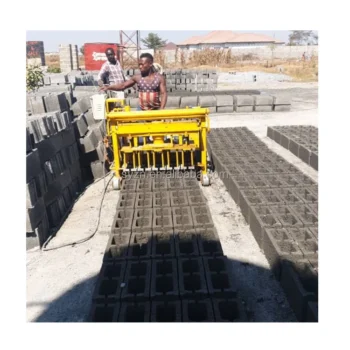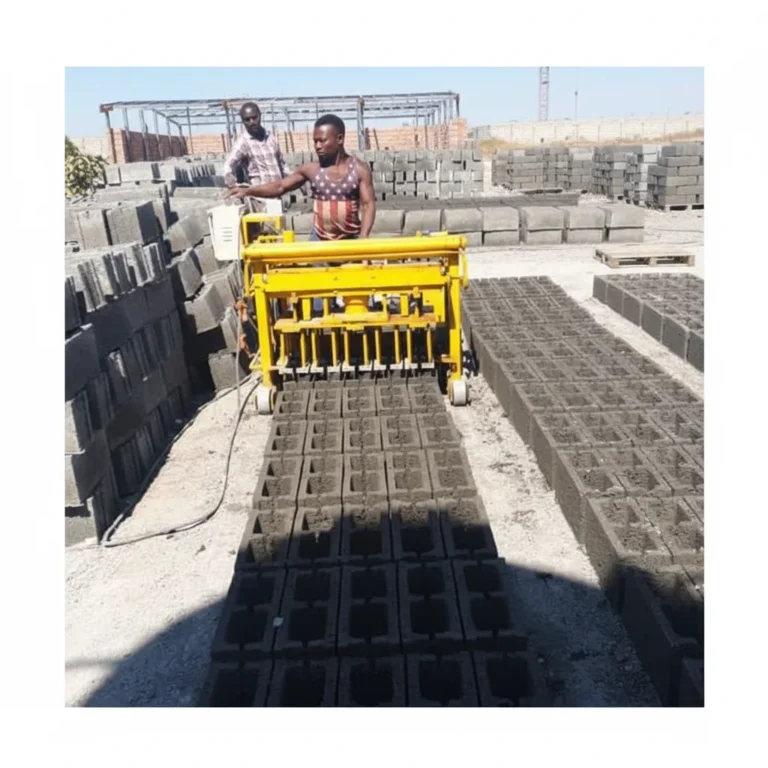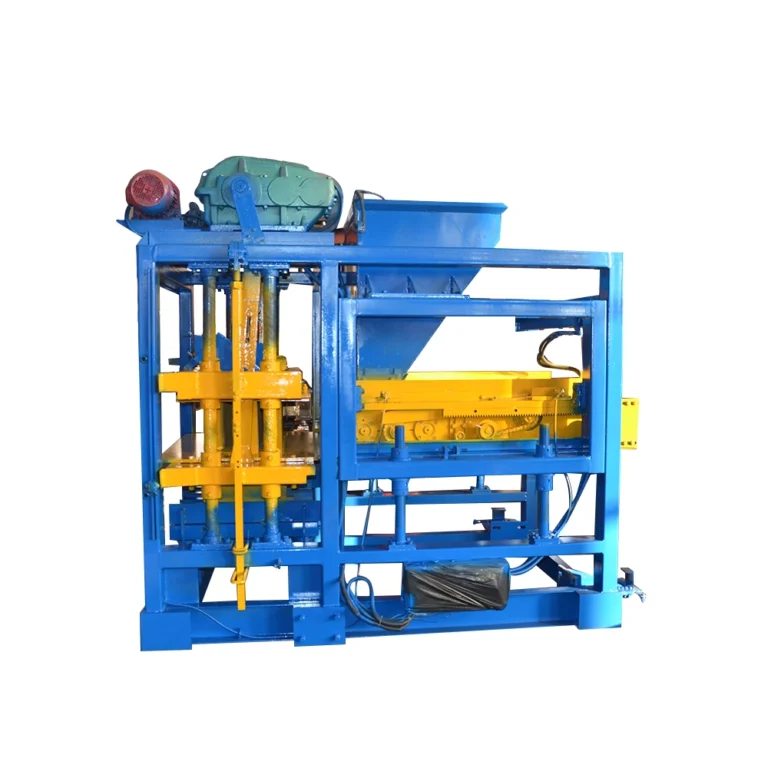
Description
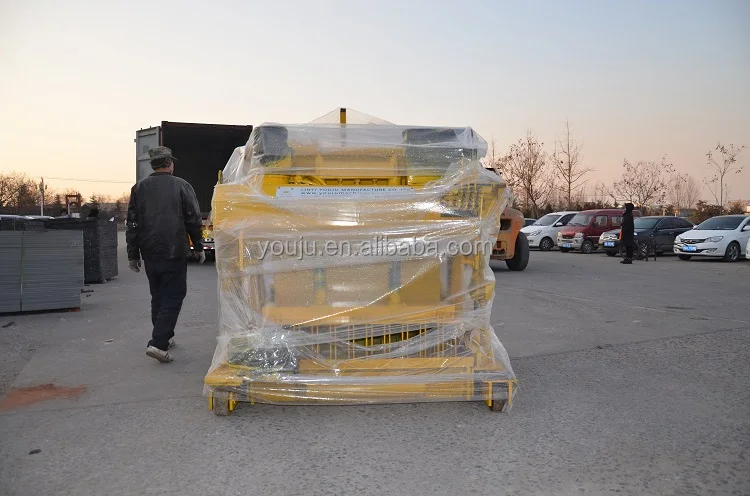
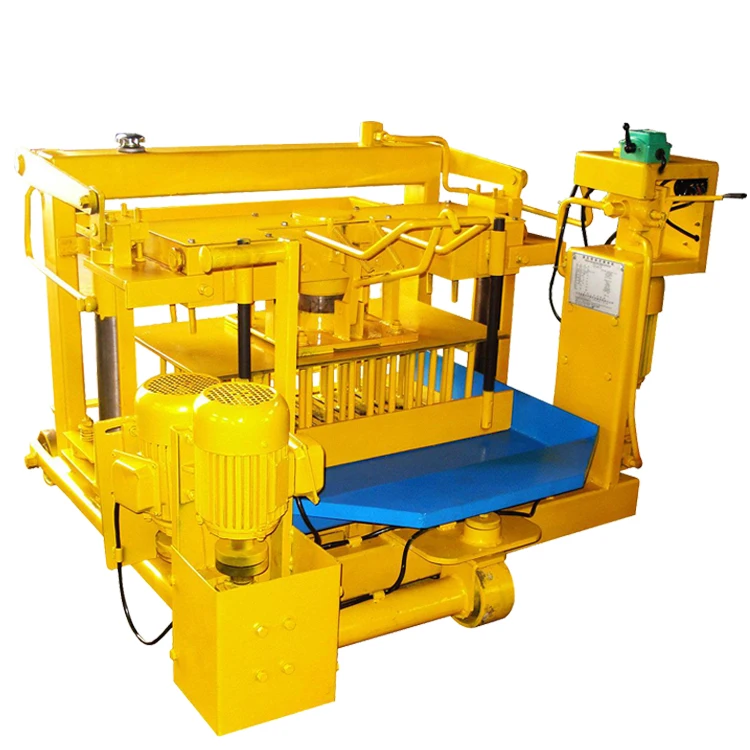
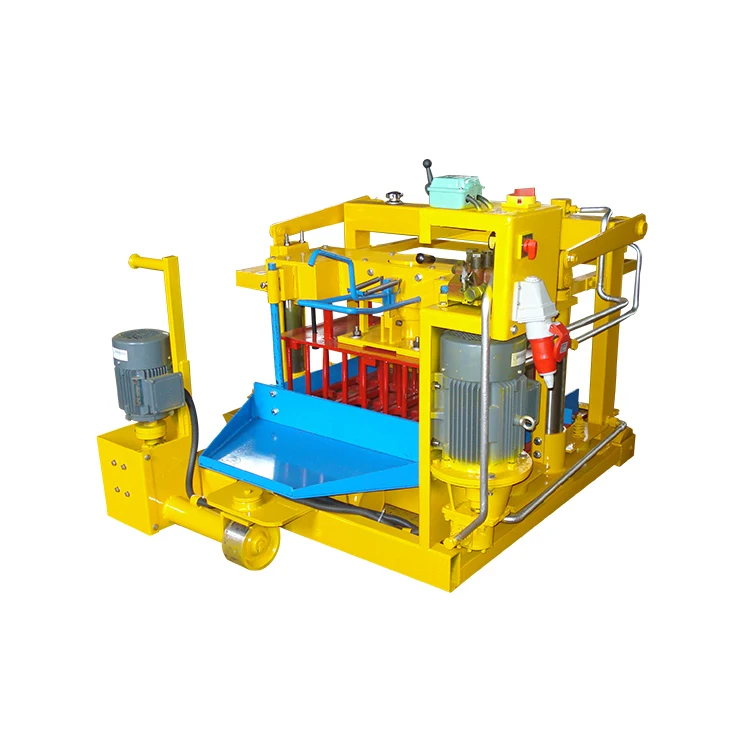
Stocked and Ready — QMY4-30 mobile block machines sitting in our Linyi yard right now, inspected and crated for container loading within days, not weeks.
Technical Specifications
| Parameter | Value |
|---|---|
| Model | QMY4-30 |
| Product Type | Mobile Block Making Machine |
| Overall Dimensions (L×W×H) | 1300 × 1500 × 1000 mm |
| Net Weight | 950–1000 kg |
| Vibration Method | Mold Vibration |
| Exciting Power | 28.6 KN |
| Excitation Frequency | 4500 r/min |
| Total Power | 5.95 kW |
| Voltage & Frequency | 380V ± 10% / 50Hz (verify against site supply before dispatch) |
| Control System | Manual Operation |
| Automation Level | Manual |
| Raw Materials Accepted | Concrete, fly ash, cinder, coal gangue, industrial waste residue, river sand, gravel, cement |
| Mould Formats | Hollow block, solid block |
| Pallet Requirement | Not required (egg-laying type) |
Application Suitability
| Application | Material or Output |
|---|---|
| On-site hollow block production for housing projects | Crushed stone, river sand, and cement mixed on the job site |
| Small-scale solid block manufacturing | Fly ash, cinder, or coal gangue blended with cement |
| Local block supply for remote construction sites | Industrial waste residue and locally available aggregate |
| Entrepreneur-led first block plant with minimal infrastructure | Any standard concrete mix without a fixed curing rack setup |
Why "In Stock" Matters More Than Catalog Capacity
A machine on the water is worth more than a machine on the drawing board when your pour date is set.
Construction contractors routinely face a gap between the lead time quoted by a manufacturer and the date their foundation crew is ready to start laying block. When you are working against a project deadline, a mobile block making machine in stock for fast delivery closes that gap entirely. The QMY4-30 units we hold in our yard have already passed factory vibration and wiring checks, meaning the only remaining step is container loading. [NEED_CITE: typical lead time differences between stocked and built-to-order block machinery]
I have watched a site in East Africa go idle for over two weeks because the block machine ordered was still in production when the building footprint was already cleared. That is the scenario this inventory position exists to prevent.
Dispatch Timeline From Yard to Port
A mobile block making machine in stock at our Linyi facility can typically be dismantled, crated, and moved to the loading point within a matter of days. Because the QMY4-30 is a compact egg-laying unit weighing under 1,000 kg, it does not require the heavy-lift logistics that a full automatic line demands. Container loading is straightforward: the machine is broken down into its main frame, vibration assembly, and mould, then secured against shifting during ocean transit. Buyers working to a fixed project start date should confirm current stock status and the next available sailing from Qingdao or Lianyungang before committing.
What Arrives With the Machine
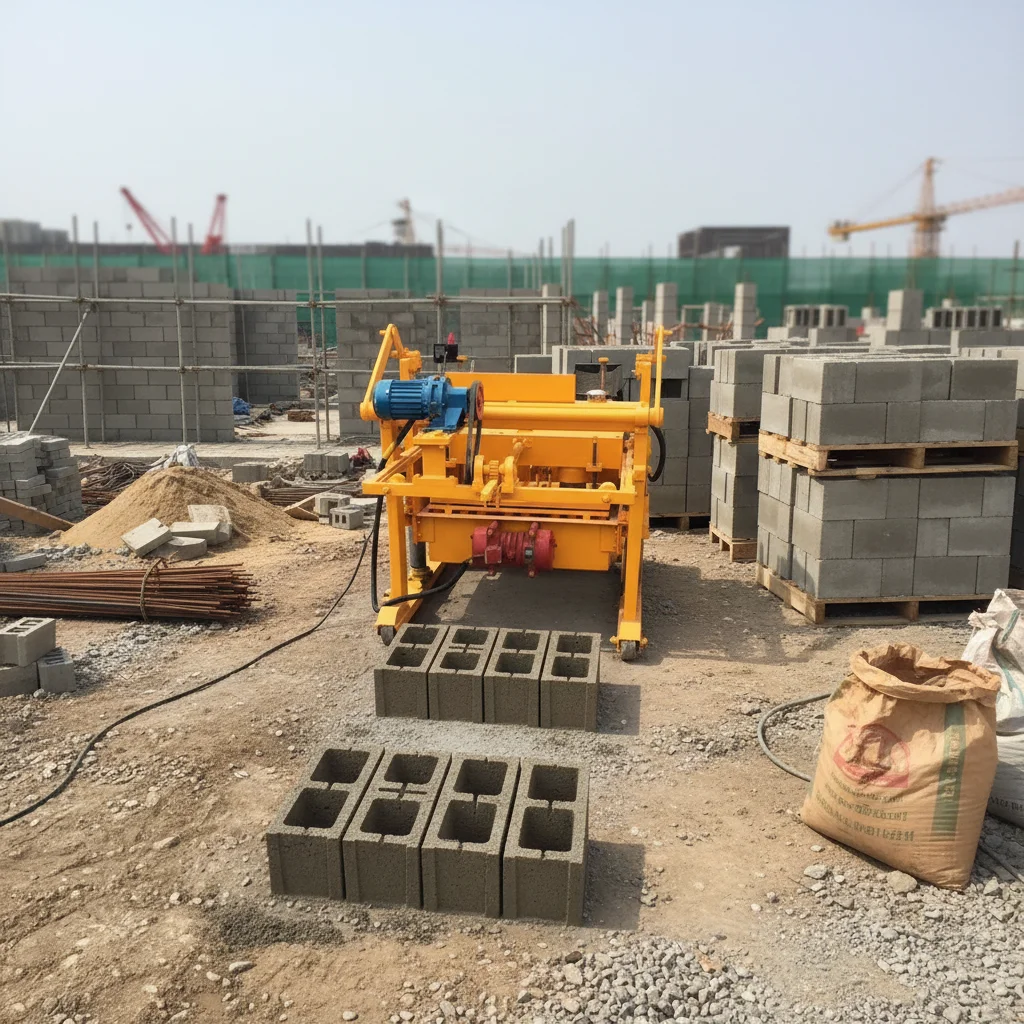
Every stocked QMY4-30 ships with the standard mould set for hollow and solid block formats, the vibration motor assembly, and the manual operating hardware. The unit arrives as a mobile egg-laying machine, meaning it lays block directly onto the ground surface and moves forward on its own wheels. No pallet feeding system, no curing rack infrastructure, no fixed plant foundation is required on arrival. The buyer needs a level, hardened ground area and a 380V three-phase power supply to begin production immediately after reassembly. [NEED_CITE: typical ground preparation requirements for mobile egg-laying block machines]
Understanding the Power and Vibration Numbers
The QMY4-30 draws 5.95 kW in total, which is a low utility demand compared to stationary hydraulic press lines that can pull 30 kW or more. This means the machine can run from a standard site generator in locations where grid power is unreliable or unavailable. The 28.6 KN exciting force delivered at 4,500 r/min through mold vibration is what compacts the concrete mix into the mould cavity. For a manual egg-laying machine, this vibration specification determines block density and, ultimately, block strength. The excitation frequency and force must be matched to the buyer’s specific mix design — a fly-ash-heavy mix compacts differently from a crushed-stone mix, and running the wrong ratio produces blocks that crumble at the edges before curing is complete.
The Hidden Cost of Unconfirmed Voltage and Spare Parts
One of the most common reasons a newly arrived block machine sits idle on site is a voltage mismatch. The stocked QMY4-30 carries a 380V ± 10% / 50Hz electrical specification as standard. If the destination site runs on a different voltage or frequency — 220V, 440V, 60Hz — the motor will either fail to start or burn out within the first operating shift. I once saw a job site in West Africa lose two full weeks because the replacement bolts for a mould change were a metric thread that no local hardware supplier stocked. That is why every dispatch now includes a confirmed spare-parts list and a voltage verification step before the container door closes. [NEED_CITE: common electrical and mechanical causes of block machine downtime on export sites]
Why Source This Machine Through This Channel
Block machinery is our single focus, so the QMY4-30 is supplied as a matched system: machine, mould, and operating hardware specified together rather than assembled from separate vendors. Stocked units have already been through factory vibration and electrical testing, so the machine that arrives on site is the machine that was validated before packing. Moulds for the hollow and solid block formats the buyer’s local market actually sells are included in the stock unit, avoiding a second round of ordering and waiting. Our documentation package arrives with the machine — not after it — so customs clearance and commissioning are not delayed by missing paperwork. Container loading plans and packing photographs are provided before the unit leaves the yard, giving the buyer full visibility into what is on the truck.
Documentation & Verification
- Factory test record confirming vibration motor output and wiring integrity before dispatch
- Voltage and frequency confirmation sheet signed off against your site supply specification
- Packing photographs showing crating, bracing, and container load plan before door seal
- Mould drawing and format list for every mould included in the shipped unit
- Customs documentation support matched to your destination port requirements
- Operation and maintenance manual in the operator’s working language
Installation, Commissioning & Support
- Reassembly on a level, hardened ground surface; no fixed foundation or curing rack required
- 380V three-phase connection with dedicated circuit breaker rated for the 5.95 kW total draw
- Vibration motor and mould alignment check performed on site before first production run
- Operator walkthrough covering mould change procedure, mix loading, and machine repositioning
- Spare mould bolts and vibration motor brushes included in the dispatch package
- Ground surface inspection guidance to prevent block cracking from uneven laying
Before You Send the Inquiry
Tell us the block format your local market buys most — hollow or solid, and the dimensions. Share your destination port and the voltage and frequency available at the job site, so we can confirm whether the stocked 380V / 50Hz unit matches or needs adjustment before loading. If you have a project start date, include it so we can map the dispatch against the next available sailing.
Frequently Asked Questions
Q: Is the QMY4-30 currently in stock and how quickly can it ship?
A: We hold QMY4-30 mobile block making machines in our Linyi yard, inspected and ready for container loading. Dispatch lead time depends on container availability and the next sailing schedule from the nearest port. Confirm current stock status at the time of inquiry, as inventory moves and units are reserved on a first-confirmed basis.
Q: How is the machine dismantled and loaded into a container?
A: The QMY4-30 is broken into its main frame, vibration assembly, and mould set for loading. At under 1,000 kg total weight, it does not require heavy-lift equipment. Packing photographs and a load plan are shared with the buyer before the container door is sealed, so you know exactly how the machine is braced for ocean transit.
Q: What is the estimated arrival time at my destination port?
A: Ocean transit time depends on the destination port and the shipping line’s schedule from Qingdao or Lianyungang. We provide an arrival estimate based on the next available sailing at the time of order confirmation. Buyers should factor in local customs clearance time on top of the ocean transit window.
Q: Are standard moulds for hollow and solid blocks included?
A: Yes. The stocked QMY4-30 ships with moulds for standard hollow and solid block formats. If your market requires a specific block dimension or a custom format beyond the standard set, confirm this before dispatch so we can include the correct mould or advise on additional lead time.
Q: What voltage does the stocked unit carry and can it be changed?
A: Stocked units carry 380V ± 10% at 50Hz. If your site operates on a different voltage or frequency, tell us before dispatch. Motor and wiring adjustments can be made at the yard before loading, but only if we know your site supply specification in advance.