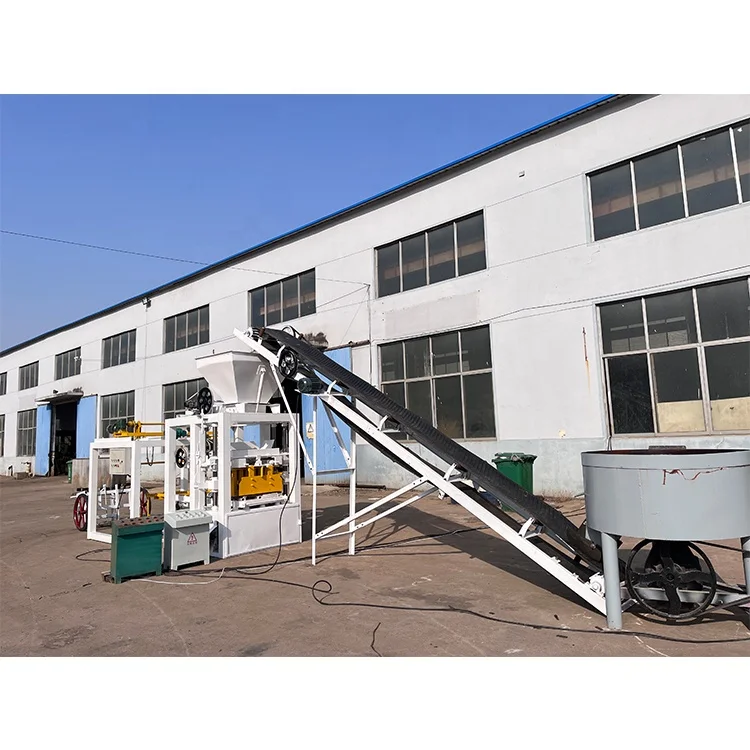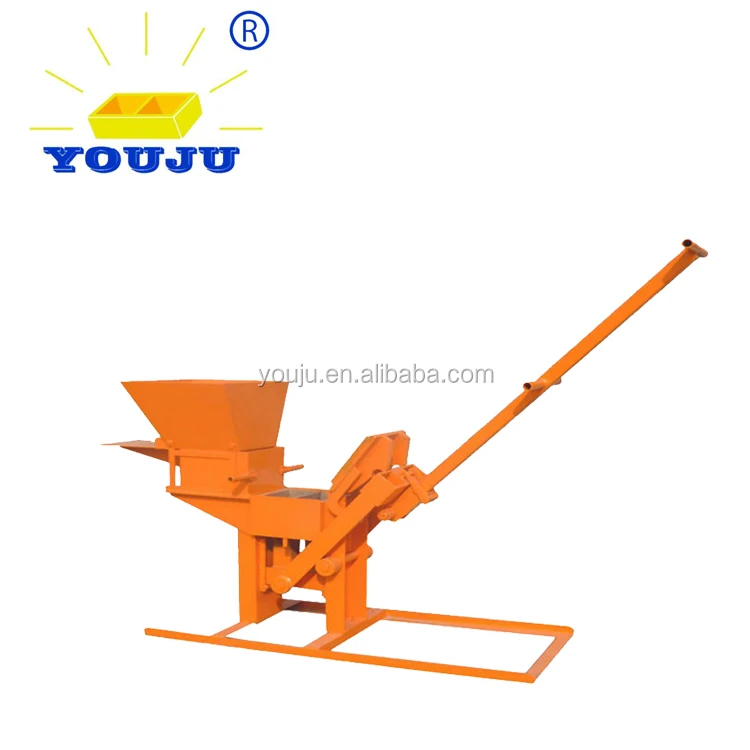

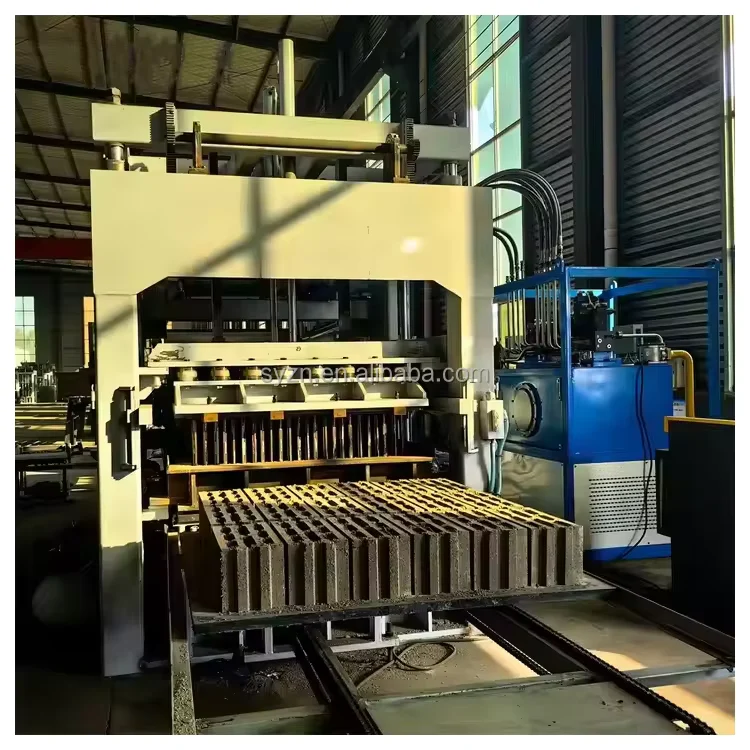
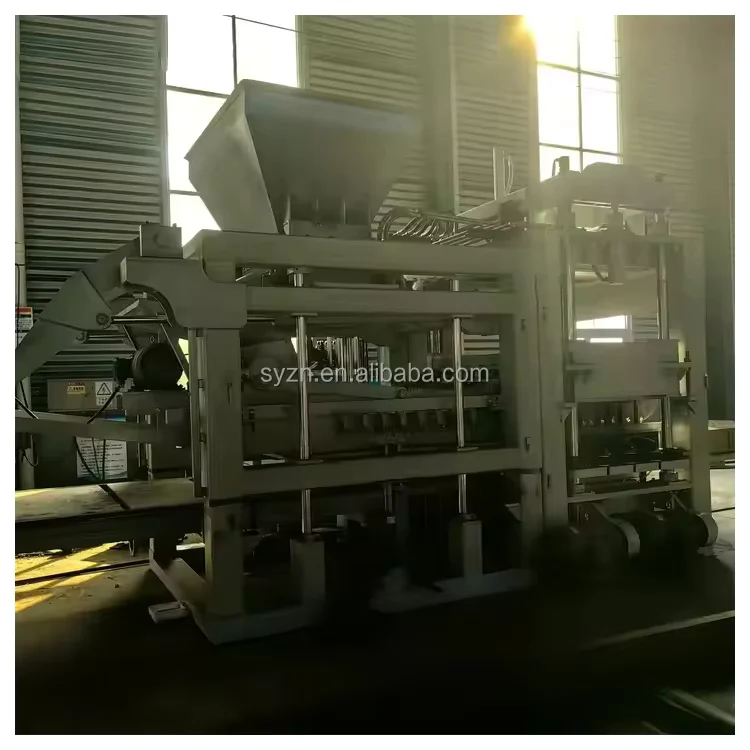
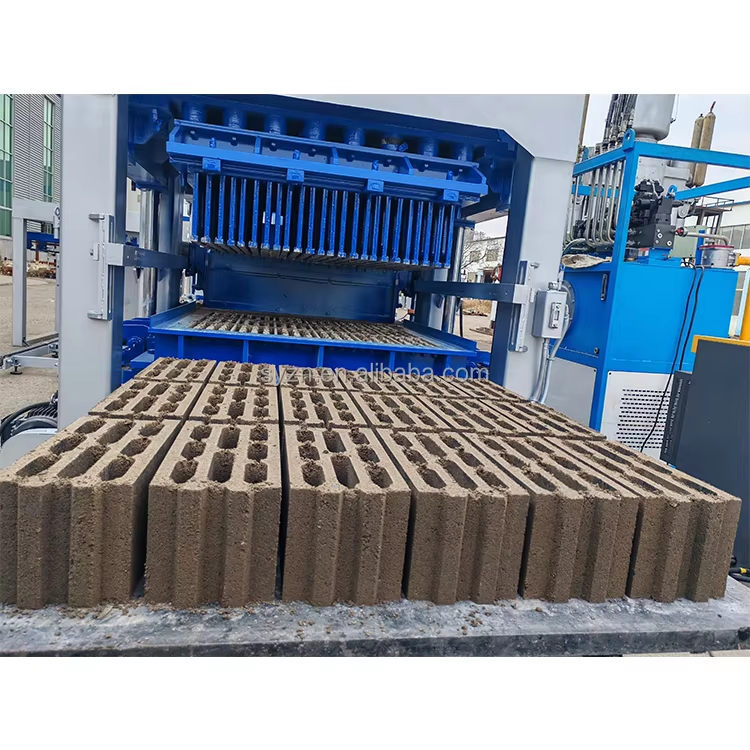
Description
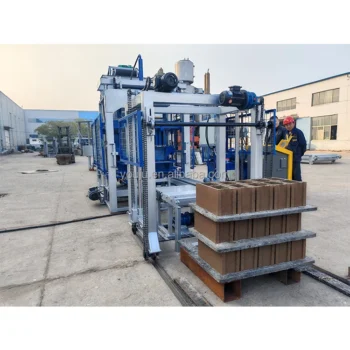
Integrated shipment readiness — The press, handling stations, and critical wear parts are loaded into the same containers to prevent project delays upon arrival.
Technical Specifications
| Parameter | Value |
|---|---|
| Model | QT18-15 |
| Product Type | Fully Automatic Block Production Line |
| Method | Hydraulic Pressure |
| Rated Pressure | 100 MPa |
| Machine Dimensions (L×W×H) | 8100 × 1600 × 2610 mm |
| Machine Weight | 7200 kg |
| Total Mass | 10 T |
| Pallet Size | 1350 × 1350 mm |
| Voltage Options | 380 V, 415 V, 220 V, 440 V |
| Core Components | PLC, Pressure Vessel, Engine, Gear, Motor, Pump, Bearing, Gearbox |
| Worker Required | 3-5 |
| Molding Cycle | 15 s (basis not stated in source — confirm block format / material / thickness) |
| Brick Size Options | 400×100×200, 400×120×200, 200×100×60, 300×150×100, 400×150×200, 240×115×90, 200×200×60, 150×150×100, 400×200×200, 230×220×115 mm |
| Color | Customizable |
| Warranty | 1 Year |
Application Suitability
| Application | Material or Output |
|---|---|
| Hollow block production | Concrete and cement for structural walls |
| Solid brick manufacturing | Flyash and crushed stone for load-bearing builds |
| Paving block laying | High-density concrete for driveways and walkways |
| Interlock block forming | Cementitious mixes for retaining walls |
| Curbstone extrusion | Heavy-duty concrete for road edges |
Why Arrival Timing Matters More Than Quoted Cycle Times
A fast molding cycle means nothing if the equipment is stuck at the port or missing a crucial component. Securing a QT18-15 block machine in stock ensures your construction schedule survives the ocean transit. When buyers focus solely on theoretical output, they often overlook the logistical realities of heavy machinery delivery. I have seen project sites sit completely idle for weeks because a single hydraulic hose or mixer blade was left behind during container loading. The physical footprint and total mass dictate how the line travels, and having upfront arrival estimates prevents costly contractor penalties [NEED_CITE: standard construction delay penalty clauses].
Container Loading and Dismantling Logistics
Moving a 10-ton press across oceans requires precise dismantling and weight distribution. The 8100×1600×2610mm main frame must be separated from the hydraulic station and pallet feeders to fit standard shipping dimensions. When you order a QT18-15 block machine in stock, the loading plan is calculated before the first bolt is removed. This prevents the common nightmare of arriving at the destination port only to realize the final pallet stacker was left on the dock because the container reached its volume limit.
Upfront Arrival Estimates for Tight Deadlines
Contractors working against the rainy season or strict handover dates cannot afford vague shipping promises. Providing clear dispatch lead times and realistic ocean transit windows allows site managers to prepare the concrete foundation in advance. Knowing exactly when the equipment clears customs means your installation crew is on-site the day the containers open. This level of scheduling certainty is the primary advantage of sourcing from immediate inventory rather than waiting for a production slot [NEED_CITE: global ocean freight transit time variability].
Matching the Pallet Footprint to Your Curing Yard
The 1350×1350mm pallet dimension is not an arbitrary choice; it dictates the entire layout of your wet block storage area. Before the machinery leaves the factory, this footprint must align with the forklifts you already own and the square footage of your curing racks. If the pallets are too large for your existing handling equipment, you will face immediate bottlenecks on the first day of production. Verifying these spatial requirements before shipment avoids expensive equipment swaps at the destination.
The Hidden Cost of Missing Wear Parts
I shifted from after-sales repair to export sales after years of fixing block production lines across Africa and South Asia. I still remember a fully automatic line where the buyer skipped spare wear parts to save on the initial invoice; a broken mixer blade halted production for three weeks waiting for shipments. Now, when I handle dispatch, I ensure critical spares are loaded in the same container. Waiting for international air freight to deliver a simple gearbox seal turns a minor maintenance event into a catastrophic project delay [NEED_CITE: industrial air freight costs versus ocean shipping].
Securing Your Project Through Inventory Availability
Sourcing from ready inventory eliminates the typical multi-week manufacturing queue. The machinery is pre-assembled, tested, and prepared for immediate dismantling and crating. We load the press, the hydraulic power pack, and the essential spare wear parts into the same container to keep projects on schedule without costly downtime. Standard moulds for common hollow and solid formats are staged alongside the mainframe. Voltage configurations and PLC language parameters are verified prior to crating, ensuring the line powers up correctly the moment it connects to the local grid.
Documentation & Verification
- Factory test record confirming hydraulic pressure stability before dismantling.
- Detailed container loading plan showing weight distribution for the 10T mass.
- Electrical schematic matching your confirmed 380V, 415V, 220V, or 440V supply.
- Video outgoing-inspection of the core components prior to container sealing.
- Complete wear parts and mould list packed inside the main control cabinet.
Installation, Commissioning & Support
- Foundation blueprints matched to the 8100×1600×2610mm machine footprint.
- Dedicated power circuit requirements for the multi-voltage motor configuration.
- Step-by-step reassembly guide for the dismantled hydraulic pressure vessel.
- On-site parameter setting for the PLC to match local grid frequency.
- Operator training focused on the 3-5 worker manual handling stations.
- Immediate replacement guide for the included gearbox and bearing spares.
Prepare Your Site Before the Containers Arrive
To ensure a smooth handover, please provide your local voltage and frequency standards so the electrical cabinets are configured before crating. Confirm the exact dimensions of your curing area to verify the 1350×1350mm pallet flow. Let us know if you require specific standard moulds included in the initial shipment to begin production immediately upon uncrating.
Frequently Asked Questions
Q: What is the exact dispatch lead time for the QT18-15 block machine in stock?
A: Because the equipment is already built and tested, dispatch lead times are significantly shorter than custom orders. Once your voltage and PLC language requirements are confirmed, the machinery is dismantled, crated, and moved to the port based on the next available vessel schedule.
Q: How is the 10T machinery dismantled for container loading?
A: The mainframe, hydraulic station, and pallet feeders are separated to optimize container space and weight distribution. A detailed loading plan is created beforehand to ensure every component, including the handling stations, fits securely without leaving critical pieces behind at the factory.
Q: Which standard moulds ship with the machine?
A: We stage standard moulds for common hollow and solid block formats alongside the main press. You must confirm your target block sizes from our available inventory list before crating so the correct tooling is loaded into the container for your first production run.
Q: How do we prevent commissioning delays related to power supply?
A: We require your exact local voltage and frequency before the machinery leaves the factory. The electrical cabinets and motors are configured to your specific grid, and the PLC display language is set, ensuring the line powers up correctly upon arrival.
Q: How are critical spare parts handled during shipment?
A: Drawing from field repair experience, we load essential wear parts, such as mixer blades and hydraulic seals, inside the same container as the main press. This prevents production halts caused by waiting for international air freight when a minor component fails during initial operation.