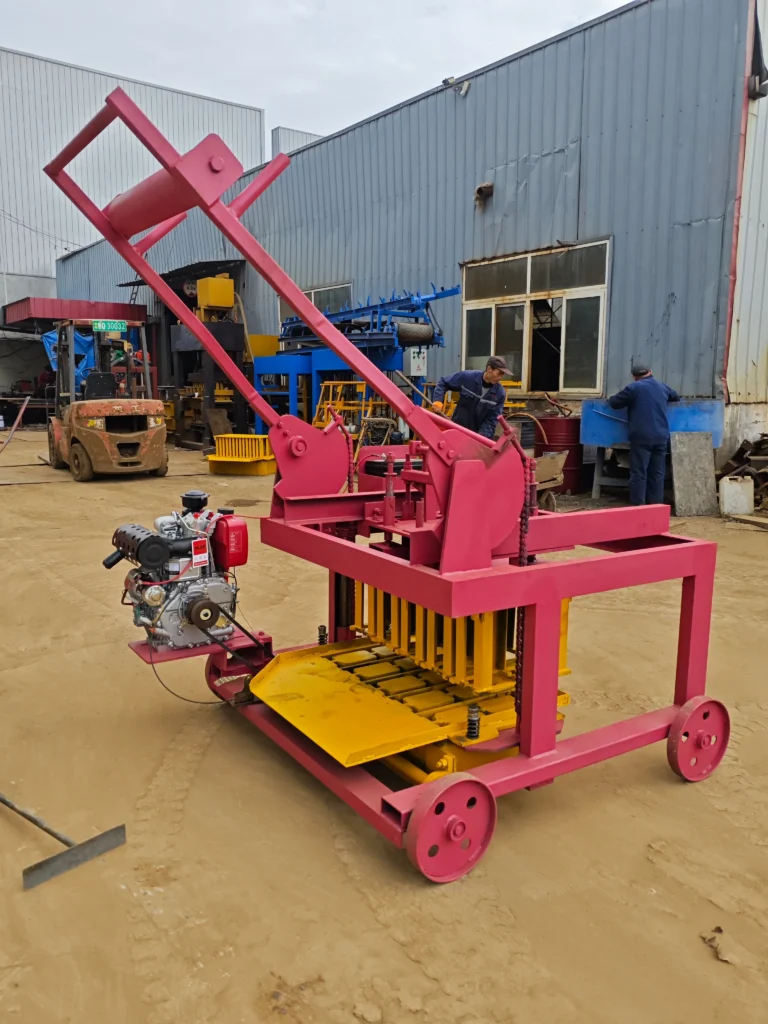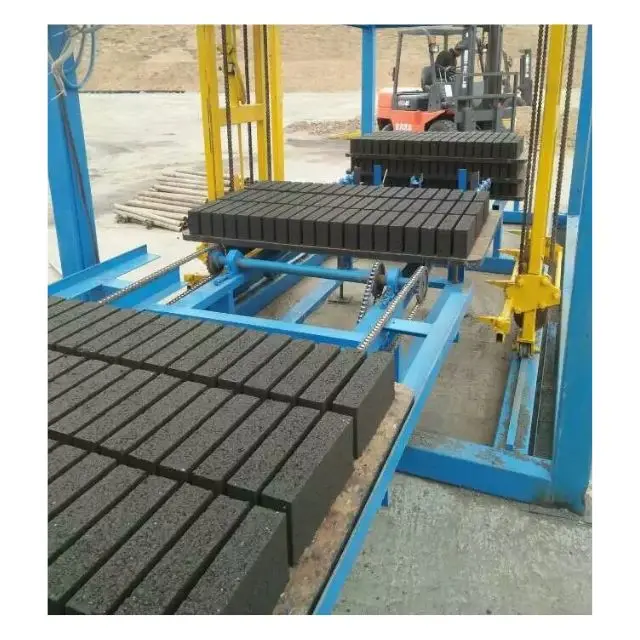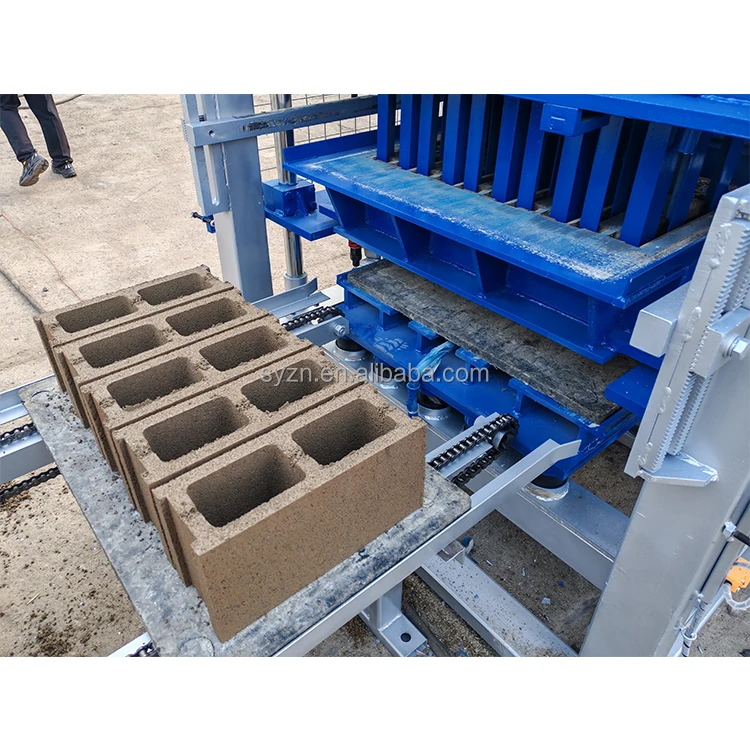
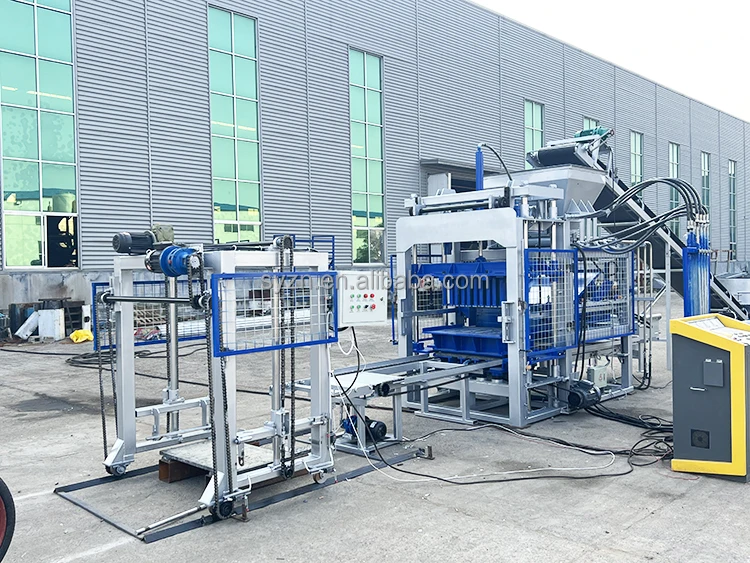
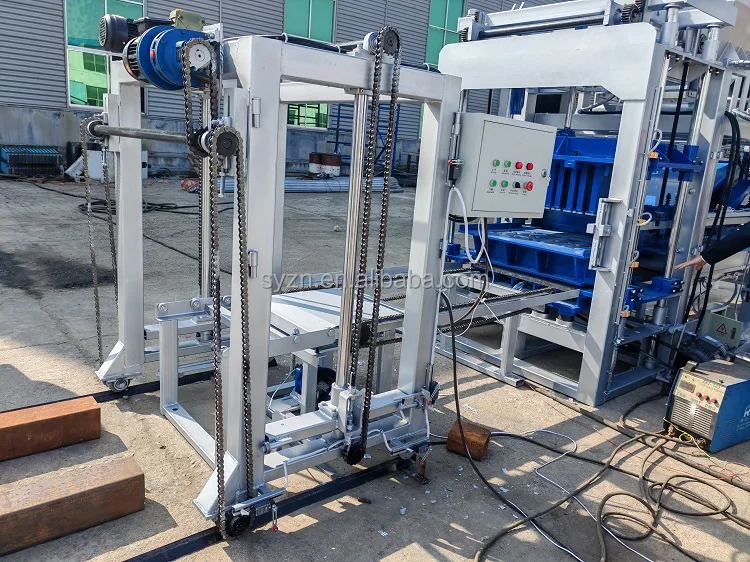

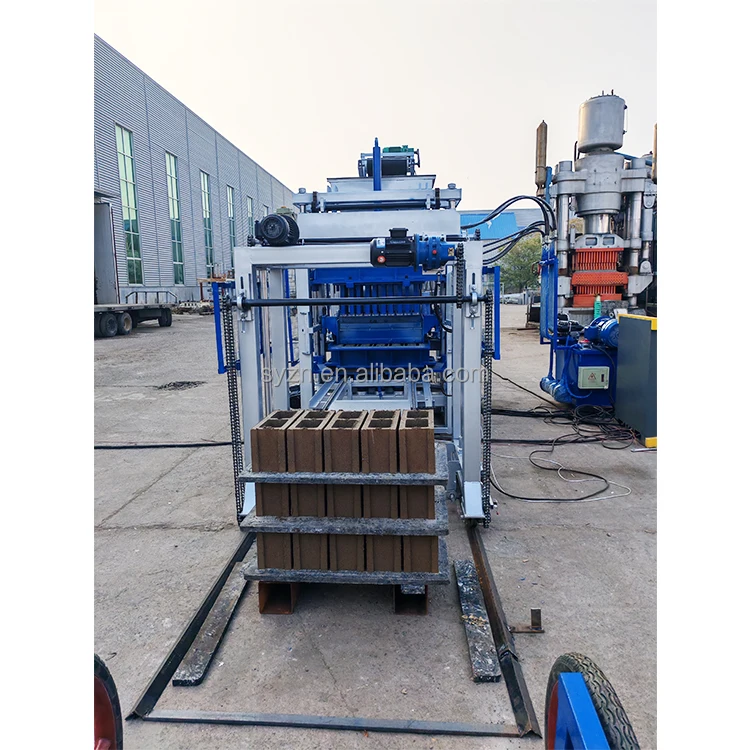

Description
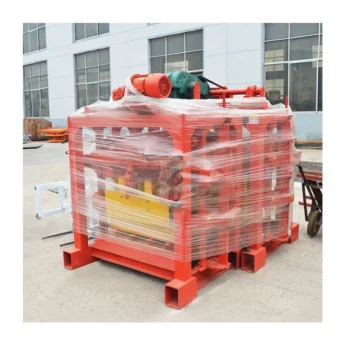
Stock and Delivery — Every QT4-15A block machine in stock for concrete paver production ships with container loading plan and arrival estimate quoted upfront, not after payment.
Technical Specifications
| Parameter | Value |
|---|---|
| Model | QT4-15A |
| Product Type | Fully Automatic Concrete Block Making Machine |
| Overall Dimensions (L×W×H) | 4100×1600×2600 mm |
| Rated Pressure | 16–21 MPa |
| Main Vibration Form | Platform Vibration |
| Vibration Frequency | 4200 r/min |
| Vibration Force | 55 KN |
| Pallet Size | 880×550 mm |
| Molding Cycle | 25–30 s (basis not stated in source) |
| Overall Power | 18.45 kW (source value — verify against manufacturer catalog) |
| Total Mass | 4 T |
| Demolding Method | Hydraulic |
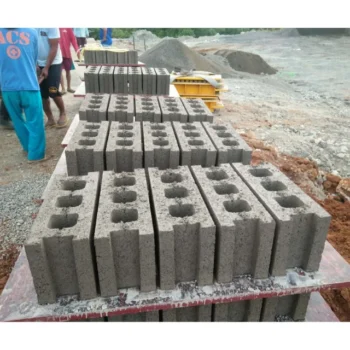
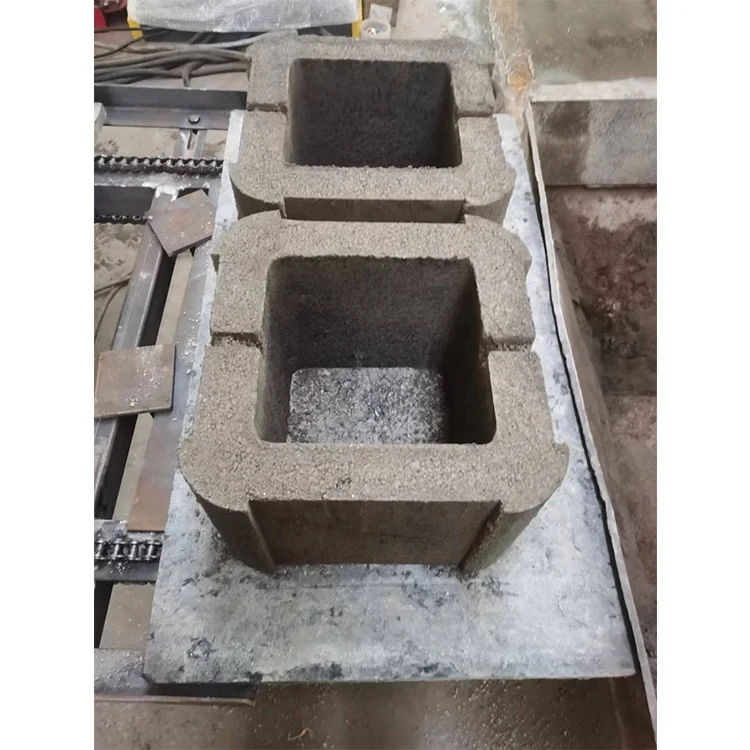
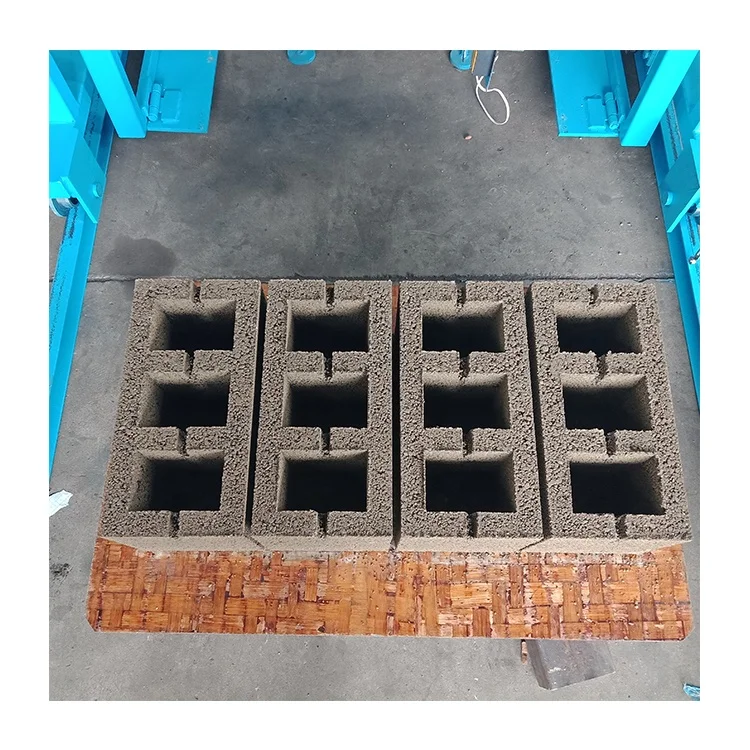
| Applied Products | Hollow blocks, solid blocks, pavers, interlocking blocks, curbstone |
| Control System | PLC (details configurable) |
| Voltage & Frequency | Configurable (to be confirmed before dispatch) |
| Loading | 1×40HQ container (for basic equipment) |
| Warranty | 1 year |
Application Suitability
| Application | Material or Output |
|---|---|
| Housing project block supply | Crushed stone, sand, cement for hollow and solid blocks |
| On-site paver production for contractors | Gravel, sand, pigment for colored concrete pavers |
| Regional distributor restocking | Standard interlocking blocks and kerbstones from local aggregate |
| Building material yard expansion | Fly ash, slag, dust blends for solid masonry units |
What "In Stock" Actually Means Before You Commit
Confirming a QT4-15A block machine in stock is only useful if the exact configuration matches your site voltage and pallet size. Many quotations state a lead time that assumes a default voltage and a standard mould that may not produce the block format your market actually buys. I have watched containers arrive at port with the wrong frequency setting because the confirmation step was skipped during a rushed order. A machine sitting in the yard is not ready to ship until the PLC language, voltage, and mould format are locked against your site conditions [NEED_CITE: voltage and frequency standards by export market].
Dispatch Readiness Over Catalogue Availability
Having a QT4-15A block machine in stock means more than a frame sitting on the shop floor. The hydraulic pack, vibration motor, and PLC cabinet must be matched to the destination market before container loading begins. Machines configured for 380V/50Hz cannot run on a 440V/60Hz site without rewinding motors, and that work takes longer than building a fresh unit. This is why we confirm electrical specifications before a machine is pulled from stock rather than after the deposit clears.
Container Loading and Dismantling Method
The QT4-15A fits a 40HQ container for basic equipment, but only when the hydraulic station, vibration table, and mixer are dismantled and braced correctly. Poor bracing leads to shifted mounts and cracked welds after a six-week ocean transit. We photograph every dismantled section before loading and share the container plan so you know exactly how the machine will arrive at your yard [NEED_CITE: container bracing standards for heavy industrial machinery].
Reading the Spec Sheet Against Your Site
Platform vibration at 4200 r/min with 55 KN of vibration force determines how densely the concrete compacts inside the mould. If your local aggregate is laterite or a high-clay sand, the default vibration setting may leave blocks under-compacted on one face. The hydraulic demolding system rated at 16–21 MPa must also match the block height and mix stickiness, otherwise demolding tears the top edge. The 880×550 mm pallet size must fit your existing curing racks and forklift tines — ordering a machine without checking this leaves pallets stacked by hand on the floor.
What Happens When the Mould Does Not Match the Order
A contractor who orders a machine for hollow blocks but receives a standard solid block mould faces weeks of idle time while a replacement is manufactured and shipped. I cleared a unit for West Africa where the buyer’s distributor had confirmed the mould format verbally but never signed a format sheet. The machine arrived with the wrong cavity plate, and the entire first production run had to be crushed and recycled. Every standard mould we ship with a QT4-15A block machine in stock is listed on the packing document with cavity dimensions and block format code so there is no ambiguity at the container door [NEED_CITE: mould format confirmation documentation in block machinery trade].
Why Procurement Teams Choose This Route
Block machinery is our single production focus, so the press, mould, pallet, and handling equipment are specified as one matched system rather than assembled from separate suppliers. Stocked configurations are built against common block formats and voltage standards, and any deviation is flagged before the container is sealed. Moulds for the formats your market sells — including custom drawings — ship in the same container when confirmed at order. Automation level is selectable so a buyer can start with basic pallet handling and add stacking later. Installation support includes operator training on the exact configuration delivered, and the factory test record travels inside the container with the machine.
Documentation & Verification
- Factory test record run on buyer-confirmed aggregate sample before dispatch
- Container loading photograph set showing dismantled sections and bracing
- Mould format list with cavity dimensions signed off at order confirmation
- Voltage and PLC language confirmation sheet co-signed before shipment
- Operation manual in confirmed language with QT4-15A specific wiring diagrams
Installation, Commissioning & Support
- Foundation plan sized to 4100×1600 mm footprint with anchor bolt layout
- Dedicated power circuit confirmed against local voltage before motor connection
- Hydraulic station reassembled and pressure set to 16–21 MPa on-site during commissioning
- PLC interface switched to confirmed language and block format programme loaded
- Operator training covering mould change procedure and daily vibration motor inspection
- Wear parts list for hydraulic seals and vibration isolators included in first shipment
Before You Request a Quote
Share your destination port, local voltage and frequency, and the block format you need to produce daily. If you already have curing racks and a forklift, send the pallet dimensions they accept so we can confirm the 880×550 mm pallet size fits your existing setup. We will reply with a written stock confirmation, container loading plan, and realistic arrival estimate based on current shipping schedules — no production-to-order lead time disguised as stock.
Frequently Asked Questions
Q: Which QT4-15A configurations are currently in stock and ready to ship?
A: Standard configurations with common hollow block and solid block moulds are typically available. Each unit is confirmed against your voltage, frequency, and PLC language requirement before it leaves the yard. We provide a written stock status and container loading plan at the quotation stage so you know exactly what ships and when.
Q: How is the QT4-15A dismantled and loaded into a 40HQ container?
A: The hydraulic station, vibration table, and mixer are separated from the main frame and braced with timber and steel straps inside the container. Photographs of every dismantled section and the loading sequence are shared before the container is sealed. This prevents shifted mounts and cracked welds during ocean transit.
Q: What is the realistic dispatch lead time from order confirmation?
A: Stocked machines with standard moulds can be dispatched within days of electrical and language confirmation. If a custom mould or non-standard voltage configuration is required, the lead time extends to accommodate that work. We quote the dispatch date in writing at order confirmation and distinguish stock from production-to-order.
Q: Can standard moulds ship together with the machine in the same container?
A: Yes, standard moulds for hollow blocks, solid blocks, and pavers load together with the basic QT4-15A equipment in one 40HQ container. The mould format list with cavity dimensions is included in the packing document. Additional moulds beyond the standard set may require separate shipment depending on container weight limits.
Q: How do I confirm voltage and frequency before dispatch to avoid commissioning delays?
A: We send a voltage and frequency confirmation sheet that you sign before the machine leaves the factory. This covers motor winding specifications, PLC input voltage, and control panel rating. Skipping this step has caused commissioning delays on multiple shipments I have personally investigated, so it is now a mandatory gate in our dispatch process.