


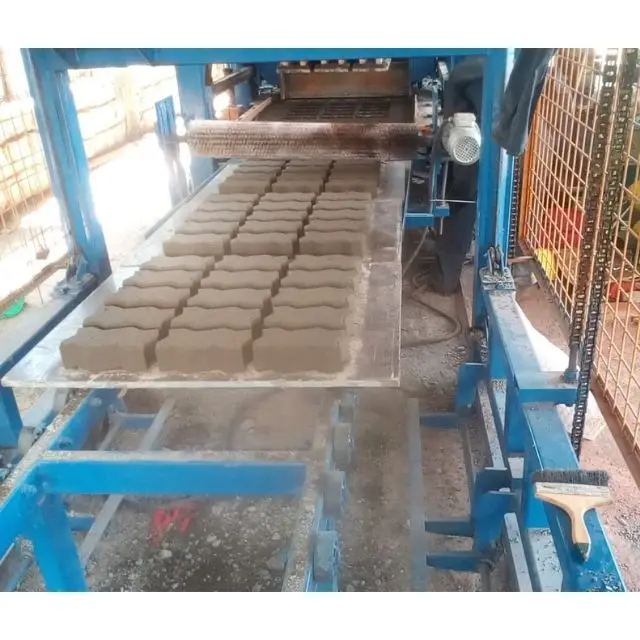
Description
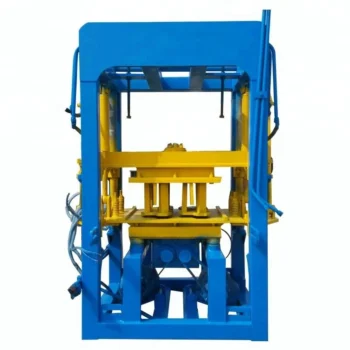
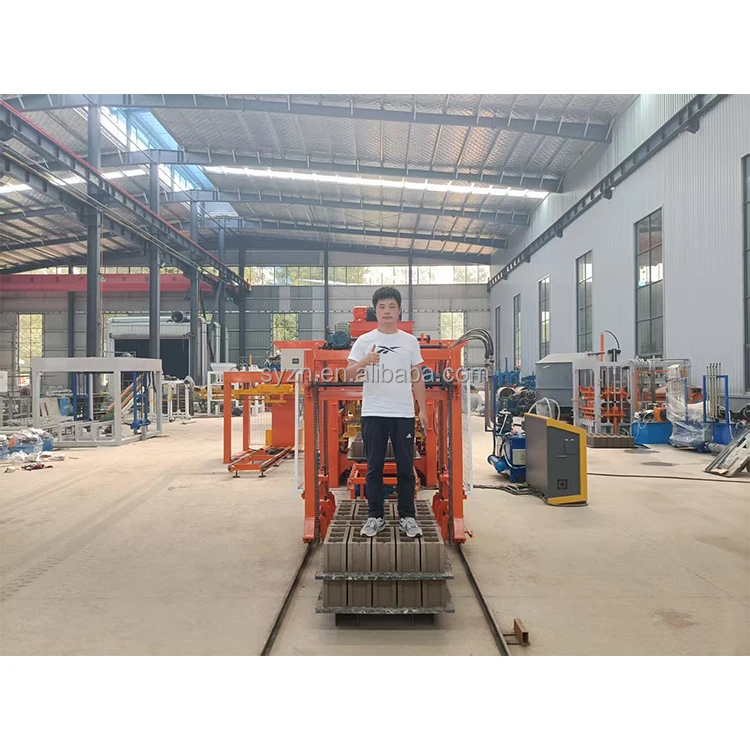
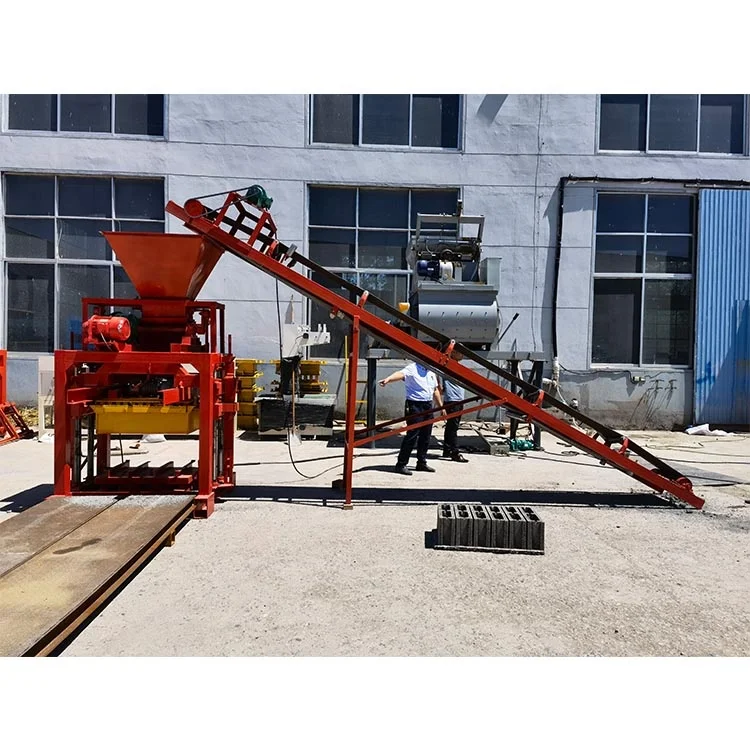
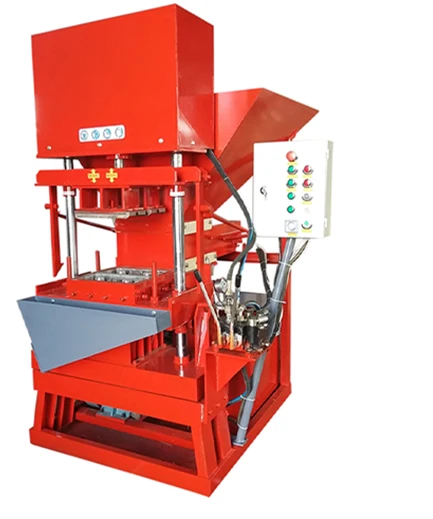
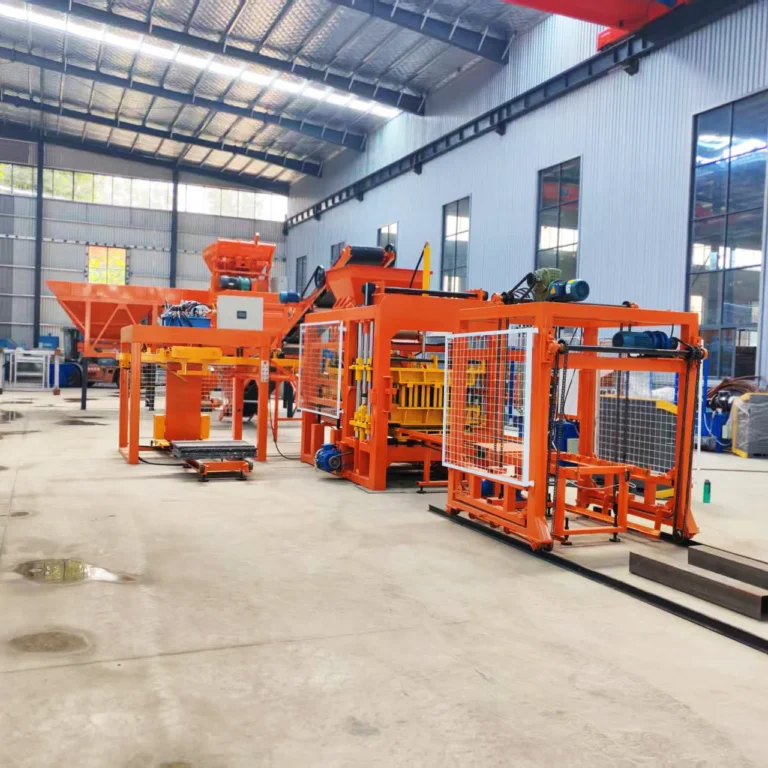
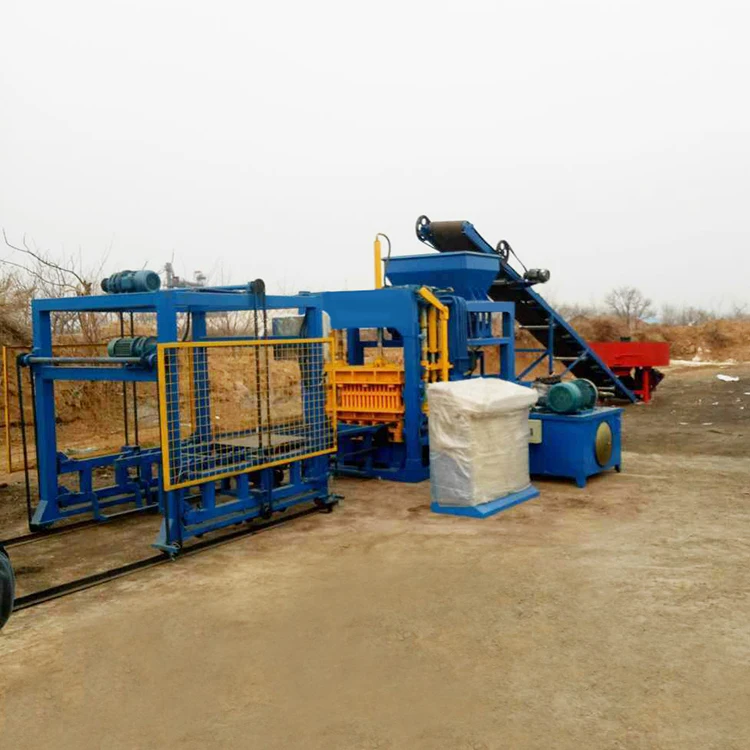
Stocked Configuration — Every QT4-15 held in our warehouse ships with its matching mixer, pallet conveyor, hydraulic station and PLC console tested as one complete line before crating, so your site crew unloads a system that has already run together, not separate boxes that meet for the first time on your foundation.
Technical Specifications
| Parameter | Value |
|---|---|
| Model | QT4-15 |
| Product Type | Automatic Concrete Block Making Machine |
| Overall Dimensions (L×W×H) | 7100 × 1600 × 2610 mm |
| Rated Pressure | 16 MPa |
| Vibration Form | Platform Vibration |
| Pallet Size | 1020 × 570 mm |
| Molding Cycle | 15–25 s (basis not stated in source — confirm block format / material / thickness) |
| Overall Power | 27.5 kW |
| Control System | PLC (electronic console) |
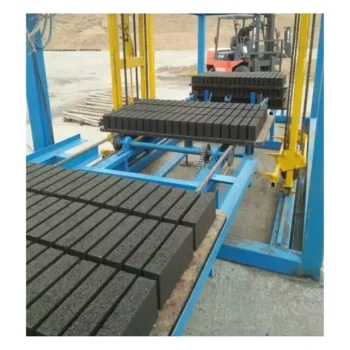
| Automation Level | Automatic (pallet feeder, material feeder, block receiver included) |
| Line Composition | Mixer, pallet conveyor, molding machine, block conveyor, hydraulic station, electronic console |
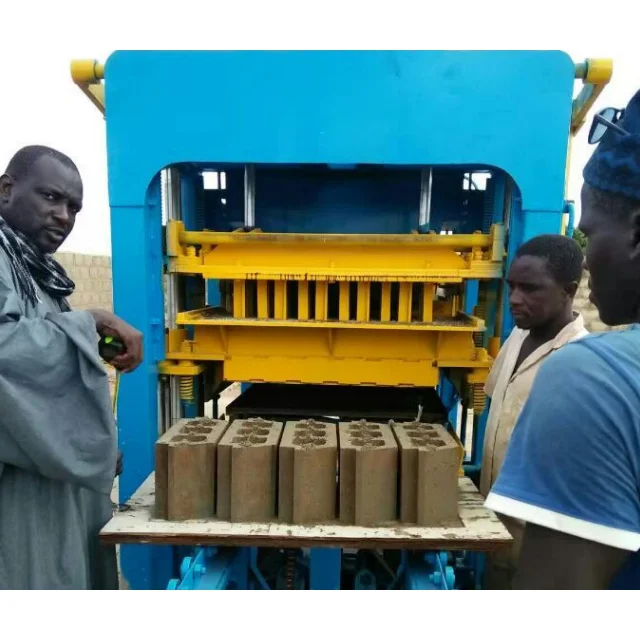
| Mould Formats | Hollow block, interlocking brick, paving block |
| Voltage & Frequency | Configurable to destination country (confirm before order) |
| Foundation Requirement | Poured concrete slab; installation plane arranged per site area |
Application Suitability
| Application | Material or Output |
|---|---|
| Hollow block production for load-bearing and partition walls | Crushed stone, cement, sand and gravel aggregates |
| Interlocking brick manufacturing for paving and landscaping | Cement, quarry dust, fine aggregate |
| Paving block output for municipal sidewalks and parking areas | Cement, sand, coarse aggregate with pigment additive |
| Fixed-plant block supply for housing or infrastructure projects | Locally sourced concrete mix designs with standard cement ratios |
Why the Voltage Question Should Come Before the Price on Any QT4-15 Block Machine in Stock
Confirm your site voltage and frequency before you sign the purchase order, not after the container sails.
A block machine wired for 380 V / 50 Hz that arrives at a 220 V / 60 Hz site will trip its main breaker the moment the operator presses start. The QT4-15 block machine in stock is configured to order only after the buyer supplies written confirmation of destination electrical standards [NEED_CITE: voltage and frequency standards by export market]. We have watched entire project schedules slip by weeks because a transformer had to be sourced locally, and we treat the QT4-15 the same way: voltage, frequency and PLC display language are locked in writing before production or dispatch of any stocked unit.
How Stocked Inventory Shortens Your Site Readiness Timeline
Holding QT4-15 block machine in stock units means the press, mixer, pallet conveyor and hydraulic station are already assembled, wired and factory-tested as a matched set. When your order is confirmed, the line is dismantled, crated and loaded into a container within a short dispatch window instead of waiting for a build slot. For contractors working against a project completion date, that difference determines whether your crew is laying blocks or still waiting at the dock.
Matching the Dispatch Window to Your Project Schedule
Arrival estimates depend on port routing, customs clearance and inland transport, but quoting the lead time upfront removes the guesswork that forces site managers to revise their construction sequence. Every QT4-15 block machine in stock shipment leaves with a container loading plan, machine dismantling photographs and a packing list so your lifting contractor and foundation team can prepare the curing yard and power connection before the container gate opens [NEED_CITE: CE machinery directive requirements for containerised industrial equipment].
Reading the Specs That Actually Shape Your Output
The 16 MPa rated pressure combined with platform vibration determines how densely the concrete is compacted into the mould, and density directly governs block compressive strength. If your local aggregate is angular crushed stone rather than rounded river gravel, the vibration amplitude and hydraulic hold time may need adjustment to avoid surface cracking. The 1020 × 570 mm pallet size must fit your existing curing racks and forklift tine spacing; ordering a pallet dimension that does not match your yard layout forces manual re-stacking and slows the entire curing cycle. The 27.5 kW overall power draw tells your electrician what dedicated breaker and cable gauge to install, and the PLC electronic console can be set to your operator’s language before the machine leaves the factory, preventing mis-read alarms on the first production shift.
What Happens When Configuration Is Left to Chance
A mould format ordered without checking the buyer’s market demand leaves expensive tooling sitting on a shelf while the plant produces blocks nobody is buying. A pallet material chosen without considering outdoor curing in tropical humidity can warp within months, throwing block dimensions out of tolerance and forcing pallet replacement sooner than expected. An electrical panel built to the wrong frequency standard damages motor windings during commissioning and voids the warranty claim because the fault is classified as user error [NEED_CITE: motor winding failure modes under frequency mismatch]. Each of these missteps adds cost and weeks of delay that a stocked machine was supposed to prevent.
Why Procurement Teams Return to This Supply Channel
Block machinery is the single product focus, so the QT4-15 press, its moulds, pallets and handling conveyors are specified as one matched system rather than assembled from separate vendors whose warranties do not cover integration gaps. Configuration is set against the buyer’s actual mix design and target block format, not a catalogue default that assumes ideal conditions. Standard moulds for hollow, interlocking and paving formats are kept alongside the press so a buyer can add formats to the same container load. Documentation arrives complete — from the factory test record to the hydraulic schematic — so local electricians and mechanics can service the line without waiting for translated drawings. The automation level is selectable, allowing a first-time buyer to start with the included automatic pallet feeder and block receiver, then add stacking automation later without replacing the press.
Documentation & Verification
- Line layout showing QT4-15 footprint and pallet conveyor routing matched to your site dimensions.
- Factory test record demonstrating press, mixer and hydraulic station running together before crating.
- Mould drawing and format list confirming cavity count for each block type on your pallet size.
- Voltage, frequency and PLC language confirmation sheet signed off before dispatch.
- Hydraulic and electrical schematic in English for local maintenance teams.
- Packing photographs documenting crating condition at the point of loading.
Installation, Commissioning & Support
- Poured concrete foundation required; installation plane arranged per QT4-15 7100 × 1600 mm footprint.
- Dedicated power circuit sized for 27.5 kW total draw at confirmed site voltage and frequency.
- Machine dismantled for container loading; reassembly sequence documented with photographs.
- PLC console powered on and alarm parameters verified before the first production run.
- Operator training covers mould change procedure, pallet feed timing and hydraulic pressure adjustment.
- Wear parts list and mould inventory supplied so spares can be ordered with the initial shipment.
What to Include in Your Enquiry
Send your target block format, required daily output, the local aggregate and cement type available at your site, and your confirmed voltage and frequency standard. Include the curing yard dimensions and the forklift model you already operate so pallet size can be verified against your existing handling equipment. State your destination port and preferred shipping timeline so the dispatch window can be quoted against actual container availability.
Frequently Asked Questions
Q: Is the QT4-15 currently in stock and what is the dispatch lead time?
A: Standard QT4-15 units are held in the warehouse with matching mixers, pallet conveyors and PLC consoles. Dispatch lead time is quoted at enquiry based on current stock levels, mould selection and container scheduling, so you receive a confirmed date rather than an estimate.
Q: Which standard moulds ship alongside the stocked QT4-15?
A: Hollow block, interlocking brick and paving block moulds are the standard formats kept on hand. Each mould is matched to the 1020 × 570 mm pallet. Custom mould drawings can be reviewed for compatibility before the container is sealed.
Q: How is the machine packed and loaded for container shipment?
A: The press, hydraulic station and conveyor sections are dismantled, crated and secured with steel bracing inside the container. Loading photographs and a packing list are provided so your receiving team can plan lifting equipment and staging space.
Q: What arrival estimate can I expect from order to port of destination?
A: Arrival timing depends on destination port, shipping line schedules and customs processing. A port-specific estimate is quoted alongside the dispatch date so your site preparation and foundation work can be scheduled against a known timeline.
Q: Can I order additional moulds and pallets in the same shipment?
A: Additional moulds and pallets can be loaded into the same container as the QT4-15 to avoid a second shipment. Pallet material and quantity are confirmed against your curing yard capacity and local climate conditions before loading.