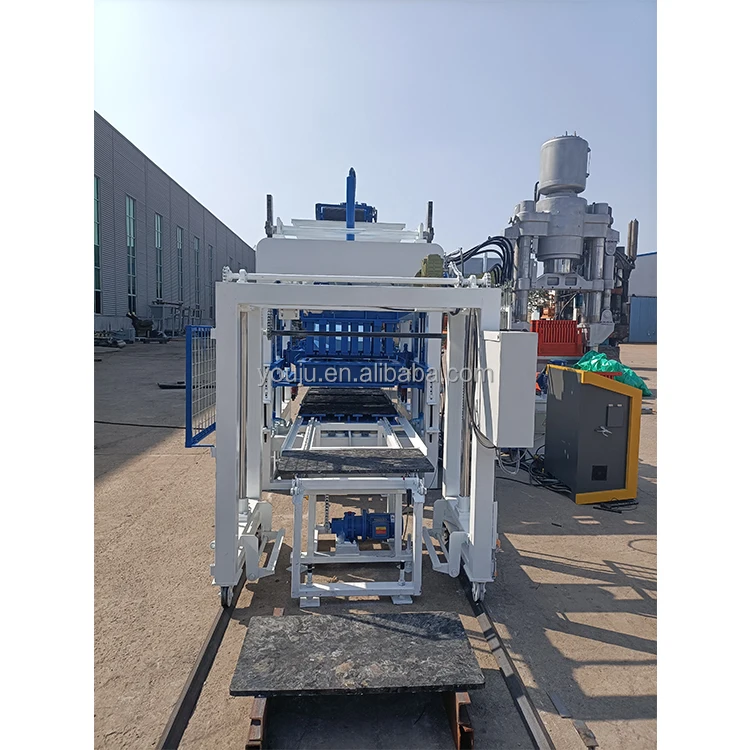

Description
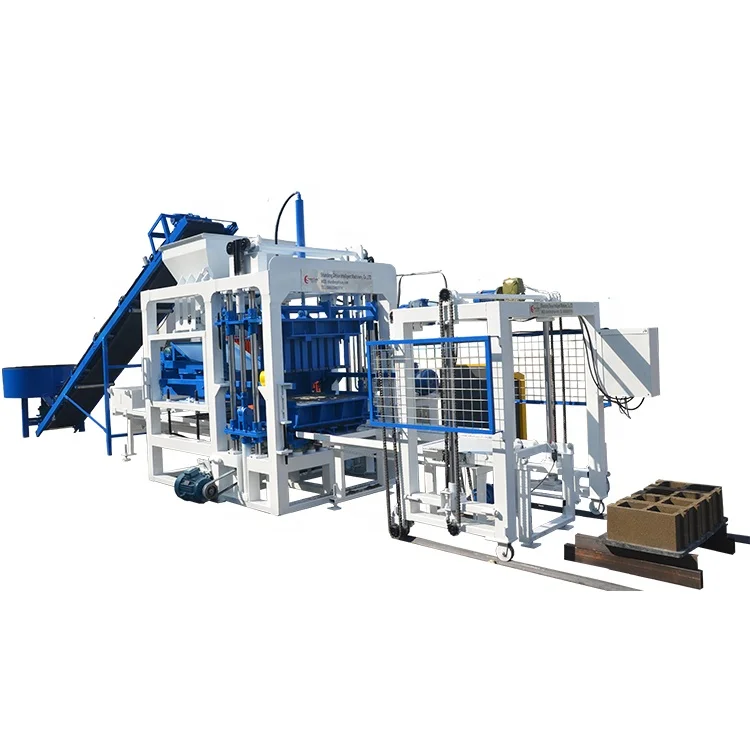
Dispatch-Ready Configuration — the QT4-16 block making machine ships with voltage, PLC language, and pallet size confirmed before it leaves the factory, so commissioning starts on day one at your site.
Technical Specifications
| Parameter | Value |
|---|---|
| Model | QT4-16 |
| Product Type | Hydraulic Concrete Block Making Machine |
| Overall Dimensions | 7400 × 1950 × 2800 mm |
| Total Mass | 5 T |
| Rated Pressure | 21 MPa |
| Vibration Force | 40 kN |
| Vibration Frequency | 2800–4500 r/min |
| Main Vibration Form | Platform Vibration |
| Pallet Size | 900 × 550 mm |
| Molding Cycle | 15–20 s (basis not stated in source — confirm block format / material / thickness) |
| Demolding Method | Hydraulic |
| Control System | PLC intelligent control with man-machine interface, fault diagnosis, remote control function |
| Automation Level | Full automatic |
| Recommended Factory Area | 600 m² |
| Voltage & Frequency | Configurable to destination market (confirmed before dispatch) |
| Rated Power | To be confirmed at order |
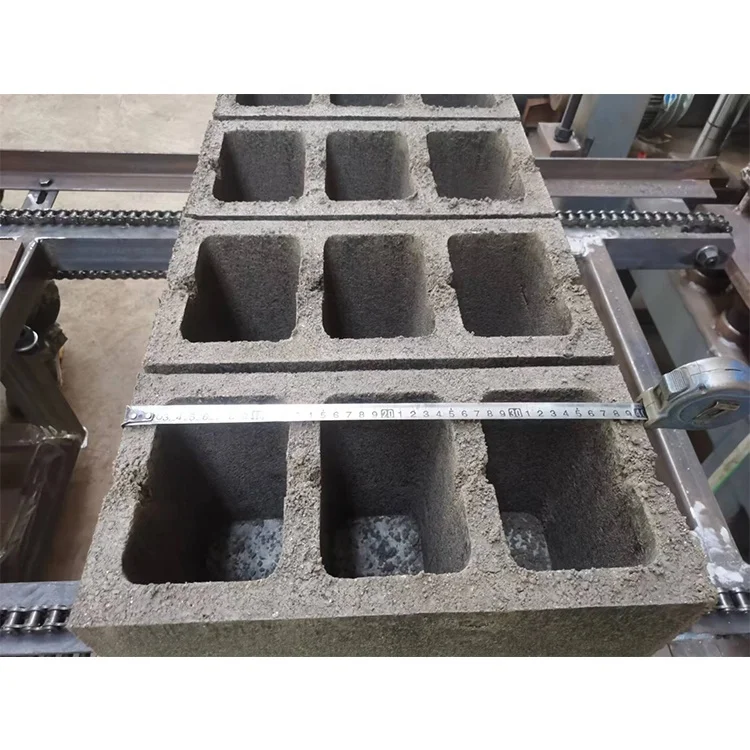
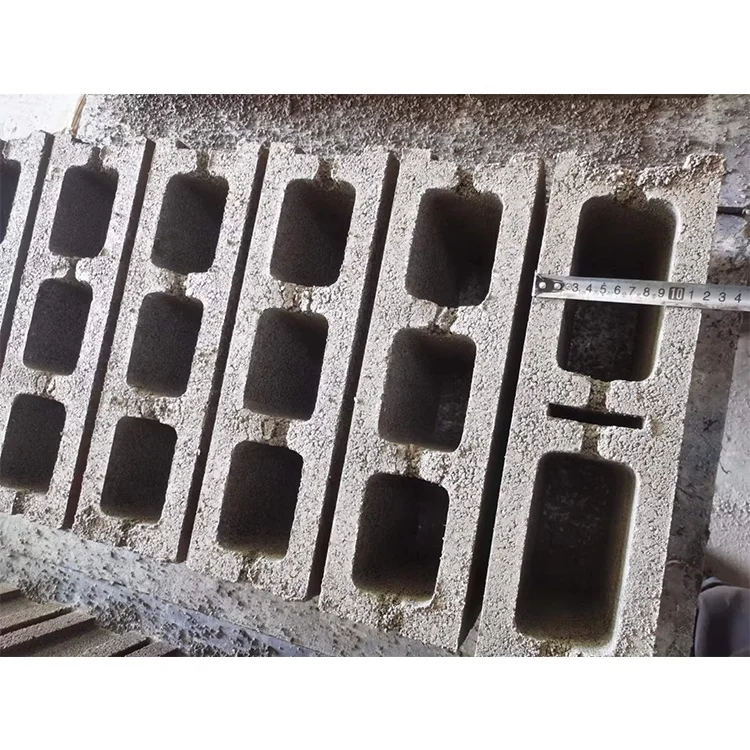
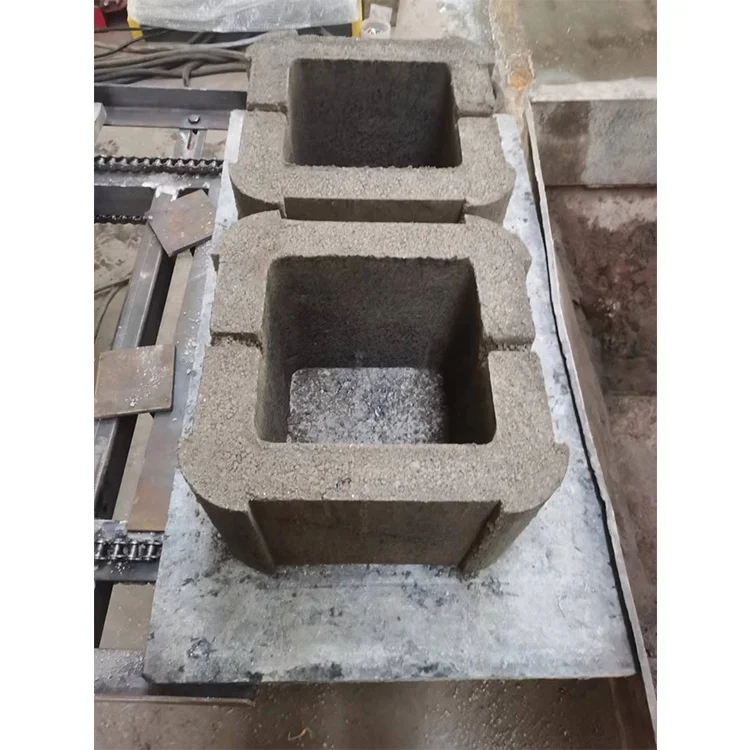
| Applied Products | Concrete blocks, hollow blocks, solid blocks, pavers, interlocking blocks, curbstone, colored pavers |
| Raw Materials | Crushed stone, sand, cement, fly ash, gravel, slag |
Application Suitability
| Application | Material or Output |
|---|---|
| Hollow block production for residential and commercial walls | Crushed stone, sand, cement, fly ash |
| Solid block manufacturing for load-bearing structures | Gravel, sand, cement blends |
| Paving block and colored paver runs for walkways and yards | Fine aggregate with pigment additives |
| Interlocking brick and curbstone for infrastructure projects | Slag, crushed stone, cement mixes |
| On-site block production for construction contractors | Locally sourced aggregate and cement |
Why the Voltage Question Must Come Before the Dispatch Date
A machine that arrives with the wrong voltage configuration is a machine that sits idle while your project deadline passes.
I have watched container after container arrive at project sites across the Middle East and Africa, only for the electrician to discover on the first morning that the motor winding does not match the local grid. The QT4-16 block making machine in stock is configured to a catalogue default unless the buyer intervenes. A 415V/50Hz site receiving a 380V unit faces transformer rentals, rewinding delays, or in the worst case a complete motor swap before the first block is pressed. [NEED_CITE: voltage and frequency standards by export market]
Every QT4-16 we prepare for dispatch goes through a voltage and frequency confirmation step tied to the buyer’s actual site supply. This is not an optional checkbox — it determines the motor specification, the control panel transformer, and the PLC power supply module. Getting it right at the factory costs a fraction of what it costs on a construction site with a crew standing by.
Stock Status and What "Ready to Ship" Actually Means
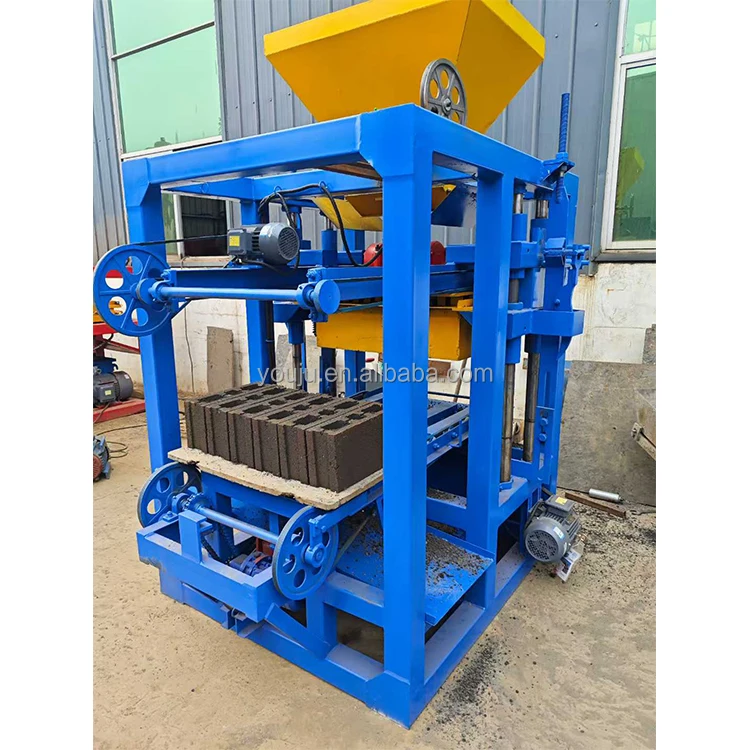
When we list a QT4-16 block making machine in stock, it means the main press frame, hydraulic station, vibration platform, and PLC cabinet are assembled and have passed factory testing. Standard moulds for hollow block and solid block formats are typically on hand. The machine can be dismantled for container loading once the destination port and shipping schedule are confirmed.
Buyers working to a project start date need more than a promise — they need a dispatch lead time quoted at the inquiry stage, not after the deposit clears. Our process locks the shipping date once the voltage, frequency, and PLC display language are confirmed, giving you a reliable arrival estimate for your site planning.
Container Loading and Dismantling for Transit
The QT4-16 at 7400 × 1950 × 2800 mm and 5 T requires partial dismantling for standard container loading. The hydraulic station, pallet feeder, and control cabinet are separated from the main frame to fit within container dimensions while protecting hydraulic lines and electrical connections from transit damage. A loading scheme is provided with the quotation so the buyer knows exactly how many containers are needed and which components arrive in which box.
This dismantling plan is not improvised at the warehouse door. It is finalized during production so that mounting points, bolt patterns, and lifting lugs are built into the frame from the start. Reassembly on site follows a sequence that matches the factory test procedure, reducing the commissioning window. [NEED_CITE: standard container loading practices for heavy industrial machinery]
Reading the Specs That Matter on Site
The 21 MPa rated hydraulic pressure and 40 kN vibration force together determine the compaction density of every block the QT4-16 produces. Higher pressure alone will not compensate for weak vibration, and strong vibration without sufficient hydraulic hold produces blocks with surface cracks. This machine balances both forces through platform vibration at 2800–4500 r/min, which suits the crushed stone and fly ash mixes common across Southern African and Middle Eastern markets.
The 900 × 550 mm pallet size defines the curing rack layout and forklift specification the buyer needs on site. Ordering pallets that match an existing curing yard avoids the cost and delay of re-racking. The PLC with fault diagnosis and remote control function allows the operator to identify hydraulic or sensor faults without waiting for an overseas technician to arrive — a practical advantage when the nearest service flight is days away.
The Hidden Cost of Skipping Pre-Dispatch Confirmation
A QT4-16 that arrives with the PLC display in a language the operator cannot read adds weeks of commissioning delay while translation and reprogramming are arranged on site. A machine shipped without confirming the buyer’s pallet size forces a curing area redesign or a new forklift purchase. These are not hypothetical problems — they repeat across the industry every time a buyer focuses on the press price and leaves the supporting details to chance. [NEED_CITE: common commissioning delays in exported concrete block machinery]
The mould change system, stacking method, and pallet handling configuration all affect whether the machine produces blocks at a rate the rest of the line can absorb. If the quotation covers the press alone, the buyer inherits the work of matching every upstream and downstream station after arrival.
Why Buyers Source This Machine Here
Block machinery is the single focus of our production, so the QT4-16, its moulds, pallets, and handling equipment are specified as one matched system rather than assembled from separate suppliers. Configuration is set against the buyer’s actual mix design and target block format, not pulled from a catalogue default.
Standard moulds for the block formats that sell in Southern African markets are stocked alongside the press. Voltage, frequency, and control language are confirmed before the machine enters final assembly, not after. The dispatch lead time and container loading plan are quoted at inquiry stage, giving buyers a firm arrival window to plan their site mobilization around. [NEED_CITE: matching block machine configuration to local aggregate and market format]
Documentation & Verification
- Factory test record run on your target block format before dispatch
- Machine specification sheet with confirmed voltage and frequency values
- Mould drawing and format list for all stocked moulds shipping with the unit
- Voltage and PLC control language confirmation signed off at order stage
- Packing photographs showing dismantling scheme and container loading sequence
- Operation and maintenance manual in confirmed display language
Installation, Commissioning & Support
- Foundation plan provided for the 7400 × 1950 mm footprint and 5 T operating mass
- Power supply specification matched to confirmed voltage and frequency before wiring
- Dismantling and reassembly sequence documented to match factory test procedure
- PLC fault diagnosis walk-through during on-site operator training session
- Hydraulic station pressure set to 21 MPa and vibration frequency calibrated to your mix
- Wear parts and mould compatibility list supplied for first replacement planning
What to Include in Your Inquiry
To give you an accurate dispatch date and arrival estimate, we need your destination port, the block formats you plan to produce, and the local voltage and frequency at your site. Confirm whether you need standard moulds from stock or a custom format, and let us know the pallet size that matches your existing curing area and forklift. With these details, a QT4-16 block making machine in stock can be matched to your project timeline and shipped with the right configuration from day one.
Frequently Asked Questions
Q: Which QT4-16 configurations and moulds are currently in stock for immediate dispatch?
A: Standard QT4-16 presses with hollow block and solid block moulds are typically available from stock. The exact configurations ready for immediate dispatch depend on current inventory at the time of your inquiry. We confirm available mould formats, pallet specifications, and automation level before quoting, so you know precisely what ships and what lead time applies to any custom additions.
Q: What is the estimated arrival time at my port after order confirmation?
A: Arrival time depends on your destination port, the shipping route, and container availability at the time of booking. For stocked QT4-16 units, the dispatch window is shorter than made-to-order machines because production time is eliminated. We provide an estimated arrival date at the quotation stage based on current sailing schedules to your specific port.
Q: How is the QT4-16 dismantled and loaded into containers for shipment?
A: The machine is partially dismantled — the hydraulic station, control cabinet, and pallet feeder are separated from the main frame to fit standard container dimensions. A container loading plan is provided with the quotation showing component placement across containers. Lifting points and bolt patterns are designed into the frame for straightforward reassembly at your site.
Q: Can voltage, frequency, and PLC language be confirmed before the machine leaves the factory?
A: Yes — this confirmation is a required step in our dispatch process, not an optional extra. We verify the buyer’s site voltage and frequency, then configure the motor, control panel transformer, and PLC power module accordingly. The display language is set to match the operator’s preference. This prevents the most common commissioning delays we see on exported block machines.
Q: What pallet size ships with the stocked QT4-16, and can it be changed before dispatch?
A: The standard pallet size for the QT4-16 is 900 × 550 mm. If your existing curing area and forklift are set up for a different pallet dimension, we can adjust the pallet specification before dispatch provided the change is confirmed at order stage. Matching pallet size to your site avoids costly curing yard modifications after the machine arrives.