

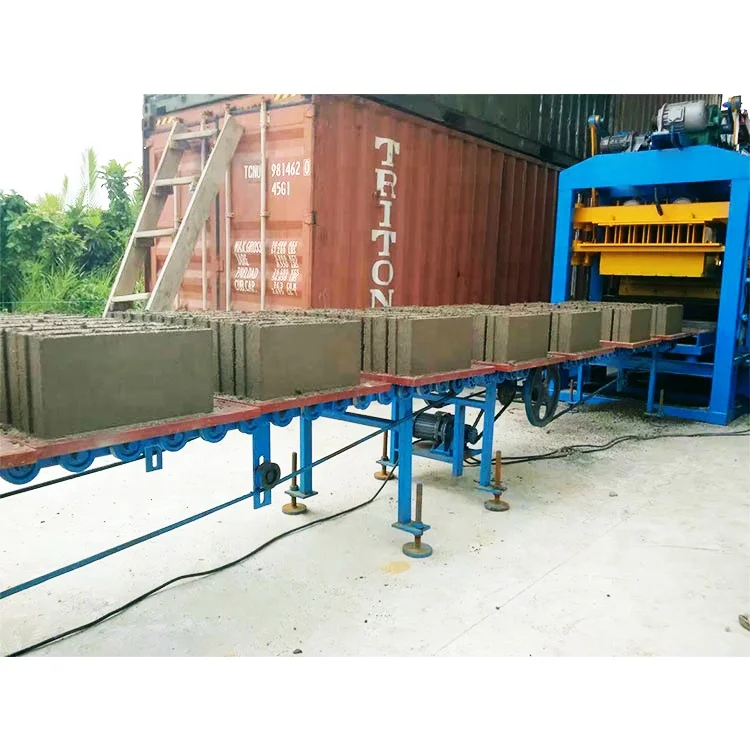

Description
Dispatch-Ready Configuration — Qt4-25a units held in stock with standard moulds paired, electrical parameters verified against buyer market, and container loading plans confirmed before payment.
Technical Specifications
| Parameter | Value |
|---|---|
| Model | Qt4-25a |
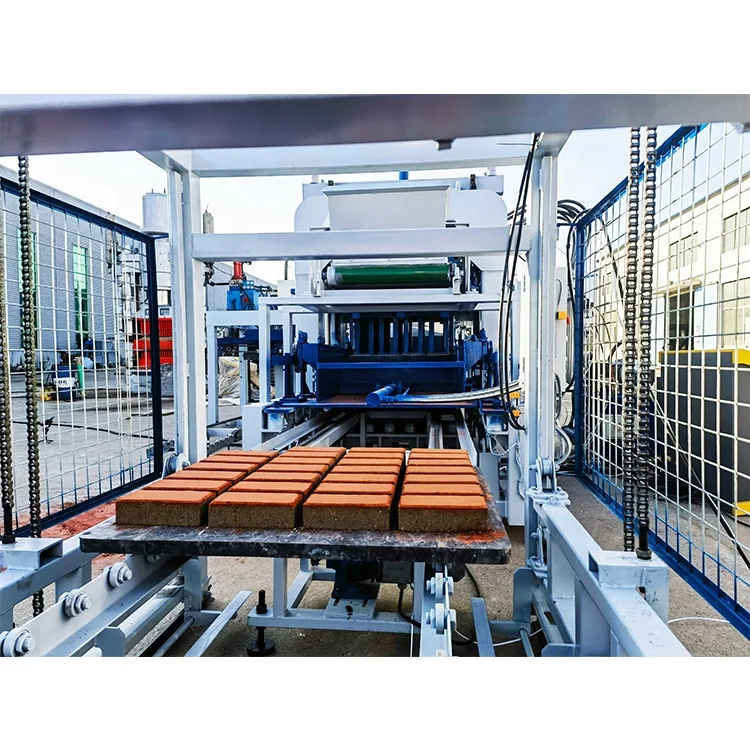
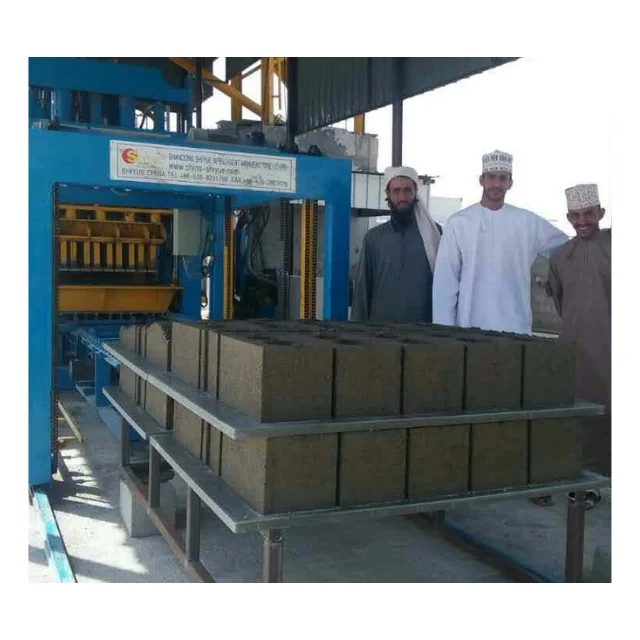
| Product Type | Automatic Concrete Block Making Machine |
| Overall Dimensions (L×W×H) | 7100×1600×2610 mm |
| Net Weight | 5800 kg |
| Rated Power | 27.5 kW |
| Voltage & Frequency | 380V or configurable to buyer standard (frequency to confirm) |
| Control System | PLC (display language to confirm) |
| Vibration Force | 60 kN |
| Hydraulic Pressure | (basis to be confirmed) |
| Pallet Size | 1020×850×40 mm |
| Pallet Material | (basis to be confirmed) |
| Mould Format Examples | 400×200×200 mm hollow block, 400×150×200 mm hollow block, 225×112.5×53 mm solid brick |
| Output Capacity | 960 pcs/h (basis: 400×200×200 mm hollow block, 4 pcs/mould) |
| Daily Output | 7680 pcs/day (basis: 400×200×200 mm, 8-hour shift assumed) |
| Automation Level | Automatic |
| Color Options | According to buyer request |
| Certification | ISO9001:2008, CE |
| Warranty | 1 year |
Application Suitability
| Application | Material or Output |
|---|---|
| Housing development on-site production | Hollow concrete blocks from crushed stone, sand, and cement |
| Paver and block plant standard formats | Solid cement bricks and laying blocks from local aggregate |
| Building material distributor stock | Standard 400×200×200 mm and 400×150×200 mm hollow blocks |
| First block plant setup | Mixed format output switching between hollow and solid brick moulds |
Why the Voltage Question Must Be Settled Before the Container Is Booked
A machine that cannot connect to the local grid on arrival is dead weight sitting on a project deadline.
I once watched a Qt4-25a block making machine in stock sit unpacked on a job site for three weeks because the frequency rating did not match the regional supply. The contractor had paid for fast dispatch, but the motor and PLC were wound for a different standard. That delay cost more than any production gain the machine would have delivered. Every Qt4-25a unit we release from stock now goes through a final electrical verification against the buyer’s confirmed grid specification before the container door closes [NEED_CITE: voltage and frequency standards by export market].
Stock Status and What It Actually Means
The phrase "in stock" gets used loosely in this industry. For the Qt4-25a block making machine, stock status means the press frame, hydraulic station, vibration table, and PLC cabinet are assembled and factory-tested as a complete unit, not that a pile of parts is waiting to be pulled together. Standard moulds for 400×200×200 mm hollow blocks and 225×112.5×53 mm solid bricks are matched and staged alongside the machine so they load into the same container.
Container Loading and Arrival Timing
Dismantling a block press for shipping is not optional — the 7100×1600×2610 mm frame does not fit through a standard container door as a single piece. The Qt4-25a block making machine in stock ships with the vibration table, hydraulic manifold, and pallet feeder separated and crated. Reassembly on site with a basic toolkit and a crane typically takes a trained crew through the first shift. Buyers working to a project deadline need the arrival estimate quoted before they commit, not after [NEED_CITE: typical sea freight transit times to major ports].
Reading the Numbers Behind Output Claims
The 60 kN vibration force and hydraulic pressure together determine how densely the concrete mix compacts inside the mould cavity. Higher compaction means the block holds its shape when stripped and reaches target strength after curing. The 1020×850×40 mm pallet size must match the curing racks and forklift dimensions the buyer already has on site — a mismatch here means buying new handling equipment or reorganizing the curing yard. The 27.5 kW rated power draw requires a dedicated circuit with correct breaker sizing; undersized wiring causes voltage drop that shortens motor life.
The Cost of Skipping Electrical Confirmation
When voltage and frequency are left to assumption, the consequences arrive in sequence. First, the motor draws excess current and trips the breaker repeatedly. Then the PLC behaves erratically because the control transformer is saturating. Finally, the hydraulic pump overheats because it is running at the wrong speed. None of these failures show up in a factory test because the test bench was wired correctly. The buyer pays for an electrician to rewire the panel on site, the project stalls, and the fast delivery they paid for turns into a slow commissioning [NEED_CITE: CE machinery directive requirements for industrial equipment].
What Stock Purchasing From This Source Covers
Every Qt4-25a leaving the floor is configured against the buyer’s confirmed mix design and target block format, not shipped with a default catalogue setting. Standard moulds are inventoried alongside the press so format changes can happen on day one of production. Pallet material and size are confirmed against the buyer’s existing curing infrastructure before the order is finalized. Voltage, frequency, and PLC display language are locked in writing before dispatch. CE and ISO9001:2008 documentation ships with the container to support customs clearance at destination.
Documentation & Verification
- Factory test record showing cycle operation on buyer’s confirmed block format before dispatch
- Electrical schematic with voltage and frequency marked to buyer’s grid standard
- Mould drawing set covering all standard formats included in the shipment
- Pallet specification sheet confirming size, material, and load rating
- CE declaration and ISO9001:2008 certificate copies packed for customs presentation
- Container loading photograph set documenting crating and securing method
Installation, Commissioning & Support
- Foundation must support 5800 kg net weight with vibration isolation at the 60 kN force rating
- Dedicated 27.5 kW circuit with breaker sized to confirmed voltage and frequency standard
- Machine ships dismantled for container loading; reassembly requires crane and basic hand tools
- PLC display language set to buyer preference and verified during factory test before crating
- First production run supervised with mix adjustment against local aggregate characteristics
- Standard mould wear parts list provided with recommended reorder intervals
Before You Request a Quote
To lock a Qt4-25a from current stock and get a realistic arrival date, we need your target block format and daily volume requirement, your site voltage and frequency standard, and the pallet material and size that matches your existing curing setup. With those three points confirmed, a dispatch schedule and container loading plan can be issued within the same exchange.
Frequently Asked Questions
Q: Which Qt4-25a configurations are available for immediate dispatch?
A: Standard configurations with 400×200×200 mm hollow block moulds and 225×112.5×53 mm solid brick moulds are held ready. Voltage and PLC language are configurable and must be confirmed before the unit leaves the floor. Units without confirmed electrical parameters are not released for shipment.
Q: How long from order to container loading?
A: Once voltage, frequency, and PLC language are confirmed in writing, a stock Qt4-25a is prepared, dismantled, and crated within a short operational window. The exact dispatch date depends on container availability at the port and is quoted at order confirmation.
Q: How is the machine loaded into the container?
A: The vibration table, hydraulic station, and pallet feeder are separated from the main frame for container loading. Each component is crated and secured. Loading photographs are taken and shared with the buyer before the container door is sealed.
Q: How do I estimate arrival time at my site?
A: Arrival depends on origin port, destination port, and local customs processing speed. We quote the sailing schedule at order time. Buyers should add their typical customs clearance duration to the transit time for a realistic on-site date.
Q: Do standard moulds ship in the same container as the machine?
A: Yes. Standard hollow block and solid brick moulds are staged with the press and loaded into the same container. Custom moulds designed to buyer drawings require a separate production lead time and may ship in a follow-up batch.