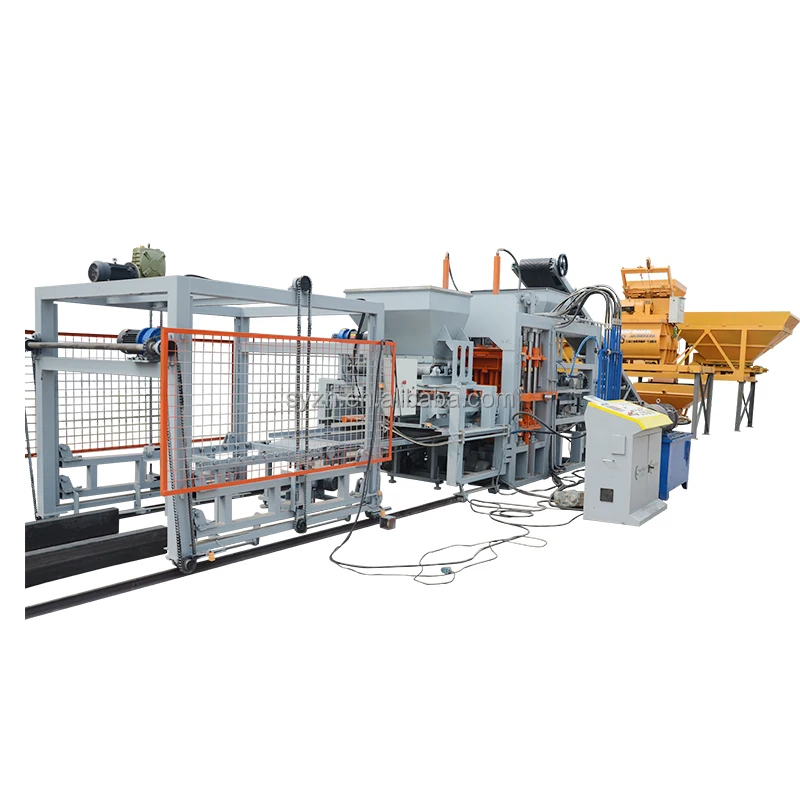

Description
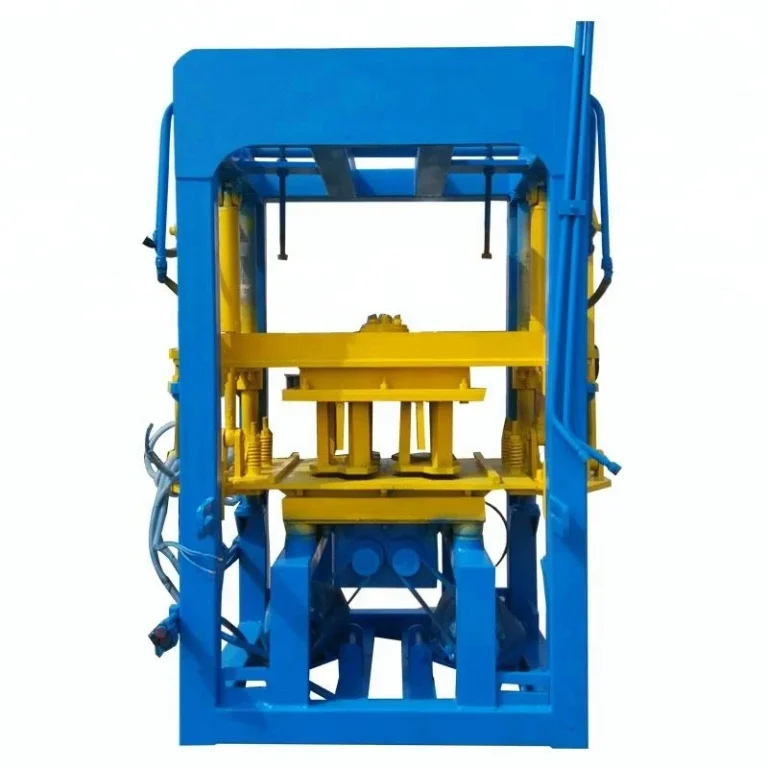
Stocked for fast dispatch — this QT5-15 block machine is built to standard configuration with capacity figures stated per format, so buyers working to a project deadline can plan container loading and arrival without guessing.
Technical Specifications
| Parameter | Value |
|---|---|
| Model | QT5-15 |
| Product Type | Fully Automatic Concrete Block Making Machine |
| Overall Dimensions | 7400×1950×2800 mm |
| Total Mass | 5000 kg |
| Pallet Size | 1100×550 mm |
| Vibration Form | Platform Vibration |
| Vibration Frequency | 0-60 Hz (adjustable) |
| Vibration Force | 80 kN |
| Moulding Mode | Automatic loading with vibration moulding |
| Demolding Method | Hydraulic |
| Hydraulic System | Independent integrated hydraulic station |
| Overall Power | 32 kW |
| Control System | PLC with touch screen interface |
| Molding Cycle | 15-20 s (basis not stated in source) |
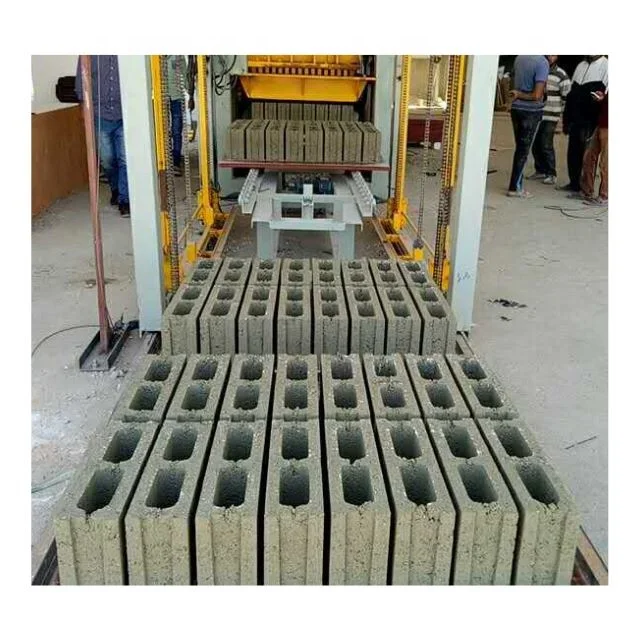
| Output: Hollow Block 400×200×200 mm | 900-1200 pcs/h, 7200-9600 pcs/8hr |
| Output: Hollow Block 400×150×200 mm | 1080-1440 pcs/h, 8640-11520 pcs/8hr |
| Output: Solid Brick 240×115×53 mm | 5760-7680 pcs/h, 46080-61440 pcs/8hr |
| Output: Rectangular Brick 200×100×60 mm | 3600-4500 pcs/h, 28800-36000 pcs/8hr (cycle 20-25 s) |
| Output: Zigzag Brick 225×112.5×60 mm | 2304-2880 pcs/h, 18432-23040 pcs/8hr (cycle 20-25 s) |
| Block Compressive Strength | ≥15 MPa |
| Recommended Factory Area | 1000 m² |
| Warranty | 1 year (excluding spare parts) |
Application Suitability
| Application | Material or Output |
|---|---|
| Hollow block production for building construction | Fly ash (up to 70%), slag, sand, crushed stone, cement, water |
| Solid brick manufacturing | Local aggregate blended with cement and water |
| Paving and rectangular interlocking brick production | Crushed stone, sand, cement mix |
| Zigzag brick for landscaping and walkways | Standard concrete mix with fine aggregate |
| Industrial residue utilization | Fly ash, slag, gangue blended into block mix |
What "900-1200 Pieces per Hour" Actually Means on Site
Every capacity figure on this page is tied to a specific block size and cycle time — there is no single "per hour" number.
Buyers often receive a headline output number without knowing which block format it assumes. When the actual product is a 150 mm hollow block instead of a 200 mm, or a paving brick with a longer press cycle, the daily total shifts significantly. I have watched site managers discover this gap on their first full production day, when the pallet count falls short of what the schedule demands. The QT5-15 block machine fast delivery listing above states output per format so that the gap between expectation and reality closes before the machine ships. [NEED_CITE: capacity calculation methods for concrete block machines by format]
Dispatch Timing and Container Loading
The primary advantage of ordering a stocked QT5-15 is the shortened window between purchase order and container departure. Standard machines with common pallet sizes and voltage configurations leave the factory floor without waiting for custom build slots. This matters most when a construction contractor has a fixed pour schedule or a distributor has committed delivery dates to downstream buyers.
Arrival Planning at Your Port
Once the container is sealed, transit time depends on the destination port and shipping line schedule. The advantage of fast dispatch is that the vessel booking window opens sooner, giving freight forwarders more options. We provide container loading plans and packing photographs before the container leaves the yard, so you know exactly how the QT5-15 concrete block making machine in stock is dismantled and secured for the voyage. [NEED_CITE: typical ocean freight transit times from Chinese ports to Southeast Asian and African destinations]
How the 80 kN Vibration Force and Hydraulic Pressure Work Together
Block compressive strength depends on the combination of vibration force and hydraulic pressure during the press cycle. The QT5-15 delivers 80 kN of platform vibration at an adjustable 0-60 Hz, compacting the mix from below while the hydraulic head applies downward pressure. If vibration frequency is set too high for a dry mix with coarse aggregate, the material fluidises instead of compacting; too low and voids remain between particles. The PLC touch screen lets operators store frequency and cycle time profiles per mould, so switching from hollow blocks to pavers does not require manual dial adjustment each shift. The pallet size of 1100×550 mm determines how many blocks are pressed per cycle — a larger pallet would increase output per cycle but requires matching curing rack dimensions and forklift capacity at the buyer’s site.
When Voltage and Language Are Confirmed Too Late
A machine arrives, the electrician opens the control cabinet, and the voltage does not match the site transformer. Or the PLC displays in a language the operators cannot read, delaying first production by days while a technician is flown in. These are not rare events. I have seen a commissioning delayed because the touch screen defaulted to a language the local team could not navigate, turning a straightforward start-up into a multi-day troubleshooting exercise. Confirming voltage, frequency, and PLC display language before production — not after — is what keeps a fast delivery promise intact. [NEED_CITE: voltage and frequency standards by export market]
Why Source the QT5-15 Here Rather Than Elsewhere
Block machinery is the single focus of this operation, meaning the press, mould, pallet, and handling equipment are specified as one matched system rather than assembled from unrelated suppliers. Stock machines are configured against common mix designs and standard pallet sizes, reducing the variables that cause delays. Standard moulds for hollow blocks, solid bricks, and pavers ship with the machine, and custom mould drawings can be produced for formats your local market demands. Dispatch from stock means the factory test, packing, and container loading happen in sequence without waiting for a build slot to open. Every shipment includes packing photographs and container loading plans so you can verify how the machine is dismantled and secured before the container door closes.
Documentation & Verification
- Capacity calculation sheet stating block format and cycle time assumed for each output tier
- Voltage, frequency, and PLC display language confirmation recorded before production
- Factory test record on standard mould formats before dispatch from stock
- Packing photographs and container loading plan provided prior to shipment
- Customs documentation support prepared for destination country import requirements
Installation, Commissioning & Support
- 1000 m² recommended factory area with level concrete floor to support the 5000 kg machine mass
- 32 kW total power requires a dedicated circuit matching your confirmed voltage and frequency
- Machine dismantled for container shipment and reassembled on site with hydraulic and electrical connections
- PLC touch screen configured to confirmed language before first production run
- Operator training covers mould change procedure and vibration frequency adjustment per mix design
- Wear parts list and hydraulic schematic provided for first replacement planning
What We Need to Confirm Before Shipping
To make sure the stocked QT5-15 fits your project timeline and site conditions, we need your target block formats and daily output requirement, your local raw material type and source, and your site voltage and frequency specification. If you already have curing racks and a forklift, share the pallet dimensions they accept so we confirm the 1100×550 mm pallet is compatible. Let us know the PLC display language your operators require so the control cabinet is set correctly before dispatch.
Frequently Asked Questions
Q: Which QT5-15 models and mould formats are currently in stock?
A: Standard QT5-15 machines with the 1100×550 mm pallet size are held in stock for fast dispatch. Common mould formats including 400×200×200 mm hollow blocks, solid bricks, and rectangular pavers are available from stock. Custom moulds require a separate lead time for design and manufacturing.
Q: What is the dispatch lead time and estimated arrival for my port?
A: Stocked machines are prepared for container loading once voltage, frequency, and PLC language are confirmed. Transit time depends on your destination port and available shipping schedules. We provide an arrival estimate based on current sailing options at the time of order.
Q: How is the QT5-15 dismantled and loaded into containers?
A: The machine is dismantled into major assemblies — main press frame, hydraulic station, PLC cabinet, pallet feeder, and conveyor — for container loading. A packing photograph set and container loading plan are shared before the container door is sealed.
Q: Are standard moulds available from stock with the machine?
A: Hollow block, solid brick, and rectangular paver moulds matching the 1100×550 mm pallet are commonly held in stock alongside the machine. Other formats such as zigzag bricks or kerbstones may require a production run. Confirm your target formats at inquiry stage.
Q: What voltage and frequency configurations can ship immediately?
A: Stock machines are typically configured for common industrial voltage and frequency combinations. If your site uses a non-standard supply, we confirm compatibility before dispatch. PLC display language is also set prior to shipment based on your requirement.



![QT4-16 Automatic Hydraulic Hollow Block Machine – In Stock 记录ID数字之和:8+2+7+7+7 = 31 31 mod 6 = 1 → 句式:[站点修饰词] [品类词] for [应用或物料] 第一层:sdsyblockmachine.com → 现货交付类 → In Stock / Ready to Ship / Fast Delivery 31 mod 3 = 1 → Ready to Ship 尝试:Ready to Ship QT4-16 Block Machine for Hollow Block = 48 chars(不足50) 补:Ready to Ship QT4-16 Automatic Block Machine for Hollow Block = 61 chars ✓](https://sdsyblockmachine.com/wp-content/uploads/2026/04/H6e9b09b95f124bda8eac4744b5e99c07g.webp)