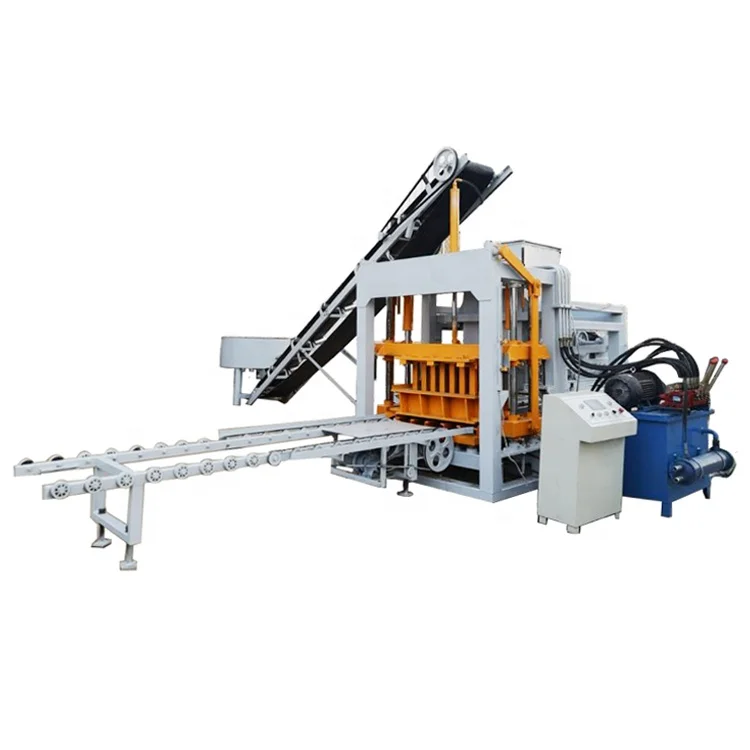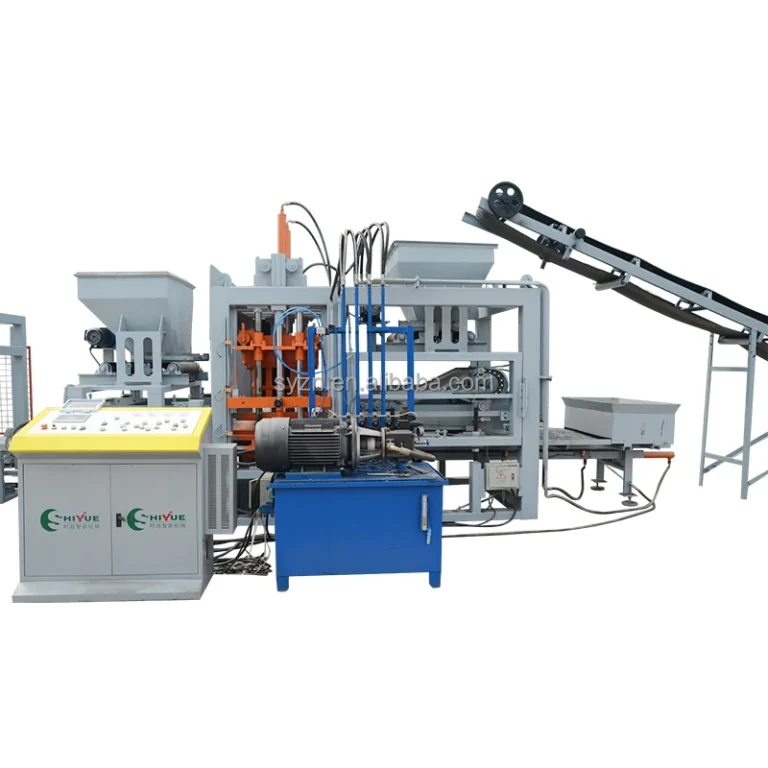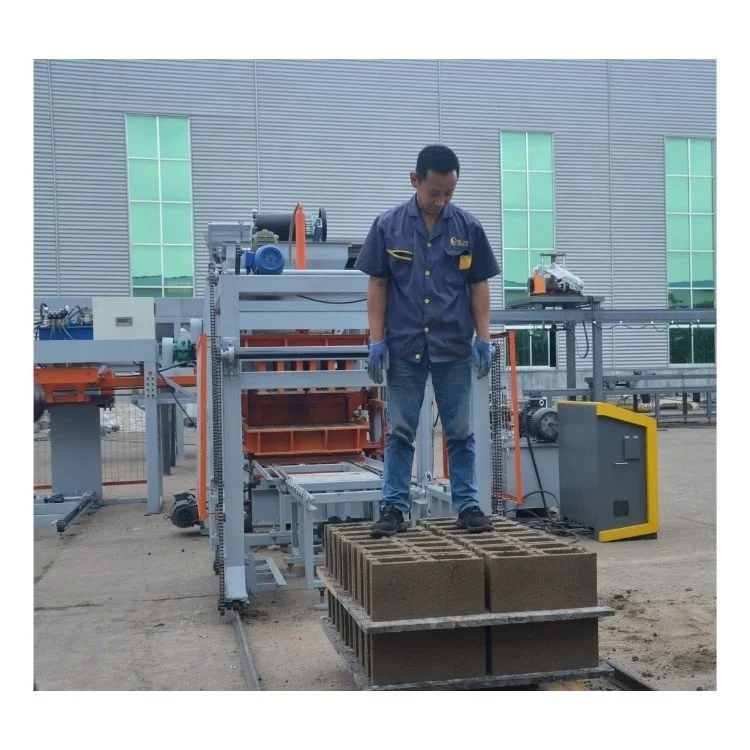


Description
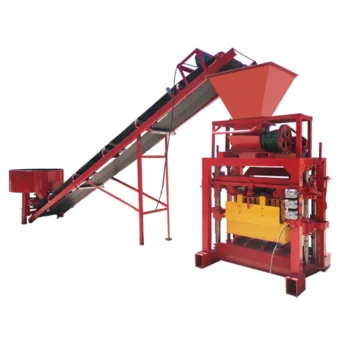
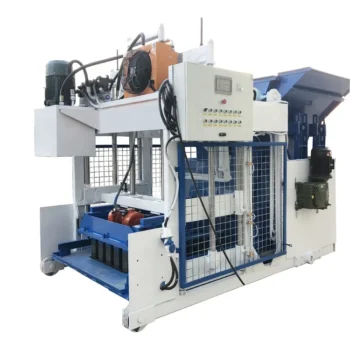
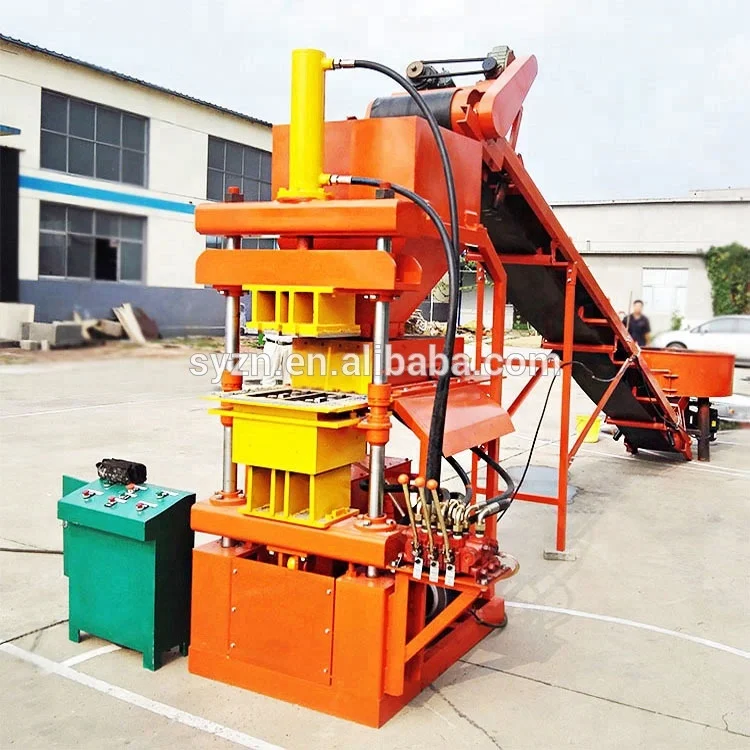
Stocked readiness — The QT6-15 block machine in stock is dispatched only after a factory test run with your actual mix, ensuring arrival timing matches your project deadline rather than a catalogue promise.
Technical Specifications
| Parameter | Value |
|---|---|
| Model | QT6-15 |
| Product Type | Automatic Hydraulic Block Making Machine |
| Overall Dimensions (L×W×H) | 7350×1780×2950 mm |
| Rated Pressure | 16 MPa |
| Main Vibration | Platform vibration |
| Vibration Frequency | 4600 r/min |
| Pallet Size | 880×700 mm |
| Moulding Cycle | 15–20 s (basis not stated in source — confirm with buyer’s mix and block format) |
| Overall Power | 30.5 kW |
| Voltage & Frequency | Configurable to buyer’s local grid (basis to be confirmed before shipment) |
| Control System | PLC (brand and language options to be confirmed) |
| Output — Hollow Block 400×200×200 mm | 6 pcs/mould, 1080 pcs/h, 8640 pcs/day (basis: 16–20 s cycle, 8 h shift assumed by source) |
| Output — Porous Brick 240×115×90 mm | 14 pcs/mould, 2800 pcs/h, 22400 pcs/day (basis: 15–18 s cycle, 8 h shift assumed by source) |
| Output — Standard Brick 240×115×53 mm | 30 pcs/mould, 6800 pcs/h, 54400 pcs/day (basis: 14–17 s cycle, 8 h shift assumed by source) |
| Automation Level | Automatic (stacking, cubing and pallet handling scope to be confirmed) |
| Mould Format | Hollow block, porous brick, standard solid brick; custom mould available to buyer drawings |
| Standards | CE / SGS / ISO 9001 |
| Warranty | One year |
Application Suitability
| Application | Material or Output |
|---|---|
| Hollow block production for housing projects | Crushed stone, sand, cement, fly ash |
| Porous brick manufacturing for municipal paving | Sand, cement, cinder, slag |
| Standard solid brick output for local masonry supply | Gravel, perlite, cement, industrial wastes |
| On-site block production by construction contractors | Local aggregate, cement, gangue |
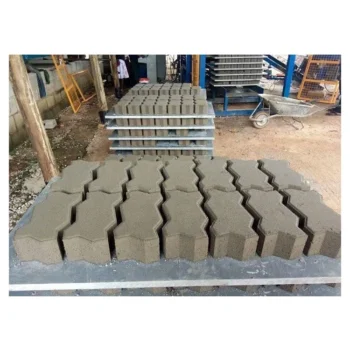
| Format expansion for existing concrete product plants | Paving stones, kerbstones, interlocking blocks, grass blocks |
What "In Stock" Really Means When the Container Ships Late
Dispatch lead time is confirmed in writing before payment, not guessed after the deposit clears.
A fast delivery block machine only earns that label when every upstream component — PLC, hydraulic valves, moulds — is already in the warehouse. I have watched orders stall because a single proximity sensor was on back-order while the press itself sat finished on the shop floor. [NEED_CITE: typical component lead-time variance in hydraulic press manufacturing]. When a buyer is racing a housing-project handover date, the QT6-15 block machine in stock must leave the factory on the day promised, not the day the last sub-supplier delivers.
How Stock Status Is Verified Before You Commit
The QT6-15 block machine in stock is pulled from finished units that have already passed a dry-cycle test and a hydraulic pressure hold. Each stocked frame carries a build date tag, and we share a time-stamped photograph of the serial plate with the buyer before the quotation is finalised. This eliminates the gap between "available" in a brochure and "ready to load" on the dock. [NEED_CITE: difference between ex-works stock and build-to-order in block machinery].
Container Loading and Dismantling for Ocean Freight
A 40-foot high-cube container accommodates the QT6-15 main frame, hydraulic station, pallet feeder and up to three standard mould sets. The upper beam and vibration table are unbolted at pre-marked flanges so that re-assembly at destination requires only the supplied fasteners and alignment pins. Loading photographs show every tie-down point and the waterproof wrapping membrane before the container doors close, giving the buyer a visual record for customs and insurance.
Reading the Numbers Behind Moulding Cycle Claims
The 15–20 second moulding cycle is measured from ram descent to pallet ejection on a standard concrete mix. In practice, cycle length shifts when aggregate moisture rises above eight percent or when fine sand replaces crushed dust. Platform vibration at 4600 r/min works together with 16 MPa hydraulic pressure to compact the mix; if the pressure is set too low for a stiff blend, blocks emerge with weak edges, while excessive pressure on a wet mix causes surface cracking. The 880×700 mm pallet must match the curing rack spacing and forklift tine width already in use at the buyer’s yard, otherwise new pallets or new racking becomes an unplanned cost. Mould change time is not published in the source data; on-site procedure and tool requirements must be confirmed during commissioning.
When a Rushed Order Creates Hidden Delays
Skipping the voltage and frequency confirmation step seems harmless until the machine arrives at a 60 Hz site wired for 50 Hz motors. The PLC display language is another small detail that, if missed, forces the operator to guess icon meanings during first-week production. [NEED_CITE: voltage and frequency standards by export market]. Pallet specification drift — ordering bamboo pallets when the buyer’s curing racks were built for steel — adds weeks of procurement at destination. These are the quiet schedule-killers that erase any lead-time advantage gained by buying a QT6-15 block machine in stock.
Why Buyers Return to the Same Dispatch Lane
Every stocked QT6-15 is run with the buyer’s own aggregate sample before crating, so vibration force and hydraulic pressure are tuned to that specific mix rather than left on a factory default. Mould drawings for hollow, porous and standard brick formats are held on file, and custom mould tooling is quoted from the buyer’s dimensional drawing rather than a generic catalogue. The automation level can be set at semi-automatic for a first plant and upgraded later by adding the automatic stacker and cubing modules that share the same PLC architecture. Dispatch documentation — packing photos, CE declaration where applicable, hydraulic schematic and pallet specification sheet — travels inside the container in a sealed pouch, so nothing is missing on day one of installation.
Documentation & Verification
- Factory test record using buyer’s submitted aggregate sample before dispatch
- Line layout drawing showing pallet flow from feeder through press to curing rack
- Hydraulic and electrical schematic with valve and sensor reference numbers
- CE declaration and ISO 9001 certificate copies included in shipping pouch
- Mould drawing pack listing cavity count per format and wear-strip material
- Packing photographs with container seal number recorded on the bill of lading
Installation, Commissioning & Support
- Foundation plan sized for 7350 mm frame length and dynamic vibration load
- Dedicated 30.5 kW circuit with breaker rating matched to confirmed voltage
- Frame re-bolted at pre-marked flanges; alignment checked with supplied gauge pins
- PLC display language and alarm codes set during first-power commissioning
- Operator training covers mould change procedure and daily vibration plate inspection
- Wear parts list identifies hydraulic seals, vibration springs and mould liners by part number
What to Include in Your First Inquiry
Send your target block format, daily output requirement and a photo of the aggregate you plan to use. Confirm the local grid voltage, frequency and the PLC display language your operators will need. If you already have curing racks or a forklift, share the pallet dimensions so the 880×700 mm pallet spec is cross-checked before the fast delivery block machine leaves the factory floor.
Frequently Asked Questions
Q: Which configurations of this fast delivery block machine are currently in stock?
A: Standard QT6-15 units with hollow, porous and solid brick mould sets are typically held in finished stock. Custom automation add-ons such as automatic stackers or non-standard pallet sizes may require a short build period. We confirm exact configuration availability against your inquiry before quoting a dispatch date.
Q: How long does it take from order confirmation to container loading?
A: For stocked configurations, loading can be scheduled within a short window after payment clearance and voltage confirmation. The exact timeline depends on container slot booking at the nearest port. We provide a written loading date in the proforma invoice so you can align site preparation.
Q: How is the machine dismantled for shipment and reassembled on site?
A: The upper beam, vibration table and hydraulic station are separated at pre-marked bolted flanges. All fasteners and alignment pins are bagged and tagged. Re-assembly follows the supplied drawing and typically requires a small crew with basic tools; our technician can guide the process remotely or attend on site.
Q: Are extra moulds included in the dispatch or ordered separately?
A: Three standard mould formats ship with the stocked machine. Additional or custom moulds are quoted separately and, if tooling is not already on the shelf, carry their own lead time. We confirm mould availability alongside the machine dispatch schedule so both arrive together.
Q: How do you confirm voltage, frequency and PLC language before shipping?
A: During the inquiry stage we request your local grid specification and preferred operator language. These are recorded on the production checklist, verified during the factory test, and printed on the machine data plate. Any mismatch is corrected before the QT6-15 block machine in stock is crated for shipment.