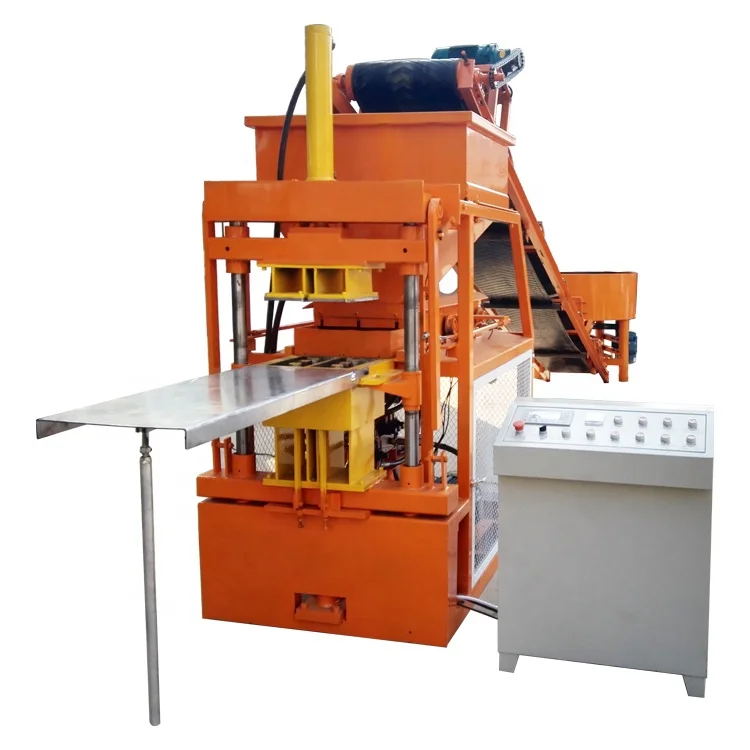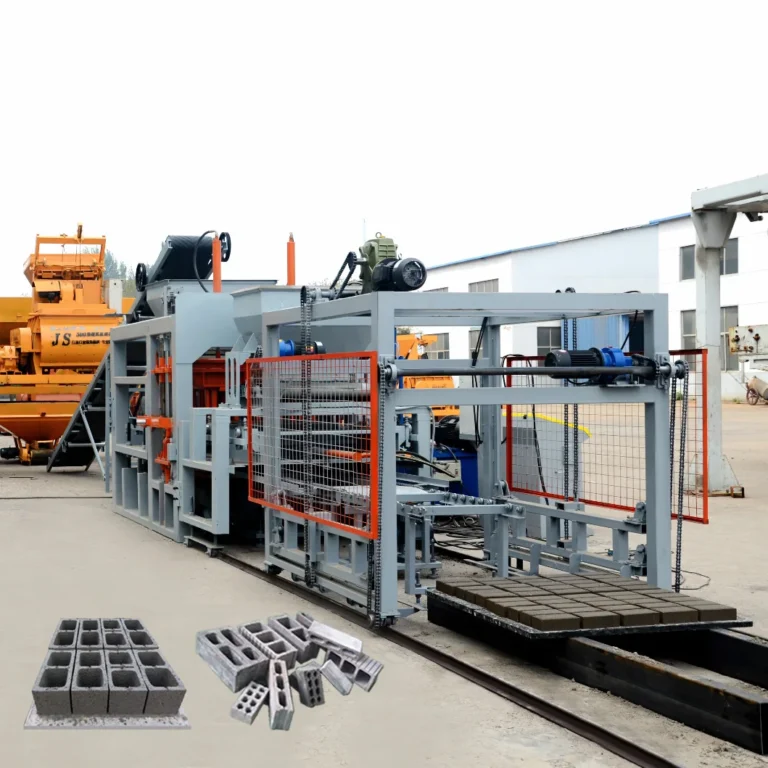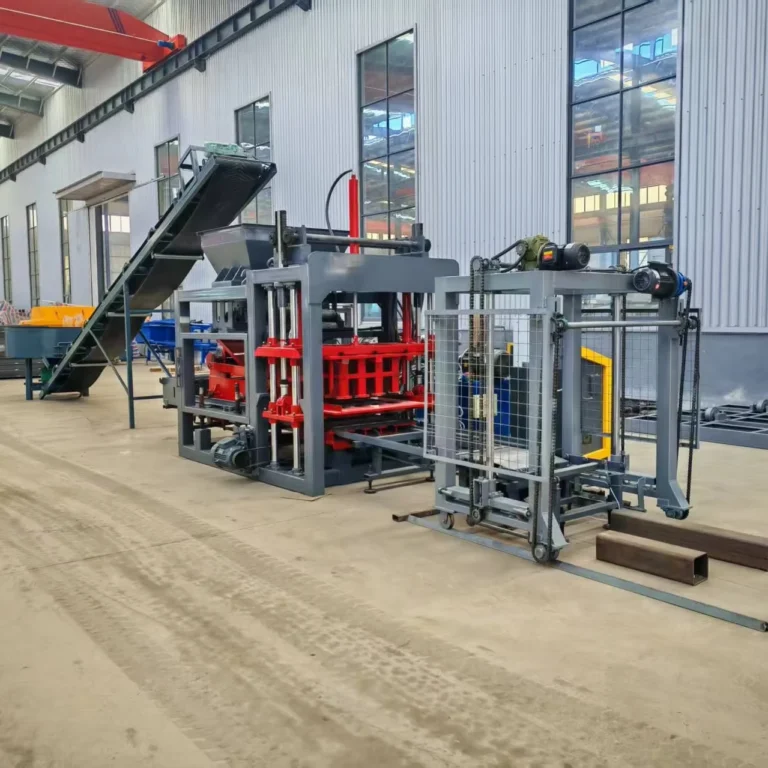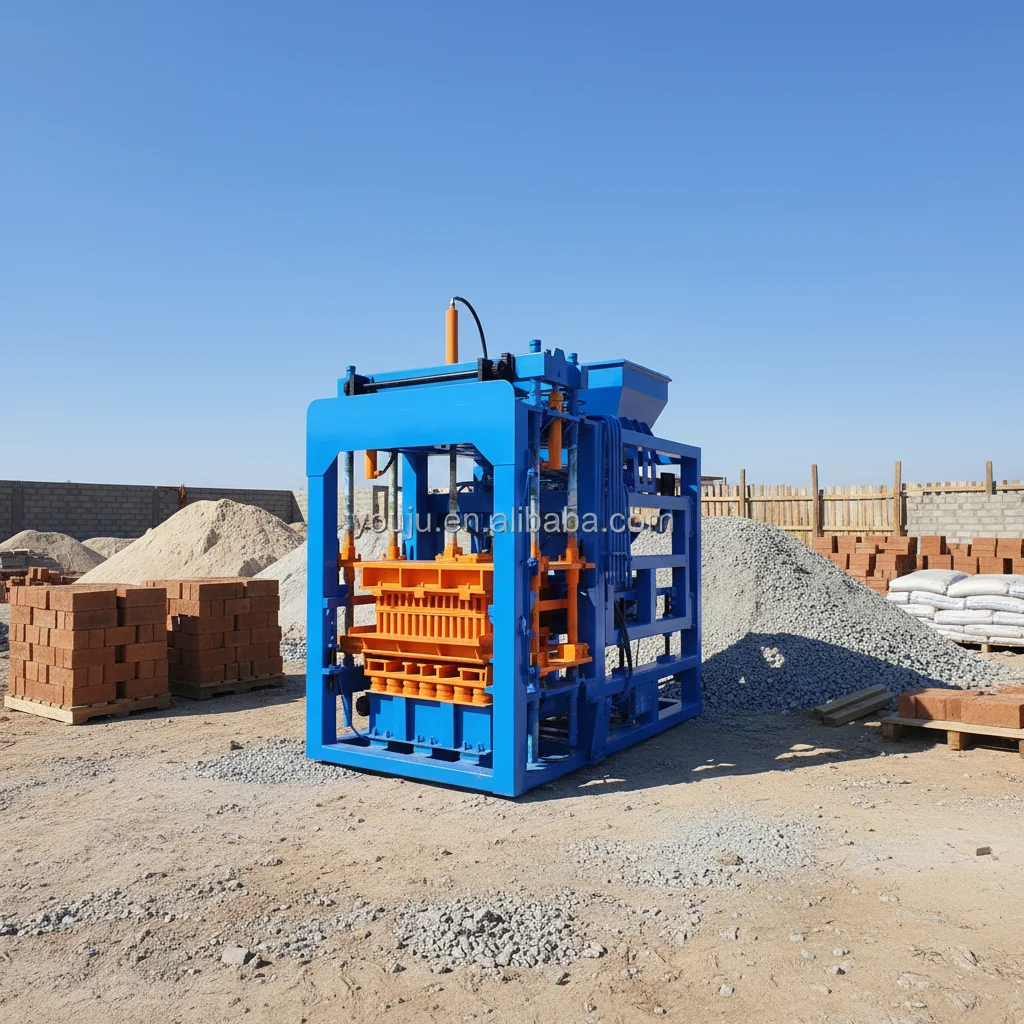


Description
Standard dispatch configuration — every QT6-15 leaves the factory with its container loading plan and dismantling sequence already mapped, so arrival timing does not drift after the order is placed.
Technical Specifications
| Parameter | Value |
|---|---|
| Model | QT6-15 |
| Product Type | Automatic Hydraulic Concrete Block Making Machine |
| Overall Dimensions (L×W×H) | 7100×1500×3000 mm |
| Rated Hydraulic Pressure | 21 MPa |
| Main Vibration Form | Platform vibration |
| Vibration Frequency | 4500–5100 r/min |
| Pallet Size | 880×850 mm |
| Molding Cycle | 15–25 s (basis not stated in source — confirm block format / material / thickness) |
| Overall Power | 31.25 kW |
| Machine Weight | 8700 kg |
| Control System | PLC intelligence control |
| Automation Level | Fully automatic |
| Mould Change | Replaceable moulds for different brick sizes |
| Raw Material Ratio (reference) | Cement 8–10%, Sand 30–40%, Stone 50–60% |
| Raw Material Consumption per Day | 150–190 T (basis not stated in source — confirm block format / operating hours) |
| Water Consumption per Day | 3–5% of raw material weight |
| Block Strength Reference | Hollow blocks 8–10 MPa; Solid bricks 10–20 MPa |
| Voltage & Frequency | Configurable per destination (confirm before shipment) |
| Certification | Confirm CE / ISO availability |
Application Suitability
| Application | Material or Output |
|---|---|
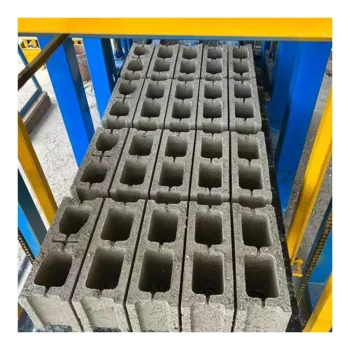
| Hollow concrete block production | Crushed stone, sand, cement mix at 8–10% cement ratio |
| Solid brick manufacturing | Dense aggregate blend targeting 10–20 MPa compressive strength |
| Medium-to-high output block plants | Continuous runs on standard pallet format 880×850 mm |
| On-site contractor production | Fixed plant setup at development or housing project locations |
| Format expansion for existing plants | Interchangeable moulds covering hollow and solid formats |
Why the Lead Time Conversation Must Happen Before the Purchase Order
A quoted delivery date only matters if it covers factory testing, container loading, and ocean transit to your port — not just the day the machine leaves the workshop floor.
Project contractors working against a building completion date often discover, after the deposit is paid, that "90 days" referred only to production and excluded the factory test, dismantling for loading, and sea freight to the destination port [NEED_CITE: typical export lead time breakdown for heavy machinery]. For a QT6-15 block machine in stock, the advantage is that the main unit and standard moulds are already assembled and tested, which collapses the gap between order placement and the day the container is sealed. When your project timeline is fixed and penalties for late delivery are written into the construction contract, knowing the realistic dispatch-to-arrival window before you sign is more valuable than any specification on the sheet.
Stock Configuration and What Ships Immediately
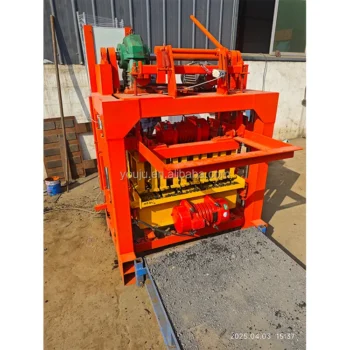
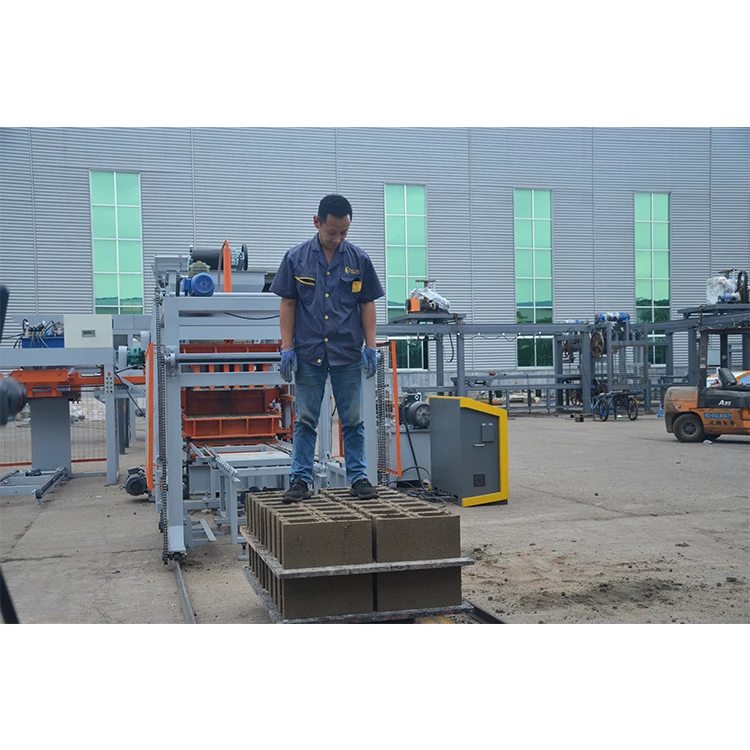
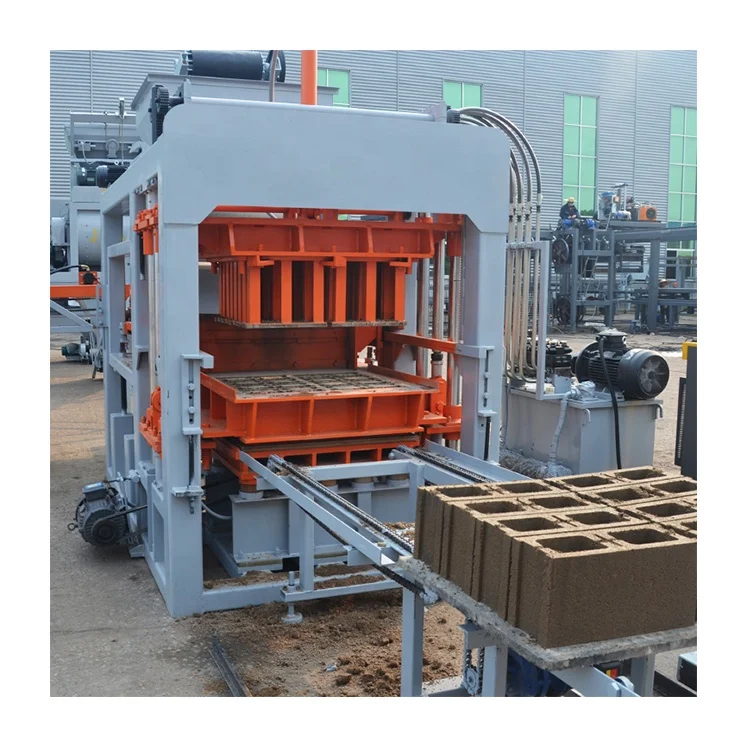
The QT6-15 block machine in stock is configured as a fully automatic hydraulic press with PLC intelligence control and platform vibration running between 4500 and 5100 r/min. Standard moulds for the most common hollow block and solid brick formats are typically held alongside the main unit, meaning a buyer does not need to wait for a separate mould production cycle. The overall power draw of 31.25 kW and the machine weight of 8700 kg determine the electrical infrastructure and foundation requirements at the receiving end, both of which can be communicated to the buyer before dispatch so site preparation runs in parallel with shipping.
Container Loading and Dismantling for Ocean Freight
At 7100 mm in length, the QT6-15 main frame requires a specific dismantling sequence to fit within standard 40-foot high-cube container dimensions. The hydraulic station, vibration platform, and PLC cabinet are separated and secured with steel bracing to prevent shifting during transit. Every unit that ships from stock includes a packing photograph set showing the exact position of each component inside the container, which doubles as a reference during reassembly at the destination port. This approach removes the guesswork that often delays commissioning when bolts and hydraulic hoses arrive in unmarked crates [NEED_CITE: container loading standards for industrial block machinery].
What the Vibration and Pressure Numbers Mean on the Production Floor
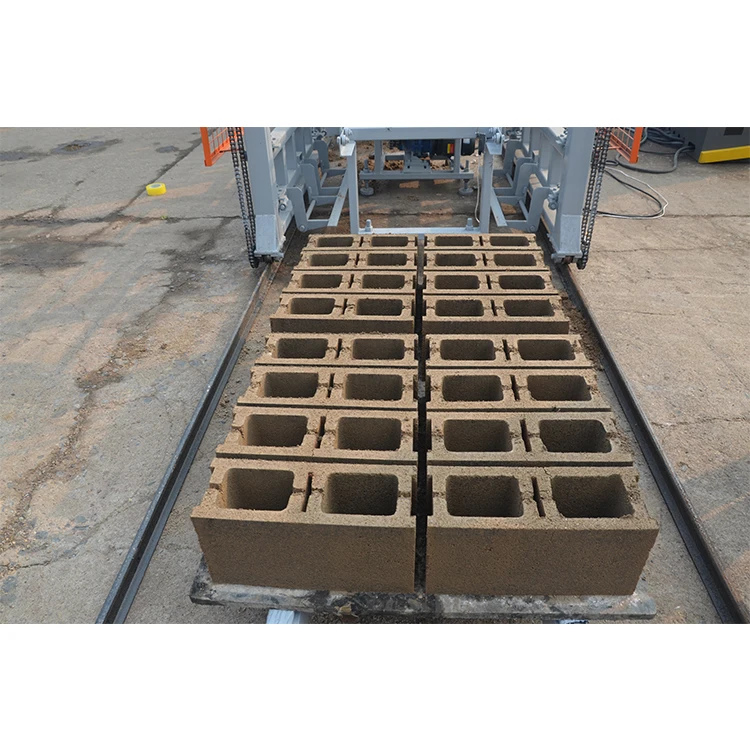
The 21 MPa rated hydraulic pressure combined with platform vibration at 4500–5100 r/min determines how densely the concrete mix is compacted inside the mould cavity. Higher vibration frequency liquefies the mix more effectively, allowing the hydraulic head to press particles into a tighter matrix before the pallet moves to the curing rack. The 880×850 mm pallet size directly governs how many block units are produced per cycle and must match the curing rack dimensions and forklift capacity already in use at the buyer’s plant. A mismatch here — for example, pallets that are wider than the curing rack slots — means the buyer either replaces the rack system or manually transfers blocks off the pallets, negating the automation the QT6-15 was purchased to deliver [NEED_CITE: pallet and curing rack compatibility in block production].
The Hidden Cost of Ordering Without a Dispatch Schedule
When a buyer places an order without a written dispatch date that includes factory testing and container sealing, the production window can extend unpredictably. A delay of several weeks at the factory cascades into missed shipping vessel bookings, which adds further weeks of waiting for the next available departure. For contractors whose building schedule depends on a daily supply of blocks, the downstream cost of idle masons and delayed slab pours far exceeds the price difference between suppliers. Stocking the QT6-15 and its standard moulds is specifically aimed at eliminating this category of risk for buyers on fixed project timelines.
Why Buyers Source This Model Here
Every QT6-15 dispatched from stock is checked against a pre-shipment list that covers the main frame, hydraulic station, PLC cabinet, moulds, pallets, and the full set of wear parts that commonly need replacement within the first production cycle. The configuration is verified against the buyer’s stated voltage and frequency before the machine is crated, preventing the commissioning delay that occurs when a 380V machine arrives at a site wired for a different supply. Container loading plans and estimated arrival dates are quoted before the purchase order is issued, not after. The raw material ratio guidance is cross-referenced with the buyer’s locally available aggregate so the mix design does not require sourcing materials from a different region. Documentation — including the hydraulic schematic, electrical wiring diagram, and operation manual — ships inside the container in both printed and digital form.
Documentation & Verification
- Factory test record confirming cycle times on the buyer’s target block format before dispatch
- Hydraulic and electrical schematic matching the as-built QT6-15 configuration
- Voltage and PLC control language confirmation document signed before crating
- Container loading photograph set showing component placement and securing method
- Operation and maintenance manual with wear parts list specific to the shipped mould set
Installation, Commissioning & Support
- Foundation pad must support 8700 kg static load plus dynamic vibration forces during operation
- Dedicated electrical circuit rated for 31.25 kW continuous draw at the confirmed local voltage and frequency
- Machine arrives dismantled into frame, hydraulic station, and PLC cabinet for reassembly on site
- First-run commissioning includes cycle time adjustment against the buyer’s actual mix and aggregate
- Operator training covers mould change procedure, PLC fault code reading, and daily lubrication points
- Wear parts list shipped with the machine identifies every component likely to need replacement in the first year
Before You Request a Quote
To match the right QT6-15 configuration to your project, provide the target block format and dimensions, the daily output volume your site requires, the raw materials available locally including aggregate type and grading, and the voltage and frequency at your plant. If you already have pallets, curing racks, or a block handling line in place, share those dimensions so the pallet size and automation level can be aligned before the machine ships.
Frequently Asked Questions
Q: Which QT6-15 configurations are currently in stock and ready for dispatch?
A: Standard QT6-15 units with fully automatic PLC control, 21 MPa hydraulic pressure, and 880×850 mm pallet size are held in stock. Common hollow block and solid brick moulds are typically available alongside the main unit. Specific mould formats and voltage configurations in stock at the time of your inquiry can be confirmed within one working day of contact.
Q: How is the QT6-15 dismantled and loaded into containers for shipment?
A: The 7100 mm main frame is separated into the vibration platform, hydraulic station, and PLC control cabinet. Each component is secured with steel bracing inside a standard 40-foot high-cube container. A packing photograph set is provided showing exact placement, which serves as a reassembly guide when the machine arrives at your destination port.
Q: What is the realistic dispatch-to-arrival timeline for my port?
A: For stocked QT6-15 units, the dispatch window covers final factory testing, dismantling, container loading, and customs documentation. Ocean transit time depends on your destination port and current vessel schedules. A written arrival estimate covering both the dispatch date and the estimated sea freight duration is provided before the purchase order is issued.
Q: Which standard moulds ship with the machine and which need a separate lead time?
A: Standard hollow block and solid brick moulds matching the 880×850 mm pallet size are typically held in stock and can ship with the QT6-15 main unit. Custom mould formats or non-standard brick dimensions require a separate production cycle. Confirming your target block formats early ensures mould availability aligns with the machine dispatch date.
Q: What voltage and frequency configurations are available from stock?
A: The QT6-15 overall power requirement is 31.25 kW, and the electrical system can be configured for different voltage and frequency standards before dispatch. Buyers must confirm their local supply specifications before the machine is crated. Units in stock may carry a default configuration that is adjusted to the buyer’s requirement during the pre-shipment preparation stage.