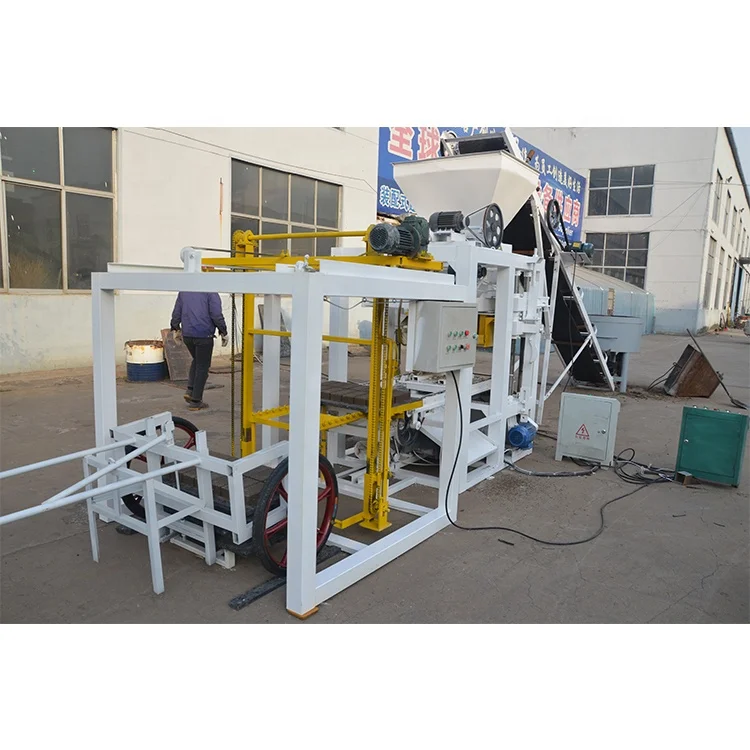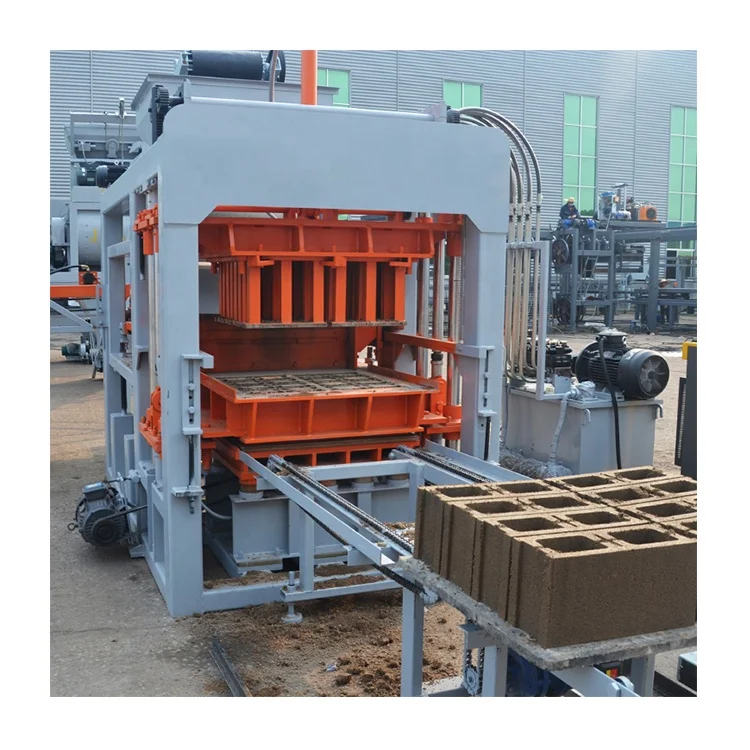


Description
Stock and Delivery Focus — QT6-15 fully automatic block machine inventory tracked daily so dispatch dates and container loading plans are confirmed at quotation, not after payment.
Technical Specifications
| Parameter | Value |
|---|---|
| Model | QT6-15 |
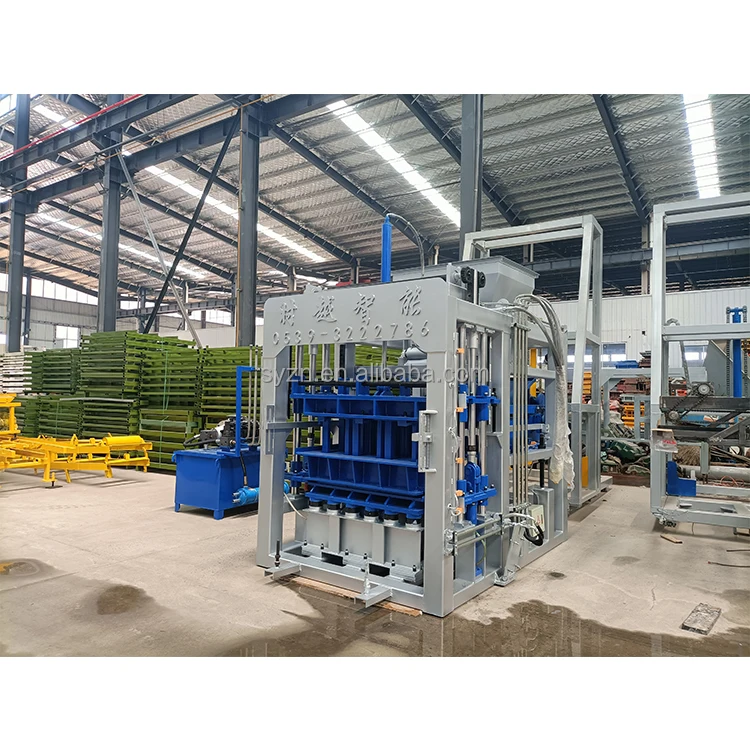
| Product Type | Fully Automatic Hydraulic Vibration Block Making Machine |
| Overall Dimensions (L×W×H) | 7400×1900×2660 mm |
| Molding Cycle | 15–25 s (basis not stated in source — confirm block format / material / thickness) |
| Vibration Frequency | 4600 r/min |
| Exciting Power (Vibration Force) | 40–50 kN |
| Rated Power | 31.25 kW |
| Mixer Model | JQ350 |
| Pallet Size | 850×550×25 mm |
| Net Weight | 7 T |
| Control System | PLC control system |
| Hydraulic Station | Included (high-pressure hydraulic system) |
| Automation Level | Fully automatic |
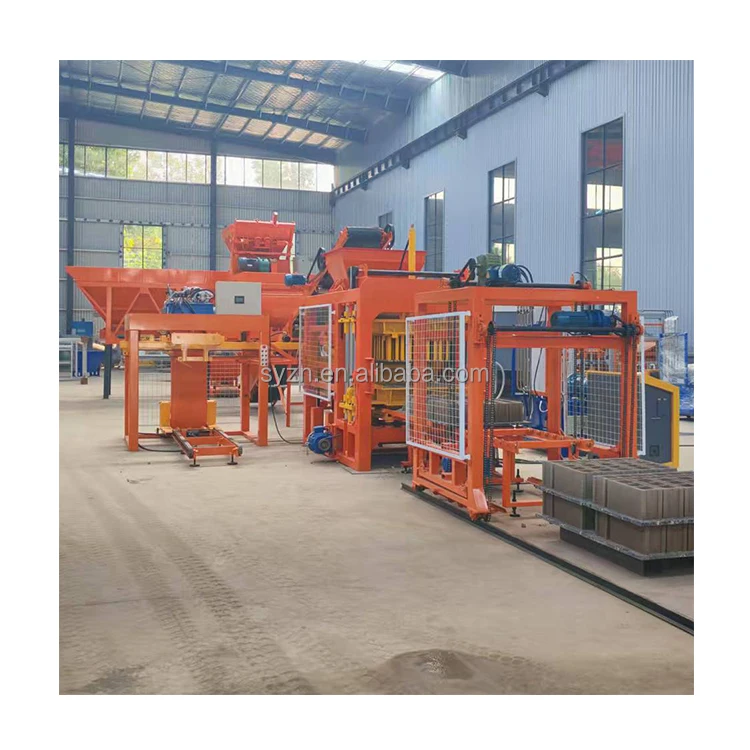
| Included Equipment | Block making machine, hydraulic station, PLC control system, pallet feeder, brick conveyor, block sweeper |
| Free Accessories | Manual hydraulic trolley, spare parts, tools |
| Output Capacity (400×200×200 mm Hollow Block) | 1200–1680 pcs/hr (9600–13440 pcs/8hr) |
| Output Capacity (400×150×200 mm Hollow Block) | 1800–2400 pcs/hr (14400–19200 pcs/8hr) |
| Output Capacity (240×115×53 mm Solid Brick) | 3240 pcs/hr (16200–19440 pcs/8hr) |
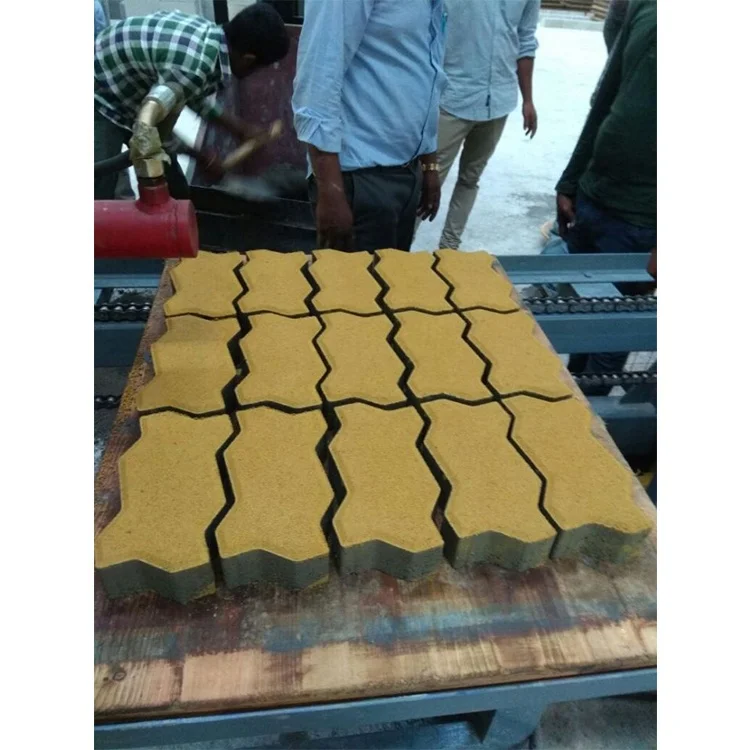
| Applied Products | Paver, solid block, hollow block, curbstone |
| Raw Materials | Crushed stones, sand, cement, dust, fly ash |
Application Suitability
| Application | Material or Output |
|---|---|
| Hollow block production for housing projects | Crushed stone, sand, cement, fly ash mix |
| Solid brick manufacturing for load-bearing walls | Cement, sand, and dust blends |
| Paver production for walkways and driveways | Crushed stone and cement aggregates |
| Curbstone forming for road and infrastructure works | Coarse aggregate and cement combinations |
| On-site block production by construction contractors | Locally sourced sand, stone, and cement |
What "Ready to Ship" Actually Means for a QT6-15 Block Making Machine In Stock
A stocked machine still requires voltage confirmation, language setup, and container planning before it can leave the factory floor.
When buyers hear "in stock," they often assume the equipment can be on a vessel within days. The reality is more involved. A QT6-15 block making machine in stock still needs electrical configuration matched to the destination country, PLC display language set for local operators, and a loading plan that accounts for pallets, moulds, and the hydraulic station. [NEED_CITE: export machinery voltage and frequency standards] Skipping these steps at the order stage leads to machines sitting on the dock or arriving with the wrong control interface, costing weeks of downtime on a project that was already running tight.
Container Loading and Dispatch Timeline
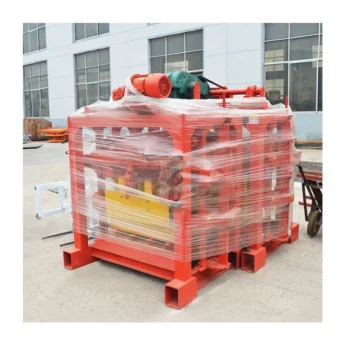
The QT6-15 block making machine in stock ships as a dismantled assembly inside standard containers. The main press frame, hydraulic station, and PLC cabinet are separated to fit within container dimensions while protecting sensitive components. Pallets ship bundled alongside the machine. Buyers receive a loading plan showing item placement before the container is sealed, so there are no surprises when the container opens at destination.
Lead Time From Order Confirmation to Vessel
Stock availability shortens the production wait, but pre-shipment steps still require coordination. Voltage and frequency confirmation, control language selection, factory power-on testing, and packing photograph documentation each take time. The dispatch date quoted upfront accounts for these steps, giving buyers a realistic arrival window instead of an optimistic promise. [NEED_CITE: typical pre-shipment inspection and documentation procedures for industrial machinery exports]
Matching Pallet and Mould Inventory to Machine Stock
Having the press in stock means little if the matching pallets and moulds are not. The QT6-15 uses 850×550×25 mm pallets, and standard moulds for hollow block, solid brick, paver, and curbstone formats are kept alongside the machine. Buyers confirm their target formats at inquiry so the correct moulds are included in the same shipment rather than sent as a costly follow-up.
How Vibration Force and Hydraulic Pressure Shape Block Density
The QT6-15 delivers 40–50 kN of exciting power at 4600 r/min vibration frequency, working together with its high-pressure hydraulic system to compact raw material inside the mould. Vibration alone settles the mix; hydraulic pressure then locks the particles into a dense matrix. When these two forces are not balanced against the buyer’s actual aggregate and cement ratio, blocks emerge with inconsistent strength — some crumble at the edges while others meet spec. The 31.25 kW rated power supports both systems running simultaneously through the 15–25 second molding cycle.
Pallet Size and Curing Area Coordination
The 850×550×25 mm pallet size determines how many blocks sit on each board, how the boards stack in the curing area, and which forklift can handle them. Buyers who already have a curing yard and material handling equipment need to confirm compatibility before the machine ships. A mismatch here means purchasing new forklifts or reorganizing the curing space after arrival — delays that have nothing to do with the press itself.
The Cost of Overlooking Pre-Shipment Details
When voltage, frequency, or PLC language are not confirmed before dispatch, the machine arrives and cannot be powered on without an electrician rewiring the control panel. Operators face a display they cannot read. Commissioning stretches from a planned few days into multiple weeks while parts and translators are sourced locally. [NEED_CITE: common causes of delayed commissioning for imported industrial equipment] These are entirely preventable delays that turn a fast delivery advantage into a project bottleneck.
Why Buyers Source This Machine Here
The QT6-15 is one focused product in a range dedicated entirely to block making machinery, meaning the press, mould, pallet, and handling equipment are specified as a matched set. Dispatch dates are quoted with container loading plans included, not added later as an afterthought. Stock models and standard moulds are available for buyers working against project deadlines. Factory test records, packing photographs, and customs documentation are prepared before the container leaves the yard. [NEED_CITE: CE machinery directive compliance for block making equipment]
Documentation & Verification
- Factory test record run on the buyer’s specified block format before dispatch
- Container loading plan with item placement confirmed at quotation stage
- Voltage and frequency written confirmation signed off before production release
- PLC control language setting documented in the operation manual
- Packing photographs provided before container seal is applied
Installation, Commissioning & Support
- Foundation must support 7 T machine weight across the 7400×1900 mm footprint with level tolerance
- Dedicated power circuit required for the 31.25 kW rated load at confirmed voltage and frequency
- Main press, hydraulic station, and PLC cabinet reconnect on-site using labeled wiring schematics
- Mould installation and first-run parameter tuning conducted with operator present at the controls
- Spare parts and tool kit ship with the machine to cover initial wear replacements
What to Include in Your Inquiry
To provide an accurate dispatch timeline and container loading plan, we need your target block format, daily output requirement, and local aggregate type. Confirm your site voltage, frequency, and preferred PLC display language. If you already have pallets or handling equipment on site, share the specifications so we can verify compatibility before shipment.
Frequently Asked Questions
Q: Is the QT6-15 block making machine currently in stock, and how soon can it ship?
A: Stocked units are available and dispatch timing is confirmed at quotation stage. Pre-shipment steps including voltage confirmation, language setup, factory testing, and packing documentation require coordination before the container is sealed. The quoted arrival estimate accounts for these steps so you receive a realistic delivery window, not just a ship date.
Q: The capacity table lists different outputs — which block format is each figure based on?
A: Each capacity figure is tied to a specific format. Hollow blocks at 400×200×200 mm yield 1200–1680 pieces per hour, 400×150×200 mm hollow blocks yield 1800–2400 pieces per hour, and 240×115×53 mm solid bricks yield 3240 pieces per hour. If your target format differs, the cycle time and output must be recalculated for that specific mould.
Q: Can voltage, frequency, and control language be confirmed before the machine ships?
A: Yes. These are confirmed in writing before the order enters final preparation. The PLC display language and electrical configuration are set to match your site conditions. This step prevents commissioning delays caused by incompatible power supply or an interface your operators cannot read.
Q: What accessories and spare parts come with the QT6-15 shipment?
A: The package includes a manual hydraulic trolley, a spare parts kit, and a tool set. The spare parts cover initial wear items so you are not searching for replacements during the first production weeks. When the first mould or hydraulic wear parts need replacement, the parts list included in the documentation allows direct reorder.
Q: Can the container loading plan and estimated arrival time be provided with the quotation?
A: The loading plan showing how the press, hydraulic station, pallets, and moulds are arranged in the container is provided at the quotation stage. The estimated arrival time is calculated from the confirmed dispatch date, sea transit duration to your port, and standard customs clearance timing so you can plan your project schedule around a known delivery window.