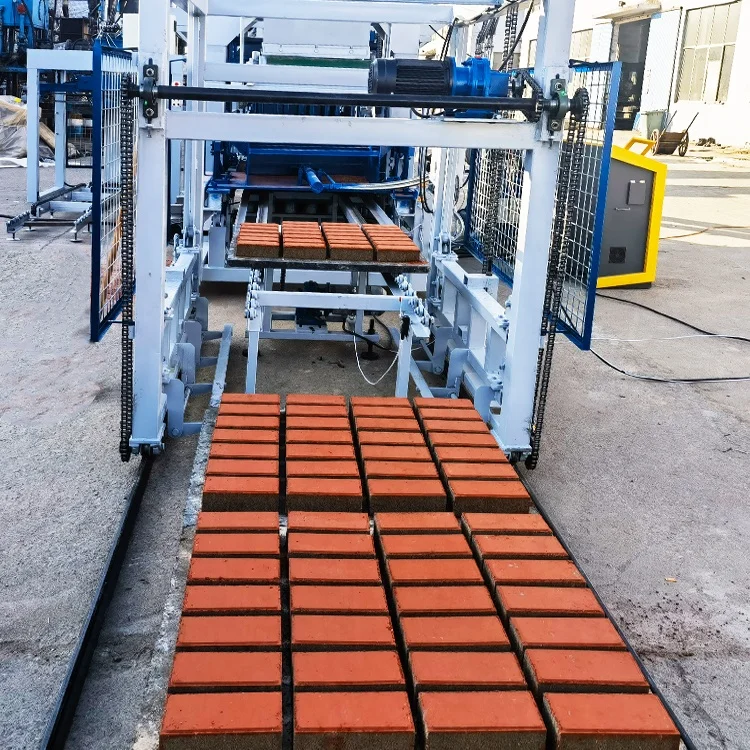
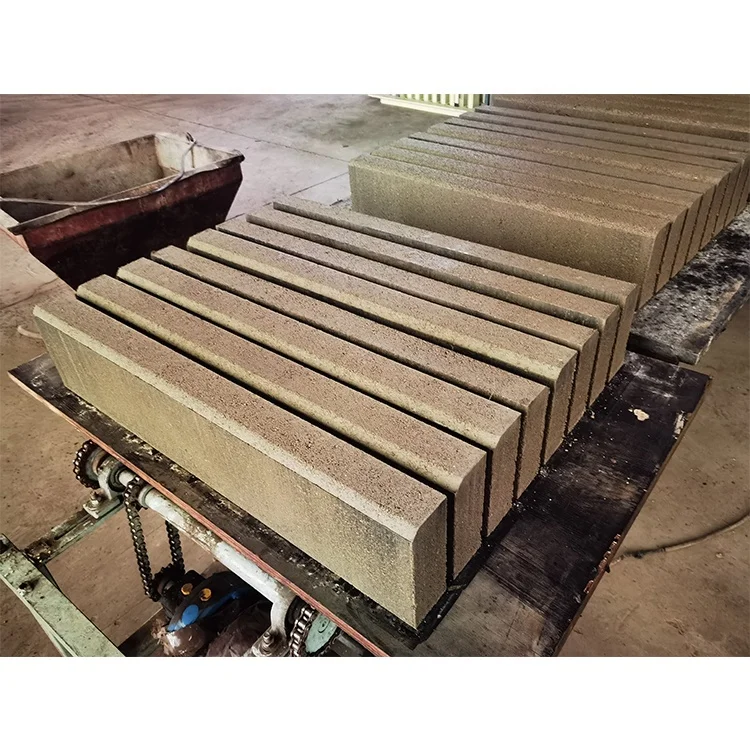
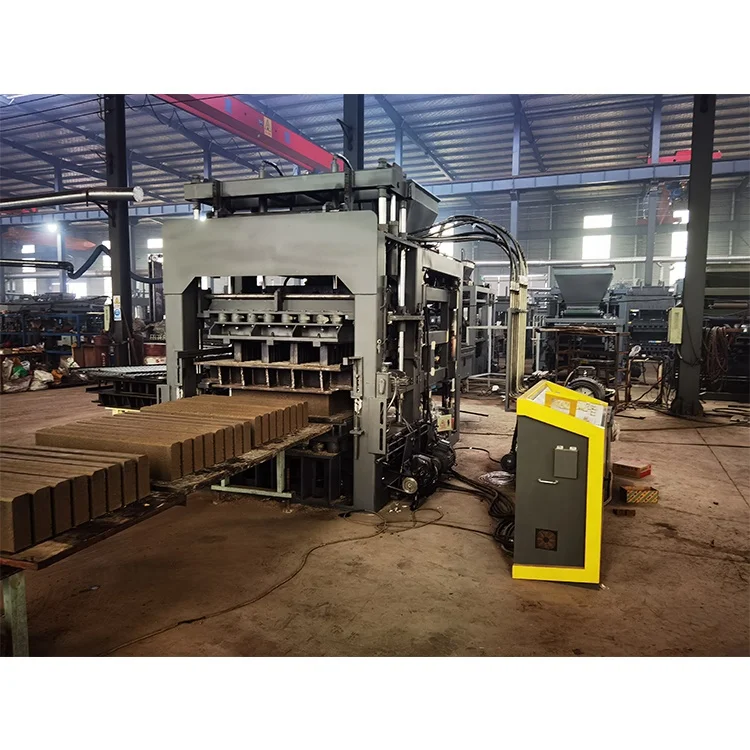
Description
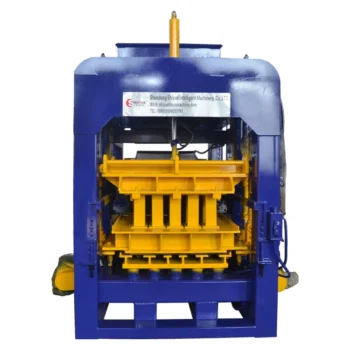
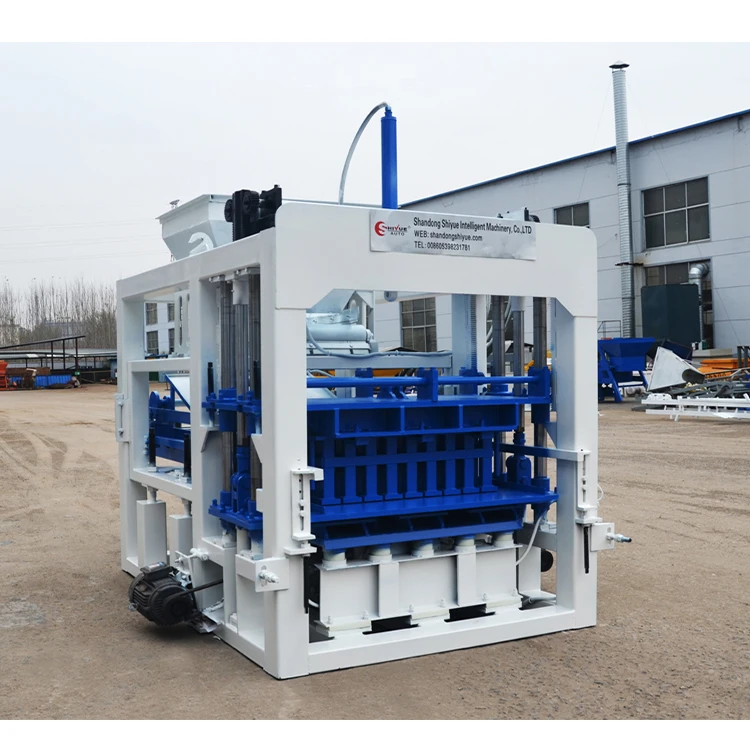
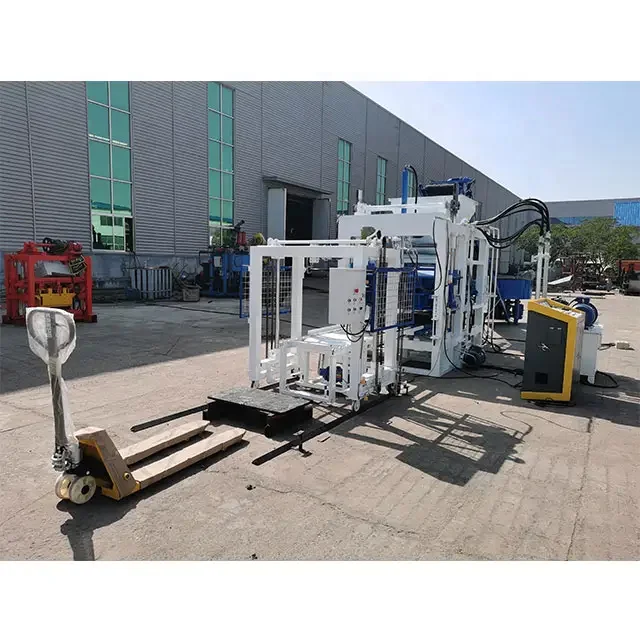
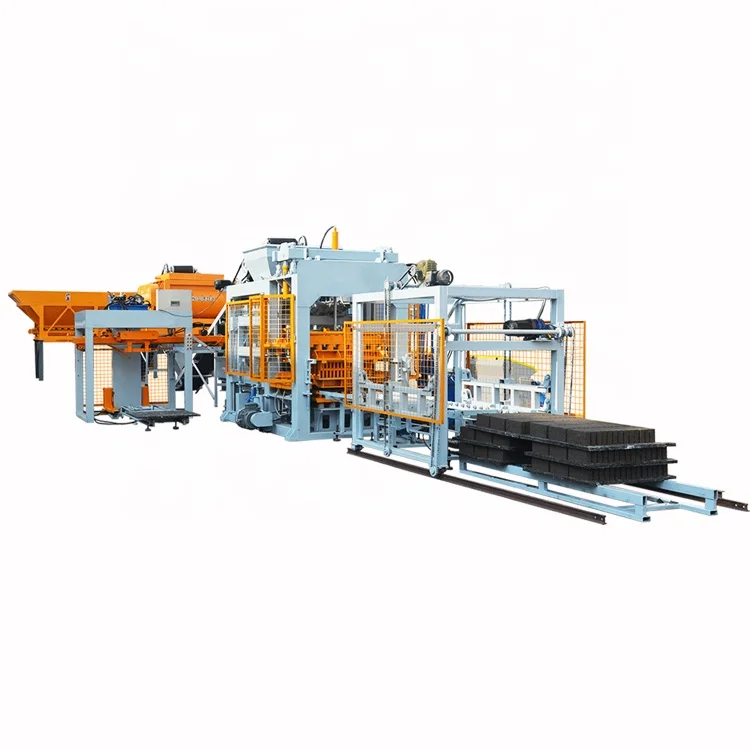
Stocked QT8-15 block machine with stacker — dispatch schedule and container loading plan confirmed at quotation stage so your project timeline stays intact.
Technical Specifications
| Parameter | Value |
|---|---|
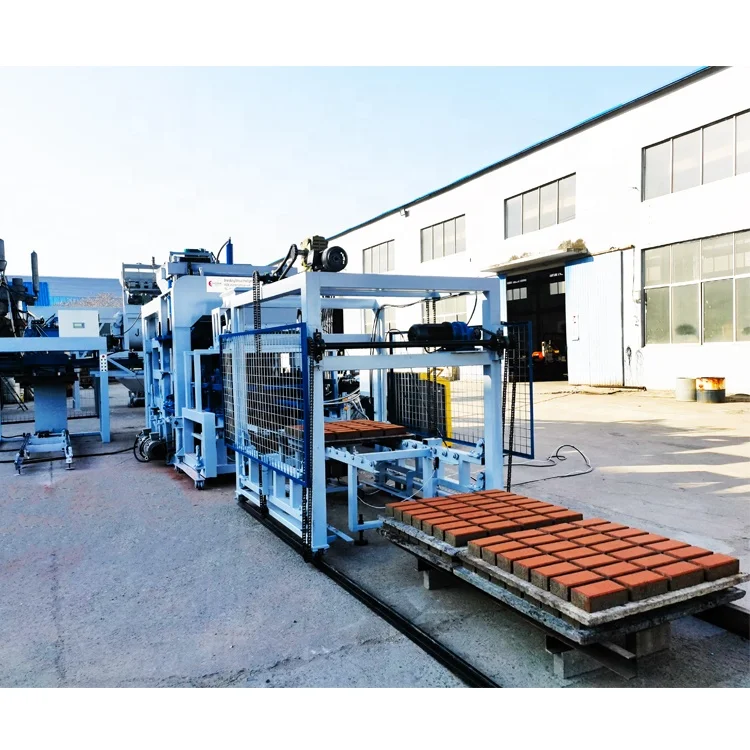
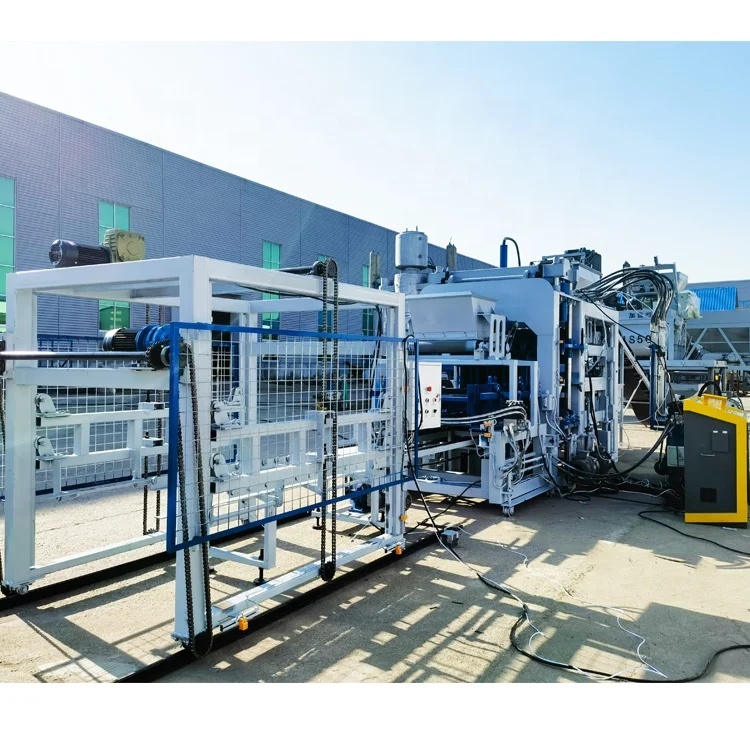
| Product Type | Hydraulic Full Automatic Concrete Block Making Machine with Stacker |
| Model | QT8-15 |
| Overall Dimensions (L×W×H) | 8300×1860×3000mm |
| Rated Pressure | 21MPa |
| Main Vibration Form | Platform Vibration |
| Vibration Frequency | 2800-4500 r/min |
| Vibration Force | 45kN |
| Pallet Size | 950×900mm |
| Molding Cycle | 15-20s |
| Overall Power | 55.5kW |
| Total Mass | 8T |
| Demolding Method | Hydraulic |
| Factory Area Required | 300m² |
| Automation Level | Full Automatic with Stacker |
| Output Capacity | (basis to be confirmed — depends on block format, material and thickness) |
| Container Loading | 1×40HQ (basic equipment) |
| Warranty | 1 year |
Application Suitability
| Application | Material or Output |
|---|---|
| Hollow block production for commercial buildings | Crushed stone, sand, cement, fly ash |
| Solid block manufacturing for load-bearing walls | Gravel, cement, dust, slag |
| Paving block production for roads and walkways | Crushed stone, sand, cement, colored pigment |
| Interlocking block production for landscape projects | Sand, cement, fly ash, gravel |
| Curbstone manufacturing for infrastructure | Crushed stone, cement, slag |
| On-site block production for housing developments | Local aggregate, cement, sand |
What "15-20 Second Cycle Time" Actually Means for Your Output
Cycle time per press stroke is only half the equation — block format, curing time, and pallet handling determine your real daily throughput.
I’ve watched buyers receive machines and then discover their quoted capacity assumed a block size they don’t even sell in their market. The QT8-15 block machine in stock molds a pallet every 15-20 seconds, but that number means different things depending on whether you’re pressing hollow blocks, pavers, or interlocking bricks [NEED_CITE: block format impact on cycle time and daily output]. Without confirming your target format and local aggregate before shipment, you’re guessing at capacity.
Lead Time Certainty When Your Project Has a Deadline
The QT8-15 block machine in stock is configured for buyers who cannot afford extended production-to-order delays. Whether you’re replacing an ageing press or fulfilling a confirmed end-buyer order, dispatch timing matters more than feature lists. Stocked units or short lead-time builds ship on schedules confirmed at quotation, not after payment clears.
Container Loading and Arrival Timing Upfront
Machine dismantling for shipment and container loading arrangements are specified before you commit. A 40HQ container carries the basic equipment, and the loading plan accounts for the stacker, hydraulic station, and control cabinet as separate secured units. Arrival estimates at your destination port are provided during quotation so you can plan site preparation, forklift availability, and installation crew scheduling accordingly [NEED_CITE: typical ocean freight transit times by destination region].
Why Pressure and Vibration Force Must Match Your Mix
The 21MPa rated hydraulic pressure works with the 45kN platform vibration force to compact material into dense, consistent blocks. But this pairing only delivers expected strength when matched to your specific mix design and local aggregate gradation. A fly-ash-heavy mix behaves differently under vibration than a crushed-stone-dominant one, and the QT8-15 must be configured against what you can actually source in your area, not a generic catalogue formula.
When Pallet Size and Forklift Tonnage Don’t Align
I once coordinated a shipment where the buyer’s existing forklift couldn’t handle loaded pallets at the specified dimensions, and their curing racks didn’t match the pallet footprint. The 950×900mm pallets on the QT8-15 work well for standard curing areas, but if your racks are sized differently or your forklift has a lower load rating, you’ll face manual restacking or equipment replacement after arrival [NEED_CITE: pallet handling compatibility with existing plant equipment]. Confirming these details before dispatch avoids costly on-site modifications.
Why Buyers Choose This Source
Block machinery is the single focus here, so the QT8-15, its moulds, pallets, and stacker are specified as one matched system rather than assembled from separate suppliers. Configuration is set against your actual mix design, local aggregate, and target block format instead of defaulting to catalogue settings. Mould design covers the formats your market actually sells, including custom drawings when standard options don’t fit. Automation level is selectable, so you can specify the stacker now or plan for later upgrades.
Documentation & Verification
- Line layout and capacity calculation stating your confirmed block format
- Machine specification sheet with voltage and control language verified
- Mould drawing and format list matching your market requirements
- Factory test record on your target block type before dispatch
- Hydraulic and electrical schematic for local maintenance teams
- Packing photographs showing dismantling and container loading arrangement
Installation, Commissioning & Support
- 300m² factory area requirement confirmed with your site dimensions and floor condition
- 55.5kW total power draw verified against your local voltage and dedicated circuit capacity
- Machine dismantled into secured units for 40HQ loading, reassembled on-site with alignment checks
- First-run parameter setting adjusted to your confirmed mix design and block format
- Operator training covers PLC interface, mould change procedure, and daily maintenance routines
- Wear parts list and mould inventory supplied for first replacement cycle planning
Before You Request a Quote
Provide your target block format with dimensions, expected daily output volume, and the raw materials you can source locally. Include your site’s available floor space, curing area layout, and existing forklift specifications. Confirm your local voltage, frequency, and preferred PLC display language so the QT8-15 block machine in stock is configured correctly before it leaves the factory.
Frequently Asked Questions
Q: Is the QT8-15 currently in stock or built to order?
A: Availability depends on current inventory and your configuration requirements. Stocked units ship faster but may need mould or voltage adjustments. Production-to-order builds allow full customization but require longer lead times. Dispatch schedule is confirmed at quotation stage once your specifications are finalized, so you know arrival timing before committing.
Q: How is the machine loaded into a 40HQ container?
A: The QT8-15 block machine in stock is dismantled into major assemblies — press frame, hydraulic station, stacker, and control cabinet — each secured separately inside the container. Loading plans account for weight distribution and reassembly sequence. You receive packing photographs showing the arrangement before the container is sealed and dispatched.
Q: Can I get an arrival estimate before placing the order?
A: Yes, transit time from departure port to your destination is provided during quotation based on current shipping schedules. This allows you to plan site preparation, utility connections, and installation crew availability. The estimate accounts for typical port handling times at both origin and destination.
Q: What daily output can I expect once the machine is running?
A: Realistic output depends on your confirmed block format, local raw material, and curing arrangement. The 15-20 second molding cycle applies per press stroke, but daily throughput varies by product type. Capacity calculations in your quotation state the assumed block format so expectations match actual production.
Q: Are voltage and PLC language confirmed before shipment?
A: Your local voltage, frequency, and preferred control interface language are verified during the quotation and configuration stage. The factory test runs the QT8-15 block machine in stock at your specified electrical parameters before dispatch, preventing commissioning delays caused by mismatched power supply or unreadable displays on arrival.