

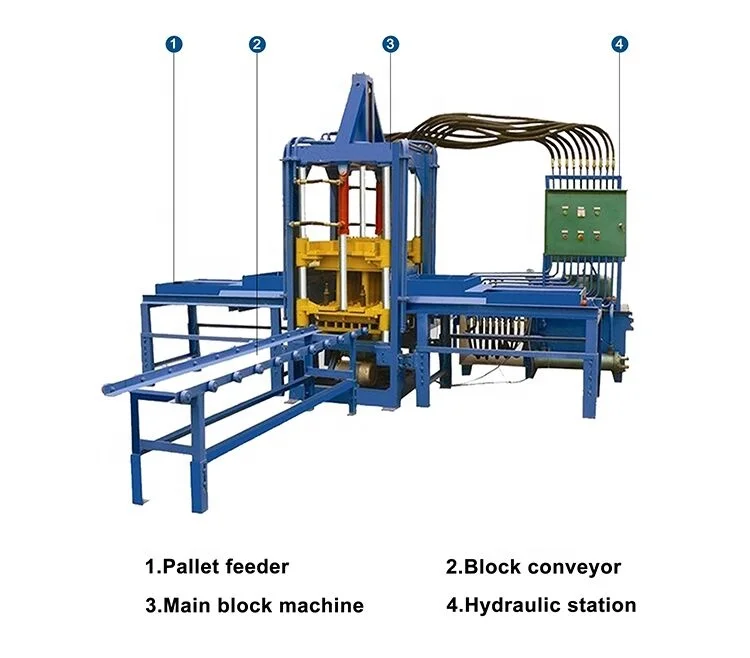


Description
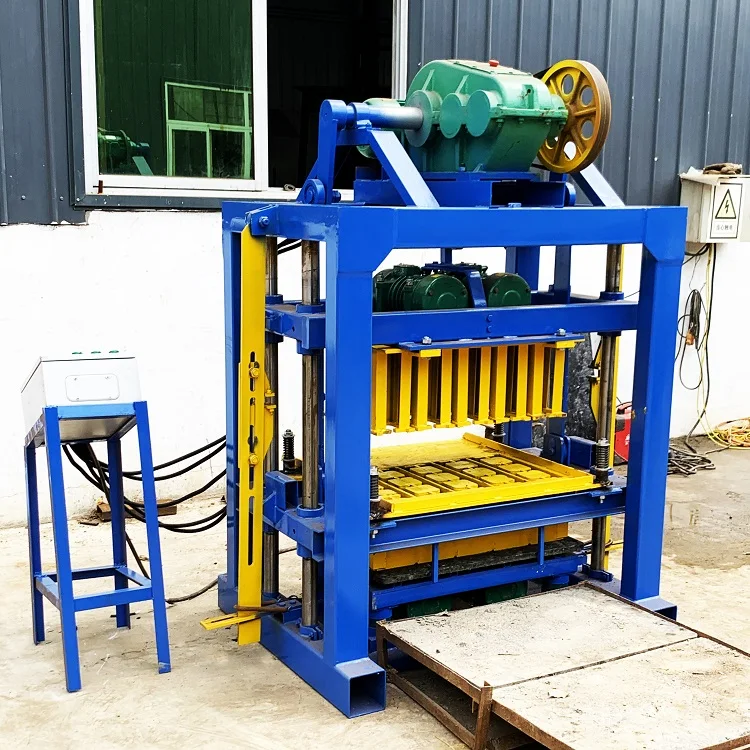
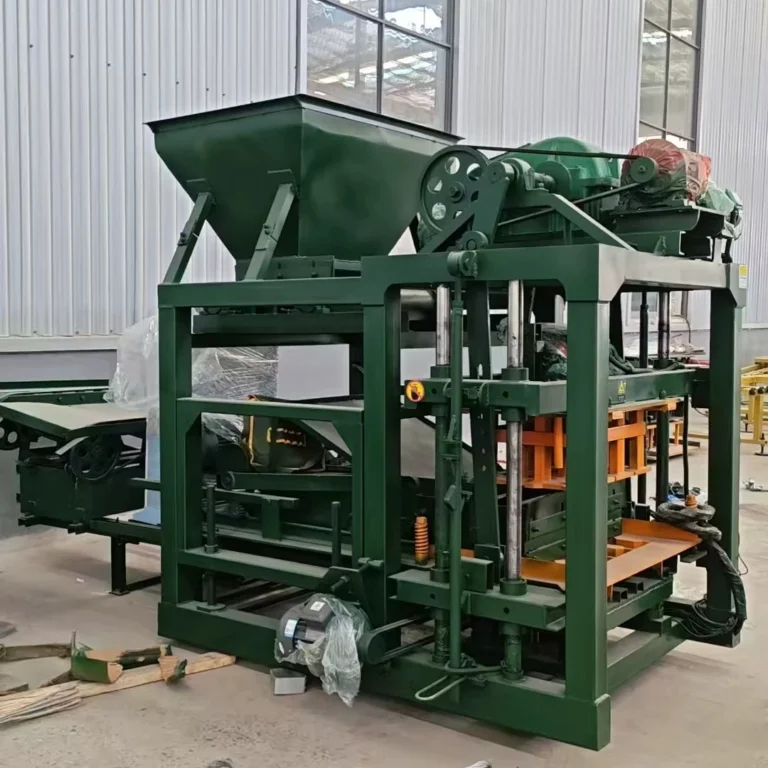
Ready-to-ship block line — every QTF3-20 unit is verified against your pallet, forklift and curing area dimensions before crate closure, so nothing waits on the dock.
Technical Specifications
| Parameter | Value |
|---|---|
| Model | QTF3-20 |
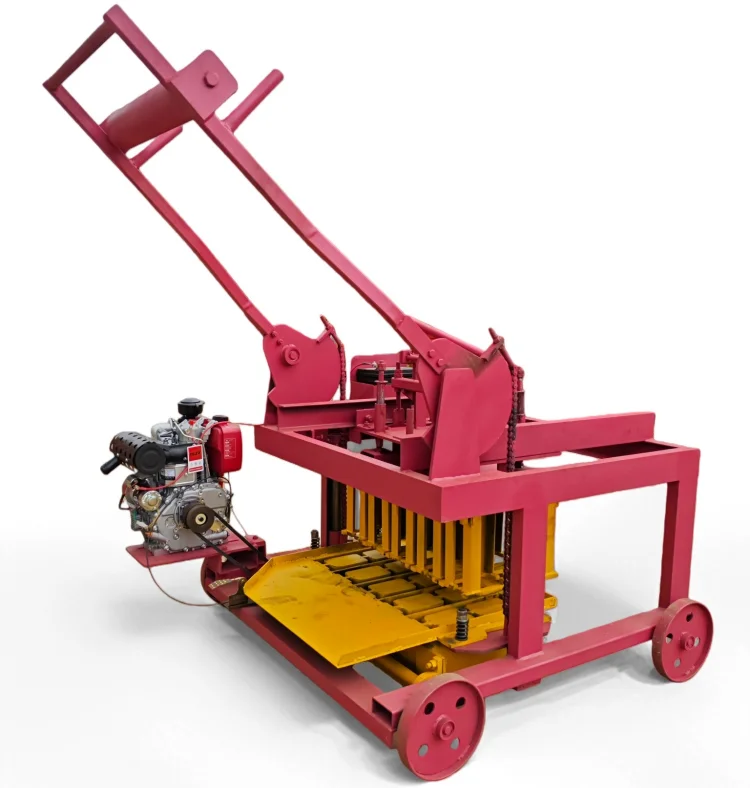
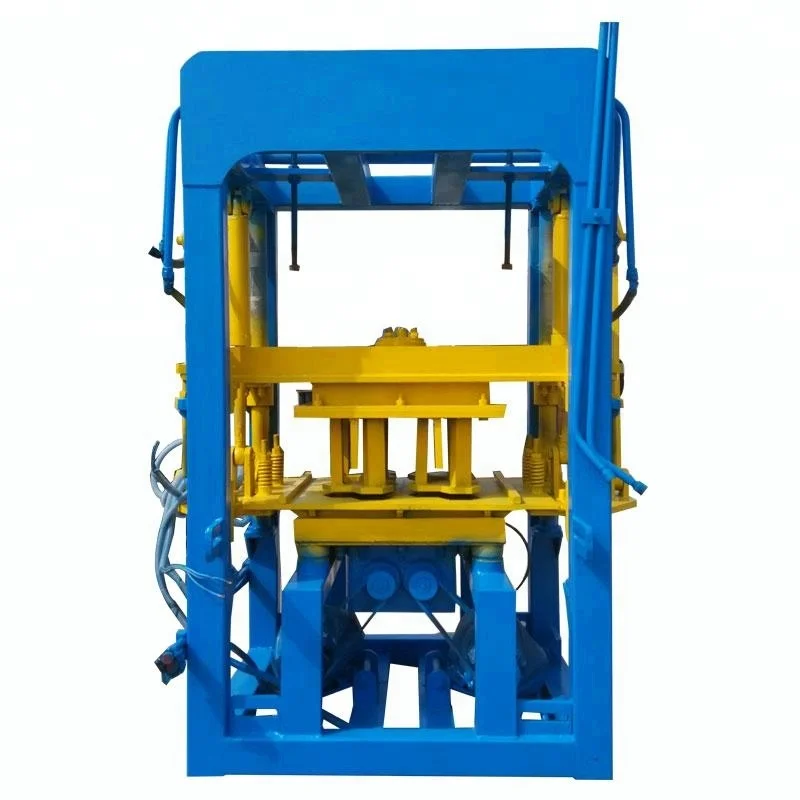
| Product Type | Semi-Automatic Concrete Block Making Machine |
| Hydraulic System | Adopted; working procedure even and dependable |
| Vibration | Efficiently combined with hydraulic press |
| Automation Level | Semi-automatic |
| Output — 200×100×60 mm paving block | 2700 pcs/hour (15 pcs/mould); 21600 pcs per 8-hour shift |
| Output — 400×200×200 mm hollow block | 540 pcs/hour (3 pcs/mould); 4320 pcs per 8-hour shift |
| Output — 225×112.5×60 mm interlocking brick | 1440 pcs/hour (8 pcs/mould); 11520 pcs per 8-hour shift |
| Mould Formats Listed | 200×100×60 mm / 400×200×200 mm / 225×112.5×60 mm |
| Voltage | Customizable to local standard (basis to be confirmed with target country voltage and frequency) |
| Warranty | 1 year (excluding wearing parts) |
| Operation Manual | Included |
| Pallet Size | basis to be confirmed against block format, material and thickness |
| Overall Dimensions | basis to be confirmed |
| Net Weight | basis to be confirmed |
| Rated Power | basis to be confirmed |
| Control System | basis to be confirmed |
| PLC Language Options | basis to be confirmed |
Application Suitability
| Application | Material or Output |
|---|---|
| Paving block production for walkways and yards | Crushed stone, sand and cement mix on 200×100×60 mm format |
| Hollow block production for load-bearing and partition walls | Aggregate and cement on 400×200×200 mm format |
| Interlocking brick production for retaining walls and slopes | Local sand and cement on 225×112.5×60 mm format |
| On-site block production for housing and commercial projects | Semi-automatic line suitable where fixed-plant footprint is constrained |
| Small-to-medium block plant start-up | First-line machine for entrepreneurs entering concrete product manufacturing |
What "Pieces per Hour" Actually Means on the QTF3-20
The cycle rate only matters once you name the block you are pressing.
A catalogue figure quoted without a block format hides the real daily output. On a QTF3-20 semi-automatic block machine in stock, 2700 pieces per hour applies to a 200×100×60 mm paving block at 15 pieces per mould. Switch to a 400×200×200 mm hollow block at 3 pieces per mould and the same machine delivers 540 pieces per hour. That is a five-fold difference in hourly count on the identical press. I have watched a buyer in West Africa plan a crew around a single number, then discover on the first shift that hollow block output was a fraction of what he expected. [NEED_CITE: capacity calculation must state the block format assumed]
Dispatch Without the Guesswork
The QTF3-20 semi-automatic block machine in stock is crated and held for fast shipment, which means the lead time question shifts from "when will production finish" to "when does the container leave." For buyers working against a project start date or a rainy-season window, that distinction matters. We confirm pallet size, forklift capacity and curing rack spacing before the machine leaves the yard, because a block machine that arrives ahead of schedule but cannot be unloaded is no faster than one still in production.
Pallet, Forklift and Curing Area Match
Every QTF3-20 shipment I sign off on goes through a three-point check. The pallet dimensions are verified against the buyer’s curing area width and the forklift tine spacing already on site. I once released a semi-automatic machine to an East African port where the pallets were 50 mm wider than the curing racks the buyer had fabricated locally; the entire output sat on the ground for four days while new racks were welded. That experience sits behind the pre-dispatch checklist now applied to every QTF3-20 semi-automatic block machine in stock before it enters the container. [NEED_CITE: pallet and curing rack dimension compatibility for block plants]
Vibration and Pressure Behind the Block Density
The hydraulic system on the QTF3-20 works in combination with vibration to compact the concrete mix. Hydraulic pressure forces the mould head down while vibration settles the aggregate, so the two must be matched to the buyer’s actual mix design and local stone grading. A mix with coarse crushed aggregate needs different vibration duration than a fine-sand mix. Getting this balance right at the factory test stage means the first shift on site produces blocks that meet the target compressive strength without trial-and-error waste.
The Cost of Skipping the Voltage Confirmation
Voltage and frequency are confirmed against the buyer’s local grid standard, but only if the conversation happens before the motor is wired. I have seen 380 V motors arrive in regions running 415 V three-phase, where the overvoltage trips the thermal relay on every start cycle. The QTF3-20 semi-automatic block machine in stock ships with a motor wound to the buyer’s confirmed voltage and frequency, and the control panel language set before dispatch. Rewinding a motor at the destination port costs more than confirming a number on a form. [NEED_CITE: voltage and frequency standards by export market]
Why Procurement Runs Through Here
Block machinery is the single focus of this operation, so the QTF3-20 is specified as a matched system of press, mould, pallet and handling rather than assembled from unrelated suppliers. Moulds for the formats your market actually sells are designed and supplied in-house, including custom drawings when a buyer needs a format outside the standard three. The automation level is selectable, meaning a buyer can begin with semi-automatic pallet handling and add automatic stacking later without replacing the press. Factory testing records each cycle against the buyer’s target format before crating. Documentation travels with the machine: line layout, capacity calculation per format, hydraulic and electrical schematics, and a wear parts list so the first replacement is already on the shelf.
Documentation & Verification
- Line layout and capacity calculation stating the block format assumed for QTF3-20 output
- Factory test record showing cycle time on your specified mould before crate closure
- Hydraulic and electrical schematic matching the voltage and frequency confirmed for your site
- Wear parts and mould list covering the first replacement interval
- Packing photographs documenting crating condition before container loading
Installation, Commissioning & Support
- Foundation plan matched to QTF3-20 overall dimensions and vibration load
- Power supply circuit sized to the confirmed voltage and rated power of your machine
- Machine dismantling state for container loading, with reassembly sequence documented
- First-shift commissioning with parameter setting against your local aggregate and mix
- Operator training covering mould change, pallet feeding and daily maintenance intervals
- Wear parts supply chain ensuring hydraulic seals and mould liners are available for first replacement
What to Include in Your Inquiry
Confirm the block format you will produce most often, the daily output target and the local aggregate available. State the voltage and frequency at your site, the control panel language your operators need, and the curing area dimensions so the pallet size is set correctly. If you have existing forklifts or curing racks, send their specifications so the QTF3-20 configuration aligns with equipment already in place.
Frequently Asked Questions
Q: How is the QTF3-20 output verified for my block format?
A: Each output figure is tied to a specific mould. The factory test runs the QTF3-20 on your chosen format and records cycle time and piece count over a measured period. The test record ships with the machine so you can compare actual output against the capacity calculation on day one.
Q: Can the motor match my country’s voltage and frequency?
A: Voltage and frequency are confirmed during the order process and the motor is wound accordingly. The control panel display language is also set before dispatch. Confirming these details upfront avoids rewinding or relay issues after the QTF3-20 semi-automatic block machine arrives on site.
Q: How quickly can a stocked QTF3-20 ship after order confirmation?
A: Stocked models are held ready for container loading, which shortens the timeline to dispatch and customs clearance. Exact dispatch timing depends on mould configuration and destination port schedule, confirmed at the quotation stage so your project planning has a firm date.
Q: Is on-site installation support available for the QTF3-20?
A: Installation and commissioning guidance is provided, with operator training covering mould change, pallet handling and daily maintenance. The support scope is defined before shipment so you know what is covered when the QTF3-20 semi-automatic block machine in stock arrives at your site.