

Description
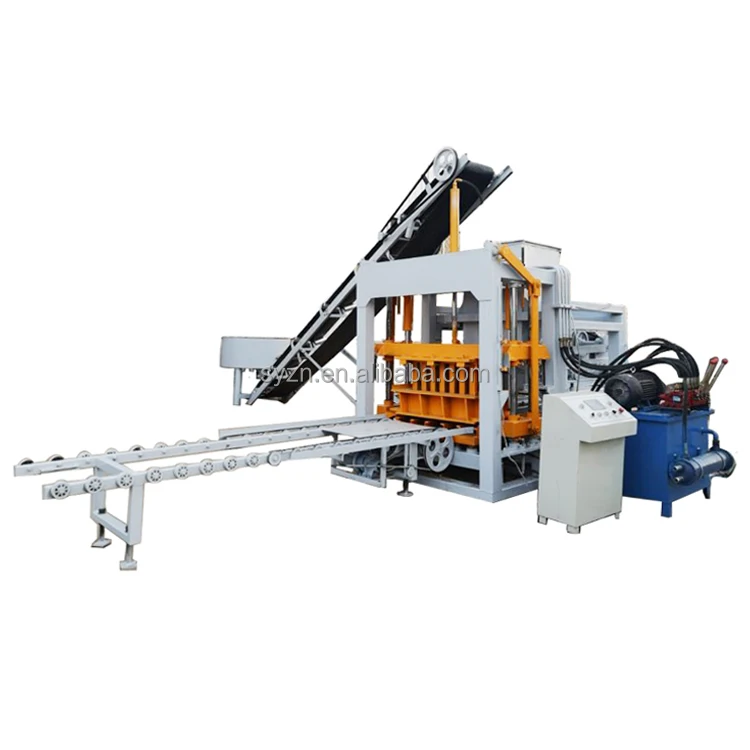
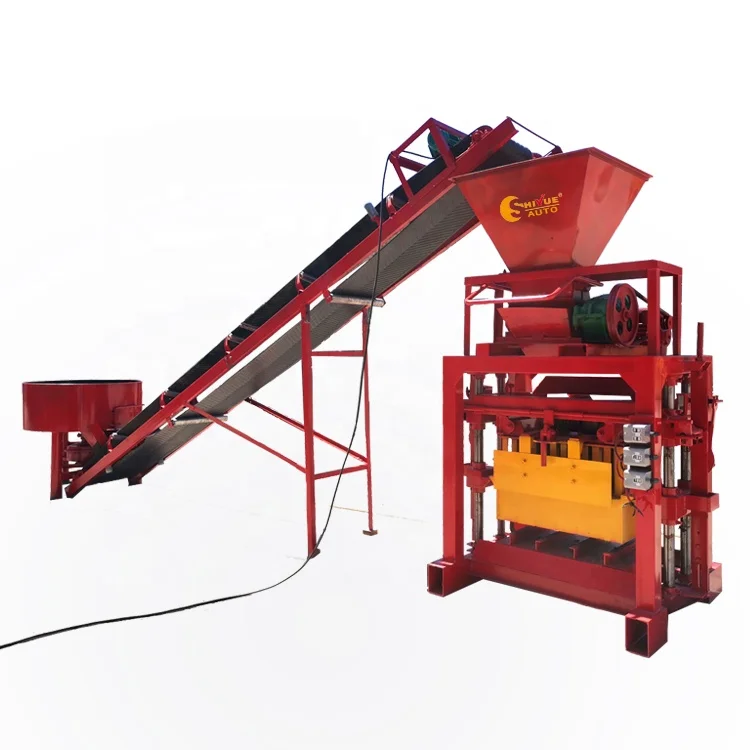
Stocked line configuration — the QTJ4-24 semi-automatic block machine is assembled with its JQ350 pan mixer and 6 m belt conveyor before dispatch, so the full basic line ships together rather than as a press-only arrival.
Technical Specifications
| Parameter | Value |
|---|---|
| Model | QTJ4-24 |
| Product Type | Semi-Automatic Concrete Block Making Machine |
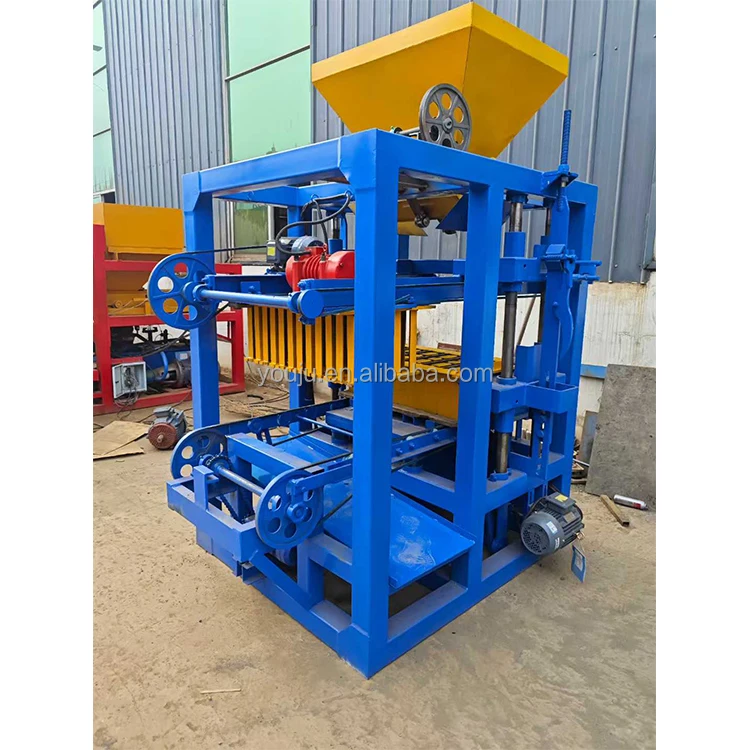
| Machine Frame | Dragon gate style, super steel construction, four vertical wear-resisting shafts |
| Molding Type | Platform Vibration (lower + upper) |
| Lower Vibration Motors | 2 × 3 kW high-speed motors driving vibration box |
| Upper Vibration | 1.5 kW attached vibration device |
| Overall Power | 14.25 kW |
| Overall Dimensions | 3600 mm × 1700 mm × 2560 mm (working state) |
| Total Mass | 1750 kg |
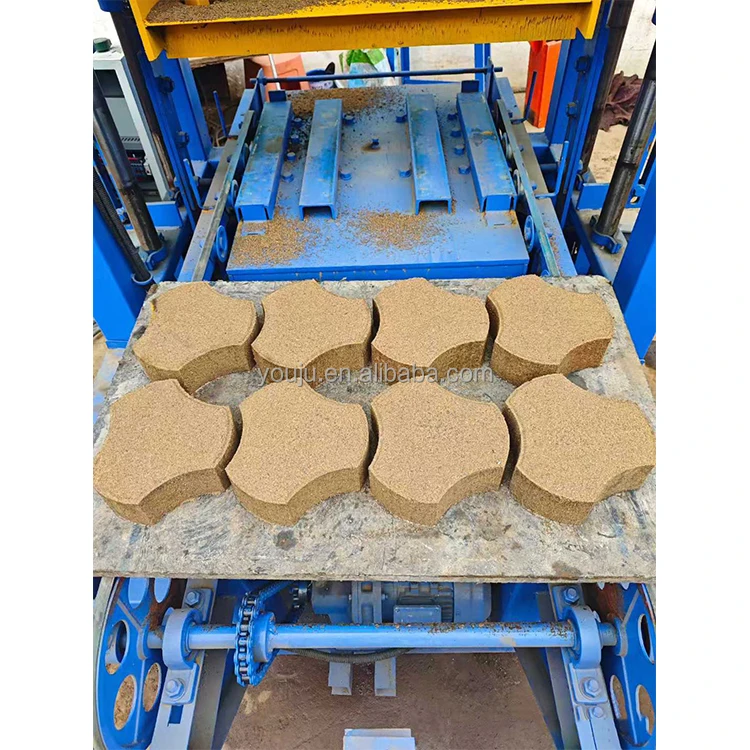
| Pallet Size | 850 mm × 450 mm |
| Mould Format (Hollow Block) | 390 mm × 190 mm × 190 mm, 4 pcs/mould |
| Mould Format (Solid Brick) | 240 mm × 115 mm × 53 mm, 21 pcs/mould |
| Elevating System | Cone-shape motor + JZQ250 speed reducer + V-belt drive |
| Delivery Device | Cycloidal pin wheel speed reducer + chain + V-belt |
| Material System | Material releasing hopper + material storing hopper |
| Automation Level | Semi-automatic (mechanical + electronic combination) |
| Cycle Time | basis to be confirmed by block format, material and thickness |
| Output Capacity | basis to be confirmed by block format, material and thickness |
| Voltage & Frequency | to be confirmed before shipment |
| Control System Language | to be confirmed before shipment |
| Supporting Line Equipment | JQ350 pan mixer, 6 m belt conveyor (basic); auto stacker, trolley (optional) |
Application Suitability
| Application | Material or Output |
|---|---|
| First-stage hollow block plant | Crushed stone, sand, cement and water for 390×190×190 mm hollow blocks |
| On-site construction brick supply | Local aggregate and cement for 240×115×53 mm solid bricks |
| Building material distributor entry line | Standard block and brick formats for regional market distribution |
| Contractor self-production for housing projects | Hollow blocks from locally sourced sand and stone aggregate |
Why the Voltage Question Should Come Before the Dispatch Date
Electrical mismatches discovered on arrival halt commissioning and can strand a QTJ4-24 block machine in stock on the dock for weeks.
I once watched a QTJ4-24 line sit idle for three weeks because the voltage at the buyer’s site did not match the factory configuration. The local transformer had to be upgraded before the machine could even be energized, and the project milestone was missed [NEED_CITE: typical cost of on-site electrical correction after equipment arrival]. A stocked machine ships fast, but speed only matters when every electrical parameter matches the destination grid from the first connection.
Dispatch Readiness Beyond the Press
A QTJ4-24 block machine in stock means the press itself is built, tested and ready to load — but that is only one station on the line. The JQ350 pan mixer, the 6 m belt conveyor and the pallet inventory must all be confirmed before the container doors close, because a press arriving ahead of its supporting equipment leaves the buyer waiting on auxiliary components before production can start.
Container Loading and Dismantling Coordination
Every stationary block machine in this class ships dismantled to fit standard container dimensions. The dragon gate frame, vibration box and hopper assembly are broken down into loading units, and the container loading plan must account for mould crates, pallet stacks and the mixer and conveyor components. When the QTJ4-24 block machine in stock is reserved, the loading sequence is mapped so unloading at destination follows the reverse order of assembly [NEED_CITE: standard container loading procedures for industrial machinery].
Reading the Vibration and Frame Specifications
The dual 3 kW lower vibration motors paired with the 1.5 kW upper vibrator create a platform vibration system that compacts the concrete mix from both directions, which is essential for hollow block density where the core voids reduce the mass available to settle under gravity alone. The dragon gate frame with four vertical wear-resisting guide shafts keeps the mould aligned through every cycle, preventing uneven wall thickness in the finished block. The 850 × 450 mm pallet size must match the curing racks and forklift capacity the buyer already has on site — ordering pallets that do not fit existing handling equipment is a common source of delay. The semi-automatic configuration with mechanical and electronic combination means the operator manages pallet feeding and block removal, while the vibration and material release cycle runs on a timed sequence [NEED_CITE: relationship between vibration force and block compressive strength in concrete masonry].
The Cost of Skipping the Pre-Shipment Checklist
Buyers who confirm the machine order without documenting the voltage, frequency and control language at the inquiry stage often face commissioning delays that erase the time saved by choosing a stocked model. A QTJ4-24 arriving with the wrong motor winding specification or a PLC display in an unreadable language sits idle while the correction is arranged, and the project deadline passes while the line waits for a transformer or a reprogrammed controller. The time advantage of fast dispatch only holds when the pre-shipment verification covers every electrical and operational parameter the destination site requires [NEED_CITE: impact of voltage and frequency mismatch on industrial motor warranty].
Why Source a Stocked QTJ4-24 Here
Block machinery is our single focus, so the QTJ4-24 is specified as a matched system with its moulds, pallets and supporting line equipment rather than assembled from separate suppliers. The configuration is set against the buyer’s actual mix design and local aggregate, not a default catalogue setting. Mould formats for the blocks the buyer’s market actually sells are confirmed before the machine leaves the factory. Dispatch lead time and arrival estimates are quoted upfront at the inquiry stage, not discovered during production. Packing photographs and container loading plans are provided so the buyer knows exactly how the machine ships and what to expect on unloading.
Documentation & Verification
- Dispatch lead time and arrival estimate documented at inquiry confirmation
- Container loading plan and machine dismantling diagram provided before shipment
- Voltage, frequency and control language confirmed in writing before dispatch
- Mould format list and pallet specification sheet included with shipping documents
- Packing photographs taken and shared before container doors close
Installation, Commissioning & Support
- Site foundation must support 1750 kg total mass across the 3600 × 1700 mm footprint with level tolerance for vibration stability
- Electrical supply must match confirmed voltage and frequency with dedicated circuit for 14.25 kW overall power draw
- Dragon gate frame and vibration platform require on-site reassembly following the provided dismantling and loading sequence
- JQ350 pan mixer and 6 m belt conveyor positioned and connected to material hopper before first test cycle
- Operator training covers mould change procedure, pallet feeding rhythm and semi-automatic cycle timing
- Wear parts list covers vibration motor bearings, guide shaft bushings and V-belt drive components
Planning Your QTJ4-24 Order
To move from inquiry to dispatch on a QTJ4-24 block machine in stock, confirm the hollow block or solid brick format you need to produce, the voltage and frequency at your site, and the pallet handling and curing equipment you already have in place. Share your local aggregate type and the daily output target for your specific block format so the capacity calculation is stated against your actual production conditions rather than a generic figure.
Frequently Asked Questions
Q: Which QTJ4-24 models and moulds are currently in stock for immediate dispatch?
A: The QTJ4-24 semi-automatic block machine is stocked in its standard configuration with hollow block and solid brick moulds included. Availability is confirmed at inquiry, and the dispatch timeline depends on whether the supporting line equipment — mixer, conveyor and optional stacker — is also drawn from inventory or built to order alongside the press.
Q: How is the container loading plan arranged for this machine?
A: The QTJ4-24 is dismantled into loading units to fit standard container dimensions, with the dragon gate frame, vibration platform and hopper separated for transport. A container loading plan is provided before shipment showing the position of each component, mould crates and pallet stacks so unloading follows the reverse assembly sequence.
Q: What happens if the voltage or frequency is wrong on arrival?
A: Voltage and frequency are confirmed in writing before the machine leaves the factory to prevent this exact scenario. If an incorrect specification reaches the destination, the motor winding and control components may require replacement or a site transformer upgrade, which delays commissioning and voids the electrical warranty coverage.
Q: How is the arrival estimate calculated and what can delay it?
A: The arrival estimate is based on confirmed dispatch lead time plus the shipping route and port handling schedule at both origin and destination. Delays typically arise from incomplete documentation at customs, container availability at the port, or changes to the order specification after production has already started.
Q: What supporting equipment ships together with the QTJ4-24 press?
A: The basic line includes a JQ350 pan mixer and a 6 m belt conveyor alongside the press itself. An auto stacker and trolley are available as optional additions. Pallet specifications and quantities are confirmed before dispatch so the buyer has the required pallet inventory to begin production immediately after installation.