
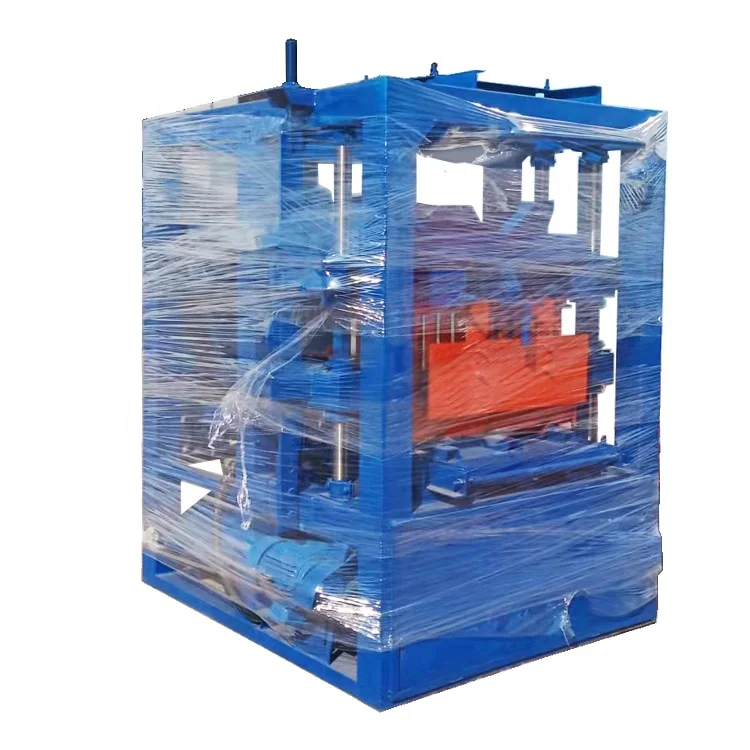

Description
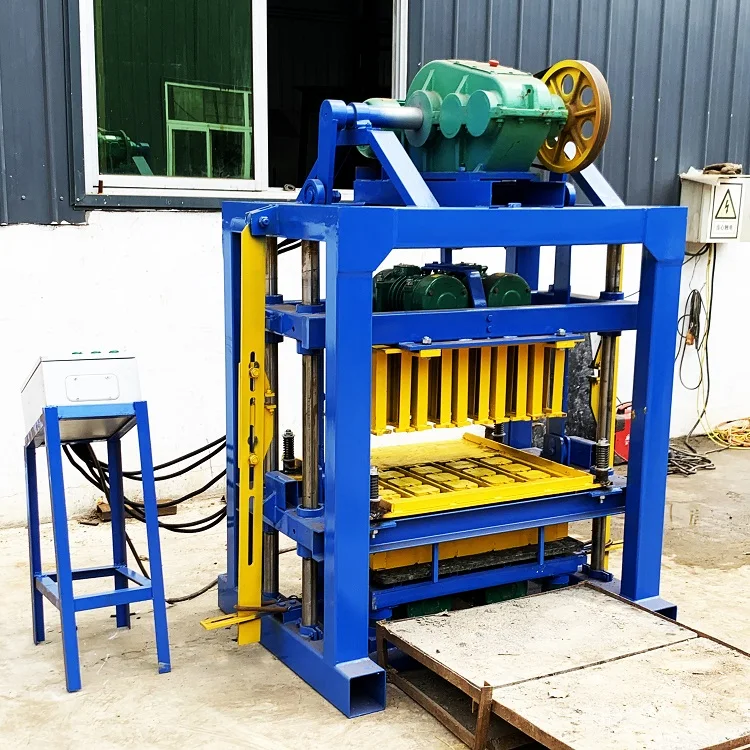
Fast Dispatch from Stock — QTJ4-24 semi-automatic block machines and standard moulds are held ready for container loading, with arrival estimates confirmed before payment.
Technical Specifications
| Parameter | Value |
|---|---|
| Model | QTJ4-24 |
| Product Type | Semi-Automatic Concrete Block Making Machine |
| Main Machine Power | 11.95 kW |
| Overall Dimensions | 3600 mm × 1700 mm × 2560 mm |
| Net Weight | 3.5 T |
| Pallet Size | 900 mm × 450 mm |
| Molding Cycle | 24–26 s |
| Vibration Type | Table vibration with fluctuation vibration molding |
| Feeding Method | Manual feeding, two feed ways available |
| Control System | Electrical control with mechanical interworking |
| Recommended Mixer | JQ350 or JQ500 vertical mixer |
| Recommended Conveyor | 6 m or 8 m belt conveyor |
| Wire Specification (Main Machine) | 3×6 mm |
| Wire Specification (General Power) | 3×16 mm |
| Assembly State | Stationary, requires precast concrete ground installation |
Application Suitability
| Application | Material or Output |
|---|---|
| Hollow block production | Crushed stone, cement, sand aggregate |
| Multi-cellular brick production | Lightweight aggregate and cement mix |
| Paving brick production | High-density concrete with fine aggregate |
| Standard solid brick production | Cement, sand, and stone dust |
| Small-scale or startup block plants | Low capital entry with manual pallet handling |
| On-site construction contractor block production | Local aggregate sourced near build site |
Why the Voltage Question Must Come Before the Dispatch Date
A stocked QTJ4-24 block machine in stock is only useful if the voltage and frequency match the job site before the container doors close.
I have watched a container arrive at a port after weeks on the water, only for the contractor to discover the main motor was wired for 380V/50Hz while the site generator produced 440V/60Hz. The crew stood idle, the concrete mixer ran dry, and a transformer had to be freighted in from another province [NEED_CITE: voltage and frequency standards by export market]. When a deadline-driven project demands a fast delivery block machine, the electrical confirmation is not a paperwork step at the end; it is the gate that decides whether the machine runs on day one or sits silent under a tarp.
Stocked Configuration Ready for Container Loading
The QTJ4-24 block machine in stock configuration holds a standard pallet size of 900×450 mm and ships with mould formats covering 400×200×200 mm hollow blocks through to 240×115×53 mm solid bricks. This means the buyer sees the exact mould list and pallet dimensions before the proforma invoice is signed, rather than discovering missing formats after arrival. Container loading plans detail how the main press, mixer, and belt conveyor dismantle and stack inside a 20-foot or 40-foot box, so the freight forwarder can quote accurately and the site team knows which panel to unbolt first.
Arrival Timing Confirmed Before the Machine Leaves
For a contractor racing a pour schedule or an entrepreneur opening a plant before the rainy season, the dispatch lead time and estimated port arrival are stated in writing alongside the quotation. The QTJ4-24 fast delivery promise rests on machines that are already assembled, tested, and crated rather than built against an open production slot. Once the voltage, frequency, and control panel language are locked in, the unit moves to the loading bay, photographs are shared, and the customs documentation package is prepared so the destination broker can pre-clear the shipment [NEED_CITE: customs documentation requirements for block machinery imports].
Reading the Specs That Decide Site Layout
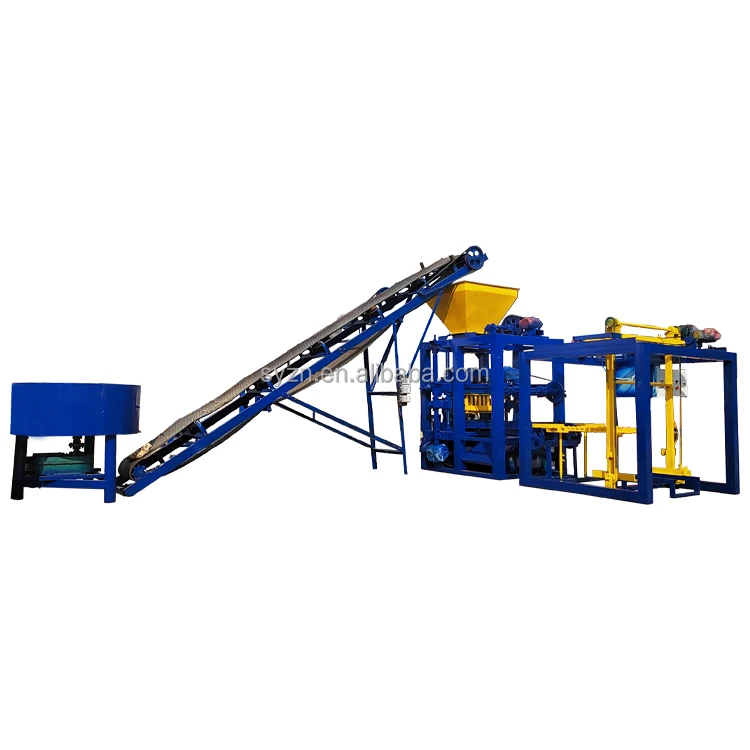
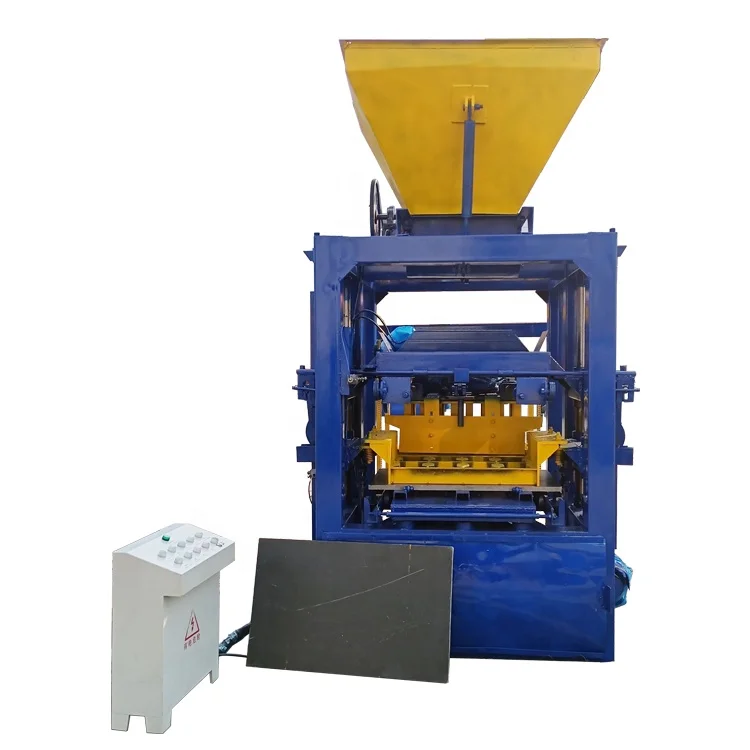
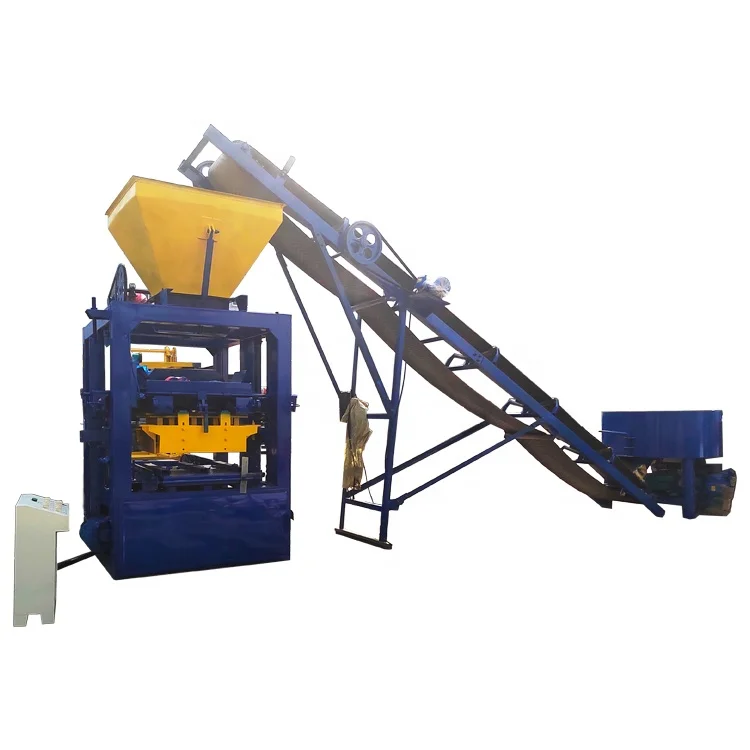
The 11.95 kW main motor draws enough current to require a dedicated 3×16 mm supply line and its own breaker, separate from the JQ350 mixer circuit. The 3600 mm × 1700 mm footprint of the press leaves room for the operator to feed pallets manually on one side and stack cured blocks on the other, but the 2560 mm height means the curing rack must clear overhead obstructions. The 24–26 s molding cycle is set by table vibration with fluctuation molding, which relies on the weight of the 3.5 T frame to absorb shock; a lightweight temporary slab will transmit vibration into nearby structures. Selecting between the 6 m and 8 m belt conveyor changes how far the mixer can sit from the press, and that distance dictates whether a wheel loader or a manual cart handles the raw feed.
The Hidden Cost of Skipping the Pre-Shipment Checklist
When a buyer rushes a QTJ4-24 block machine in stock off the warehouse floor without confirming the local aggregate grading, the vibration force that works perfectly with river sand may leave blocks friable with crushed coral or volcanic scoria. Pallets sized for a different curing rack force the plant to hand-stack or buy new racks, erasing the time saved by fast delivery. And if the control panel labels arrive in a language the operators cannot read, the first mould change stretches from minutes into hours [NEED_CITE: impact of operator interface language on machine downtime]. These are not catastrophic failures; they are small mismatches that accumulate into weeks of lost output.
What Stays Consistent Across Every Shipment
Block machinery remains the single focus here, so the QTJ4-24 press, its moulds, pallets, and the recommended JQ350 or JQ500 mixer are specified as a matched set rather than sourced from separate vendors. The configuration is checked against the buyer’s stated mix design and target block format, not a catalogue default. Mould design covers the formats the buyer’s market actually sells, and custom drawings are accepted when a kerbstone or interlocking profile falls outside the standard list. Automation level is selectable, so a plant can start semi-automatic and add stacking later. Installation support includes operator training at the machine, not just a manual left in the crate.
Documentation & Verification
- Capacity calculation listing block format assumed for the 24–26 s cycle.
- Machine specification sheet confirming 11.95 kW motor and 900×450 mm pallet.
- Mould drawing and format list for all four standard block sizes.
- Voltage, frequency, and control language confirmation signed before dispatch.
- Factory test record with photographs of the QTJ4-24 running under load.
- Packing photographs and container loading plan shared before the container is sealed.
Installation, Commissioning & Support
- Precast concrete ground pad required to absorb vibration from the 3.5 T frame.
- Dedicated 3×16 mm power line with breaker sized for the 11.95 kW main motor.
- Machine arrives dismantled; main press, mixer, and conveyor reassemble on site.
- JQ350 reducer filled with 10 kg of 35–40# machine oil before first run.
- Operator training covers 24–26 s cycle timing and manual pallet feeding sequence.
- Wear parts list and mould inventory provided for first replacement planning.
What to Prepare Before Requesting a Dispatch Quote
To move a QTJ4-24 fast delivery order from inquiry to loading bay, the buyer should provide the target block format and daily volume, the local aggregate type and source, and the site voltage and frequency. Include the curing area dimensions and the forklift model already on site so pallet sizing is confirmed. If the control panel must display a specific language or the site generator has a known voltage fluctuation range, state those figures upfront so the electrical cabinet is built to match.
Frequently Asked Questions
Q: Which QTJ4-24 models and standard moulds are currently held in stock?
A: The stocked QTJ4-24 semi-automatic press ships with moulds for 400×200×200 mm hollow blocks, 390×240×190 mm multi-cellular bricks, 390×120×190 mm blocks, and 240×115×53 mm solid bricks. Pallets sized at 900×450 mm are included. Stock lists are confirmed in writing at the time of inquiry, and any additional custom mould must be produced against a separate lead time.
Q: What is the dispatch lead time and how is the machine packed for the container?
A: Once voltage, frequency, and control language are confirmed, the QTJ4-24 block machine in stock moves to the loading bay within days rather than weeks. The main press, mixer, and conveyor dismantle into components that stack inside a standard container, and packing photographs are shared before the doors are sealed so the buyer can verify the load plan.
Q: What arrival estimate can I expect at my destination port?
A: The transit time depends on the shipping line and route, but an estimated arrival date is quoted alongside the dispatch date once the container is booked. This allows the site team to plan the foundation pad and electrical connection for the same week the container clears customs, reducing idle time on the ground.
Q: Are the mixer, conveyor, and pallets part of the shipment or ordered separately?
A: The JQ350 or JQ500 mixer, the 6 m or 8 m belt conveyor, and the 900×450 mm pallets can be included in the same container as the QTJ4-24 press. Each item appears on the packing list, and the quotation states clearly which components are in the crate and which are optional, so there are no surprises when the container is opened.
Q: How are voltage and control language confirmed before the machine leaves the factory?
A: Before the QTJ4-24 fast delivery order is released, the buyer signs a confirmation sheet stating the site voltage, frequency, and the required language for the electrical control panel. The factory then wires the 3×6 mm main motor cable and the 3×16 mm general power line to match, and a photograph of the terminal block is shared before dispatch.