

Description
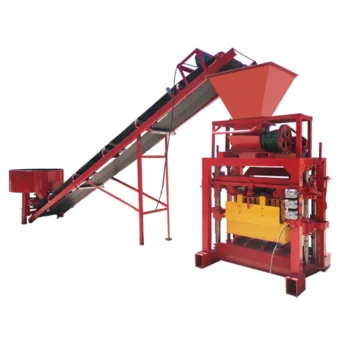
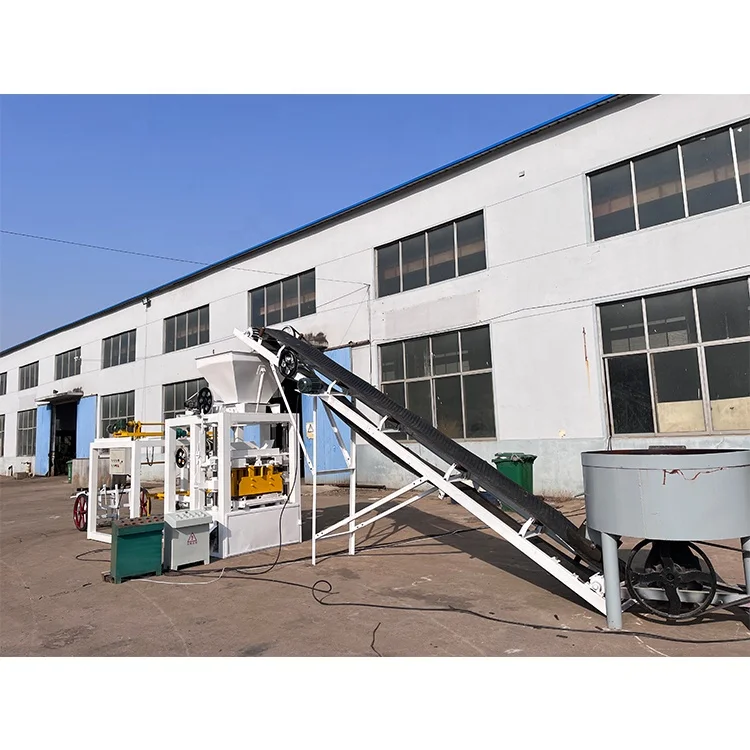
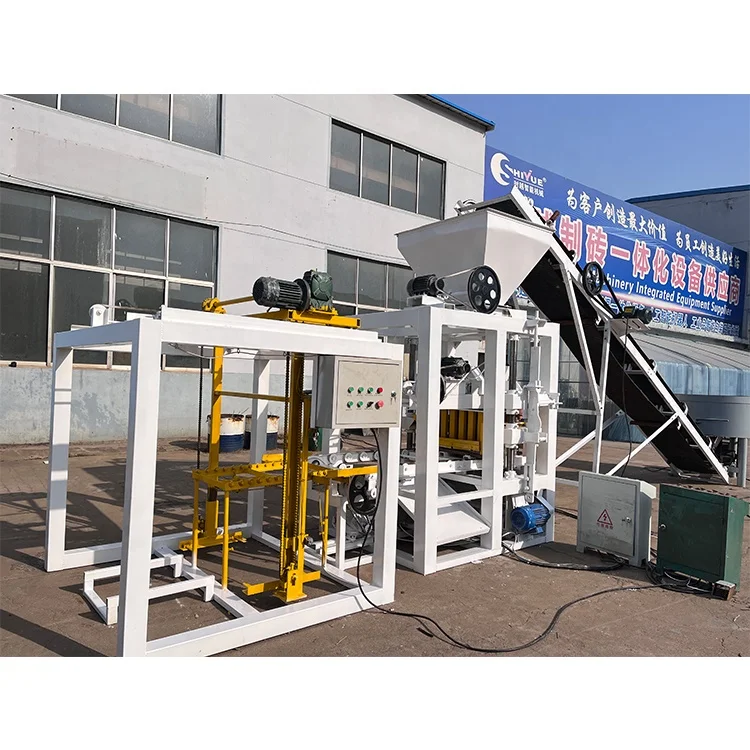
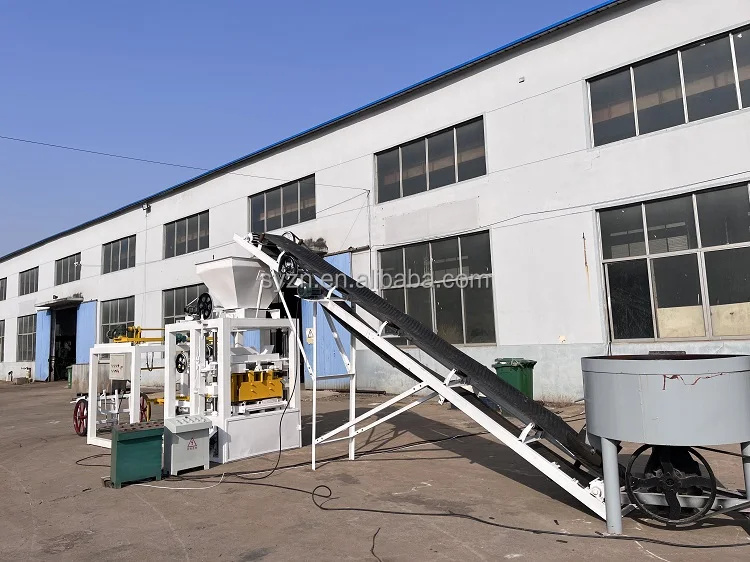
Stocked Machine, Single Container — the QTJ4-24 block machine ships assembled and ready to load into a 20GP container, cutting the wait between order placement and site commissioning to a matter of weeks instead of months.
Technical Specifications
| Parameter | Value |
|---|---|
| Model | QTJ4-24 |
| Product Type | Semi-automatic Concrete Block Making Machine |
| Overall Dimensions (L×W×H) | 2060×1730×2580 mm |
| Molding Cycle | 24 s |
| Vibration Frequency | 4200 r/min |
| Vibration Force | 35.5 kN |
| Rated Power | 14.25 kW |
| Mixer Model | JQ350 |
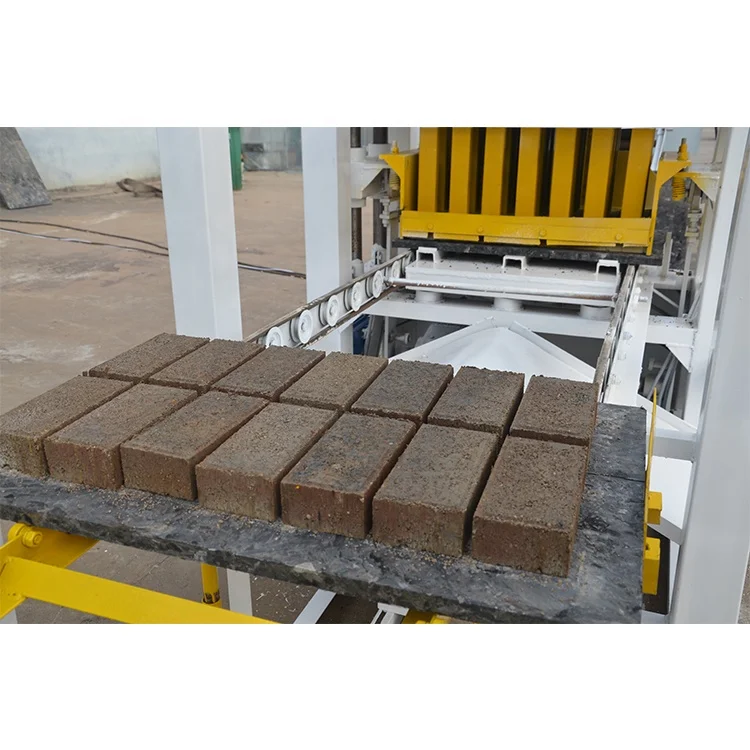
| Pallet Size | 850×450×20 mm |
| Net Weight | 1800 kg |
| Automation Level | Semi-automatic |
| Hydraulic System | Hydraulic station equipped |
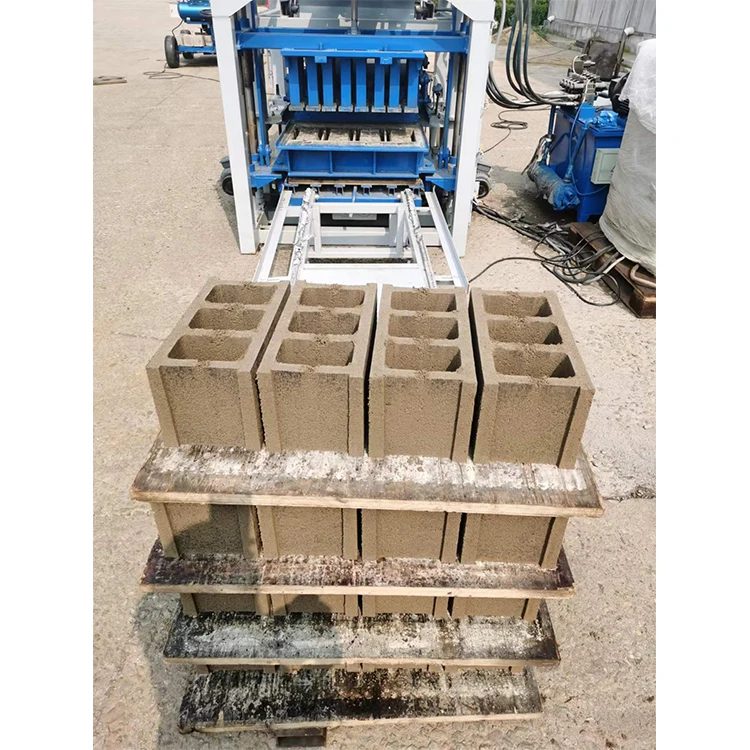
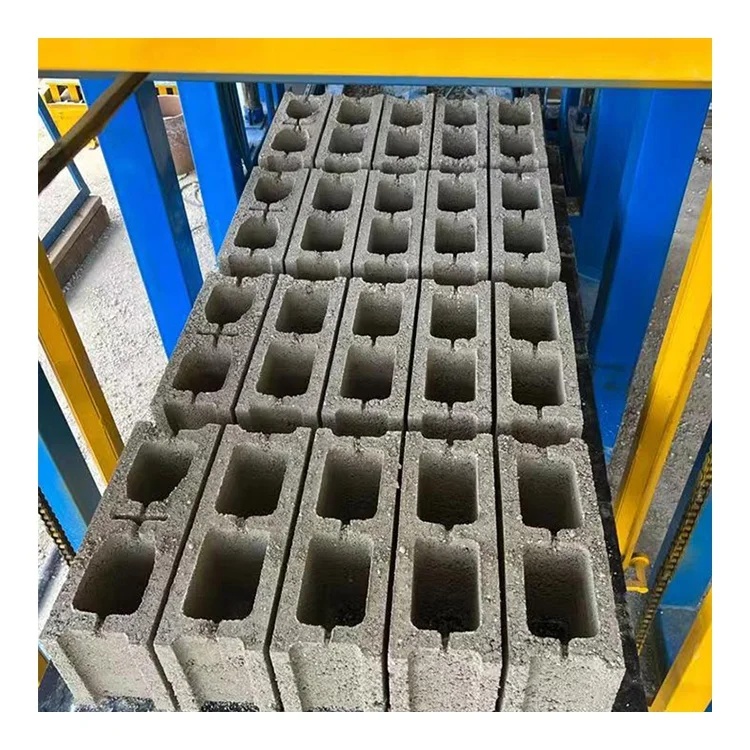
| Output Capacity | 480 pcs/h (based on 390×190×190 mm hollow block, 4 pcs/mould) |
| Output Capacity | 600 pcs/h (based on 400×150×200 mm hollow block, 5 pcs/mould) |
| Output Capacity | 2100 pcs/h (based on 240×115×53 mm solid brick, 18 pcs/mould) |
| Daily Output | 3800 pcs/8hr (based on 390×190×190 mm hollow block) |
| Daily Output | 4800 pcs/8hr (based on 400×150×200 mm hollow block) |
| Daily Output | 17000 pcs/8hr (based on 240×115×53 mm solid brick) |
| Mould Change Method | Manual mould swap |
| Raw Materials | Crushed stone, sand, cement, fly ash, dust |
| Stacking Method | Manual stacking with trolley |
| Assembly State | Shipped assembled, nude packing in 20GP container |
Application Suitability
| Application | Material or Output |
|---|---|
| Small to medium concrete block production plants | Crushed stone, sand, cement, fly ash mixes |
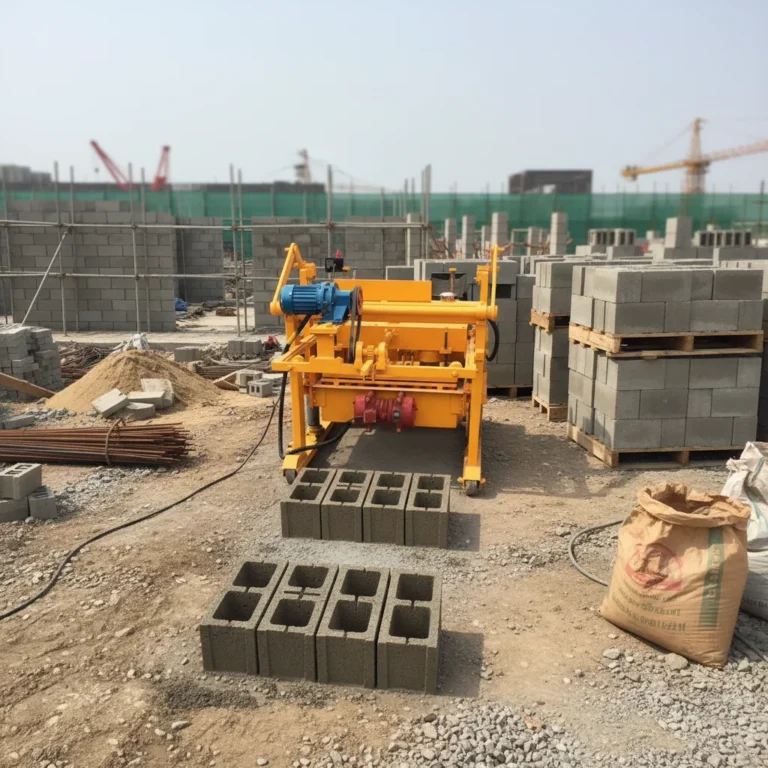
| On-site block production for construction contractors | Local aggregate with cement binder |
| Hollow block manufacturing (8", 6", 5", 4") | Standard concrete mix with coarse aggregate |
| Solid brick production | Fine sand and cement blends |
| Paving block production with mould change | High-density mix with graded aggregate |
Why the Dispatch Date Matters More Than the Cycle Time
A fast molding cycle means nothing if the machine is still sitting on the factory floor eight weeks after your project start date.
I have watched contractors lose entire mobilization windows because the block machine they ordered was built to a production schedule that did not align with their site deadline. A project crew standing idle costs real money every day, and no catalogue spec sheet compensates for that loss [NEED_CITE: construction project delay costs from equipment late delivery]. The QTJ4-24 block machine in stock avoids this problem entirely because the unit is built, tested, and waiting — not queued behind six other orders in a production backlog.
When a buyer needs a fast delivery semi-automatic block machine, the conversation should start with what is physically available to load, not what could theoretically be manufactured in a given timeframe. Stock availability changes, but a machine sitting on the warehouse floor is a machine that can be containerized within days of payment confirmation.
What Ships When You Order From Stock
A stocked QTJ4-24 leaves the factory in the same configuration it was tested in — hydraulic station connected, vibration assembly calibrated, and mould mounted. The machine goes into a 20GP container assembled, which means your crew does not spend the first three days on site figuring out how to align the frame and reattach the hopper. The pallets, mixer, and standard mould load alongside the press in the same container, so nothing arrives three weeks later on a separate shipment.
Container Loading and What Else Fits Inside
The 1800 kg net weight and 2060×1730×2580 mm footprint of this QTJ4-24 block machine in stock leave usable space in the 20GP container for pallets and the JQ350 mixer. This matters because some buyers discover after ordering that their pallets require a second container, adding freight cost and a separate arrival date [NEED_CITE: container loading optimization for industrial machinery exports]. Confirming the loading plan before payment ensures the entire production setup arrives together and commissioning can begin the day the container is opened.
Reading the Output Numbers Honestly
The rated power of 14.25 kW and vibration force of 35.5 kN tell you what the press can physically deliver per cycle, but the output you actually see on the curing racks depends entirely on which block format you are running. At 24 seconds per cycle, hollow blocks at 4 per mould yield 480 pieces per hour, while solid bricks at 18 per mould push that figure to 2100 pieces per hour. A buyer comparing machines based on the highest number alone will be disappointed when production switches to the larger format the local market actually demands.
The Voltage Question That Delays Commissioning
Export markets run on different voltage and frequency standards, and a machine wired for the wrong supply will not run until an electrician rewires the motor and control panel on site [NEED_CITE: voltage and frequency standards by export market]. Confirming the buyer’s local supply against the machine’s electrical configuration before the container is sealed eliminates a delay that can stretch commissioning by a week or more. This is a five-minute question that prevents a five-day problem.
Why Source This Machine Through Our Stock Channel
Block machinery is our single focus, which means the QTJ4-24 press, its mould, the 850×450×20 mm pallets, and the JQ350 mixer are specified and tested as one matched system rather than assembled from separate suppliers at the last minute. Every stocked unit carries a factory test record showing actual cycle performance, not just a label on the frame. The dispatch lead time is quoted upfront based on what is physically on the floor, not estimated from a production queue. Packing photographs are provided before the container doors close so the buyer knows exactly what is arriving. Mould and hydraulic wear part lists ship with the machine so the first replacement order can be placed before anything actually breaks.
Documentation & Verification
- Factory test record showing cycle time on your specified block format before dispatch
- Machine specification sheet with pallet size and hydraulic pressure confirmed
- Mould drawing and format list matching the block types your market requires
- Voltage and control language confirmation documented before container loading
- Packing photographs showing machine and pallets secured inside the 20GP container
Installation, Commissioning & Support
- Foundation pad sized to the 2060×1730 mm footprint with clearance for pallet trolley access
- Dedicated power circuit matching confirmed voltage and frequency for the 14.25 kW rated load
- Machine arrives assembled; hydraulic station and vibration assembly require only utility connection
- Operator training covers manual mould swap procedure and pallet handling workflow
- Wear parts list for hydraulic seals and vibration components included for first replacement cycle
What We Need to Confirm Before Loading
To move from inquiry to dispatch on a QTJ4-24 fast delivery semi-automatic block machine, share your target block format, your local voltage and frequency, and the pallet material and size your existing curing area is set up for. If you are adding this machine to an existing line, tell us what mixer and stacking setup is already on site so the QTJ4-24 block machine in stock integrates without bottlenecks or redundant equipment.
Frequently Asked Questions
Q: What is the actual dispatch lead time for the QTJ4-24 from current stock?
A: Stock availability changes as units are reserved and shipped. We confirm the exact dispatch date at the point of order based on what is physically on the warehouse floor. Once payment is confirmed, container loading typically follows within days, not weeks, assuming electrical specifications have been agreed in advance.
Q: How is the machine packed and loaded into a 20GP container?
A: The QTJ4-24 ships assembled in nude packing — no wooden crate around the press itself. It is secured to the container floor with the JQ350 mixer and pallets loaded alongside. Packing photographs are taken before the doors close so you see exactly how your machine was positioned and braced for ocean freight.
Q: Which moulds and pallets are included, and can additional pallets ship in the same container?
A: Standard moulds matching common hollow block or solid brick formats ship with the machine. Pallets at 850×450×20 mm fit the remaining container space. We confirm how many pallets can load alongside the press based on your format selection before the container is booked, so there are no surprises at loading.
Q: What voltage and frequency options are available for immediate dispatch units?
A: Stocked machines are configured to common export voltages, but we verify your site supply before sealing the container. If a rewiring is needed to match your local standard, this is done before shipment rather than leaving it to your electrician on arrival, which avoids delaying commissioning.
Q: What is the arrival estimate from order to port of destination?
A: Ocean transit time depends entirely on the destination port and shipping line schedules. We quote the estimated arrival date at the time of order based on the confirmed dispatch date and the carrier’s published sailing schedule to your port, giving you a timeline to plan crew mobilization around.