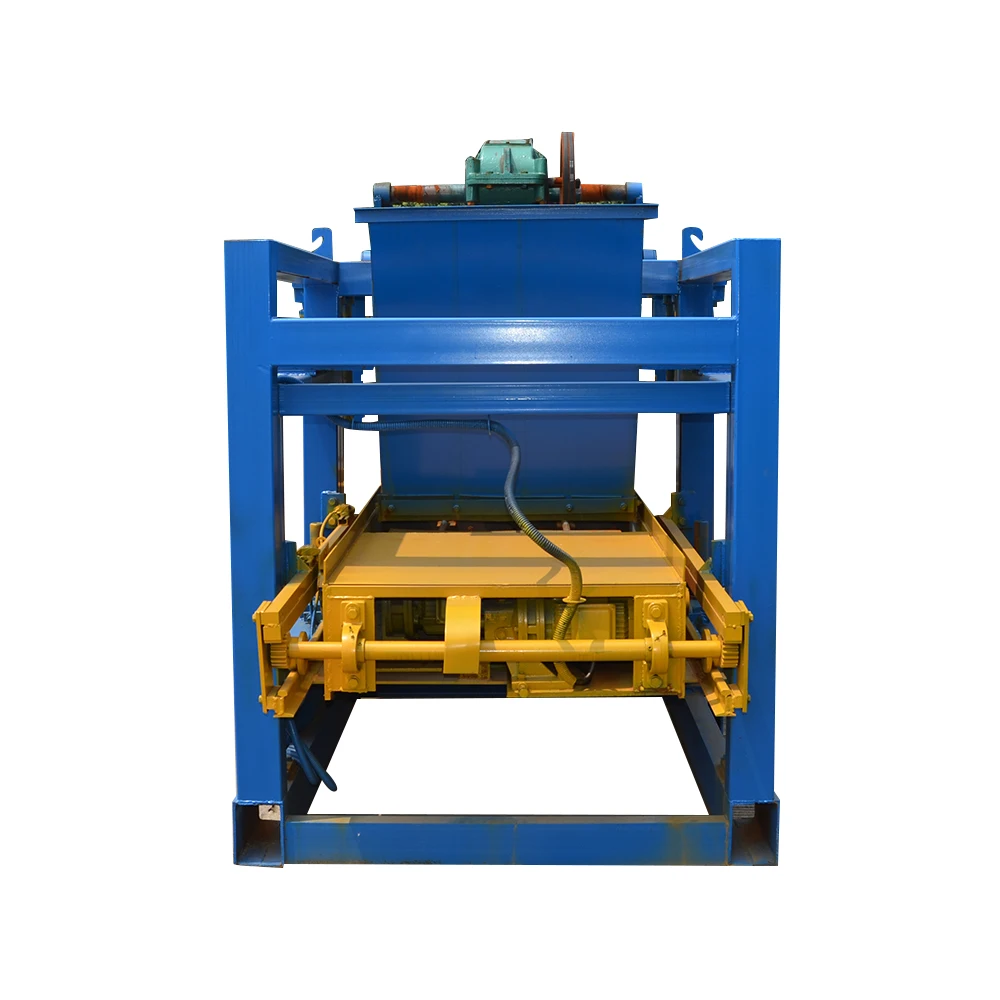
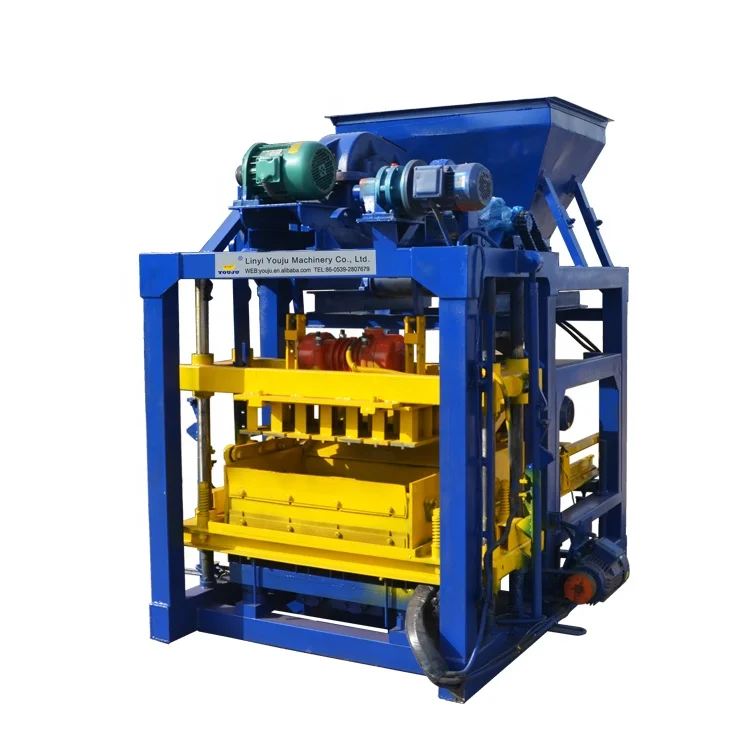
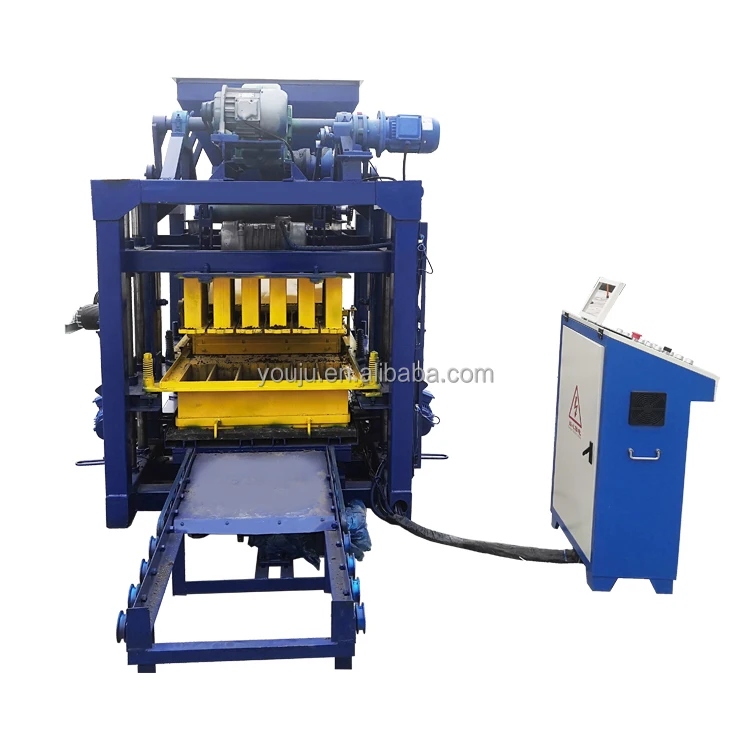
Description
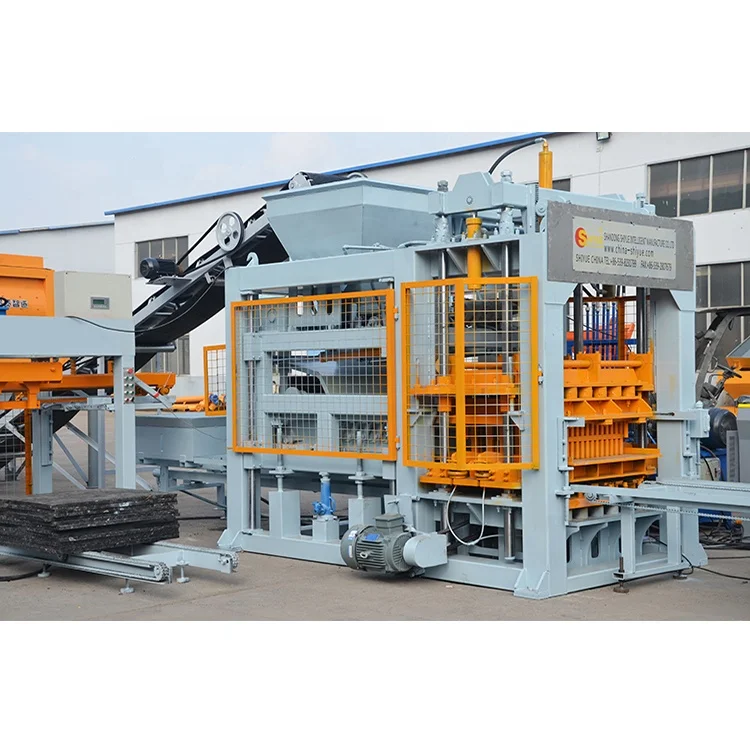
Fast Dispatch Stock — QTJ4-25 block making machines held ready for container loading so project-deadline buyers receive confirmed arrival timing at inquiry, not after payment.
Technical Specifications
| Parameter | Value |
|---|---|
| Model | QTJ4-25 |
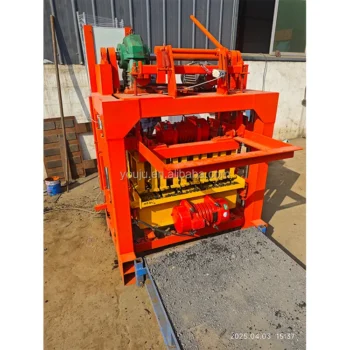
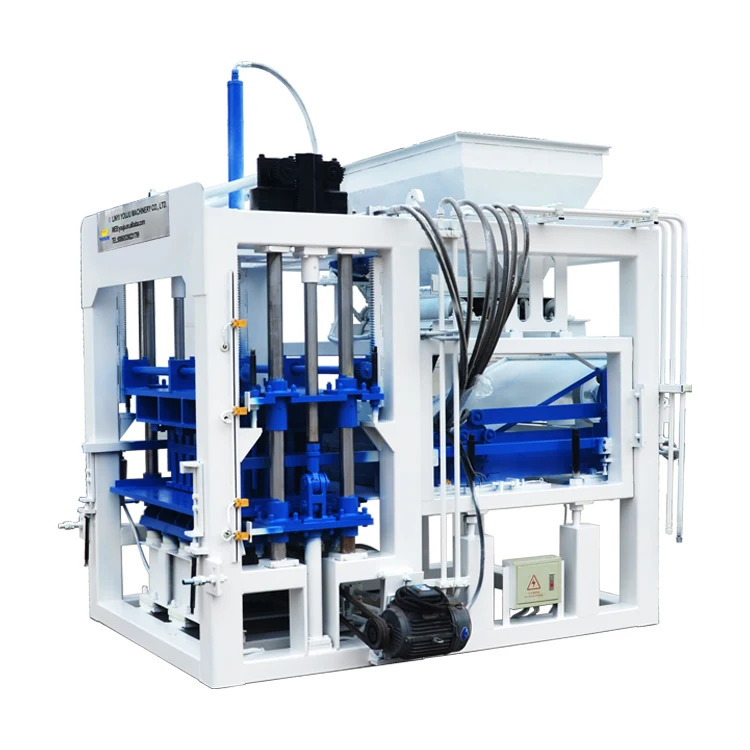
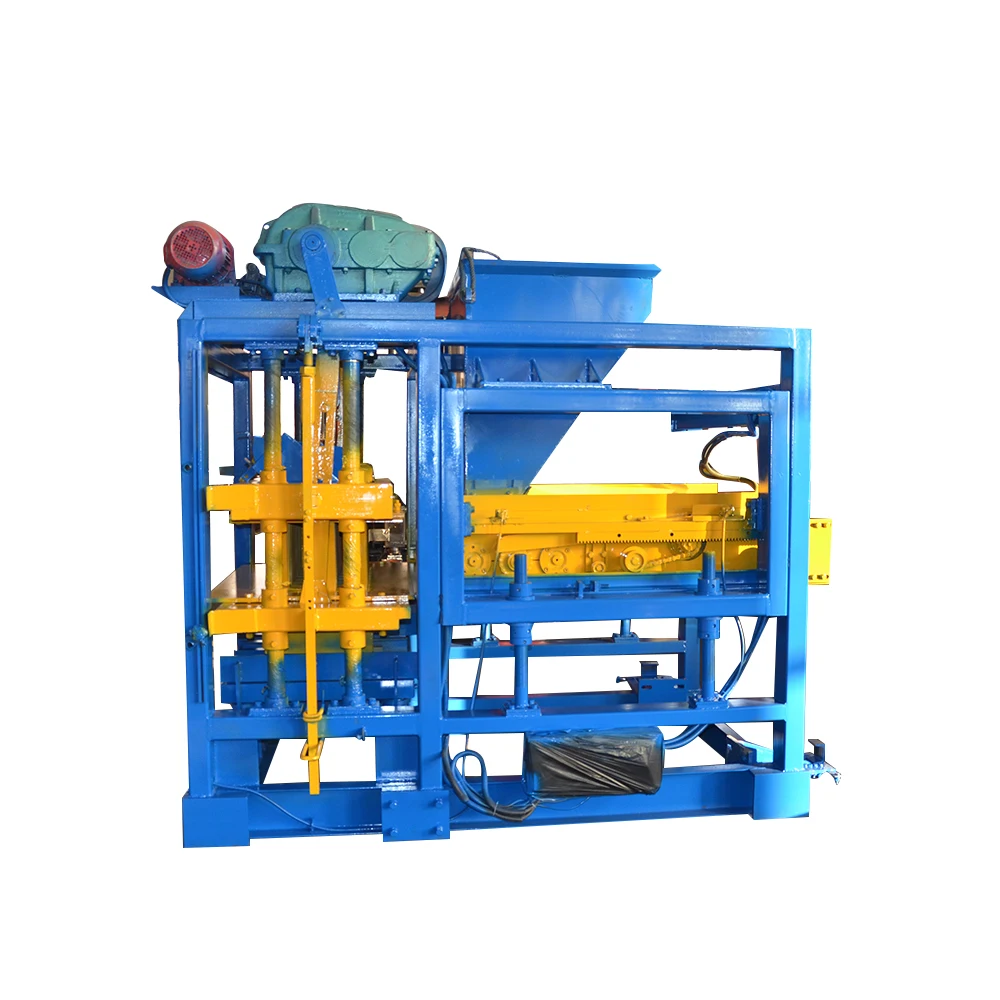
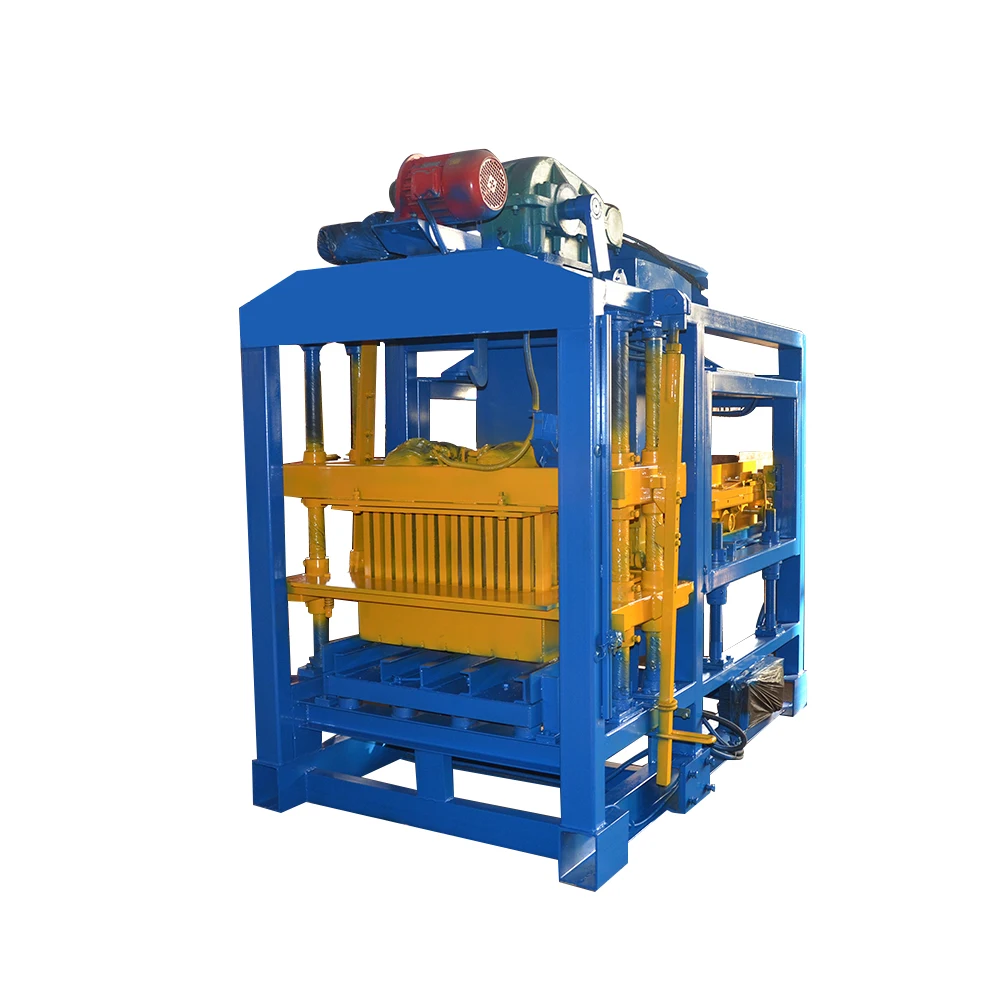
| Product Type | Automatic Hydraulic Concrete Block Making Machine |
| Rated Power | 17.9 kW |
| Overall Dimensions (L×W×H) | 6400×1500×2700 mm |
| Total Mass | 2500 kg |
| Molding Cycle | 25 s |
| Pallet Size | 850×550×20 mm |
| Vibration Frequency | 2800 r/min |
| Vibration Force (Exciting Power) | 60 kN |
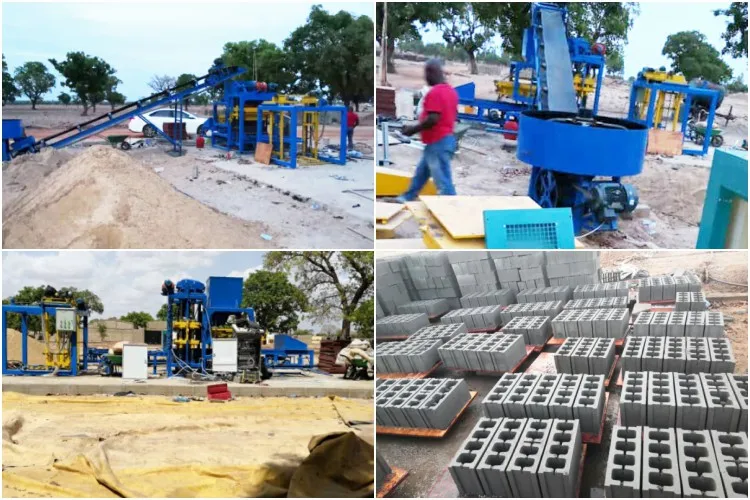
| Output Capacity | 960 pcs/h, 7680 pcs/day (basis: 400×200×200 mm hollow block, 4 pcs/mould) |
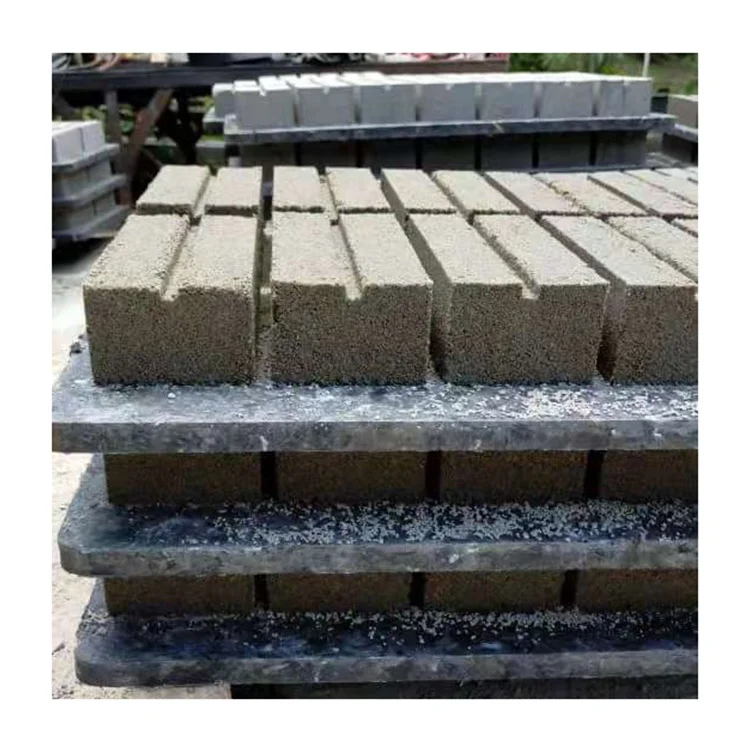
| Mould Format | Hollow, solid, paver, curbstone (mould change required) |
| Automation Level | Semi-automatic |
| Configuration Included | Host machine 1 set, block mould 1 set, JQ350 mixer |
Application Suitability
| Application | Material or Output |
|---|---|
| Hollow block production for load-bearing walls | Crushed stone, sand, cement aggregate mix |
| Solid block manufacturing for partitions | Fly ash, sand and cement blends |
| Paving block output for walkways and yards | Fine aggregate with pigment additives |
| Curbstone production for site boundaries | Coarse aggregate with high cement content |
| On-site block production for contractors | Local quarry sand and gravel sources |
What "7680 Blocks per Day" Actually Assumes About Your Schedule
Capacity figures only hold when the block format, mould cavity count and cycle time all align with what you plan to produce.
I once watched a buyer in the Middle East receive a machine rated at impressive daily numbers, only to discover the figure assumed four-cavity hollow blocks at 200 mm width. His market primarily sold 150 mm solid blocks requiring a different mould, which shifted cycle timing and reduced daily throughput substantially. The QTJ4-25 block making machine in stock is rated at 7,680 pieces per day based on 400×200×200 mm hollow blocks at four pieces per mould. When you switch to pavers or kerbstones, the cycle changes and so does the count. [NEED_CITE: block format impact on cycle time and daily output] Any supplier quoting daily output without naming the assumed block format is handing you a number that belongs to a different product than the one you will sell.
Dispatch Timing You Can Put in Your Project Plan
Stock availability means the QTJ4-25 block making machine in stock can be scheduled for container loading within a confirmed window, rather than entering a production queue of uncertain length. For buyers working against a construction deadline, the gap between order confirmation and dispatch date is what actually matters. We state dispatch lead time at the inquiry stage and hold it in writing.
How the Machine Ships and What Arrives on Site
Dismantling method, container loading plan and packing photographs are provided before order confirmation so you know exactly what your team will handle at the destination port. The host machine, one block mould set and the JQ350 mixer ship as the standard configuration. Arrival estimates are quoted based on destination port at inquiry, giving your logistics team a date to plan around rather than a guess. [NEED_CITE: container loading practices for industrial machinery export]
Reading the Specs That Shape Your Daily Operation
The 25-second molding cycle sets the rhythm of your entire production floor — every pallet moves through the press at this interval, and upstream mixing plus downstream handling must keep pace. The vibration force of 60 kN at 2,800 r/min delivers vertical excitation through the bed mould while the upper mould applies compression vibration, a dual-action approach that determines block density and surface finish. Pallet size at 850×550×20 mm is not arbitrary; it must match your curing rack spacing and the forklift tine width already on your site. The 17.9 kW rated power requirement needs a dedicated circuit — running it on shared supply with other equipment risks voltage drop during the vibration phase, which directly weakens block compaction.
The Cost of Skipping the Pallet Conversation
Buyers who focus on the press and overlook pallet specifications often arrive at commissioning to find their existing curing racks cannot accept the pallets the machine produces. The result is either a rushed local pallet order at inflated cost or a curing bottleneck that limits daily output regardless of what the machine itself can press. Pallets are a consumable that wears through thousands of cycles, so material choice and thickness affect replacement intervals directly. [NEED_CITE: pallet material wear rates in concrete block production] Confirming pallet size against your forklift and curing infrastructure before order avoids this entirely.
What You Receive Beyond the Press Itself
The QTJ4-25 ships as a matched set — host machine, mould and JQ350 mixer — so material preparation and pressing begin from day one without separate procurement. Configuration is set against the buyer’s actual mix design and target block format rather than a catalogue default, meaning the vibration force and cycle timing match your local aggregate. Mould supply covers the formats your market actually sells, with custom drawings available when standard options do not fit. Dispatch and arrival timing are confirmed before commitment, not after the deposit clears. Factory test records demonstrate performance on your specified block format prior to container loading.
Documentation & Verification
- Factory test record run on your specified block format and aggregate proportions
- Machine specification sheet with confirmed pallet size and vibration force values
- Voltage and control language confirmation document signed before production
- Packing photographs showing dismantling state and container loading arrangement
- Mould drawing and format list covering every block type in your order
- Operation and maintenance manual with wear parts schedule and replacement intervals
Installation, Commissioning & Support
- Foundation pad must support 2,500 kg total mass with level tolerance for the 6,400 mm machine length
- Dedicated power circuit rated for 17.9 kW continuous draw at confirmed voltage and frequency
- Host machine ships partially dismantled for container loading — on-site reassembly sequence provided
- Mould change procedure covered during commissioning so format switching does not consume a full shift
- JQ350 mixer setup and feed timing matched to the 25-second molding cycle during first run
- Wear parts list with hydraulic and vibration component replacement intervals supplied at delivery
Tell Us What Your Site Looks Like
To give you an accurate dispatch date and arrival estimate, we need your destination port, the block format you sell most, and the local aggregate you plan to run. Confirm your site voltage and frequency so the electrical configuration is locked before the machine enters final assembly. Let us know whether you have existing pallets and curing racks — if so, share the dimensions so we verify compatibility before quoting.
Frequently Asked Questions
Q: Is the QTJ4-25 currently in stock and what is the dispatch lead time?
A: Stock status is confirmed at inquiry and held in writing. Dispatch lead time is quoted upfront based on current warehouse position and container loading schedule, so you receive a date you can put in your project timeline rather than an estimate that shifts after payment.
Q: How is the machine packed and loaded into the container?
A: The host machine is partially dismantled to fit container dimensions, with the mould set and JQ350 mixer packed alongside. A loading plan and packing photographs are shared before dispatch so your receiving team knows the unloading sequence and reassembly requirements at destination.
Q: What arrival estimate can I expect for my destination port?
A: Arrival timing is quoted at inquiry based on your specific port, combining confirmed dispatch date with current shipping schedules. This gives you a working estimate to coordinate customs clearance and site preparation before the container arrives.
Q: Are pallets included in the shipment and how many should I order?
A: Pallets are not part of the standard configuration and must be specified separately. We recommend ordering enough to fill your curing racks plus a working buffer, and we confirm the 850×550×20 mm pallet size against your existing rack spacing and forklift before finalizing the count.
Q: What ships with the machine versus what I need to source locally?
A: The QTJ4-25 ships with the host machine, one block mould set and a JQ350 mixer. You will need to arrange pallets, raw materials, power supply infrastructure and curing area setup locally. We provide a clear list of what is and is not included before you commit.