

Description
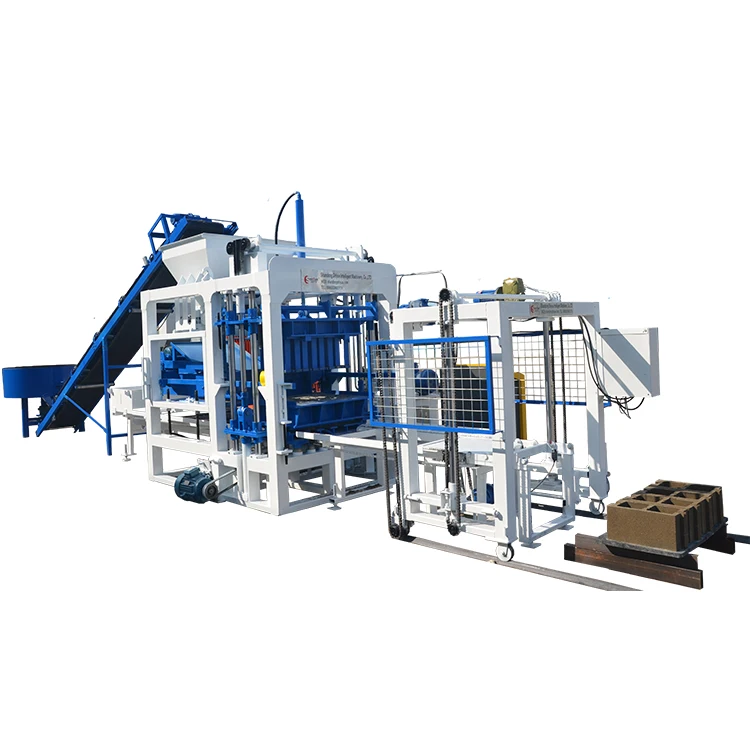
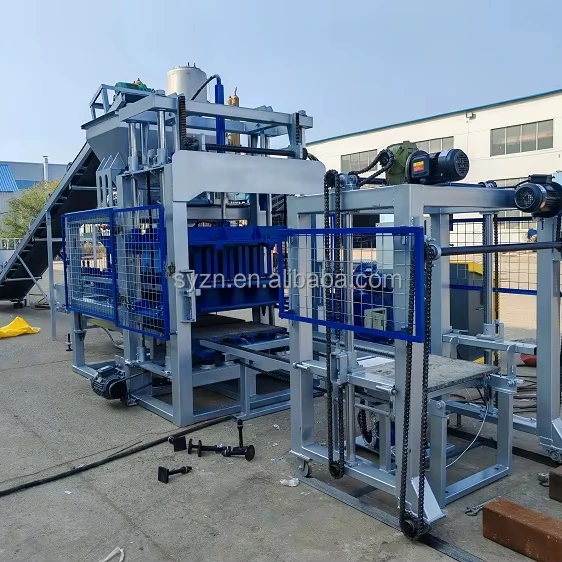
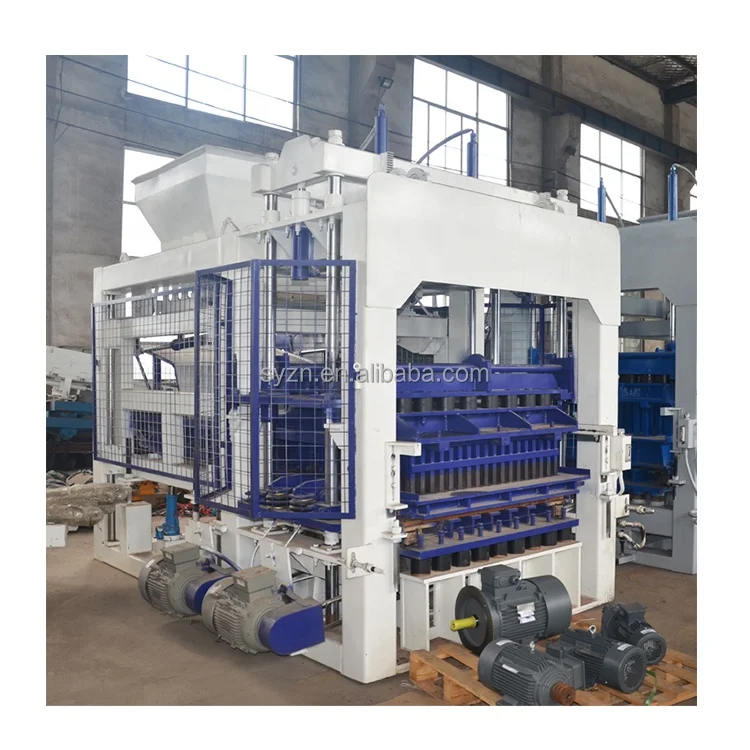
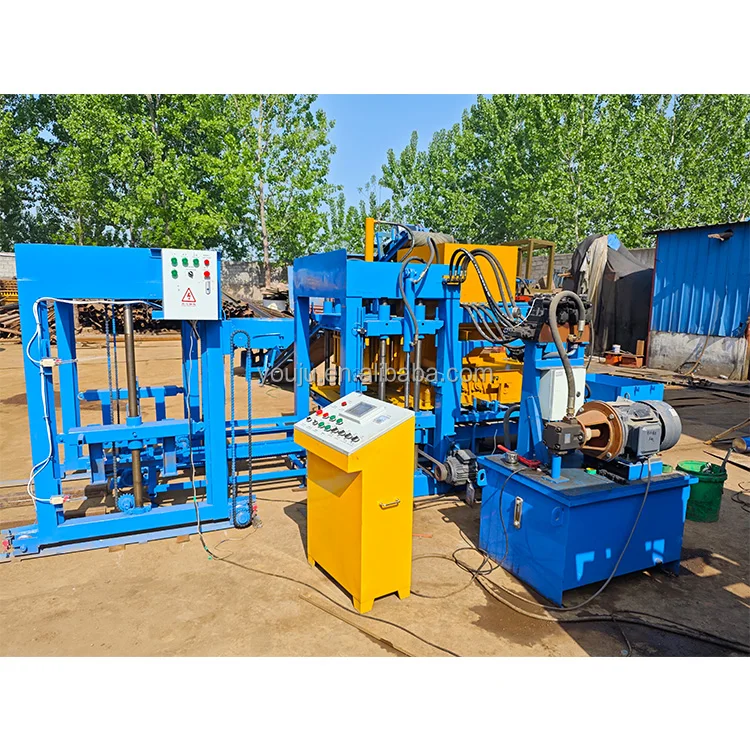
Rapid Deployment Readiness — The QTJ4-25 is maintained as a stocked semi-automatic configuration, with the host machine, standard mould set, and JQ350 mixer pre-matched and cleared for container loading to meet tight project schedules.
Technical Specifications
| Parameter | Value |
|---|---|
| Model | QTJ4-25 |
| Product Type | Semi-Automatic Concrete Block Making Machine |
| Rated Power | 17.9 kW |
| Overall Dimensions (L×W×H) | 6400 × 1500 × 2700 mm |
| Net Weight | 2500 kg |
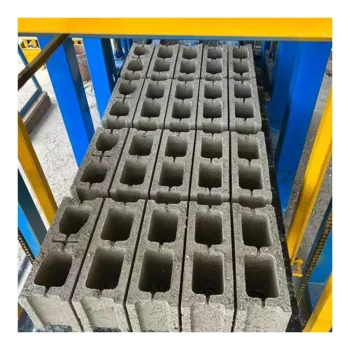
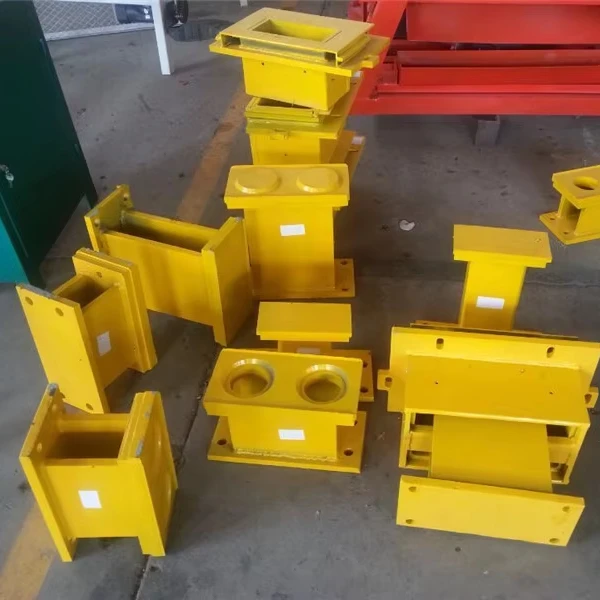
| Standard Mould Format | 400 × 200 × 200 mm hollow block, 4 pcs/mould |
| Output Capacity | 960 pcs/h, 7680 pcs/day (based on 400×200×200mm hollow block, 25s cycle) |
| Molding Cycle | 25 s |
| Pallet Size | 850 × 550 × 20 mm |
| Vibration Frequency | 2800 r/min |
| Exciting Force | 60 kN |
| Control System | Motor-based, semi-automatic (PLC option to be confirmed) |
| Hydraulic Station | Equipped (pressure rating to be confirmed) |
| Included Configuration | Host machine 1 set, block mould 1 set, JQ350 mixer |
| Automation Level | Semi-automatic |
| Block Formats Supported | Hollow, solid, paver, curbstone (via mould change) |
| Voltage & Frequency | Configurable to destination grid (confirm before ordering) |
Application Suitability
| Application | Material or Output |
|---|---|
| Small to medium block plants | Hollow and solid blocks from crushed stone, sand, and cement |
| On-site construction production | Pavers and curbstones for housing and infrastructure projects |
| First-time block plant setup | Semi-automatic hollow block output with manual pallet handling |
| Format expansion for existing plants | Additional mould formats added to an operating line |
Why Voltage Confirmation Must Happen Before the Container Is Booked
A stationary block machine in stock can still sit idle for weeks if the motor winding does not match the destination grid.
I learned this the hard way when a fully automatic hydraulic press arrived at an African job site wired for 380V/50Hz while the local supply ran at 440V/60Hz. The buyer waited three weeks for a motor swap before a single block was pressed. That delay cost more than any discount on the machine itself. Every QTJ4-25 dispatch now carries a written voltage and frequency confirmation sheet signed before production begins, and the electrical nameplate is photographed against the destination country grid parameters before the crate is closed [NEED_CITE: voltage and frequency standards by export market].
Dispatch Lead Time and Stock Availability
Buyers working against a project deadline need certainty on when a stationary block machine in stock can actually leave the factory floor. The QTJ4-25 is held as a standard semi-automatic model with the host frame, vibration assembly, and hydraulic station pre-assembled and tested. Standard hollow block moulds in the 400×200×200 mm format are stocked alongside the machine, so no additional tooling lead time is added to the order.
Container Loading and Machine Dismantling
The 6400 × 1500 × 2700 mm frame is dismantled into the main press body, the mixer, and the pallet stack for loading into a standard container. Each component is secured with timber bracing and steel strapping, and packing photographs are shared with the buyer before the seal is applied. This process eliminates the guesswork around what arrives on site and how the pieces reconnect during commissioning [NEED_CITE: container loading methods for heavy industrial machinery].
Vibration, Pressure, and Pallet Matching
The 2800 r/min vibration frequency and 60 kN exciting force work together with the hydraulic station to compact the concrete mix into a dense, consistent block. This vibration is delivered through the bed mould vertically while the upper mould applies compression, which is critical for hollow block wall integrity. The 850 × 550 × 20 mm pallet size must be checked against the buyer’s existing curing racks and forklift capacity — a mismatch here means pallets stacked by hand or curing space left unused.
What Happens When Pallet and Grid Details Are Skipped
Choosing a pallet size without confirming the curing area dimensions forces the buyer to re-rack the entire yard or handle blocks manually, erasing the output advantage of the machine. Similarly, shipping a semi-automatic press without confirming the local grid frequency leads to motor overheating or outright failure within the first production shift. These oversights do not show up in the quotation but surface on the first day of operation [NEED_CITE: common commissioning failures in exported block machinery].
Why Buyers Source This Model Here
Block machinery is the single focus of this operation, so the QTJ4-25 is specified as a matched set — host, mould, pallet, and JQ350 mixer — rather than assembled from separate suppliers. Each machine is configured against the buyer’s actual local aggregate and target block format, not a catalogue default. Moulds are designed and supplied for the formats the buyer’s market actually sells, and the automation level is selectable so a buyer can start semi-automatic and move up later. Factory testing is recorded per block format before dispatch, and installation support includes operator training on site.
Documentation & Verification
- Line layout showing QTJ4-25 footprint with pallet flow direction marked
- Capacity calculation sheet stating the 400×200×200 mm hollow block basis
- Voltage and frequency confirmation record signed before assembly
- Factory test record covering mould vibration and cycle timing
- Packing photographs taken before container seal is applied
- Hydraulic and electrical schematic for on-site troubleshooting
Installation, Commissioning & Support
- Foundation pad leveled to accommodate the 6400 × 1500 mm frame footprint
- Dedicated power circuit rated for the 17.9 kW total load with correct voltage taps
- Main press body and JQ350 mixer reassembled on site with alignment check
- First-run cycle test on buyer’s local aggregate and mix ratio
- Operator training covering mould change and pallet feeding sequence
- Wear parts list provided with first reorder lead time noted
What We Need to Prepare Your Shipment
Share your target block format, daily output requirement, and local raw material source so the mould and mixer can be matched before the machine leaves the yard. Confirm your site voltage, frequency, and any control language preference in writing. Let us know the curing area dimensions and forklift capacity so the pallet specification is right the first time.
Frequently Asked Questions
Q: What is the current dispatch lead time for the QTJ4-25?
A: The QTJ4-25 is held as a stocked semi-automatic model with standard hollow block moulds ready. Once voltage and frequency are confirmed in writing, the machine goes through a factory test and moves to container loading. Typical lead time from confirmation to dispatch is measured in weeks, not months, though exact timing depends on the current order queue.
Q: How is the machine dismantled for container shipment?
A: The host frame, JQ350 mixer, and pallet stack are separated and secured with timber bracing inside the container. Packing photographs are shared before the container is sealed. On arrival, the main press body is repositioned onto its foundation and the mixer is connected to the feed hopper.
Q: Which voltage options are available before shipping?
A: The motor and control wiring are configured to match your local grid. You must confirm the exact voltage and frequency in writing before assembly begins. The electrical nameplate is photographed against your specification before the machine is crated.
Q: How many pallets should I order for the stated output?
A: The pallet size is 850 × 550 × 20 mm. The number of pallets needed depends on your curing cycle length and available rack space. A curing cycle that holds blocks for several days will require enough pallets to keep the machine running without waiting for empties to return.
Q: Are spare moulds and wear parts included in the shipment?
A: One block mould set ships with the machine. A wear parts list is provided with the documentation package, and the first reorder lead time is stated upfront so you can plan replacements before they are needed on the production floor.