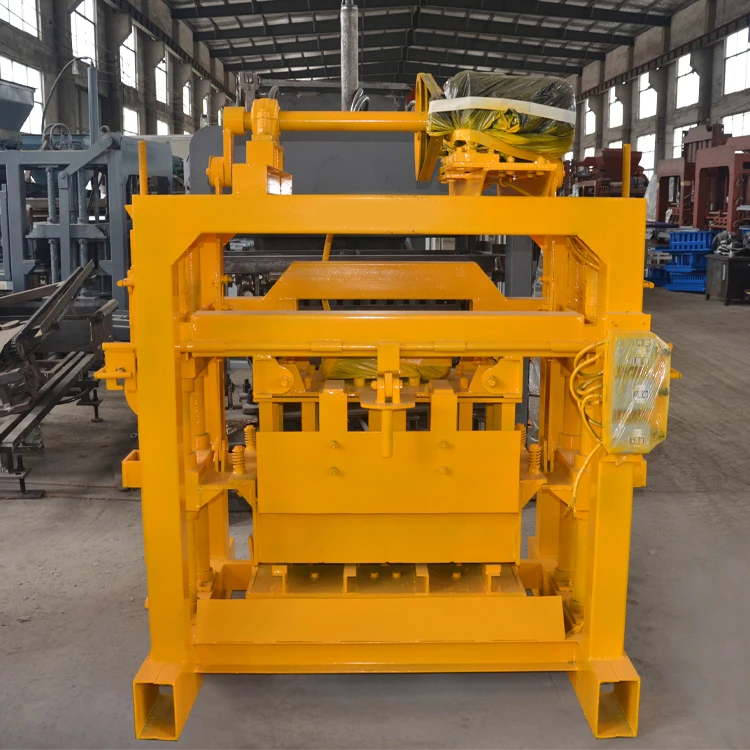
Description
Dispatch-Ready Inventory — QTJ4-40 block machines are warehouse-stocked, tested under load, and scheduled for container loading within days of order confirmation, not weeks after production starts.
Technical Specifications
| Parameter | Value |
|---|---|
| Model | QTJ4-40 |
| Product Type | Manual Cement Block Making Machine |
| Rated Power | 9.5 kW |
| Molding Cycle | 40s |
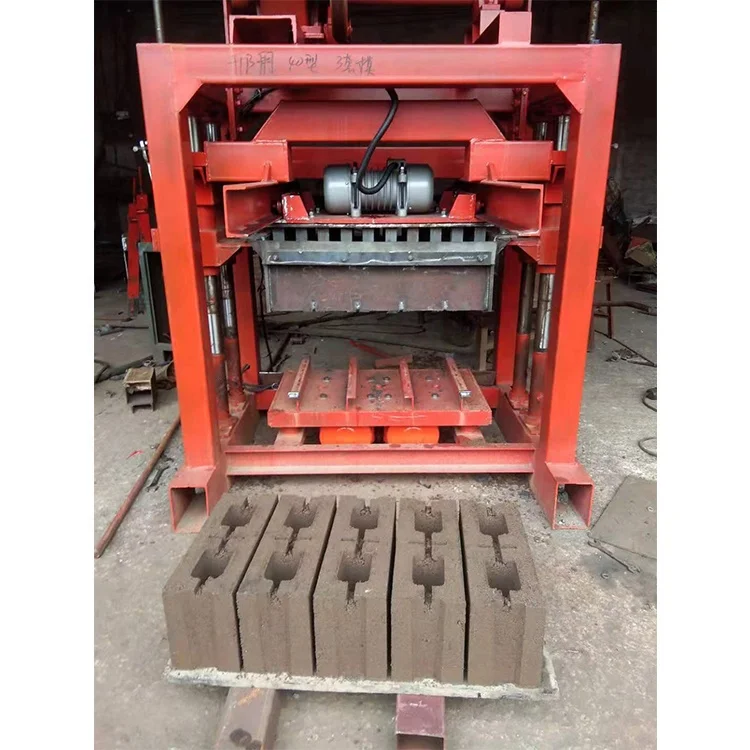
| Vibration System | Bed mould vertical vibration + upper mould compression vibration |
| Pallet Size | 850×450mm |
| Overall Dimensions | 1350×1460×1800mm |
| Machine Weight | 1T |
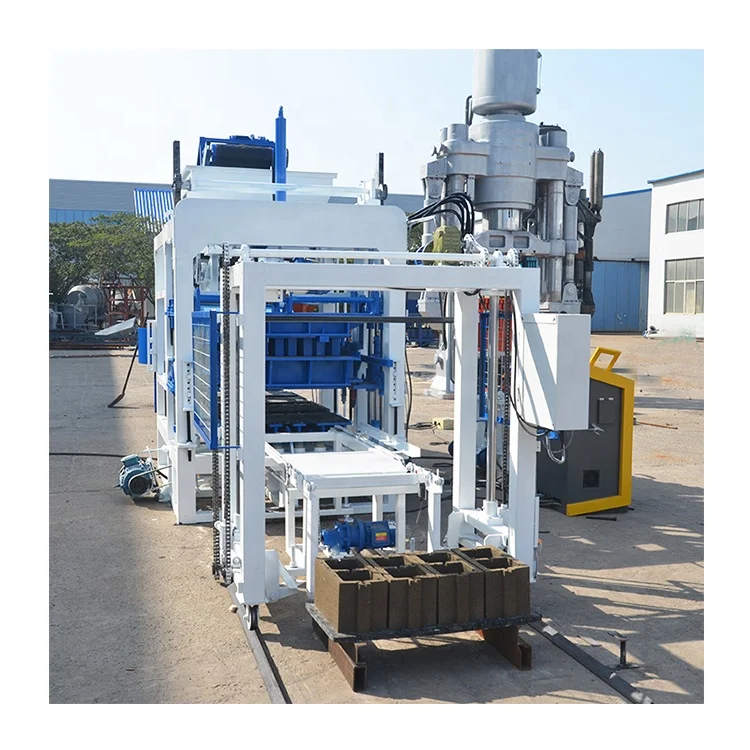
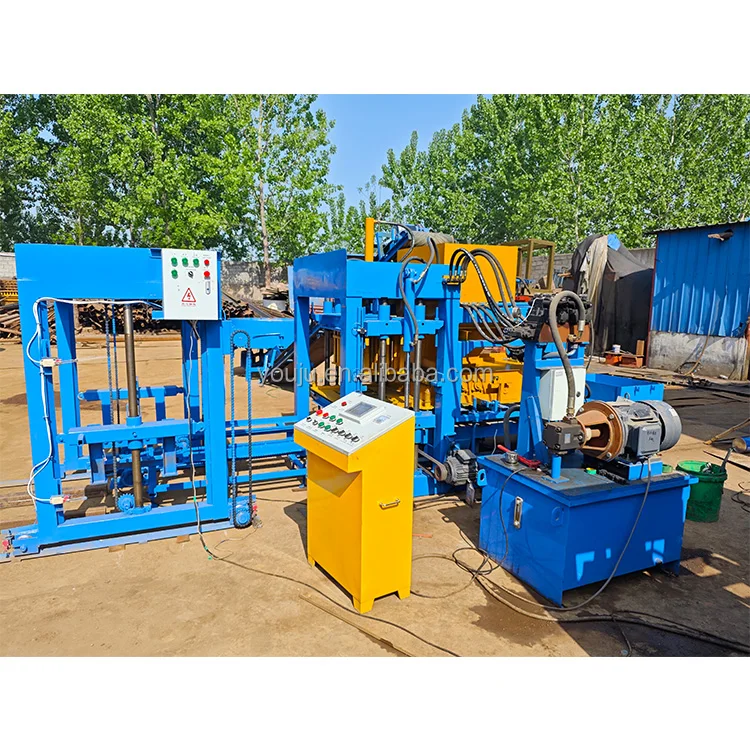
| Automation Level | Semi-automatic (top die push/pull, automatic scraper, manual pallet handling) |
| Voltage | Configurable to local supply (exact voltage and frequency to be confirmed before dispatch) |
| Theoretical Output (400×200×200mm hollow block, 4 pcs/mould) | 360 pcs/hour, 2800 pcs/day (basis to be confirmed) |
| Theoretical Output (400×150×200mm hollow block, 5 pcs/mould) | 450 pcs/hour, 3600 pcs/day (basis to be confirmed) |
| Theoretical Output (225×112.5×60mm solid brick, 9 pcs/mould) | 800 pcs/hour, 6400 pcs/day (basis to be confirmed) |
| Raw Materials | Concrete, sand, cement, fly ash, lime, gypsum |
Application Suitability
| Application | Material or Output |
|---|---|
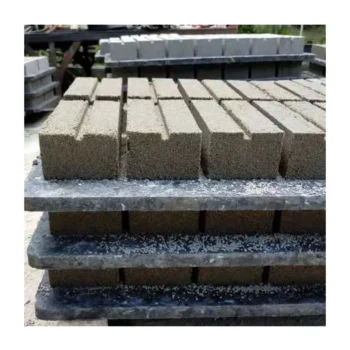
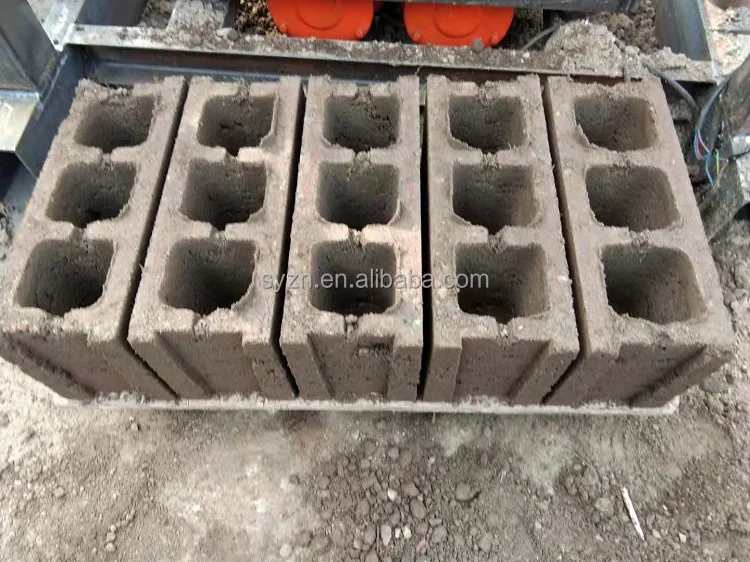
| Small-scale hollow block production | Crushed stone, sand and cement mix for 400×200×200mm and 400×150×200mm formats |
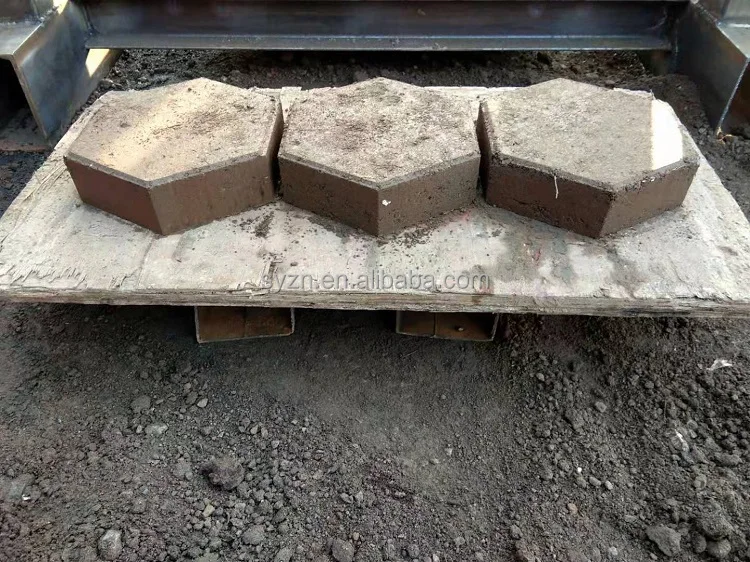
| Solid brick manufacturing | Sand-cement or fly ash-lime mix for 225×112.5×60mm standard bricks |
| On-site contractor block making | Locally sourced aggregate with portable mixer feeding the QTJ4-40 directly |
| First plant setup for entrepreneurs | Low-volume paving and wall block formats with minimal capital outlay |
| Workshop paver and kerbstone trials | Interlocking and paving formats where mould change flexibility matters more than speed |
Why the "Ships in 60 Days" Promise Fails Project Timelines
A QTJ4-40 block machine in stock means your container is booked the same week you confirm the order, not the week production finishes.
I have watched project contractors lose an entire dry season because a block machine was still on the production floor when their foundation crew was already on site. The quotation said 45 days, but raw material delays pushed it to 70, and by the time the machine arrived the rainy window had closed. When your schedule depends on blocks being cured and stacked before the weather turns, warehouse availability matters more than catalogue specifications. [NEED_CITE: typical lead time variability in block machine export orders]
What Stocked Actually Means for Your Project Schedule
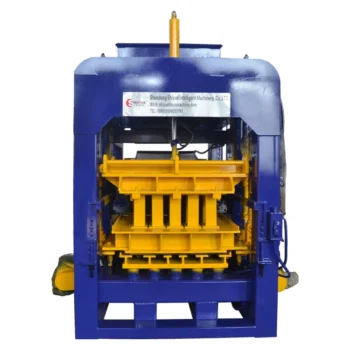
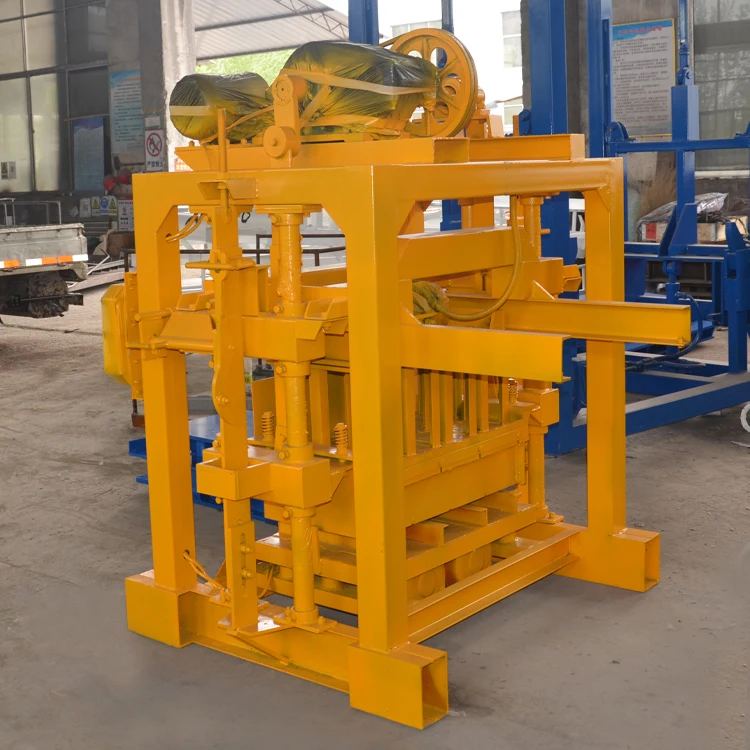
When we confirm a QTJ4-40 block machine in stock, the unit has already passed a factory vibration and pressure test. The motor has run under load, the mould alignment has been checked, and the hydraulic scraper cycle has been verified. This is not a machine pulled from a crate that still needs assembly-line finishing. The lead time you see on the quotation is the time from payment confirmation to container gate, not from order to the start of manufacturing.
Container Loading and Dismantling Logistics
A machine weighing 1T with overall dimensions of 1350×1460×1800mm fits into standard container space, but only if the loading plan accounts for pallet stock and mould crates alongside the press itself. I always check whether the buyer needs the upper hopper detached for LCL consolidation or whether the full assembled height clears the container door frame. Getting the QTJ4-40 block machine in stock loaded correctly avoids the situation where a forklift at the destination port cannot reach the top bolt because the frame was shipped upside down to save space. [NEED_CITE: standard container internal dimensions for 20ft and 40ft units]
Reading the Specification Sheet Against Your Site Reality
The 9.5 kW rated power tells you what electrical supply the QTJ4-40 demands, but the real question is whether your site transformer can sustain that draw alongside a mixer and a conveyor running simultaneously. The 850×450mm pallet size determines your curing rack spacing and your forklift tine width — if your existing curing yard was laid out for a different pallet dimension, those racks need repositioning before the machine arrives. The 40-second molding cycle produces consistent density through dual vibration, but that cycle time assumes the operator is feeding and removing pallets at pace, which is where semi-automatic operation places the bottleneck on human rhythm rather than mechanical speed.
The Cost of Ordering Without Checking Pallet and Voltage First
Buyers who skip the pallet compatibility check discover at commissioning that their curing racks cannot accept 850×450mm boards, forcing them to either rebuild the rack system or order custom pallets at a premium. Voltage mismatches are equally common — a machine wired for 380V/50Hz arriving at a 440V/60Hz site will burn out the vibration motor within the first week. [NEED_CITE: voltage and frequency standards by export market] These are not warranty claims because the machine was built to the specification the buyer confirmed; the failure is in the confirmation step, not the manufacturing.
Why Buyers Source This Machine Through Our Dispatch Workflow
Every QTJ4-40 in our warehouse has been matched against a specific mould format and pallet size before it is offered to a buyer, so the unit you see available already has a defined production scope. Dispatch lead time and container loading plans are provided before payment, meaning you know exactly which vessel your machine will sail on before funds leave your account. Machine dismantling and packing photographs are supplied at the loading stage so you can verify condition before the container doors close. Voltage, frequency and control language are confirmed in writing before the machine leaves the factory floor, eliminating the commissioning delays that happen when electrical assumptions are made after arrival.
Documentation & Verification
- Factory test record showing vibration amplitude and cycle timing on your specified block format
- Pallet dimension drawing cross-referenced with your curing area layout before dispatch
- Voltage and frequency confirmation sheet signed by both parties before container loading
- Dismantling and packing photographs documenting machine condition at container gate
- Mould format list and compatibility sheet for future mould additions
Installation, Commissioning & Support
- Foundation pad must support 1T static load plus dynamic vibration across the 1350×1460mm footprint
- Dedicated 9.5 kW circuit with correct voltage and phase confirmed before motor connection
- Upper hopper may require re-attachment on site depending on container loading configuration
- First production run verifies 40-second cycle timing against your specific raw material mix
- Operator training covers manual pallet feed rhythm and dual vibration system adjustment
- Wear parts list identifies scraper blades and vibration mounts for first reorder cycle
What to Include in Your Inquiry
Send us your target block format and daily output requirement so we can confirm which stocked QTJ4-40 units carry the right mould. Include your local voltage, frequency and phase specification so the motor and vibration system are verified against your grid before dispatch. Share your curing area dimensions and existing forklift model so we can confirm the 850×450mm pallet will integrate with your current handling setup without modification.
Frequently Asked Questions
Q: Is the QTJ4-40 currently in stock, and how fast can it ship after order confirmation?
A: Stock availability is confirmed at inquiry against specific mould formats in the warehouse. Once confirmed, dispatch lead time and container loading schedule are provided before payment. Shipping typically follows within days of order confirmation for units already tested and pallet-packed, subject to container booking availability on your destination route.
Q: What block formats and moulds come with the stocked unit, and can I add moulds later?
A: Each stocked QTJ4-40 carries a specific mould format that was used during factory testing. Additional moulds for hollow blocks, solid bricks or paving formats can be included in the same shipment if available in warehouse stock, or manufactured to your drawings on a separate lead time.
Q: How is the machine packed for container loading, and what reassembly is needed on arrival?
A: The 1T machine may ship fully assembled or with the upper hopper detached depending on container type and whether pallets and spare moulds share the same load. Packing photographs document the configuration before dispatch, and reassembly instructions cover bolt torque and alignment checks for any detached components.
Q: Will the voltage and frequency match my local supply, and is this confirmed before dispatch?
A: Voltage and frequency are confirmed in writing during the inquiry stage based on your local grid specification. The motor and vibration system are then verified against that specification before the machine leaves the warehouse, preventing the commissioning failures that occur when electrical assumptions are made after arrival.