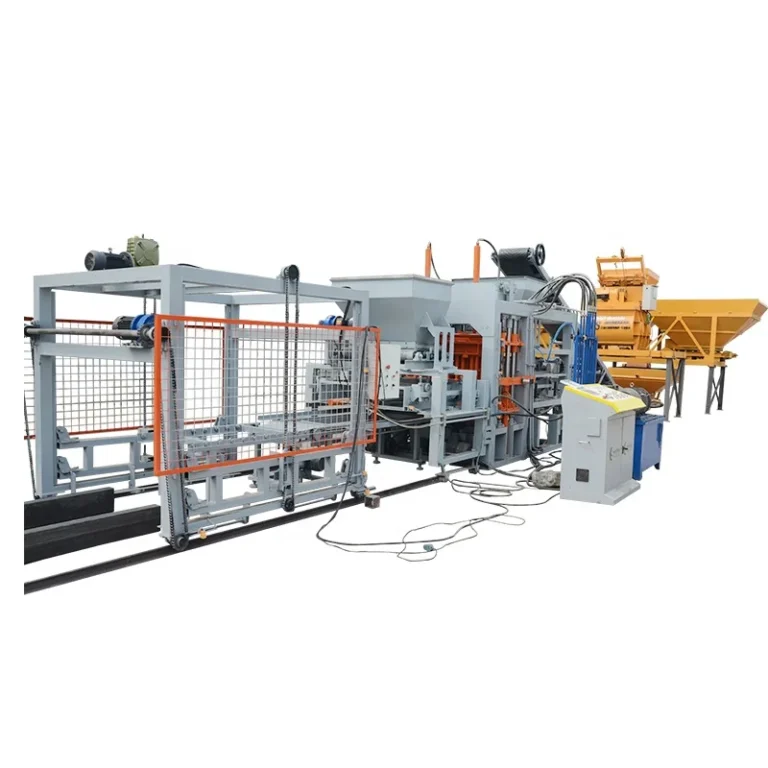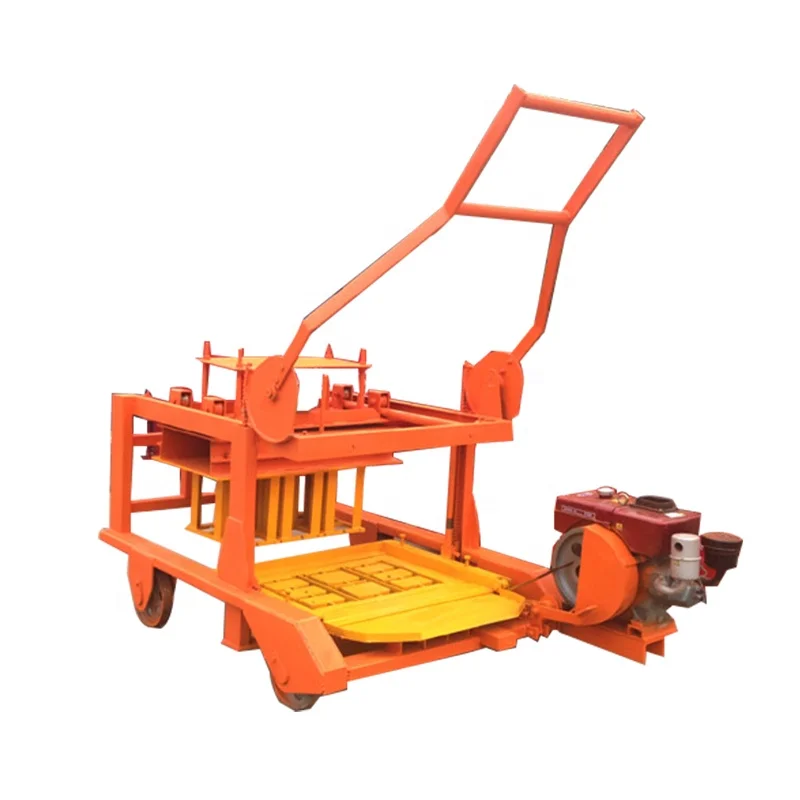
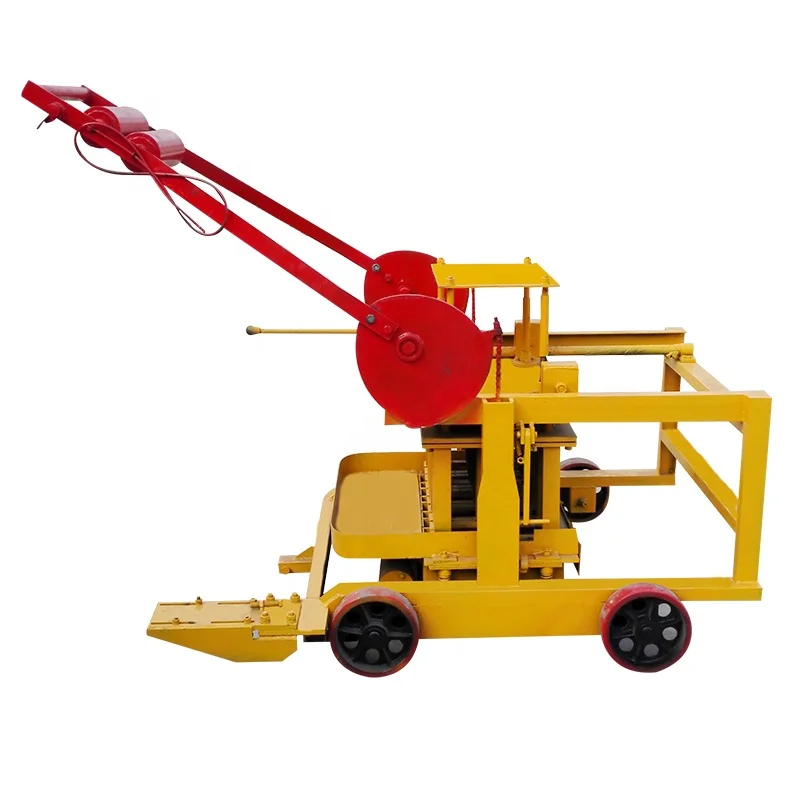
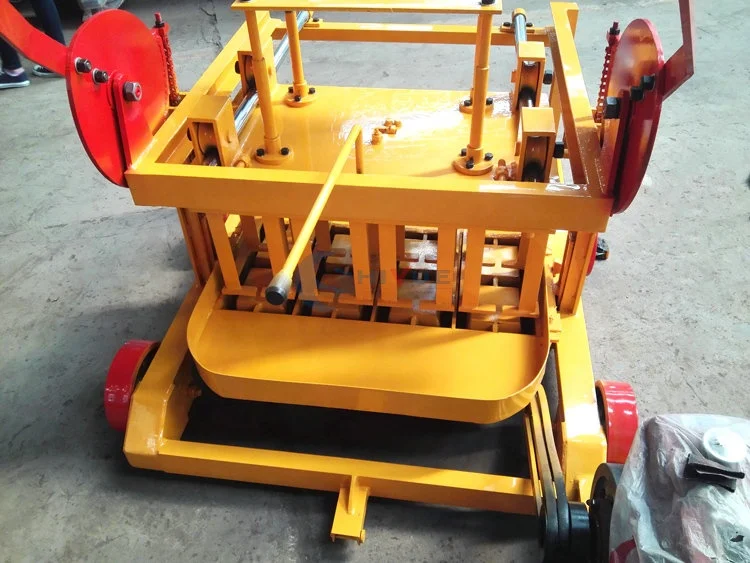
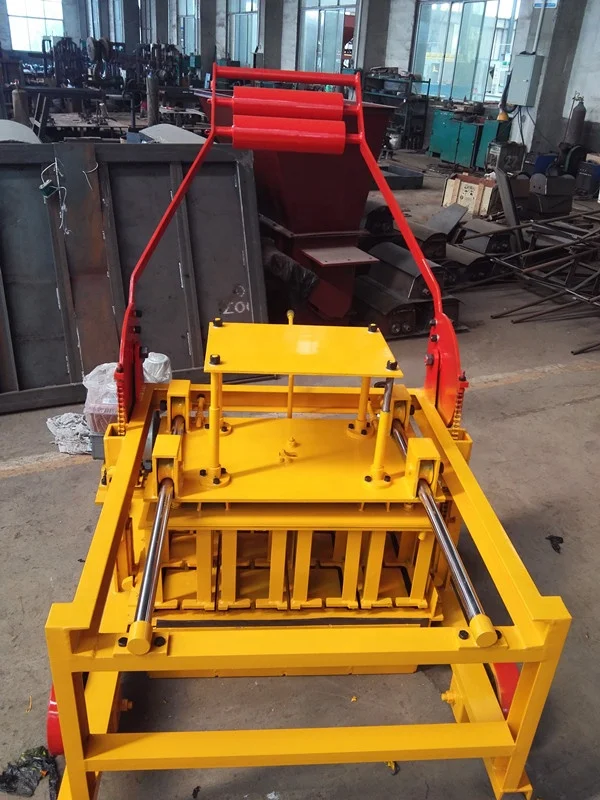
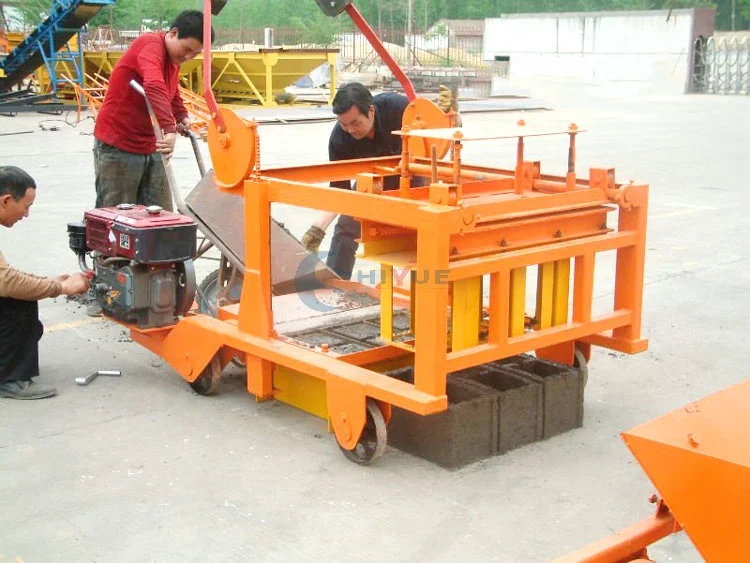
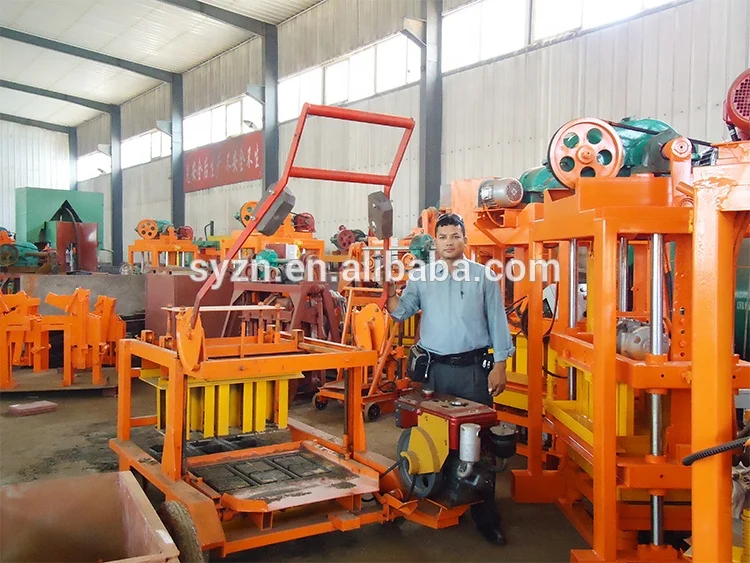
Description
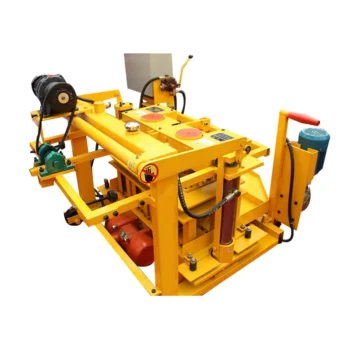
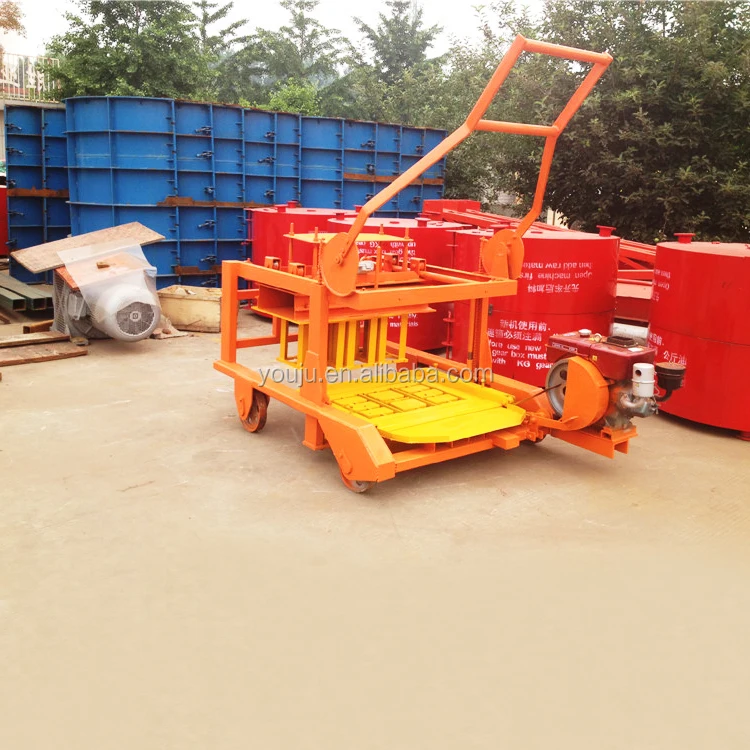
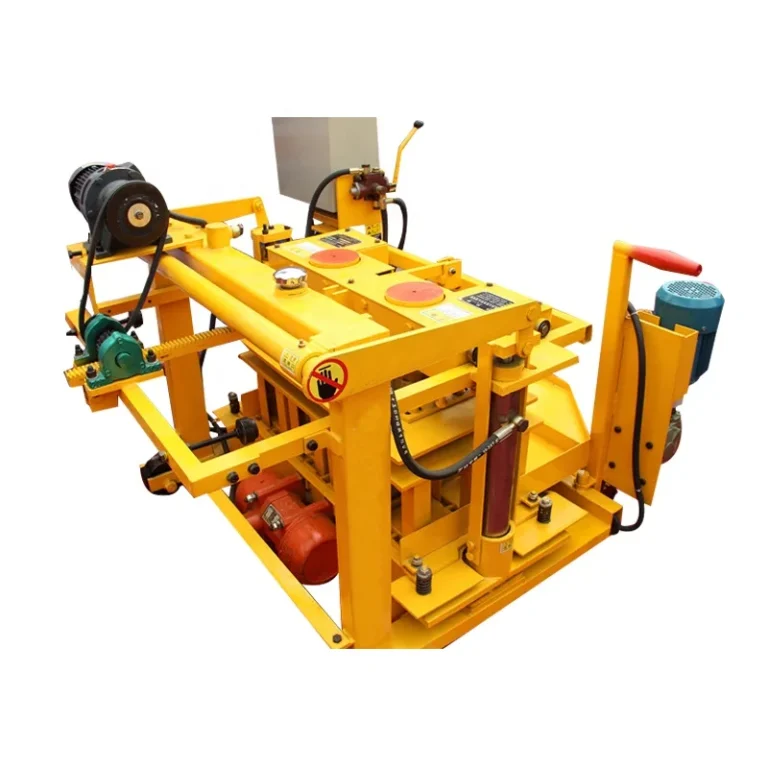
Matched to site, not catalogue defaults — the QMR4-45 diesel mobile block machine is configured around your local aggregate, target block format, and off-grid conditions before dispatch.
Technical Specifications
| Parameter | Value |
|---|---|
| Model | QMR4-45 |
| Product Type | Mobile Diesel Engine Concrete Block Making Machine |
| Power Source | Diesel Engine |
| Machine Dimensions | 1300 x 1500 x 1000 mm |
| Total Mass | 950 kgs – 1000 kgs |
| Hydraulic Method | Mold Vibration |
| Exciting Power | 28.6 KN |
| Excitation Frequency | 4500 r/min |
| Molding Cycle | 30 s |
| Output Capacity | 3000 pcs/day (basis not stated in source) |
| Raw Materials | Concrete, sand, cement, fly ash, lime, gypsum |
| Transmission | Hydraulic & Manual (handle operation) |
| Operation Mode | Mobile / Egg-laying |
Application Suitability
| Application | Material or Output |
|---|---|
| Remote rural construction sites | Local sand, crushed stone, and cement |
| Hilly and mountainous terrain projects | Fly ash blends and lightweight aggregates |
| Mine industrial area perimeter works | Lime-based and gypsum-bearing mixes |
| Desert and coastal small-scale plants | Salt-resistant cement and marine sand |
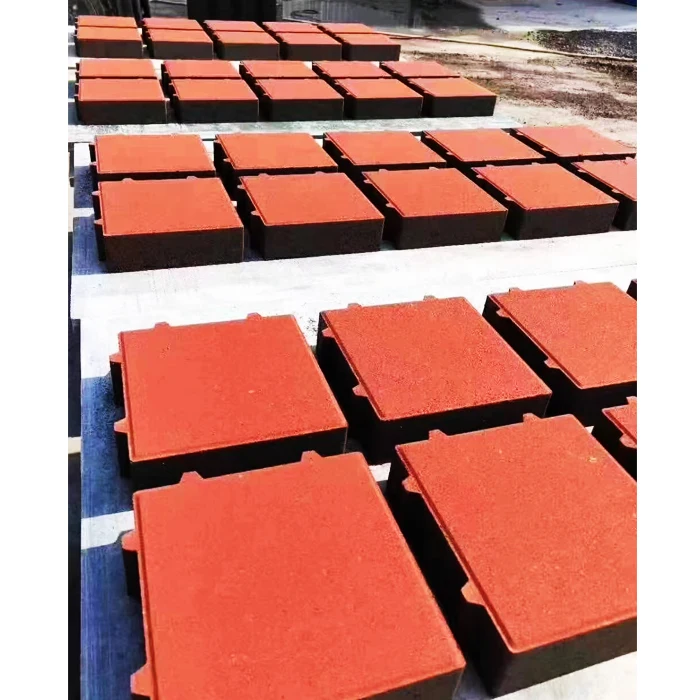
| Individual owner start-up yards | Standard concrete block mixes |
Why "3000 Pieces a Day" Misses the Deadline Picture
Real dispatch speed depends on what sits in the warehouse today, not what the catalogue promises next month.
A mobile block machine in stock is worth more to a contractor working against a handover date than a higher-output press still on a production schedule. I have watched site managers absorb weeks of delay because the quoted lead time assumed a factory slot that did not exist. When the project penalty clock is ticking, container loading readiness and a confirmed arrival estimate matter far more than cycle-time charts. [NEED_CITE: liquidated damages clauses in construction contracts]
What Being In Stock Actually Means
Having the QMR4-45 mobile block machine in stock means the diesel engine is already mounted, the vibration assembly is wired, and the standard mould set is packed alongside the frame. No waiting for a production slot, no partial assembly at the factory, no last-minute sourcing of a diesel unit. The machine moves from the yard to the container once the shipping documents clear.
Container Loading and Dismantling for Transit
The QMR4-45 breaks down into a compact footprint that fits standard twenty-foot container dimensions without overhang or special crating. The handle-operated transmission and mold vibration unit travel secured to the base frame. Packing photographs are taken before the container doors close, so you see exactly how your mobile block machine in stock was loaded and braced for ocean transit. [NEED_CITE: standard container internal dimensions and loading practices]
Reading the Specs That Decide On-Site Performance
The 28.6 KN exciting power combined with 4500 r/min vibration frequency determines how densely the concrete settles into the mould cavity on each cycle. On egg-laying machines, the ground itself becomes the curing surface, so vibration force must be strong enough to compact the mix but controlled enough to keep the freshly laid block from cracking at the base. The 30-second molding cycle reflects the rhythm an operator can sustain with handle operation across a full shift. Total mass between 950 kgs and 1000 kgs gives the frame enough weight to resist walking during vibration, while staying light enough for two workers to reposition manually across uneven terrain.
The Cost of Ignoring Dispatch Details Before You Pay
Choosing a machine purely on output figures and then discovering it ships in eight weeks leaves contractors paying idle crews while they wait. I have seen projects where the block machine arrived but the wrong voltage motor was fitted, adding another round of delays. With diesel-powered mobile units this particular trap is avoided, yet the mould format still needs confirming before packing. A standard hollow block mould and a paving block mould occupy different crate space, and swapping after dispatch means air freight costs that erase any savings from a quick decision. [NEED_CITE: common causes of equipment delivery disputes in international trade]
What This Supplier Arranges Before You Ask
Shandong Shiyue Intelligent Machinery treats block machinery as a single focus, so the QMR4-45, its mould, and supporting pallets are specified as one matched system. Dispatch lead time is quoted upfront based on actual warehouse position, not a rolling factory schedule. Container loading plans are confirmed before the proforma, so you know whether a twenty-foot or forty-foot container is needed. Arrival estimates account for your destination port, not just the sailing date. Customs documentation support covers the commercial invoice, packing list, bill of lading, and certificate of origin your clearing agent requires.
Documentation & Verification
- Factory test record showing vibration output on your requested mould format
- Packing photographs documenting container loading and bracing before dispatch
- Hydraulic and electrical schematic matching your diesel engine specification
- Mould drawing and format list confirming cavity dimensions before shipment
- CE declaration included where applicable to your destination market
Installation, Commissioning & Support
- Ground preparation guidance matched to the 1300 x 1500 mm machine footprint
- Diesel engine pre-start checklist and break-in procedure included
- Mould change procedure using handle operation explained during on-site training
- Vibration frequency and exciting power adjusted to your local aggregate mix
- Wear parts and mould spring list provided with recommended reorder intervals
- Operator training covers egg-laying technique on uneven site surfaces
What We Need From You to Confirm Availability
Share your target block format and daily output requirement so we can verify which mould set is packed with the QMR4-45 mobile block machine in stock. Provide your destination port for an arrival estimate that includes sailing time and inland transit. Let us know if your site altitude or ambient temperature range requires diesel engine derating adjustments before the machine leaves the factory.
Frequently Asked Questions
Q: Which QMR4-45 units and standard moulds are currently in stock?
A: The QMR4-45 diesel mobile block machine is held in finished-goods stock with standard hollow block moulds pre-matched. Other mould formats may require a short preparation period for cavity finishing and test pressing. Confirm your exact block dimensions early so the correct mould is loaded into the container alongside the machine.
Q: What is the dispatch lead time and how is container loading handled?
A: Dispatch lead time for a stocked QMR4-45 is typically a matter of days once shipping documents and container booking are confirmed. The machine is dismantled into base frame and vibration assembly for loading, secured with steel bracing, and photographed before the container doors are sealed. Packing photographs are shared with the buyer for customs and insurance records.
Q: How is the estimated arrival time calculated after shipment?
A: Arrival time combines the sailing schedule from the port of loading to your destination port plus any inland haulage if your site is not port-adjacent. We provide an arrival estimate quoted upfront based on current shipping line schedules, not optimistic projections. Delays at transshipment hubs are flagged early so your site team can adjust their mobilization timeline accordingly.
Q: What customs documentation do you provide for international shipping?
A: Standard documentation includes commercial invoice, detailed packing list, bill of lading, certificate of origin, and CE declaration where applicable to your market. Additional documents such as fumigation certificates for wooden packing or embassy-legalized invoices are arranged upon request. All paperwork is prepared in parallel with container loading to avoid dispatch holds.
Q: Are diesel engines pre-installed and tested before dispatch?
A: Yes, the diesel engine is mounted, connected to the hydraulic and vibration system, and run through a full molding cycle at the factory before dismantling for shipment. This confirms fuel delivery, cooling, and vibration output under load. The engine is then drained of fluids and secured for container transit, with refill instructions included in the operation manual.