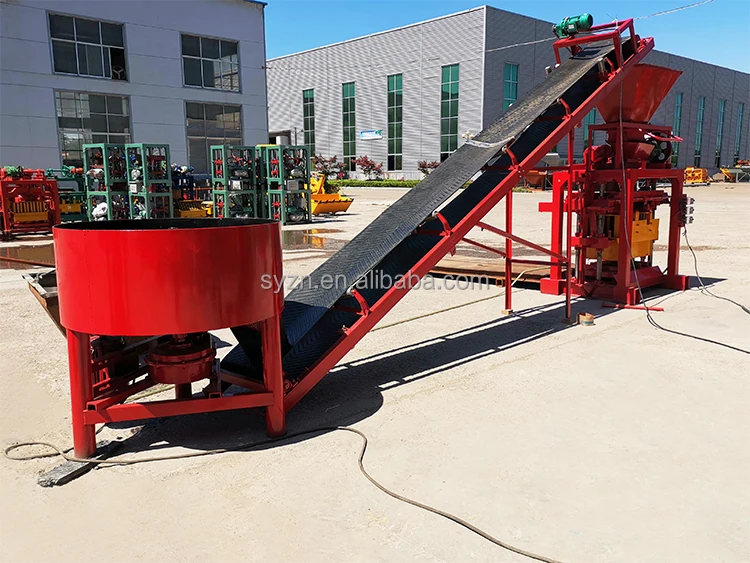
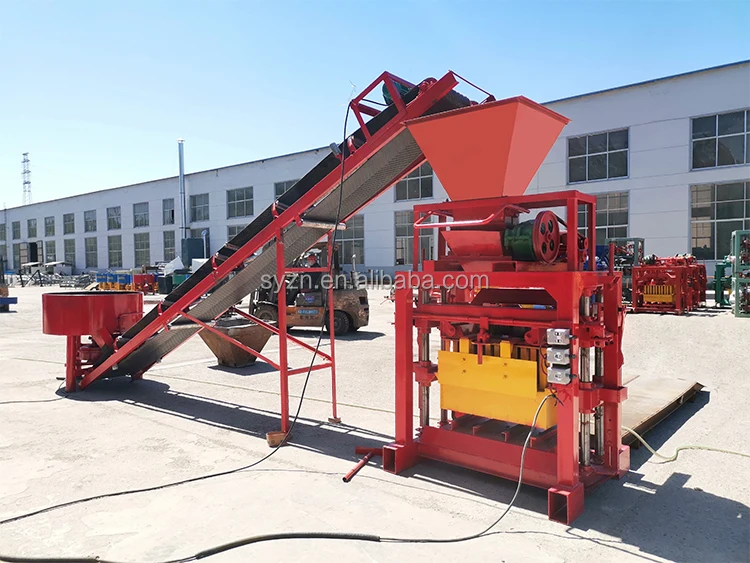
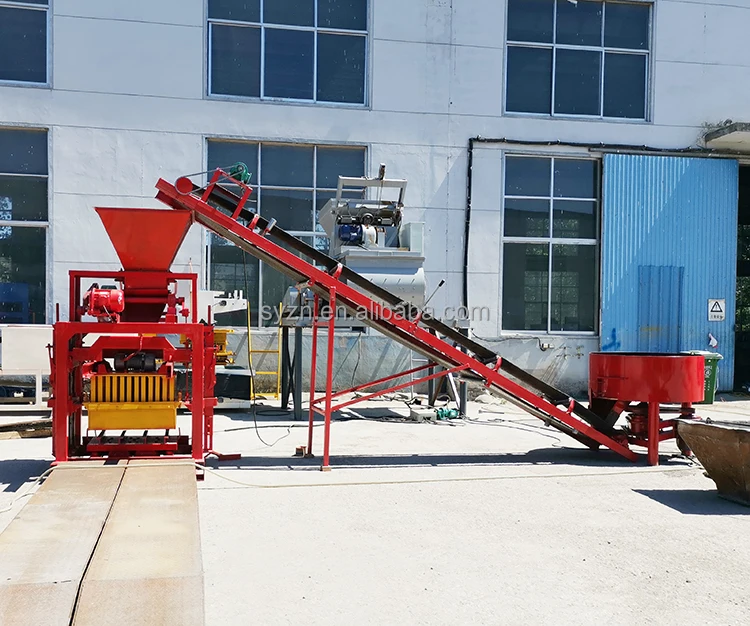
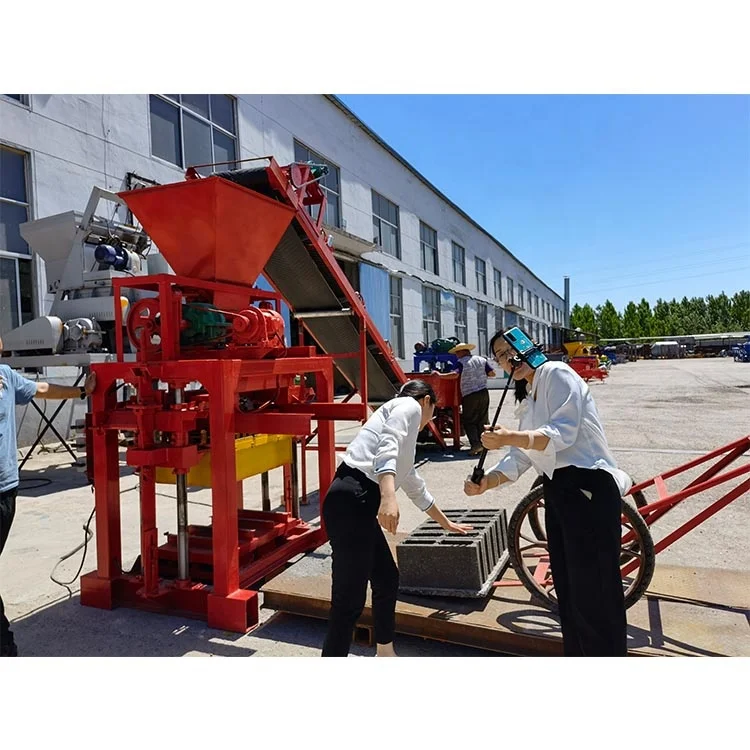
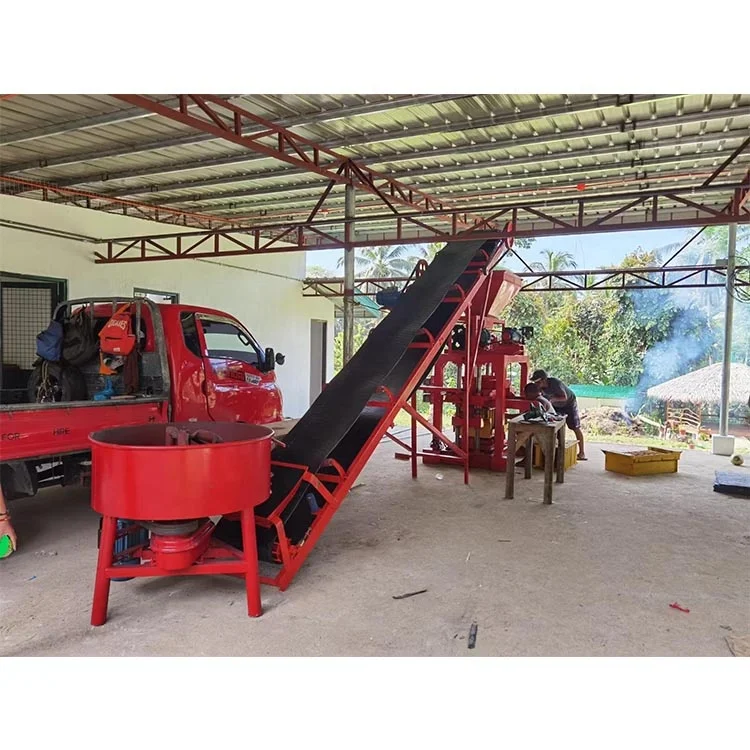
Description
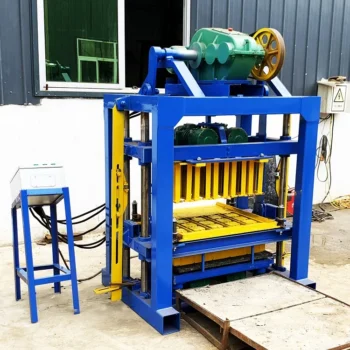
Dispatch-Ready Inventory — the QTJ4-35 block machine ships from stocked units so your project timeline is not held hostage to build-to-order delays.
Technical Specifications
| Parameter | Value |
|---|---|
| Model | QTJ4-35 |
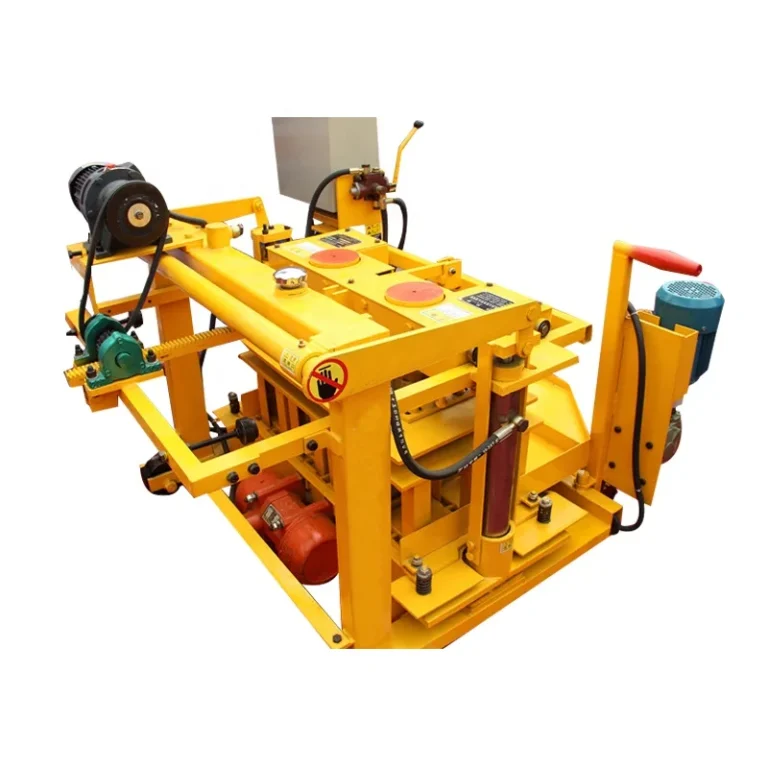
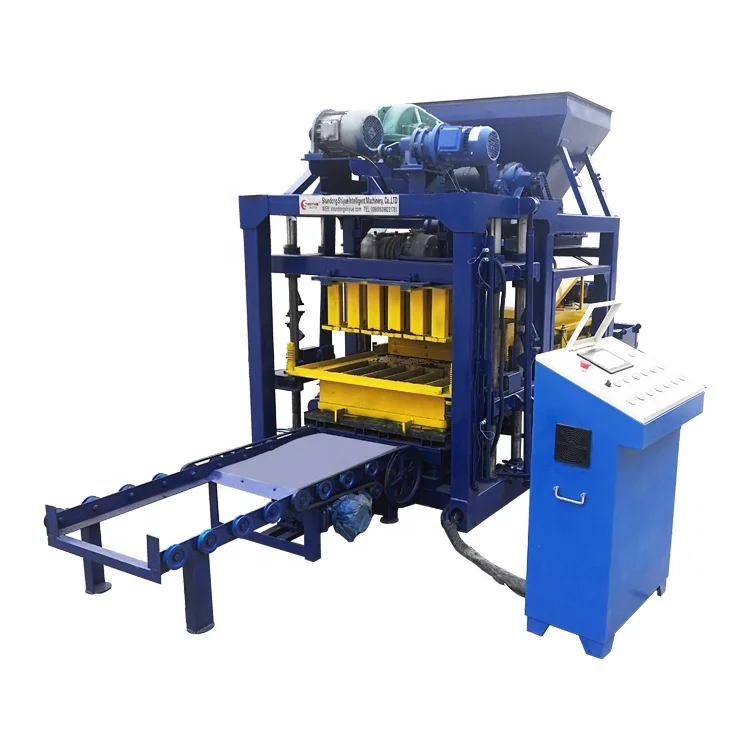
| Product Type | Manual Concrete Block Making Machine |
| Overall Dimensions (L×W×H) | 2050 × 1660 × 1900 mm |
| Total Mass | 1500 kg |
| Rated Vibration Force | 35 kN |
| Main Vibration Form | Platform Vibration |
| Vibration Frequency | 2800 r/min |
| Pallet Size | 850 × 450 mm |
| Molding Cycle | 35 s (basis to be confirmed with block format) |
| Overall Power | 9.7 kW |
| Demolding Method | Vibration |
| Recommended Factory Area | 260 m² |
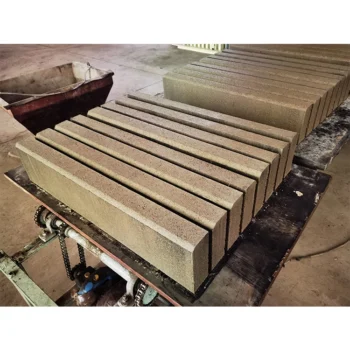
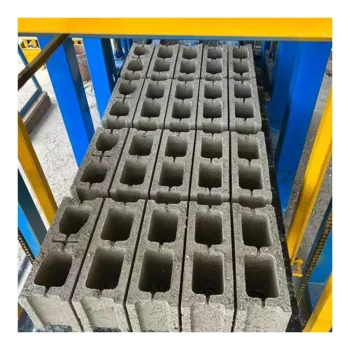
| Applied Products | Concrete blocks, hollow blocks, solid blocks, pavers, interlocking blocks, curbstone, colored pavers |
| Raw Materials | Crushed stone, sand, cement, dust, fly ash, gravel, slag |
| Automation Level | Manual |
| Warranty | 1 year (excluding spare parts) |
| Container Loading | 1 × 40HQ (basic equipment) |
Application Suitability
| Application | Material or Output |
|---|---|
| First-time block plant setup | Hollow and solid blocks from crushed stone, sand, and cement |
| On-site contractor production | Pavers and interlocking blocks for local housing projects |
| Small workshop manufacturing | Kerbstones and colored pavers using fly ash and gravel blends |
| Rural and peri-urban supply | Standard concrete blocks using locally sourced slag and dust |
Why "In Stock" Should Mean More Than a Warehouse Label
A stocked QTJ4-35 block machine in stock fast delivery only matters if the unit is actually wired, tested, and crated before you ask for it.
I have watched containers sit at port because the machine inside was listed as available but still needed voltage conversion and a missing control panel. The gap between "we have it on the floor" and "it is ready to load" is where project schedules quietly collapse. Buyers working against a construction season or a fixed handover date cannot absorb a multi-week slip that was never on the original timeline. [NEED_CITE: typical container shipping lead times from Chinese ports to West Africa and Southeast Asia]
What Dispatch Lead Time Actually Covers
When we confirm a QTJ4-35 block machine in stock fast delivery, that covers the press itself along with the standard mould, a set of pallets, and the motor wired to your confirmed voltage. Supporting items like extra moulds for different formats, additional pallets, or a mixer upgrade are built or sourced separately and can add time. The honest answer on lead time only holds once the full scope of your order is locked, not just the base machine.
Container Loading and Site Access Reality
A 1500 kg unit with a 2050 × 1660 × 1900 mm footprint fits inside a single 40HQ, but that is not the whole story. I once had a customer in East Africa whose workshop doorway was 1.8 meters wide — the QTJ4-35 could not roll through without partial dismantling, adding two weeks of reassembly on a concrete floor that was still curing. We now send the overall dimensions and a dismantling-for-entry plan before the container is booked, so the machine arrives and goes straight to its foundation. [NEED_CITE: common workshop door and access constraints in developing-market block plants]
Reading the Specs That Matter for Daily Operation
The 35 kN platform vibration at 2800 r/min is what compacts your mix into a dense, handleable block. On a manual machine like this, the vibration form — platform rather than mould-box — means the pallet absorbs the energy and transfers it upward through the material. The 850 × 450 mm pallet size is a practical middle ground: small enough that a standard workshop forklift can move cured racks without a specialized handler, yet large enough to produce multiple blocks per cycle. The 9.7 kW total power draw stays within the supply capacity of most small industrial connections, though confirming your local voltage and frequency before dispatch avoids a costly transformer workaround on arrival.
The Hidden Cost of Skipping Pre-Shipment Checks
Voltage mismatch is the most common reason a block machine sits idle after arrival. A unit wired for 380V/50Hz arriving in a country running 220V/60Hz will not start — and rewinding motors on site is neither fast nor cheap. Beyond electrical issues, failing to confirm which block format moulds are included in the shipment means the machine may arrive ready to produce only one of the three or four products your market actually demands. That gap between what was quoted and what was loaded is where the real cost hides. [NEED_CITE: electrical standards and voltage variations across African and South American markets]
Why Buyers Source This Model From Our Stock
Single-focus machinery sourcing means the press, mould, pallet, and handling are specified as a matched set — not pulled from separate catalogues and hoped to work together. Configuration is set against your actual mix and local aggregate, so the vibration force and cycle time produce blocks that meet your strength target without material substitution. Stocked units undergo the same factory test as built-to-order machines, and packing photographs are shared before the container is sealed. Dispatch lead time is quoted against confirmed inventory, not a production slot that may shift. [NEED_CITE: factory acceptance testing procedures for small block machines before export]
Documentation & Verification
- Overall dimension drawing sent before shipment so you verify workshop access and foundation layout
- Voltage and frequency confirmation sheet signed off before motor wiring begins
- Packing photographs of crated QTJ4-35 and pallets shared before container is sealed
- Container loading plan showing lashing points and weight distribution for your freight forwarder
- Operation and maintenance manual with mould change steps for the formats you ordered
- CE declaration included where required by your destination port authority
Installation, Commissioning & Support
- Foundation pad must support 1500 kg static load across the 2050 × 1660 mm base footprint
- Dedicated 9.7 kW circuit with correct breaker rating for your confirmed voltage and frequency
- Partial dismantling plan provided if workshop door is narrower than 1660 mm
- Vibration frequency and molding cycle verified on your local aggregate during first run
- Operator training covers mould swap procedure and pallet handling for the 850 × 450 mm format
- Wear parts list with reorder references for vibration springs, mould liners, and pallet surfaces
What to Include in Your Inquiry
To give you a firm dispatch date and loading plan, we need to know your target block formats, the raw materials available locally, and the voltage and frequency standard at your site. Share your workshop dimensions and any access constraints so we can confirm whether the QTJ4-35 rolls straight in or requires a dismantling plan before it ships.
Frequently Asked Questions
Q: Is the QTJ4-35 currently in stock and what is the exact dispatch lead time?
A: Stock status is confirmed against live inventory at the time of your inquiry. For a base unit with standard mould, lead time from order confirmation to container loading is typically measured in days rather than weeks. Supporting items like additional moulds or pallet sets may extend the timeline, so locking the full order scope early is important.
Q: What is the container loading arrangement — does it ship in one 40HQ or split?
A: The QTJ4-35 basic equipment loads into a single 40HQ container. This covers the press, one standard mould, and a base set of pallets. If your order includes additional mould formats or a larger pallet quantity, we will confirm whether everything fits in one container or if a split shipment is needed.
Q: Which standard moulds ship with the machine and what is the lead time for additional custom moulds?
A: One standard mould matching a common block format is included with the base unit. Additional moulds — whether standard hollow, solid, paver, or interlocking formats — are quoted and lead-timed separately. Custom moulds built to your drawings carry a longer lead time that we confirm before you commit.
Q: What voltage and frequency is the machine wired for, and can it be changed before dispatch?
A: The motor is wired to the voltage and frequency you confirm at order stage. We do not ship a default configuration and hope it matches. If your site runs a non-standard supply, let us know early so the correct motor and control components are installed before the machine is crated.
Q: What is covered under the 1-year warranty and how are spare parts shipped after arrival?
A: The warranty covers manufacturing defects on the press itself for one year, excluding consumable spare parts. Wear items like vibration springs, mould liners, and pallets are listed with part numbers so you can reorder directly. Parts are shipped by express courier once you confirm the reference and quantity.