

Direct Import Solid Block Machine for Belgium Manufacturers Factory Price
The lowest FOB price is rarely the biggest cost saver; accurate HS code classification prevents demurrage fees that can exceed machine profits.
For Belgian manufacturers, direct importing from China offers significant cost savings compared to European peers, but success hinges on strict CE documentation and precise HS code classification to prevent costly customs delays. Securing a Direct Import Solid Block Machine Belgium requires more than just negotiating the unit price; it demands a rigorous verification of technical files and logistics planning to ensure smooth clearance through EU ports.
When I first transitioned from quality inspection to trade support, I watched a shipment of block machines stall at a Southeast Asian port for eleven days. The issue was not the machine quality, but a mismatch between the physical cargo and the declared HS code for the molds. The client had separated the main unit and the mold sets into two different bills of lading to save on perceived duties, but the customs authority flagged the molds as unrelated industrial parts rather than integral components of the machinery. The resulting storage fees erased the margin saved by choosing a lower-priced supplier. This experience reshaped how I approach every export file. Now, when discussing a Direct Import Solid Block Machine Belgium, I insist on reviewing the entire packing list and commercial invoice before the goods leave the factory floor. The goal is to align the physical reality of the shipment with the regulatory expectations of Belgian Customs Authority guidelines.
Why Direct Import from China? Analyzing the Cost Advantage for Belgian Manufacturers
European manufacturing overheads include higher labor costs and stricter environmental compliance fees, which are reflected in the final equipment price.
Importing directly from Chinese manufacturers allows Belgian investors to bypass these layered costs. The primary advantage lies in the supply chain structure. In Linyi, a major hub for construction machinery, the clustering of component suppliers reduces logistics friction and material costs. This ecosystem enables factories to offer competitive pricing without compromising on core structural integrity. However, the term "factory price" can be misleading if it does not account for the total landed cost.
A common misconception is that the gap between European and Chinese prices is solely due to labor arbitrage. While labor costs are lower, the real savings come from economies of scale in steel processing and hydraulic component assembly. For a buyer seeking a Direct Import Solid Block Machine Belgium, understanding this distinction is vital. It means you are not buying a "cheap" alternative, but a product from a highly specialized industrial cluster. The challenge is ensuring that the cost reduction does not come at the expense of compliance.
To validate the value proposition, buyers should request detailed breakdowns of the hydraulic systems and PLC brands used. Reputable manufacturers use internationally recognized components for critical control units, ensuring that maintenance and spare parts remain accessible in Europe. This approach mitigates the risk of being locked into a proprietary system that lacks local support. When evaluating quotes, look for transparency in these specifications rather than just the bottom-line figure. A Direct Import Solid Block Machine Belgium sourced correctly provides a robust foundation for profitability, provided the initial due diligence covers both mechanical specs and regulatory alignment.
Choosing the Right Machine: QT4-15 vs. QT6-15 for Your Production Capacity Needs
Selecting a machine based on peak demand rather than average output leads to underutilization and extended ROI periods.
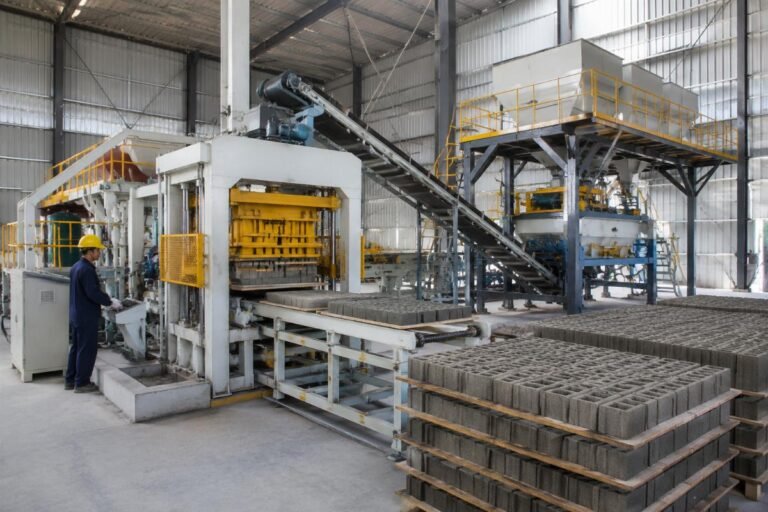
The QT series represents the standard for stationary block making machines, with models ranging from semi-automatic to fully automatic PLC-controlled lines. For Belgian investors, the choice often narrows down to the QT4-15 and QT6-15 models. The difference is not just in the number of blocks produced per hour, but in the level of automation and labor required.
| Feature | QT4-15 Series | QT6-15 Series |
|---|---|---|
| Automation Level | Semi-Automatic / Basic PLC | Fully Automatic PLC |
| Labor Requirement | Moderate (Manual feeding possible) | Low (Auto feeding & stacking) |
| Output Consistency | Standard | High Precision |
| Initial Investment | Lower | Higher |
| Maintenance Complexity | Simple | Requires Technical Knowledge |
[NEED_CITE: comparison of labor efficiency in automated vs semi-automated construction material production]
The QT4-15 is suitable for startups with limited capital who can manage manual raw material feeding. It offers a lower entry barrier but requires more hands-on operation. In contrast, the QT6-15 integrates automatic batching and feeding systems, reducing human error and increasing output consistency. For a established manufacturer in Belgium looking to upgrade, the QT6-15 offers a better long-term value due to its ability to run continuously with minimal supervision.
A case from a recent project illustrates this point. A client initially opted for the QT4-15 to save on upfront costs. However, the inconsistent manual feeding led to variations in block density, causing rejection rates to rise during quality checks. Switching to a QT6-15 with an auto-feeder resolved the density issue, stabilizing production quality. When sourcing a Direct Import Solid Block Machine Belgium, consider the total cost of ownership, including labor and waste reduction, not just the purchase price. The right model aligns with your operational capacity and quality standards.
Navigating EU Compliance: Essential CE Certification and Documentation for Smooth Clearance
CE certification is not merely a sticker on the machine; it requires detailed technical files and PLC safety logic verification for EU customs clearance.
Belgian customs authorities strictly enforce the EU Machinery Directive. A valid CE certificate must be accompanied by a technical file that includes risk assessments, electrical diagrams, and proof of conformity for all safety-critical components. Many buyers assume that a general CE mark is sufficient, but without the supporting documentation, shipments can be held for inspection.
The technical file should verify that the machine’s safety interlocks, emergency stops, and guarding mechanisms meet EU standards. For PLC-controlled machines like the QT series, this includes software logic verification to ensure that the machine cannot operate in unsafe conditions. When importing a Direct Import Solid Block Machine Belgium, request the full technical dossier before shipment. This allows your local compliance officer to review the documents and identify any gaps early.
[NEED_CITE: EU Machinery Directive requirements for technical documentation and conformity assessment]
Additionally, ensure that the Certificate of Origin is correctly issued. Discrepancies between the country of manufacture and the declared origin can trigger additional duties or delays. Working with a supplier who understands these nuances is crucial. They should be able to provide a commercial invoice, packing list, and bill of lading that are perfectly aligned with the CE technical file. This level of documentation precision is what separates a smooth import process from a logistical nightmare. A Direct Import Solid Block Machine Belgium arrives ready for installation only when the paperwork is as robust as the hardware.
Avoiding Hidden Costs: How Proper Packing and HS Code Classification Prevent Port Delays
Incorrect weight declarations and poor palletizing are frequent causes of port inspections and demurrage charges.
Customs officials often target shipments with irregular weight distributions or vague descriptions. For block machines, the heavy steel frames and hydraulic units must be packed securely to prevent shifting during transit. More importantly, the gross and net weights declared on the bill of lading must match the actual cargo within a tight tolerance. A discrepancy of even a few percent can raise red flags.
In one instance, a shipment was delayed because the molds were listed separately with a generic HS code for "steel parts" instead of being integrated into the main machine’s declaration. This triggered a manual review, as customs suspected undervaluation. Correct classification requires listing the entire line under the appropriate HS code for concrete or stone working machinery. This ensures that duties are calculated correctly and avoids suspicion of misdeclaration.
[NEED_CITE: impact of HS code misclassification on customs clearance times in EU ports]
Proper palletizing also plays a role. Heavy components should be secured on sturdy wooden pallets that meet ISPM 15 standards for international shipping. Clear labeling of each package with corresponding invoice numbers helps customs officers verify contents quickly. When arranging a Direct Import Solid Block Machine Belgium, insist on a pre-shipment inspection that includes weight verification and packaging checks. This proactive step minimizes the risk of unexpected fees and ensures that your investment reaches your site without unnecessary holdups.
After-Sales Support: Ensuring Remote Diagnostic Assistance and Spare Parts Availability
Downtime due to missing spare parts can cost more than the initial savings from direct importing.
Once the machine is installed, the focus shifts to maintenance and operational continuity. Hydraulic hoses, seals, and PLC modules are wear items that may need replacement over time. Relying on local European suppliers for these parts can be expensive and slow. Therefore, securing a reliable supply chain from the manufacturer is essential.
Reputable manufacturers offer remote diagnostic assistance via video call or dedicated support platforms. This allows technicians to troubleshoot issues in real-time, guiding local operators through repairs. For urgent needs, express courier services like DHL or FedEx can deliver critical components within days. However, for larger orders, consolidating spare parts with the main shipment or using DDP shipping options can be more cost-effective.
A Belgian startup we worked with kept a stock of essential seals and sensors on hand, ordered alongside the main machine. This strategy reduced their downtime to near zero during the first year of operation. When negotiating a Direct Import Solid Block Machine Belgium, discuss the availability of spare parts and the terms for future orders. Ensure that the supplier provides detailed maintenance manuals and training videos in English or French. This support infrastructure is as critical as the machine itself for long-term success.
Conclusion
Successful direct import relies on meticulous documentation and strategic partner selection, not just low pricing.
Importing a Direct Import Solid Block Machine Belgium offers a clear path to cost efficiency and high-quality production. By focusing on CE compliance, accurate HS classification, and robust after-sales support, Belgian manufacturers can mitigate risks and maximize their return on investment. The key is to treat the import process as a comprehensive project, where every detail from packing to paperwork contributes to the final outcome.
Leave a Reply