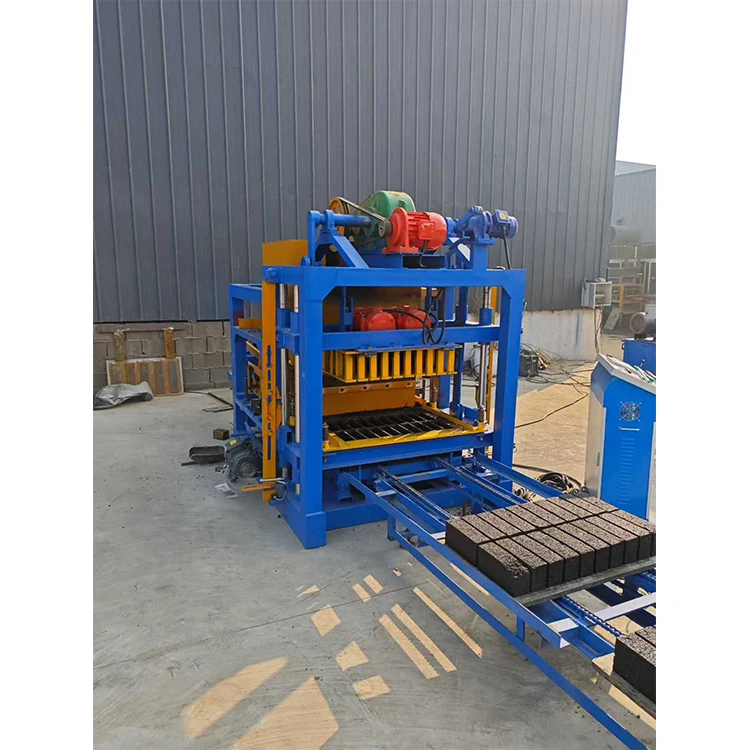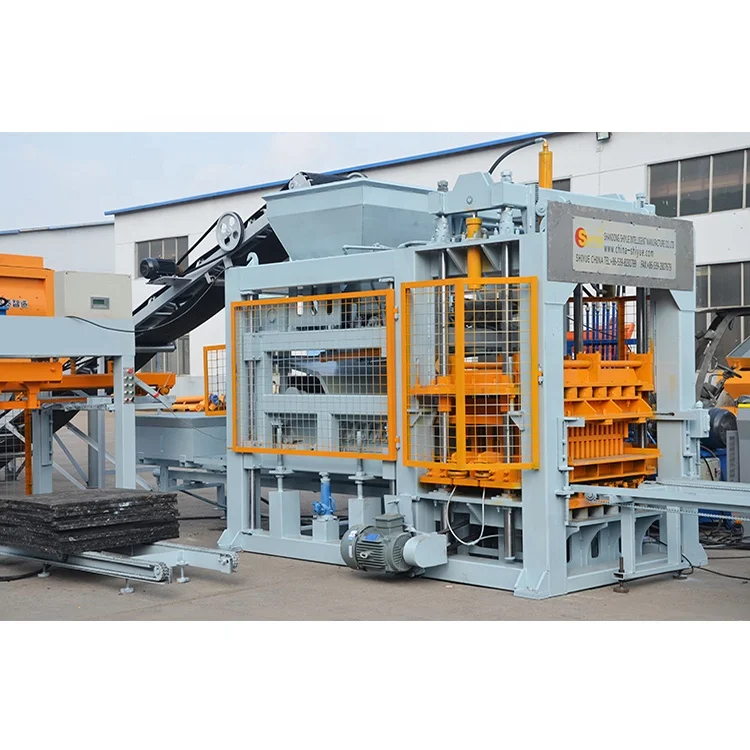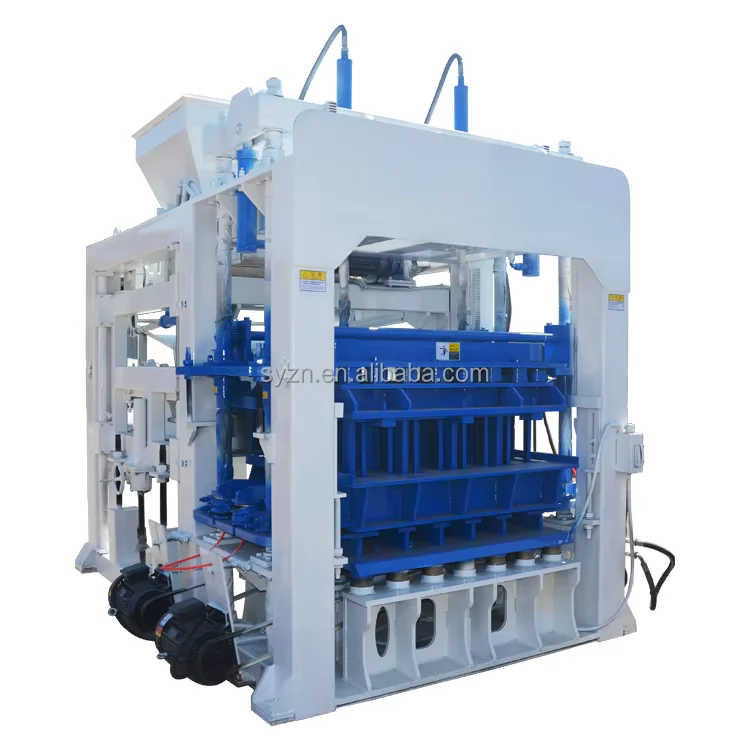
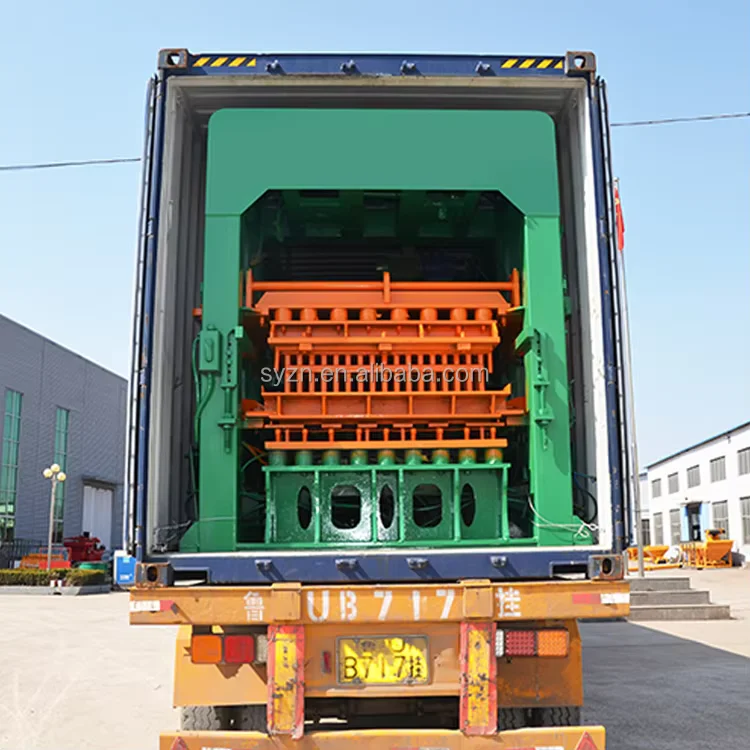
Description
Rapid Dispatch Readiness — every stocked unit undergoes strict electrical and packing checks before leaving the factory to prevent arrival delays.
Technical Specifications
| Parameter | Value |
|---|---|
| Product Type | Automatic Concrete Block Making Machine |
| Method | Hydraulic pressure |
| Automation Level | Automatic |
| Voltage | Local Voltage (verify against manufacturer catalog) |
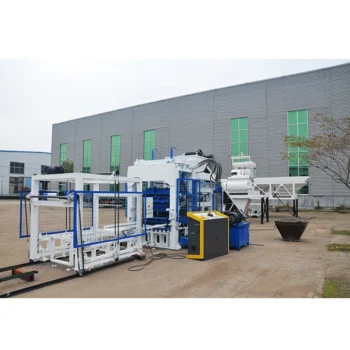
| Overall Dimensions (L×W×H) | 9350×2320×2950 mm |
| Net Weight | 10000 kg |
| Hydraulic Pressure | 20 MPa |
| Cycle Time | 15-20s (basis to be confirmed) |
| Mould Format / Brick Size | 400×100×200 mm, 400×120×200 mm, 200×100×60 mm, 300×150×100 mm, 400×150×200 mm, 240×115×90 mm, 200×200×60 mm, 150×150×100 mm, 400×200×200 mm, 230×220×115 mm |
| Power Source | Electric motor |
| Core Components | Motor, Pump |
| Raw Material Compatibility | Crushed stone, sand, cement, dust, coal fly ash, cinder, slag, gravel |
| Concrete Mixer | Optional |
| Labor Requirement | 1-3 people |
| Warranty | 1 Year |
Application Suitability
| Application | Material or Output |
|---|---|
| Paving block production for municipal walkways | Crushed stone, sand, and cement |
| Hollow block manufacturing for building walls | Coal fly ash, cinder, slag, and gravel |
| Solid block output for structural foundations | Dust, sand, and cementitious materials |
Why the Voltage Question Must Precede the Shipment Date
Confirming local voltage and frequency is the single most critical step before loading an Automatic Concrete Block Making Machine in stock.
I once oversaw an installation in South Africa where a fully automatic unit arrived at the site, only to sit idle for three weeks because the local grid frequency did not match the motor specifications. The project contractor had to source and install a custom transformer while the construction deadline slipped away [NEED_CITE: voltage and frequency standards by export market]. When you are working against a tight project schedule, a machine sitting in a container without the correct electrical configuration is just a heavy metal box. Securing an Automatic Concrete Block Making Machine in stock means nothing if the main motor cannot spin on day one. We lock down the exact voltage, frequency, and PLC display language during the order confirmation so the unit is wired correctly before it ever sees the inside of a shipping container.
Container Loading and Dismantling Logistics
Moving a 10,000 kg hydraulic press requires precise spatial planning. The main frame, hydraulic station, and control cabinet are systematically dismantled to fit standard shipping container dimensions, ensuring the Automatic Concrete Block Making Machine in stock arrives without structural stress. Every component is secured with heavy-duty lashing, and the hydraulic lines are capped to prevent contamination during ocean transit.
Pre-Dispatch Electrical and Mechanical Verification
Before the crate doors close, the electric motor and pump undergo a full operational test. We record a video outgoing-inspection showing the hydraulic pressure reaching 20 MPa and the core components running under load. This verification guarantees that the machine you receive is the exact unit tested, eliminating surprises when your local electricians connect the main power supply [NEED_CITE: machinery test report requirements for industrial equipment].
Decoding the Physical Footprint and Power Draw
The 9350×2320×2950 mm overall dimension dictates your factory floor layout and foundation pouring requirements. A 20 MPa hydraulic pressure system demands a stable power supply to maintain consistent force during the shaping cycle. The optional concrete mixer integration must be positioned to feed the hopper without interrupting the main press, requiring careful spatial arrangement of the raw material compatibility zones for crushed stone, sand, and cement. Properly mapping these physical and electrical parameters ensures the equipment drops into your facility without requiring post-arrival structural modifications.
The Hidden Cost of Overlooking Dispatch Details
Failing to verify the dispatch lead time and container loading schedule often leads to cascading project delays. If the customs documentation does not perfectly match the packing list, the equipment can get held at the port of entry, incurring daily demurrage fees. Furthermore, arriving at a site without the correct foundation bolts or dismantling tools means your crew stands around waiting for hardware while the construction timeline collapses [NEED_CITE: customs clearance delays for heavy machinery].
Why Source Your Equipment From Our Inventory
We maintain ready-to-ship inventory so your project does not wait for a production slot. Every unit is tested with a machinery test report provided before it leaves our floor. We supply comprehensive packing photographs and customs documentation support to ensure smooth port clearance. Our dispatch process includes verifying the exact local voltage to prevent on-site electrical failures. We focus entirely on getting the equipment to your site rapidly and correctly.
Documentation & Verification
- Factory test record confirming 20 MPa hydraulic pressure before dispatch.
- Video outgoing-inspection showing electric motor and pump operation.
- Packing photographs detailing container loading and component securing.
- Customs documentation support matching the exact dismantled shipping weight.
- Voltage and control language confirmation sheet signed prior to crating.
Installation, Commissioning & Support
- Foundation planning based on the 9350×2320×2950 mm overall dimensions.
- Electrical hookup requiring verified local voltage for the main electric motor.
- Reassembly of dismantled hydraulic pump and press frame on-site.
- Initial power-on testing to confirm 20 MPa hydraulic pressure stability.
- Operator training covering the 1-3 people labor requirement workflow.
- Wear parts list provided for the core motor and pump components.
Finalizing Your Shipment Details
To initiate the dispatch process, provide your exact local voltage, frequency, and preferred PLC display language. Confirm your site’s container unloading capabilities and available crane capacity for the 10,000 kg net weight. Specify which standard mould formats from the available brick sizes you need loaded into the container first.
Frequently Asked Questions
Q: Which standard moulds are currently in stock and ready to ship?
A: We hold standard moulds for various formats, including 400×200×200 mm hollow blocks and 200×100×60 mm paving bricks. When you request an Automatic Concrete Block Making Machine in stock, we confirm the exact mould inventory available for immediate container loading, ensuring your primary production formats arrive with the main press without waiting for custom fabrication.
Q: What is the exact dispatch lead time and container loading process?
A: Once voltage and documentation are confirmed, stocked units are dismantled and loaded into containers within a matter of days. We secure the 10,000 kg frame and hydraulic components with heavy-duty lashing, providing packing photographs and a detailed loading plan so your port agents know exactly how the cargo is stowed before the ship departs.
Q: How do we confirm the voltage and PLC language before the machine leaves?
A: During the order finalization, we require your exact local voltage, frequency, and preferred PLC display language. We configure the electric motor and control cabinet to these specifications, then run a video outgoing-inspection to prove the system powers up correctly before the container doors are sealed.
Q: What customs documentation is provided to ensure fast clearance?
A: We supply a complete documentation package, including a commercial invoice, packing list, and bill of lading that perfectly match the dismantled shipping weight and dimensions. This precise alignment prevents port authorities from flagging discrepancies, allowing your Automatic Concrete Block Making Machine in stock to clear customs rapidly and head straight to your project site.