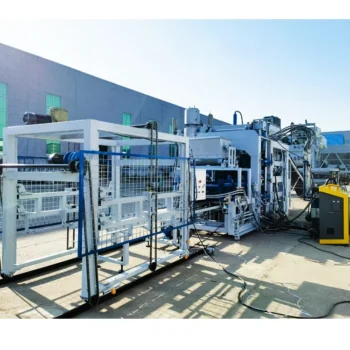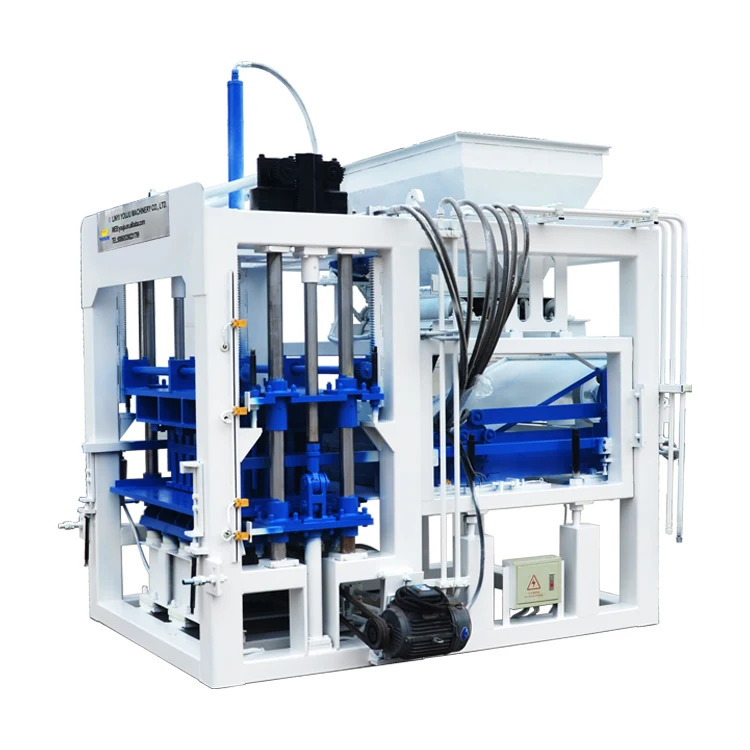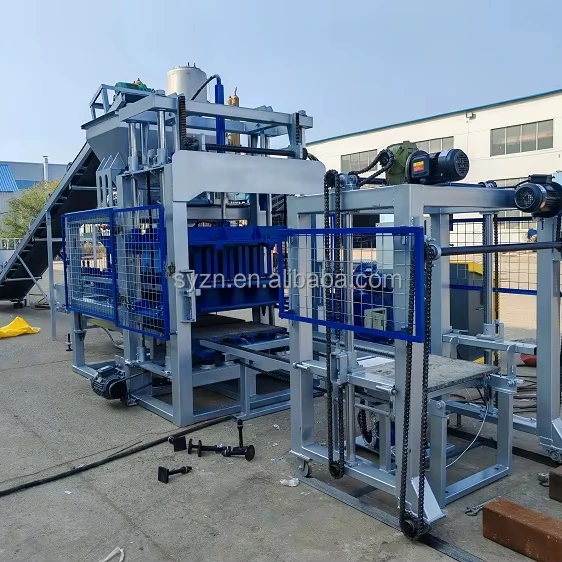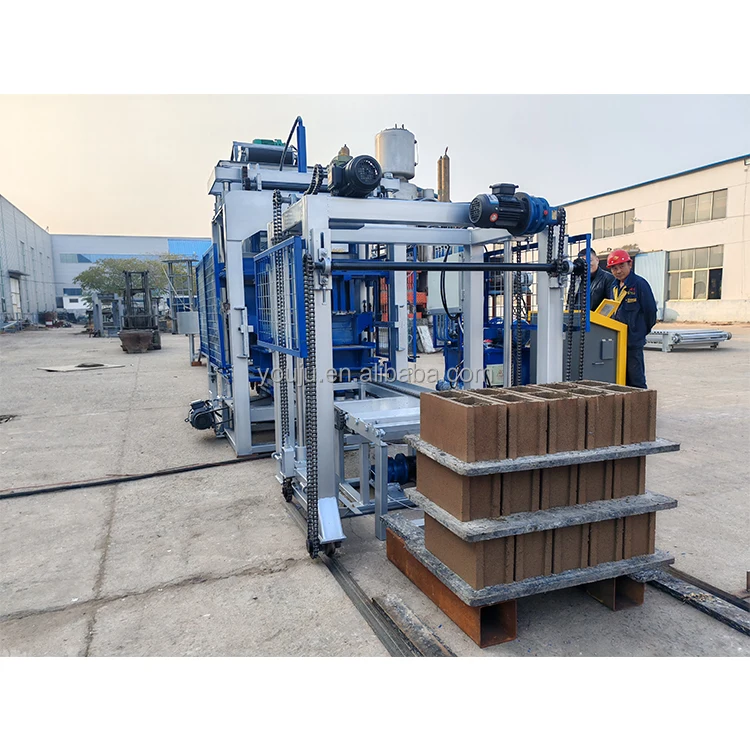
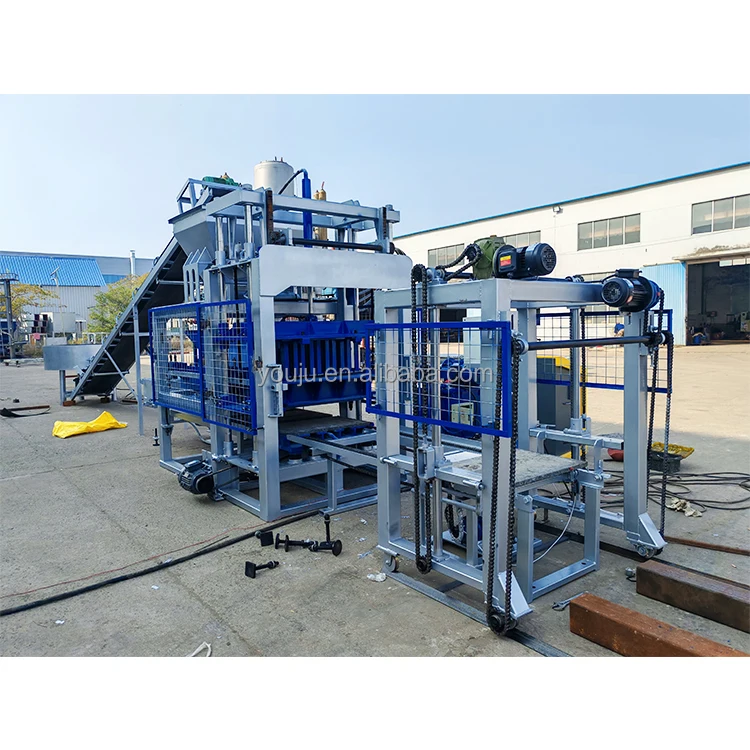
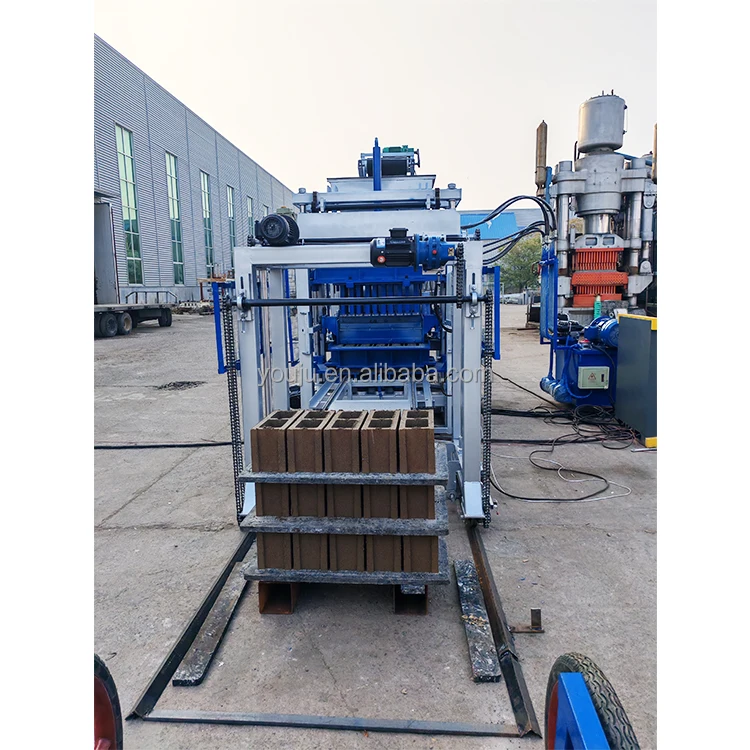
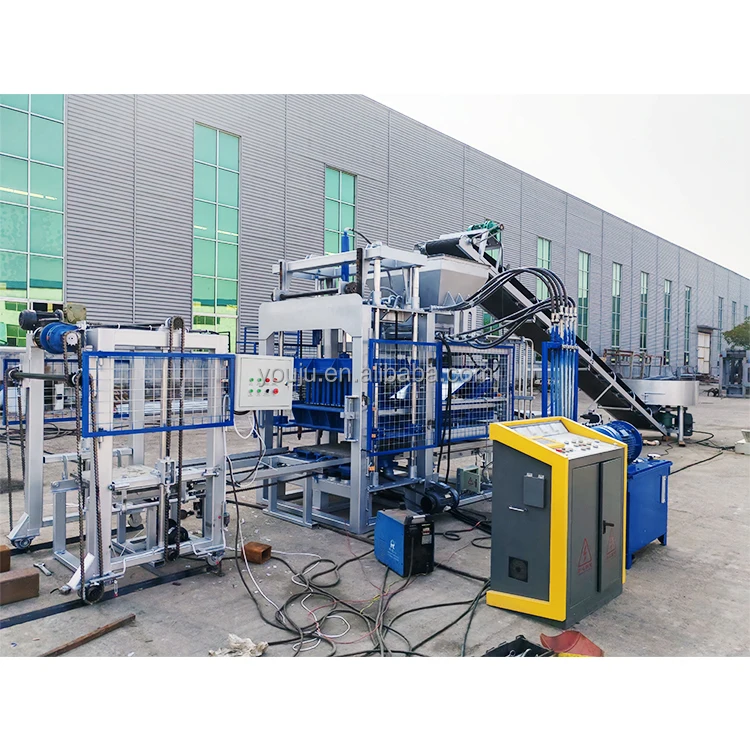
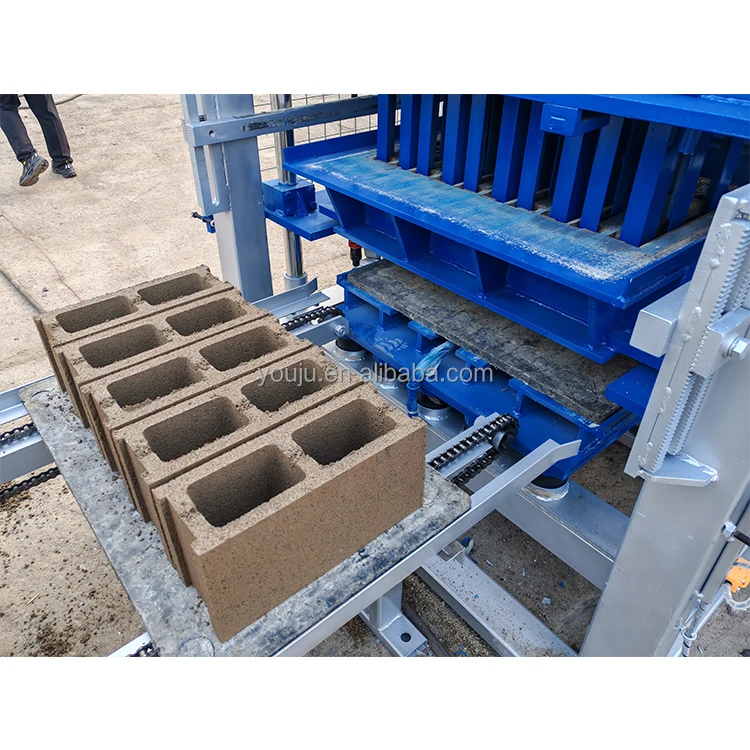
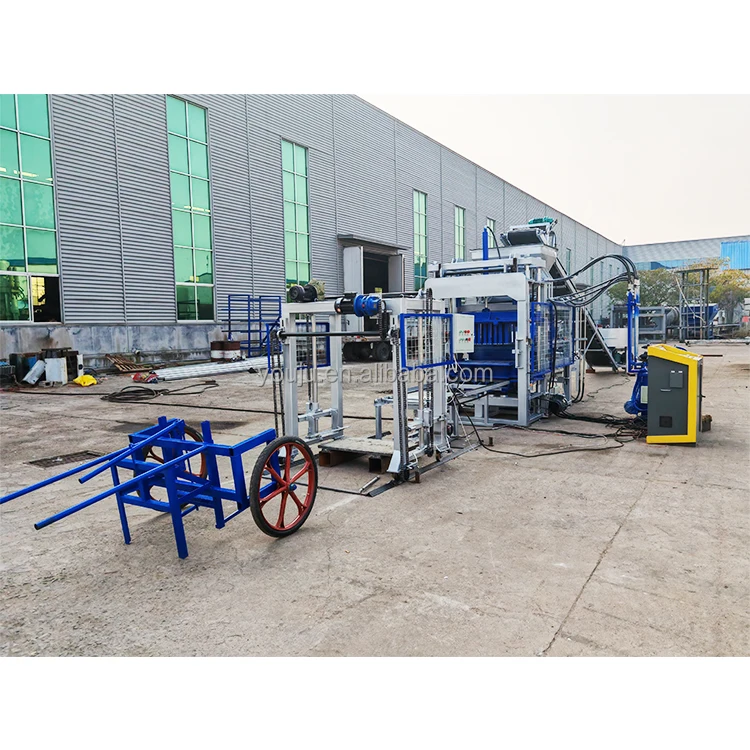
Description
Stock Availability — QT4-15 hydraulic block machine is kept as a standard stocked model, so buyers working against a project deadline can confirm dispatch timing without waiting for a custom production slot.
Technical Specifications
| Parameter | Value |
|---|---|
| Model | QT4-15 |
| Product Type | Hydraulic Concrete Block Making Machine |
| Molding Cycle | 15–30 s |
| Pallet Size | 900 × 500 mm |
| Vibration Type | Platform vibration |
| Vibration Frequency | 50–70 Hz |
| Product Height Range | 50–220 mm |
| Overall Power | 24.5 kW |
| Demolding Method | Hydraulic |
| Control System | PLC |
| Automation Level | Automatic (PLC-controlled pallet feeding, material feeding, vibrating, demoulding) |
| Block Compressive Strength | > 15 MPa |
| Output — Hollow Block 400×200×200 mm | 900–1,200 pcs/h (basis: 4 pcs/mould, 15–20 s cycle) |
| Output — Hollow Block 400×150×200 mm | 1,080–1,440 pcs/h (basis: 5 pcs/mould, 15–20 s cycle) |
| Output — Hollow Block 400×100×200 mm | 1,440–1,920 pcs/h (basis: 8 pcs/mould, 15–20 s cycle) |
| Output — Paver 200×100×60 mm | 2,880–3,840 pcs/h (basis: 16 pcs/mould, 15–20 s cycle) |
| Output — Solid Brick 240×115×53 mm | 5,930–6,720 pcs/h (basis: 28 pcs/mould, 15–20 s cycle) |
| Voltage & Frequency | Configurable — confirm with supplier before order |
Application Suitability
| Application | Material or Output |
|---|---|
| Mid-scale hollow block plant | Cement, sand, fly ash, crushed stone aggregate |
| On-site block production for housing projects | Cement, locally sourced sand and slag |
| Paver brick production for municipal contracts | Cement, fine aggregate, pigment (with paver mould) |
| Solid brick runs for masonry supply | Cement, gangue, fly ash, water |
What "900 to 1,200 Pieces per Hour" Actually Means on the QT4-15 Concrete Block Making Machine in Stock
Quoted capacity only holds true when you know which block format the number assumes.
Buyers frequently receive a headline figure like "1,200 pieces per hour" and plan an entire project schedule around it, only to discover on site that the number was based on a 400×100×200 mm hollow block — a format they never intended to run. On the QT4-15, a 400×200×200 mm hollow block yields 900–1,200 pcs/h because the mould carries four cavities, while the same press with a solid brick mould produces a vastly different number due to 28 cavities per cycle [NEED_CITE: capacity calculation methods for hydraulic block presses]. The cycle time itself also shifts with mix stiffness and vibration settling, so the lower end of the 15–30 s range is realistic only with a well-graded, low-moistance aggregate blend. When you receive a capacity quote, always ask which exact block format, mould cavity count, and cycle assumption sit behind the number.
Dispatch Timing and Container Loading for the QT4-15
Because the QT4-15 concrete block making machine in stock is held as a standard mid-tier model, the interval between order confirmation and container loading is measured in days rather than the multi-week lead times typical of custom-built presses. The machine ships as a complete press unit — hydraulic station, PLC panel, vibration platform and mould — with the pallet specification locked to 900 × 500 mm so that curing racks and forklift tines at the destination already match. Buyers who need a second press to cover a surge order or a contractor racing a project deadline benefit most from this stocking approach, since the critical path shifts from factory build time to ocean transit and customs clearance.
Arrival Estimate and Customs Documentation
Once the container leaves the factory gate, the destination port transit window depends on the shipping line and routing, but the dispatch date is known the moment the machine is loaded — not weeks after a production slot opens [NEED_CITE: standard container transit windows from Chinese ports]. Customs documentation including commercial invoice, packing list and certificate of origin is prepared in parallel with packing, so the buyer’s clearing agent receives the paperwork set before the vessel sails. The QT4-15 is dismantled only to the extent required for container loading: the hydraulic station and PLC cabinet remain bolted to the main frame, while the mould is crated separately to prevent transit damage. This partial dismantling means on-site reassembly is limited to reconnecting hydraulic hoses, electrical plugs and the pallet feed track.
How Vibration, Hydraulic Pressure and Pallet Size Interact in Daily Production
The 50–70 Hz platform vibration works together with the hydraulic demoulding stroke to compact the concrete mix evenly across all mould cavities. If the vibration frequency is set too high for a stiff, low-slump mix, the aggregate segregates and block faces show voids; too low and the block does not reach the > 15 MPa compressive target before demoulding. The hydraulic system must deliver enough pressure to strip the block cleanly from the mould without cracking edges — a balance that changes when a buyer switches from a 400×200×200 mm hollow mould to a 240×115×53 mm solid brick mould because the contact area and friction path are completely different. Meanwhile, the 900 × 500 mm pallet size dictates how many blocks cure per square metre of yard space; ordering a pallet dimension that does not match existing curing racks forces the buyer to rebuild the entire yard layout. The 24.5 kW overall power draw also determines whether the site transformer needs a dedicated circuit or can share a panel with the mixer and conveyor.
The Hidden Cost of Skipping the Voltage and Language Check
One of the most frequent delays I have seen on site happens before the machine even arrives: the buyer’s electrician opens the PLC cabinet and finds a control voltage or display language that does not match local standards. Replacing a transformer or re-flashing PLC firmware on a foreign job site can stall commissioning for weeks while parts are air-freighted [NEED_CITE: voltage and frequency standards by export market]. Because the QT4-15 ships from stock, the window to confirm these details is narrower than with a made-to-order press. Verifying voltage, frequency and PLC display language against site conditions before the container is sealed removes this risk entirely and keeps the on-site schedule intact.
Why Source the QT4-15 from This Stocking Operation
The QT4-15 is stocked as a matched system — press, mould, pallet and hydraulic station specified together rather than assembled from separate suppliers after the order is placed. Before dispatch, each unit undergoes a factory test on the exact mould included in the shipment, and the test record travels with the machine so the buyer can verify cycle time and block density upon arrival. The 900 × 500 mm pallet is confirmed against the buyer’s existing curing area and forklift before the order is finalized, preventing the common mismatch that forces a yard rebuild. Moulds for hollow block, paver and solid brick formats are kept in the same warehouse, allowing additional formats to be added to the container without waiting for a second production run. Packing photographs and a container loading plan are shared with the buyer before the seal is applied, giving full visibility into how the press is braced and crated for ocean transit.
Documentation & Verification
- Factory test record showing cycle time on the exact moulds in your order
- Machine specification sheet with pallet size and vibration frequency confirmed
- Container loading plan and packing photographs before seal applied
- Hydraulic and electrical schematic matching your voltage configuration
- Operation and maintenance manual in the language you specify
Installation, Commissioning & Support
- Foundation pad must be level within 3 mm over the press footprint to maintain platform vibration uniformity
- Dedicated 24.5 kW circuit with correct voltage and frequency confirmed before the QT4-15 is energized
- Hydraulic hoses and PLC cables reconnect on site — no major reassembly required after container unloading
- First-run parameter tuning covers vibration frequency and hydraulic pressure matched to your local aggregate
- Operator training includes mould change procedure and PLC fault-code reading on your specified display language
- Wear parts list identifies hydraulic seals and vibration springs with reorder intervals for the first year of operation
Before You Send the Inquiry
Share the block format you plan to run most often, the daily output you need, and the aggregate materials available near your site. Include your local voltage, frequency and the PLC display language your operators will use. If you already have curing racks or forklifts on site, note the pallet dimensions they accept so the 900 × 500 mm pallet can be validated against your yard.
Frequently Asked Questions
Q: Which QT4-15 configurations are currently in stock and which moulds ship with the machine?
A: The QT4-15 concrete block making machine in stock is held as a standard mid-tier hydraulic press with PLC control and platform vibration. One mould matching your chosen block format — hollow, paver or solid — ships with the machine. Additional moulds from the standard range can be added to the same container if ordered before dispatch.
Q: What is the realistic dispatch lead time from order to container loading?
A: Because the QT4-15 is stocked rather than built to order, dispatch is measured in days after voltage, frequency, PLC language and mould selection are confirmed. The buyer receives packing photographs and a container loading plan before the seal is applied. Exact timing depends on container availability at the nearest port.
Q: How is the machine dismantled and packed for shipment?
A: The hydraulic station and PLC cabinet stay bolted to the main frame. The mould is crated separately to prevent transit damage. Pallets, if ordered, are stacked flat. On-site reassembly is limited to reconnecting hydraulic hoses, electrical plugs and the pallet feed track.
Q: Can I add pallets and extra moulds to the same shipment?
A: Yes. The 900 × 500 mm pallets and additional moulds are stored in the same warehouse, so they can be loaded into the container with the QT4-15 press. Confirming the pallet quantity and mould list before dispatch avoids the need for a second container later.
Q: What arrival estimate can I expect for my destination port?
A: Ocean transit time depends on the shipping line and routing from the port of loading. The dispatch date is known once the container is sealed, and customs documentation is sent to your clearing agent before the vessel sails so port clearance can begin immediately on arrival.