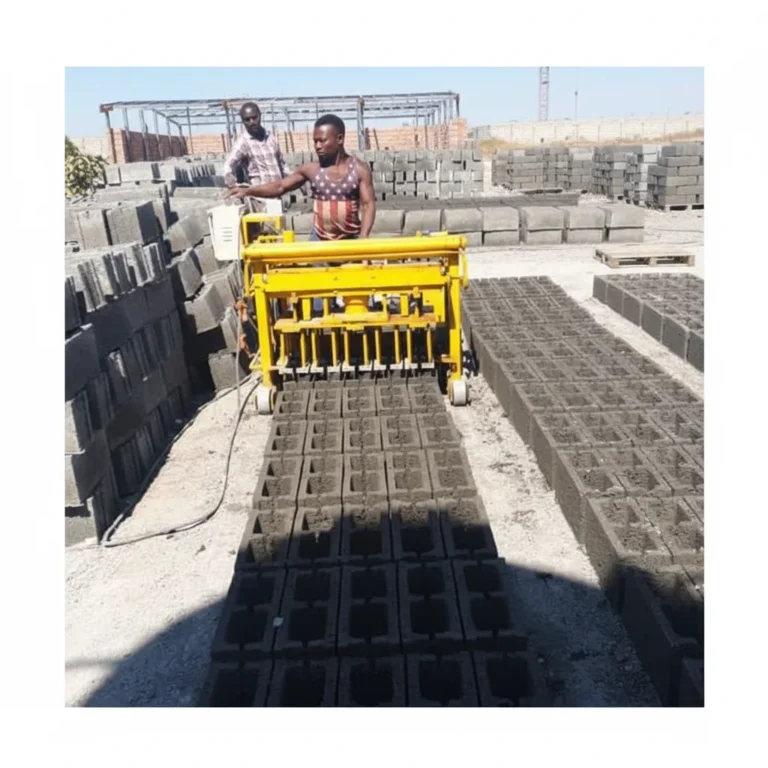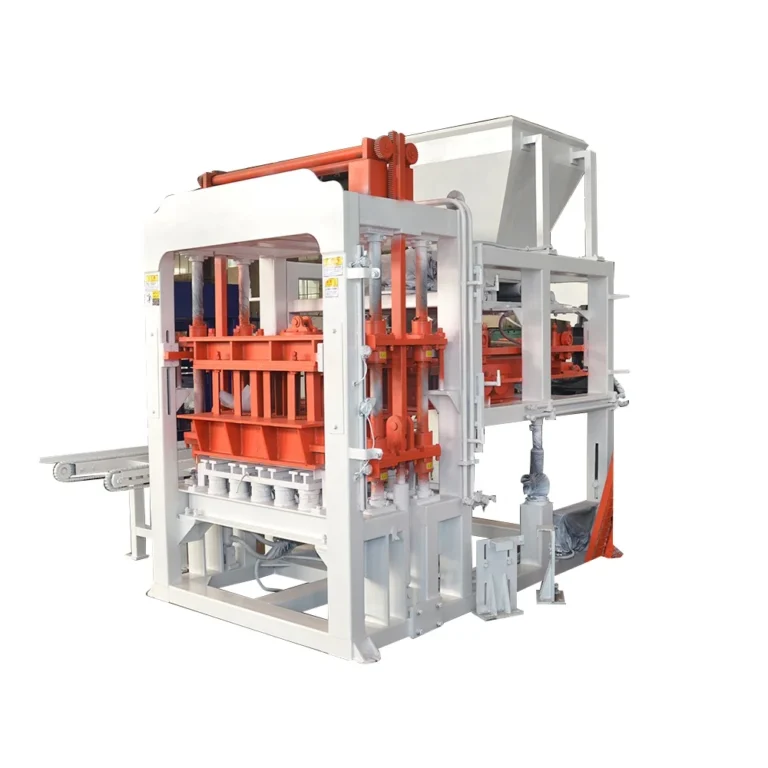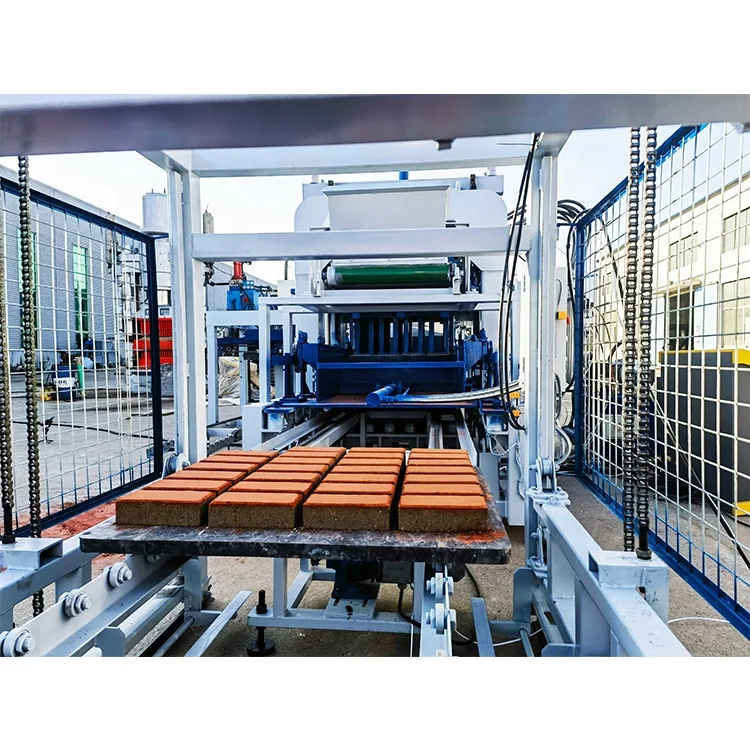
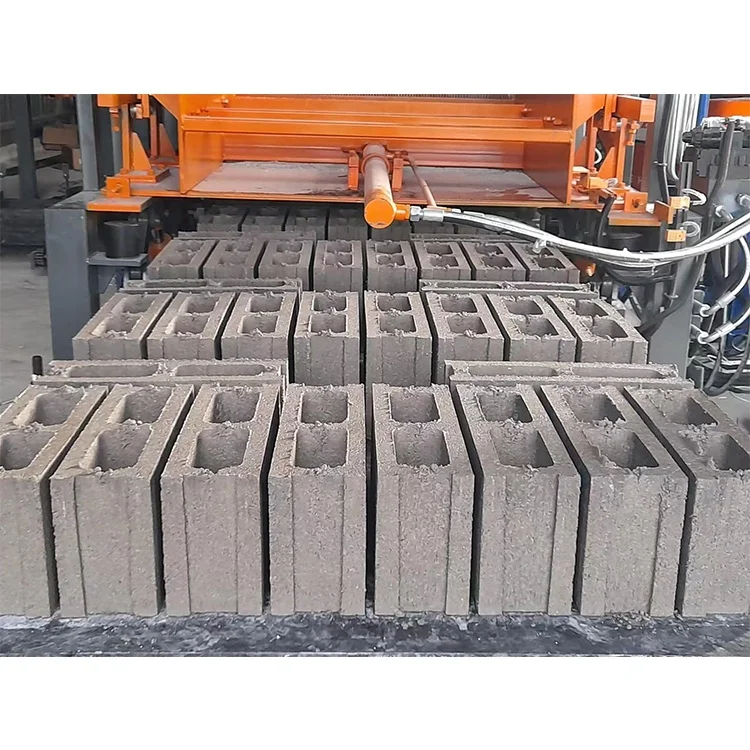

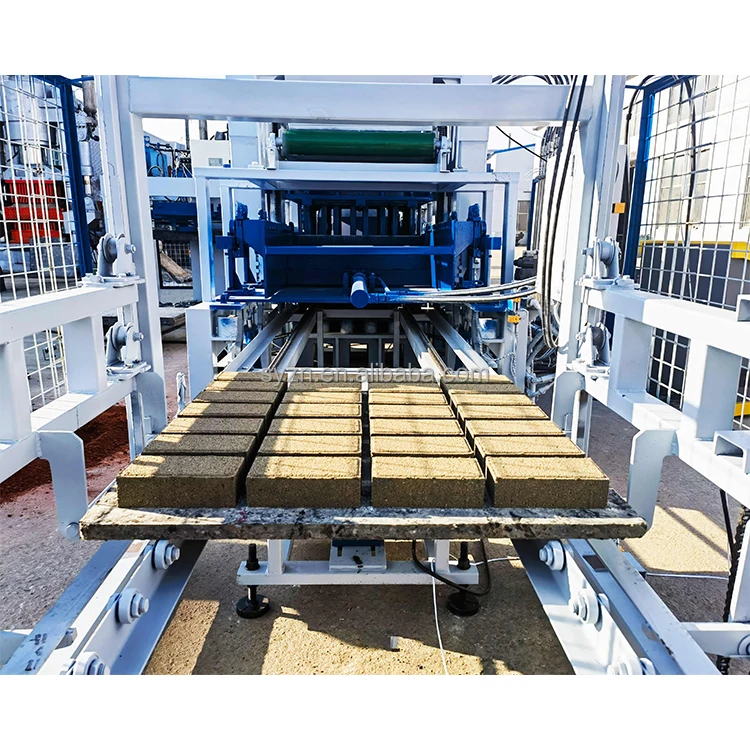
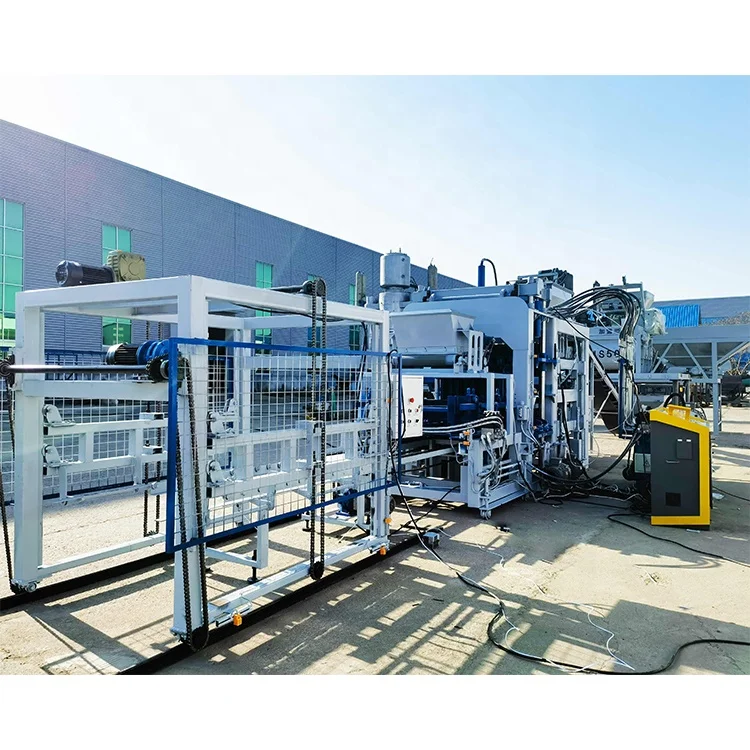
Description
Stocked Configuration — Every QT8-15 is voltage-checked and factory-tested before crating, so arrival means power-on, not troubleshooting, keeping your project deadline intact.
Technical Specifications
| Parameter | Value |
|---|---|
| Model | QT8-15 |
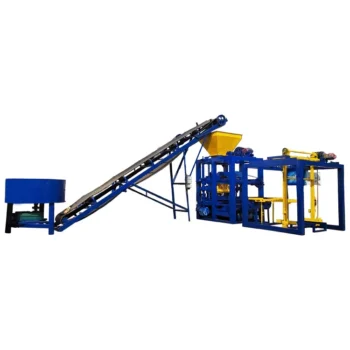
| Product Type | Hydraulic Concrete Block Making Machine |
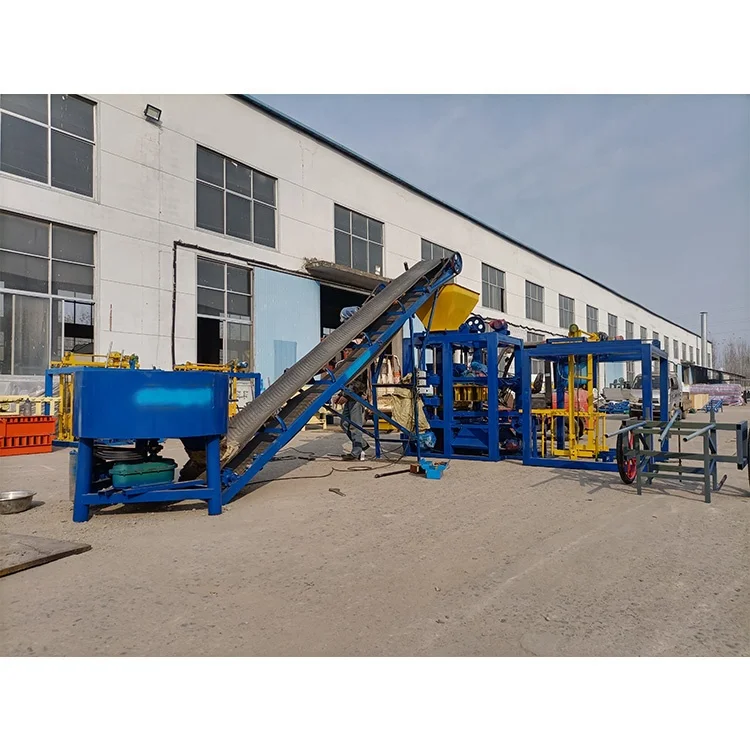
| Overall Dimensions (L×W×H) | 8300×1860×3000 mm |
| Rated Pressure | 21 MPa |
| Main Vibration Form | Platform Vibration |
| Vibration Frequency | 2800–4500 r/min |
| Vibration Force | 45 kN |
| Pallet Size | 950×900 mm |
| Molding Cycle | 15–20 s (basis not stated in source — confirm block format and material) |
| Overall Power | 55.5 kW |
| Total Mass | 8 T |
| Demolding Method | Hydraulic |
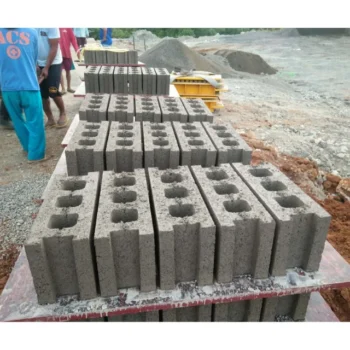
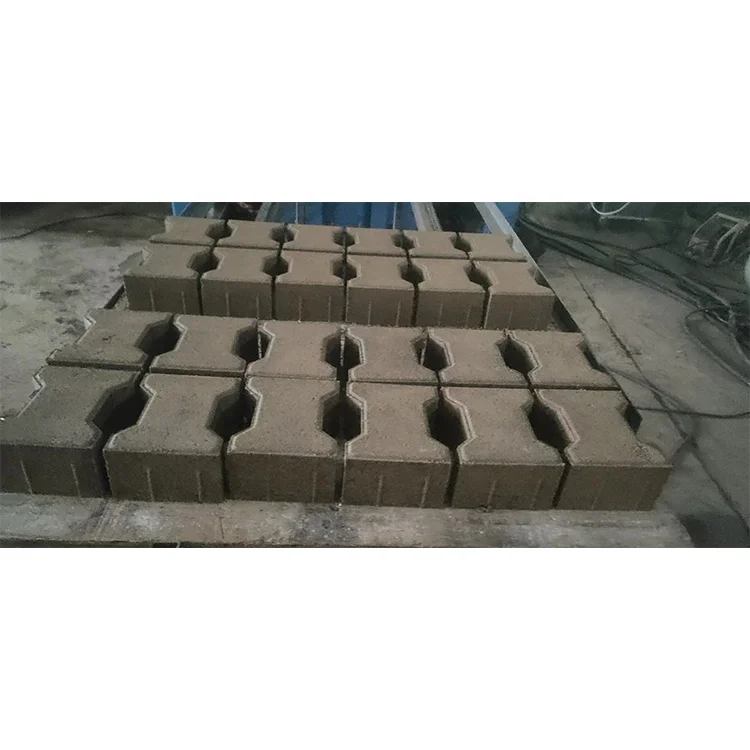
| Applied Products | Hollow blocks, solid blocks, pavers, interlocking blocks, curbstone, colored pavers |
| Raw Materials | Crushed stone, sand, cement, fly ash, gravel, slag |
| Loading | 1×40HQ container (basic equipment) |
| Warranty | 1 year (excluding spare parts) |
Application Suitability
| Application | Material or Output |
|---|---|
| Fixed-plant hollow and solid block production | Crushed stone, sand, cement, fly ash blends |
| Paver and colored paver runs | Cement, fine aggregate, pigment additives |
| Interlocking block and kerbstone manufacturing | Gravel, slag, sand with cement binder |
| On-site production for housing and development projects | Locally sourced aggregate and cement |
Why "In Stock" Should Mean More Than Just Fast Dispatch
A stocked QT8-15 concrete block making machine in stock only matters if it arrives matched to your site voltage, frequency, and control language — otherwise speed just delivers a problem sooner.
I once watched a QT8-15 sit idle for two weeks on a Honduran job site because the motor was wound for 50 Hz while the local grid ran at 60 Hz. The overload relay tripped within minutes of first start-up. The contractor had paid for fast delivery and got it — along with a line that could not run until a replacement VFD arrived by air freight. That delay cost more than the machine discount [NEED_CITE: voltage and frequency standards by export market]. Buyers chasing the shortest lead time often forget that dispatch speed and commissioning speed are two different things. A machine can leave the factory in days and still take weeks to produce its first saleable block if the electrical specification was never confirmed against the destination grid.
Dispatch Readiness vs. Catalogue Availability
When we say a QT8-15 concrete block making machine in stock is ready for dispatch, the clock we measure starts from order confirmation and ends at container gate-out — not at some vague "production complete" milestone. The 1×40HQ loading plan for this model covers the basic press, hydraulic station, and control panel as a matched set. Buyers working to a project deadline need the container loading scope itemized line by line before they commit, because any supporting equipment left off the packing list will arrive later on a separate shipment or not at all.
Container Loading and Arrival Predictability
The 8 T total mass and 8300 mm length of the QT8-15 determine how the press frame is positioned inside the 40HQ container and what can be loaded alongside it. Moulds, pallets, and spare hydraulic seals each take cubic volume that competes with the machine footprint. Confirming the packing photograph and container loading plan before dispatch removes the guesswork that causes customs hold-ups at destination [NEED_CITE: container loading best practices for heavy industrial machinery]. An arrival estimate quoted upfront lets the buyer schedule the forklift, the foundation crew, and the electrician for the same week the container clears the port.
Reading the Specs That Matter Before Arrival
The 21 MPa rated pressure combined with 45 kN vibration force defines the compaction energy available at the mould — this pairing determines whether the press can achieve target block density with the buyer’s local aggregate, not just with the factory test mix. The 950×900 mm pallet size must be checked against the curing racks and forklift tines already on site; a mismatch here means pallets cannot be racked or moved without modification after arrival. The 55.5 kW overall power draw requires a dedicated supply circuit sized for starting current, not just running current, and the voltage and frequency must be confirmed in writing against the local grid before the motor is wound [NEED_CITE: industrial motor voltage and frequency matching]. These are the specifications that determine whether the QT8-15 produces blocks on day one or sits waiting for an electrician.
What Happens When Arrival Planning Is Skipped
A machine that arrives without confirmed voltage documentation forces the buyer to source a transformer or VFD locally, adding cost and delay that the "fast delivery" promise was supposed to avoid. Pallets ordered at a size that does not fit existing curing racks turn automatic production into manual handling within a week. Moulds shipped without a format list leave the operator guessing which cycle settings match which block, and inconsistent block strength follows. These are not factory defects — they are specification gaps that could have been closed before the container was sealed [NEED_CITE: common commissioning delays in exported block machinery].
Why Buyers Source This Model Here
Block machinery is the single product focus, so the QT8-15 press, moulds, pallets, and handling equipment are specified as one matched system rather than assembled from unrelated suppliers. Every stocked configuration is checked against the buyer’s site voltage, frequency, and PLC display language before crating — the same verification step I now insist on after the Honduras incident. Container loading plans and packing photographs are provided before dispatch so the buyer knows exactly what is inside and how it is secured. Factory test records accompany each shipment, documenting that the press cycled under load before it was dismantled for loading. Dispatch lead times are quoted against the buyer’s project calendar, not against the factory’s production schedule alone.
Documentation & Verification
- Container packing list itemizing every component inside the 40HQ before dispatch
- Factory test record showing the press cycled under load at confirmed voltage
- Voltage, frequency, and PLC language confirmation sheet signed before crating
- Pallet and mould specification matched to buyer’s curing area and forklift
- Hydraulic and electrical schematic for on-site reassembly and commissioning
Installation, Commissioning & Support
- Foundation must support 8 T total mass across the 8300×1860 mm footprint
- Dedicated electrical circuit rated for 55.5 kW with confirmed voltage and frequency
- Press frame dismantled for 40HQ loading and reassembled on-site with alignment check
- First-run commissioning with hydraulic pressure set to buyer’s target block density
- Operator training covers mould change procedure and cycle adjustment per format
- Wear parts list with hydraulic seal and vibration component replacement intervals
Before You Request a Quote
Tell us which block formats you need to produce, your target daily output per format, and the raw materials available locally. Confirm your site voltage, frequency, and preferred PLC display language so the QT8-15 is configured correctly before dispatch. Share your curing area dimensions and existing forklift specifications so the pallet size and handling equipment match what you already have on the ground.
Frequently Asked Questions
Q: Which QT8-15 configurations are currently in stock and what is the dispatch lead time?
A: Stocked configurations cover standard hollow block and paver setups. Dispatch lead time is quoted against your project deadline once the voltage, frequency, and mould format are confirmed. We provide a written arrival estimate before you commit so you can schedule site preparation and customs clearance in parallel.
Q: What exactly is loaded in the 1×40HQ container for the basic equipment?
A: The basic scope includes the press frame, hydraulic station, vibration platform, and control panel. Moulds, pallets, and stacking equipment are listed separately so you can confirm each item before loading. Packing photographs are provided before the container is sealed for your records and customs documentation.
Q: How is the QT8-15 dismantled for shipment and what is needed for reassembly?
A: The press frame is broken into sections that fit within the 40HQ internal dimensions. Reassembly requires a level concrete foundation, a crane rated for the heaviest single section, and electrical supply at the confirmed voltage. The hydraulic and electrical schematic included in the documentation guides the on-site reconnection.
Q: Can the arrival estimate be confirmed in writing before order placement?
A: Yes. Once the container loading plan is finalized and the dispatch date is set, we provide a written arrival estimate based on the shipping route and port clearance timeline. This lets you coordinate the foundation crew, electrician, and forklift for the same week the container arrives.
Q: Are standard moulds stocked, or do custom moulds add to the lead time?
A: Standard hollow block and paver moulds matching the 950×900 mm pallet are typically available with the stocked machine. Custom mould designs built to buyer drawings require additional production time, which is quoted separately and added to the dispatch schedule transparently before you confirm the order.