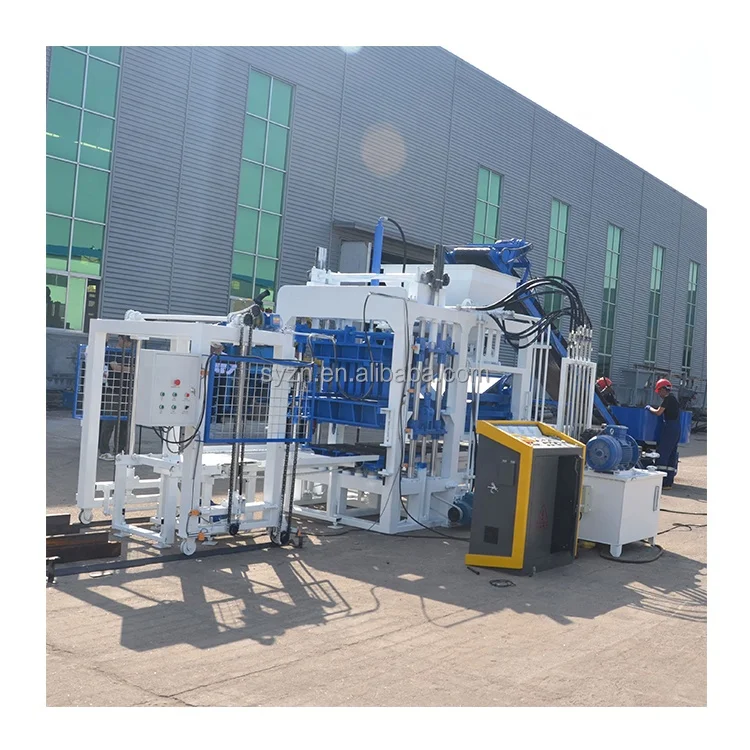
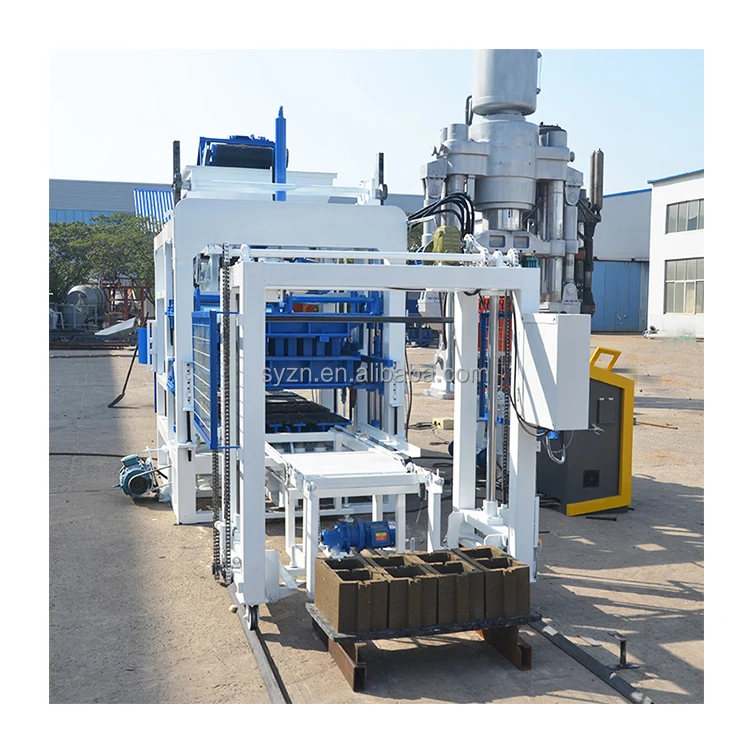
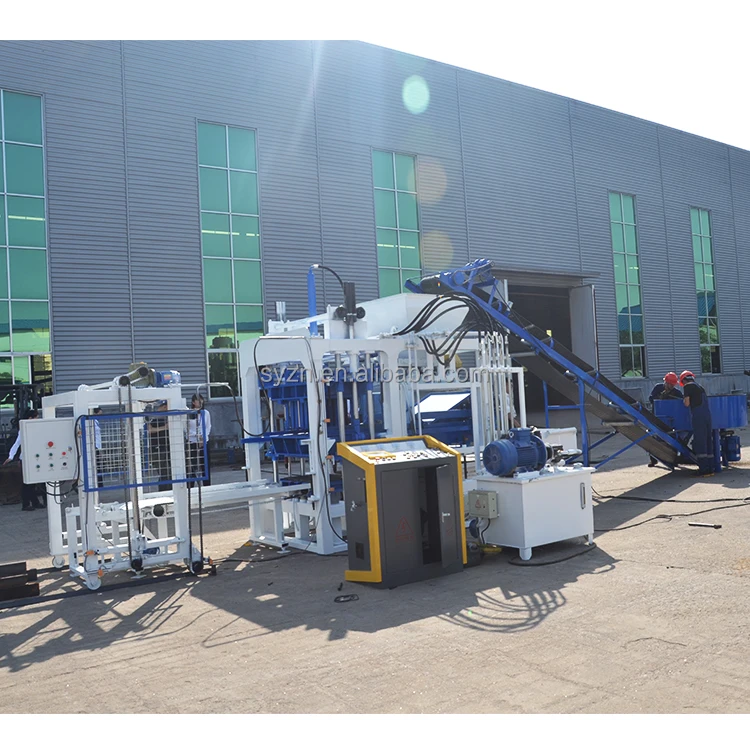
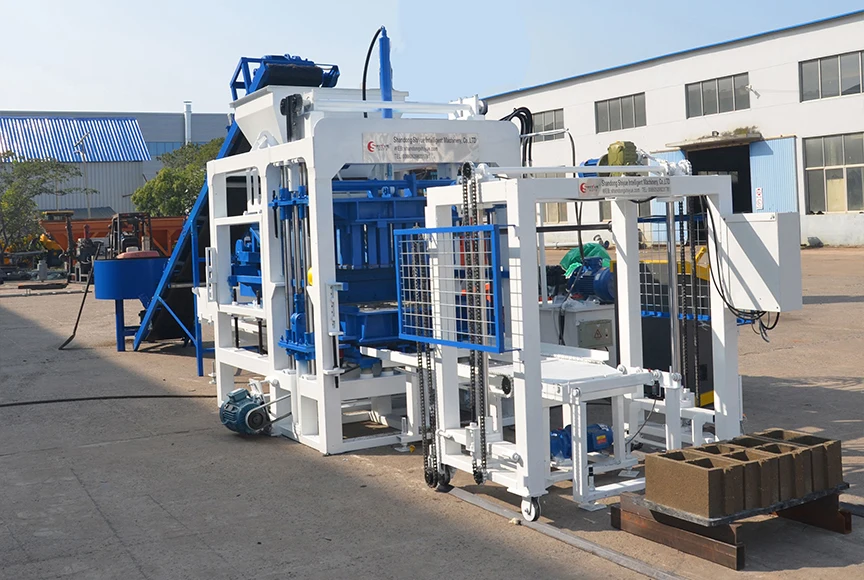
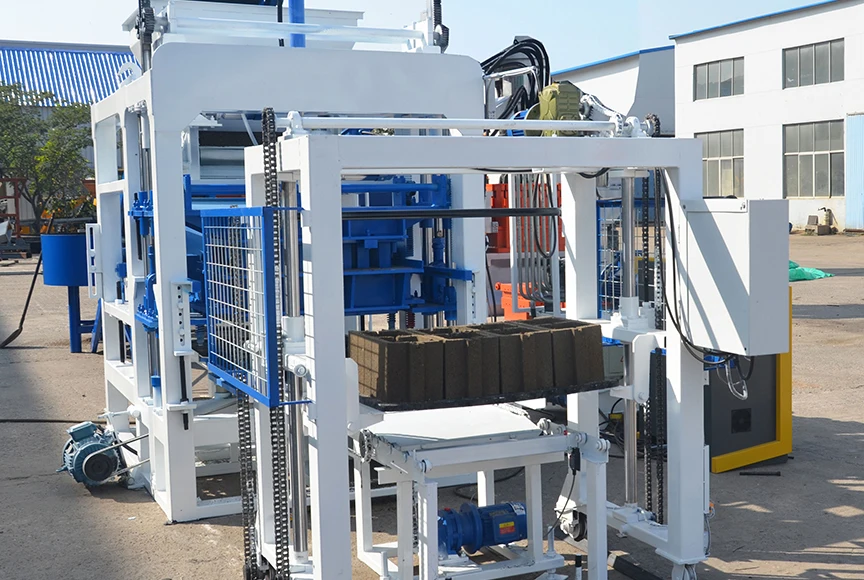
Description
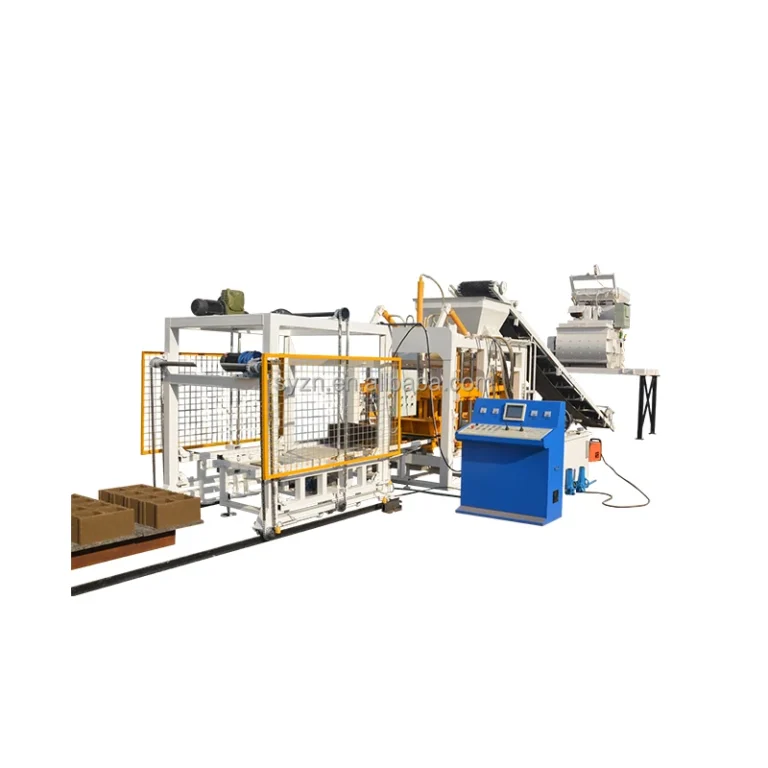
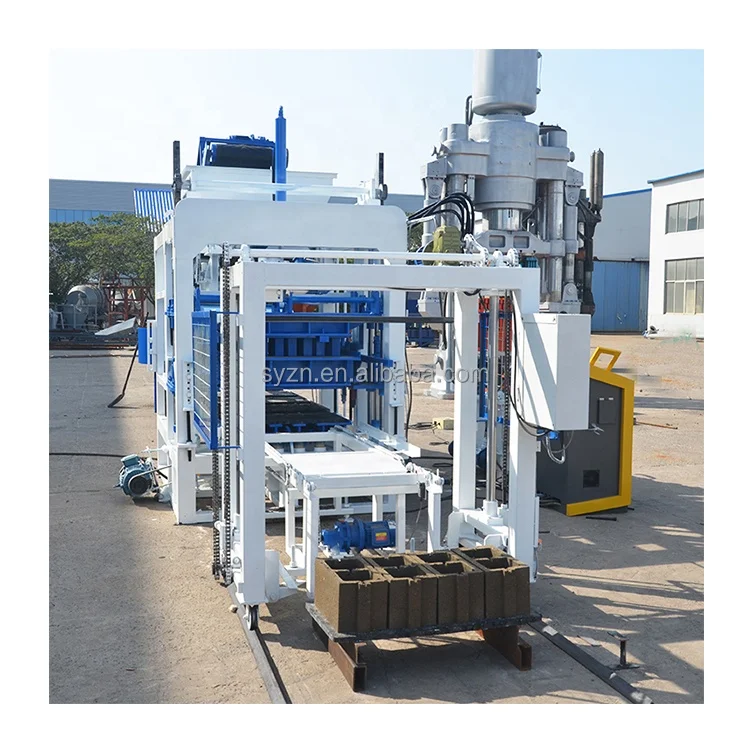
Fast Dispatch from Stock — The QT4-18 concrete block making machine in stock ships as a matched system with hydraulic station, PLC, pallet feeder, conveyor and sweeper, so your site receives one verified container rather than chasing multiple suppliers.
Technical Specifications
| Parameter | Value |
|---|---|
| Model | QT4-18 |
| Product Type | Concrete Block Making Machine |
| Overall Dimensions (L×W×H) | 3900×1600×2300 mm |
| Net Weight | 3 T |
| Molding Cycle | 15-25 s |
| Vibration Force | 40-50 kN |
| Total Power | 24 kW |
| Mixer Model | JQ350 |
| Pallet Size | 850×550×25 mm |
| Control System | PLC control system |
| Hydraulic Station | Included |
| Automation Level | Semi-automatic (manual pallet handling) |
| Stacking Method | Manual |
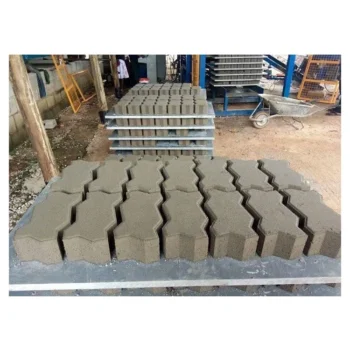
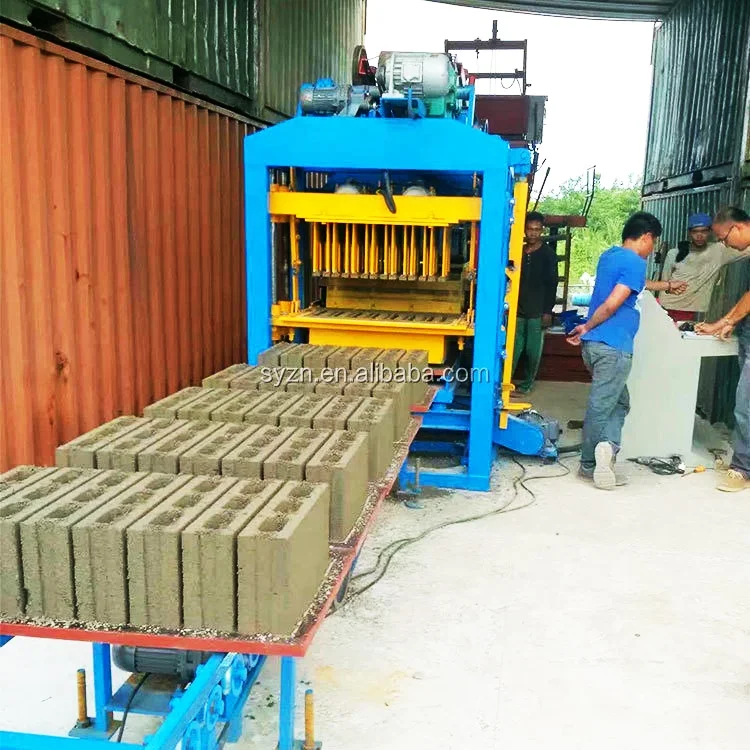
| Applied Products | Paver, solid block, hollow block, curbstone |
| Raw Materials | Crushed stones, sand, cement, dust, fly ash |
| Output Capacity | 1200-1680 pcs/hr (basis: 400×200×200 mm hollow block) |
| Output Capacity | 1800-2400 pcs/hr (basis: 400×150×200 mm hollow block) |
| Output Capacity | 3240 pcs/hr (basis: 240×115×53 mm solid brick) |
| Daily Output (8hr) | 9600-13440 pcs (basis: 400×200×200 mm hollow block) |
| Daily Output (8hr) | 14400-19200 pcs (basis: 400×150×200 mm hollow block) |
| Daily Output (8hr) | 16200-19440 pcs (basis: 240×115×53 mm solid brick) |
| Voltage & Frequency | Not stated in source — confirm before order |
| PLC Language Options | Not stated in source — confirm before order |
| Hydraulic Pressure | Not stated in source — confirm against manufacturer catalog |
| Mould Change Time | Not stated in source — confirm against manufacturer catalog |
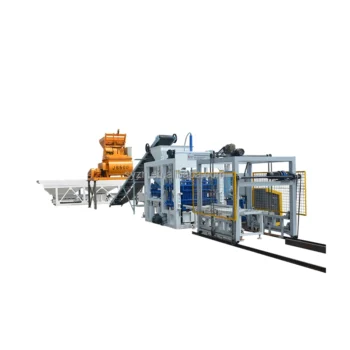
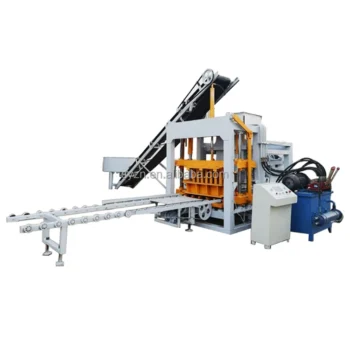
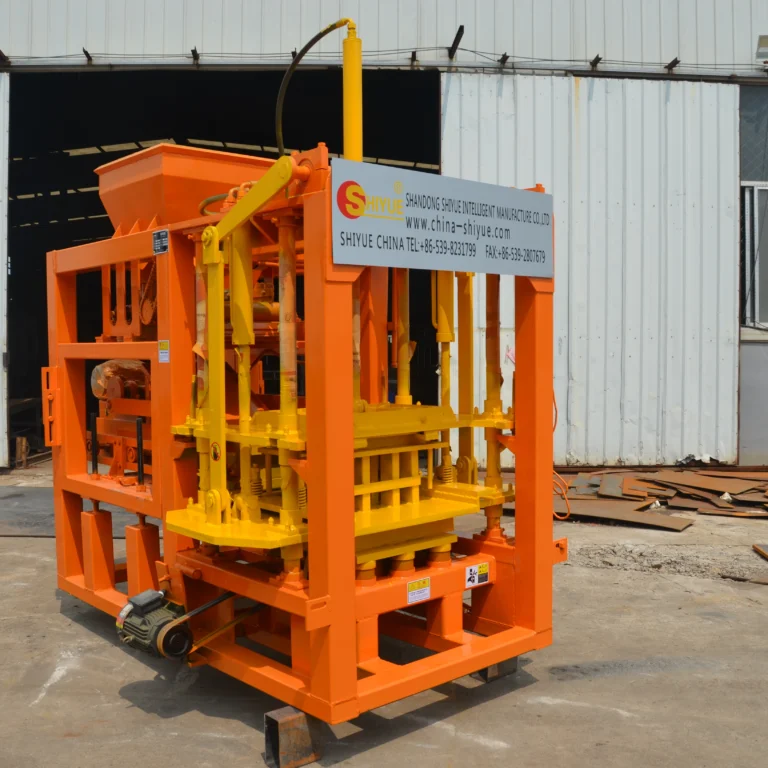
| Included Equipment | Block making machine, hydraulic station, PLC control system, pallet feeder, brick conveyor, block sweeper |
| Free Accessories | Manual hydraulic trolley, spare parts and tools |
Application Suitability
| Application | Material or Output |
|---|---|
| Small to medium block production plants | Hollow blocks and solid bricks from crushed stone, sand and cement |
| On-site contractor production | Pavers and curbstones for housing and infrastructure projects |
| First-time block plant setup | Standard block formats using locally sourced aggregates and fly ash |
| Distributor restocking | Proven model with established local demand across multiple block formats |
What "Ready to Ship" Actually Means for Your Project Timeline
A stocked machine only matters if every component leaves the factory together — otherwise you are still waiting on hydraulics, pallets or controls from a second supplier.
I have watched contractors miss their own project deadlines because the block press arrived but the pallet feeder was on back order, or the PLC arrived with the wrong display language and the electrician could not commission the line. When we say a QT4-18 concrete block making machine in stock is ready, we mean the full package: main press, hydraulic station, pallet feeder, brick conveyor, block sweeper, manual hydraulic trolley, spare parts and tools — all crated and photographed before the container doors close [NEED_CITE: common causes of commissioning delays in imported block plants]. Dispatch lead time is quoted against the current warehouse position, not against a production slot that does not yet exist.
Complete Shipment Scope Verified Before Loading
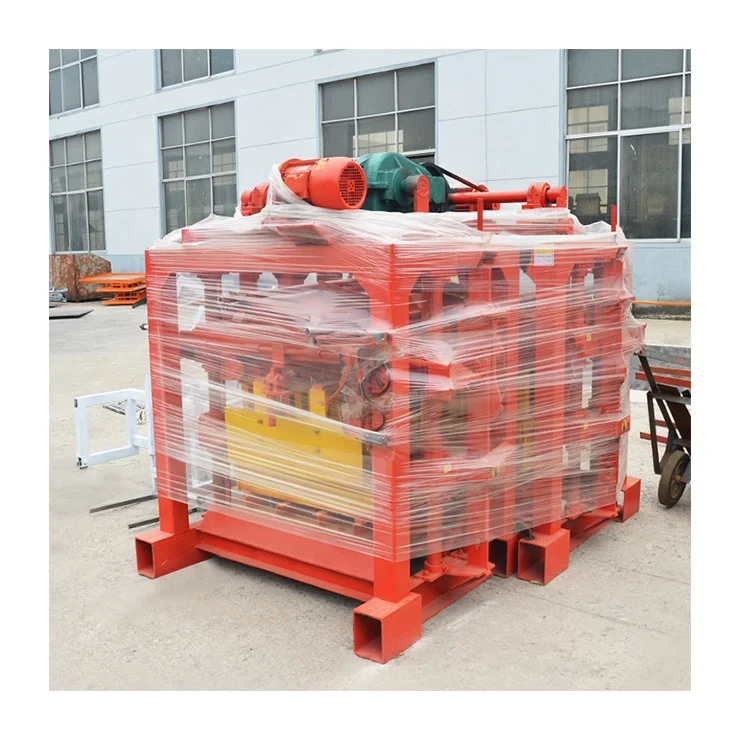
Every QT4-18 concrete block making machine in stock leaves the workshop as a matched set, not a partial shipment that forces you to source the hydraulic station or control panel locally. The packing list is confirmed against the physical crate contents, and packing photographs are shared before the container is sealed so you know exactly what is on the truck heading to port.
Container Loading and Dismantling Plan
The QT4-18 breaks down into a 20GP container loading scheme that accounts for the main press footprint, the hydraulic station, and approximately 500 production pallets occupying the remaining volume. We provide the dismantling layout and loading diagram for your confirmation before crating begins, so there are no surprises when the container arrives and your crew starts unpacking [NEED_CITE: container loading standards for heavy industrial machinery].
What the Specs Mean on the Production Floor
The 850×550×25 mm pallet size determines how many blocks cure per cycle and must match your existing curing racks and forklift capacity — a mismatch here means rebuilding the curing area or buying new handling equipment. The 40-50 kN vibration force combined with hydraulic pressure sets the density of every block that comes off the press, and this relationship must be tuned to your local aggregate gradation and cement ratio rather than left at a factory default. The PLC control system manages the molding cycle between 15 and 25 seconds depending on block format, and the display language must be confirmed before the panel is wired, not after it arrives on site. The JQ350 mixer feeds the press continuously, and its capacity must keep pace with the cycle time so the press is never idling between batches.
The Hidden Cost of an Incomplete Quotation
When the quotation covers only the press, the buyer discovers after arrival that pallets, pallet feeders, conveyors and sweepers must be sourced locally — often at higher cost and longer lead time than if they had shipped in the same container. I have seen first-time plant buyers lose weeks trying to find compatible production pallets that fit the 850×550 mm slot, only to learn the local supplier does not stock that dimension [NEED_CITE: pallet compatibility issues in block production]. A complete shipment scope eliminates this risk entirely.
Why Source This Machine Here
Block machinery is our single focus, so the press, mould, pallet and handling equipment are specified as one matched system rather than assembled from unrelated suppliers. Every QT4-18 is configured against the buyer’s actual block format and local aggregate, not pulled from a catalogue default and shipped as-is. Stock status and dispatch lead time are confirmed against the current warehouse position before your deposit is taken, so your project timeline is based on real availability. Factory test records and video are provided before dispatch, letting you see the machine run with your target mould installed. Mould design and supply covers the formats your market actually sells, and the pallet size is confirmed against your curing area before loading begins.
Documentation & Verification
- Factory test record showing the QT4-18 running with your target block mould before crating
- Packing photographs of every crate and component before container doors are sealed
- Container loading plan confirming 20GP arrangement with pallet count and dismantling layout
- Machine specification sheet with confirmed voltage, frequency and PLC display language
- Voltage and control language confirmation document signed off before electrical panel wiring
Installation, Commissioning & Support
- Foundation must support the 3900×1600 mm footprint and 3 T operating weight of the QT4-18
- Dedicated 24 kW power circuit required with confirmed voltage and frequency matching the PLC and hydraulic station
- Machine arrives dismantled per the agreed loading plan with reassembly guided by hydraulic and electrical schematics
- First-run commissioning includes vibration force and cycle time adjustment against your local mix design
- Operator training covers PLC interface navigation, mould change procedure and daily maintenance checkpoints
- Wear parts list and mould inventory provided so first replacements are on hand before production ramps up
What We Need to Move Forward
Tell us which block format you plan to produce as your primary product, your target daily output, and the raw materials available at your site. Confirm your local voltage and frequency, and whether the PLC display needs to be in a specific language for your operators. Let us know your curing area dimensions and existing forklift capacity so we can verify the 850×550 mm pallet fits your setup before the container loads.
Frequently Asked Questions
Q: Is the QT4-18 currently in stock, and what is the dispatch lead time?
A: Stock position is confirmed against our current warehouse inventory at the time of your inquiry. Once confirmed, dispatch lead time covers final inspection, factory testing, crating and container loading. We quote this timeline upfront so your project schedule is based on real availability rather than a production slot estimate.
Q: What exactly arrives in the container?
A: The shipment includes the main press, hydraulic station, PLC control system, pallet feeder, brick conveyor, block sweeper, manual hydraulic trolley, spare parts and tools. Production pallets are loaded alongside the dismantled machine. A full packing list and photographs are shared before the container is sealed.
Q: Can I see the machine run before it ships?
A: Yes. We conduct a factory test with your target mould installed and provide the test record along with video showing the QT4-18 in operation. This lets you verify cycle time, block quality and machine condition before the equipment leaves our workshop.
Q: How does the machine fit into a 20GP container?
A: The QT4-18 is dismantled according to a loading plan that accounts for the press, hydraulic station and approximately 500 production pallets. We share the dismantling layout and container loading diagram for your approval before crating begins.
Q: What customs documentation is prepared for shipment?
A: We prepare the commercial invoice, packing list, bill of lading coordination, and CE declaration where applicable. HS codes are confirmed for your destination country’s import requirements. Let us know if your customs broker needs additional documentation formats.