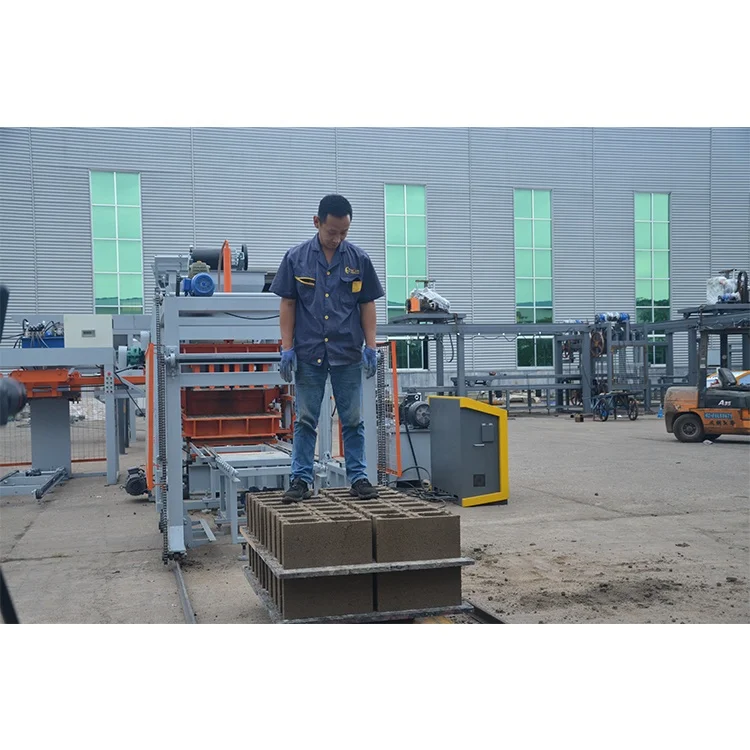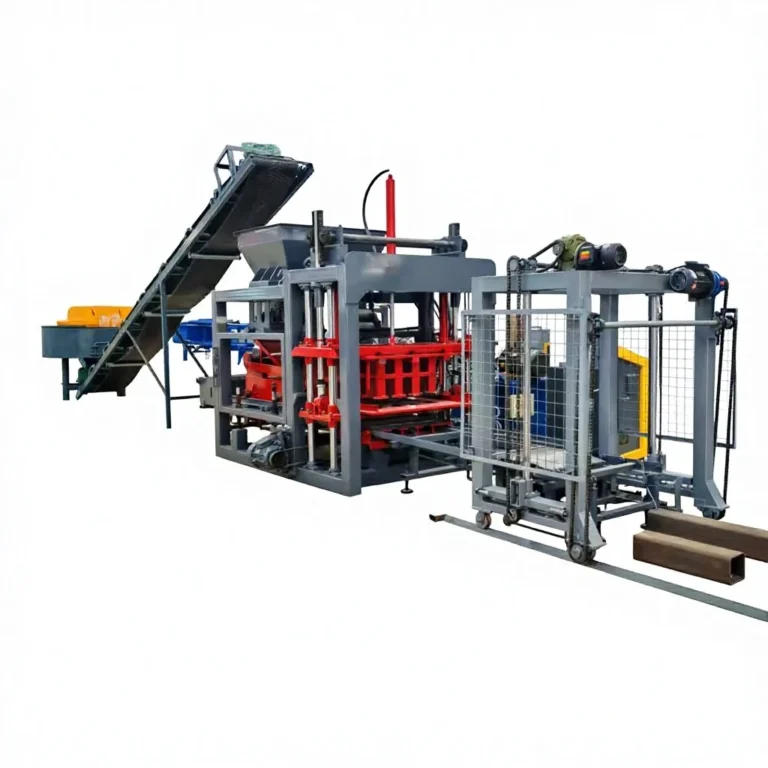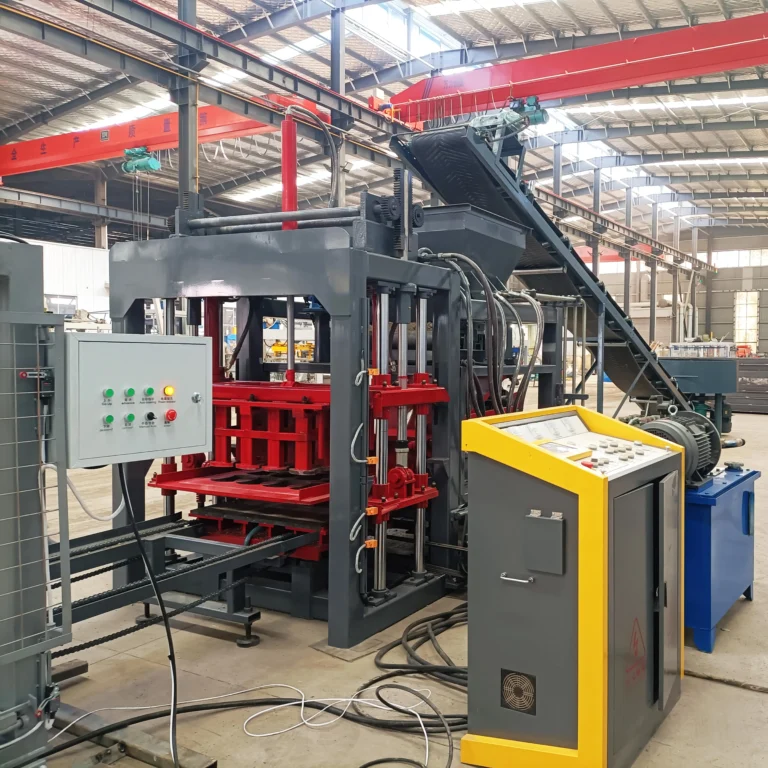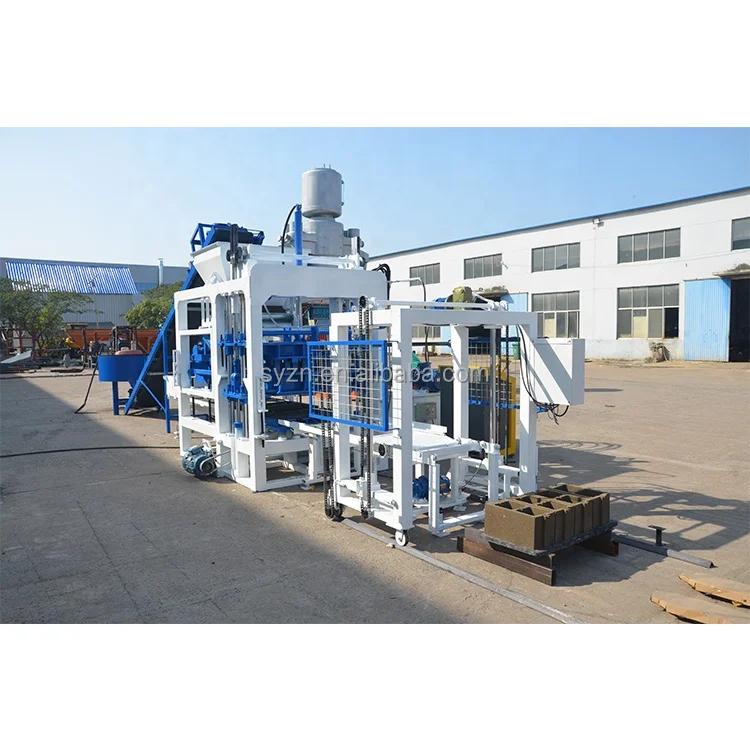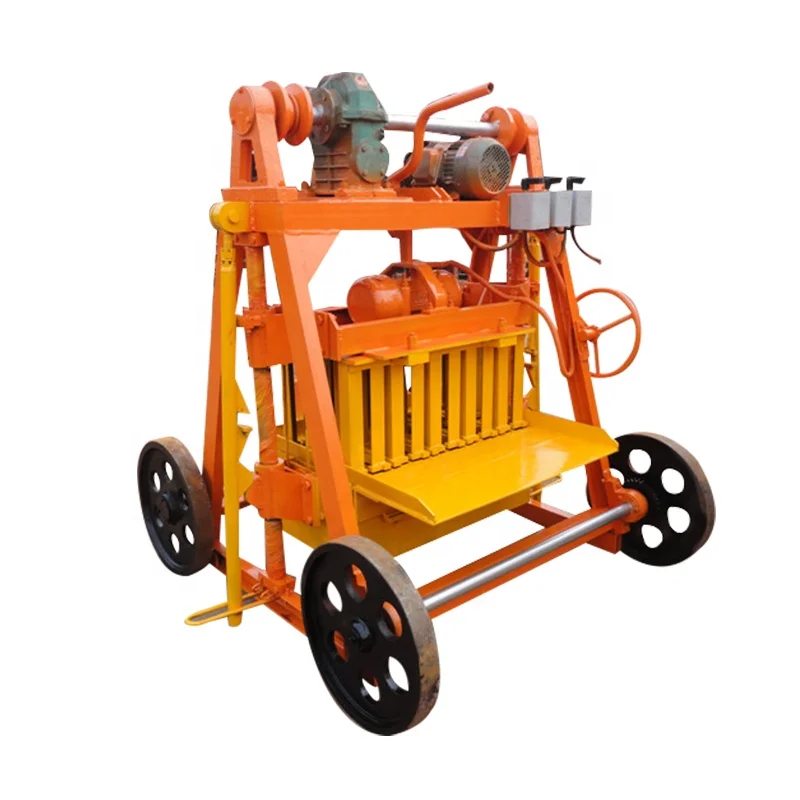
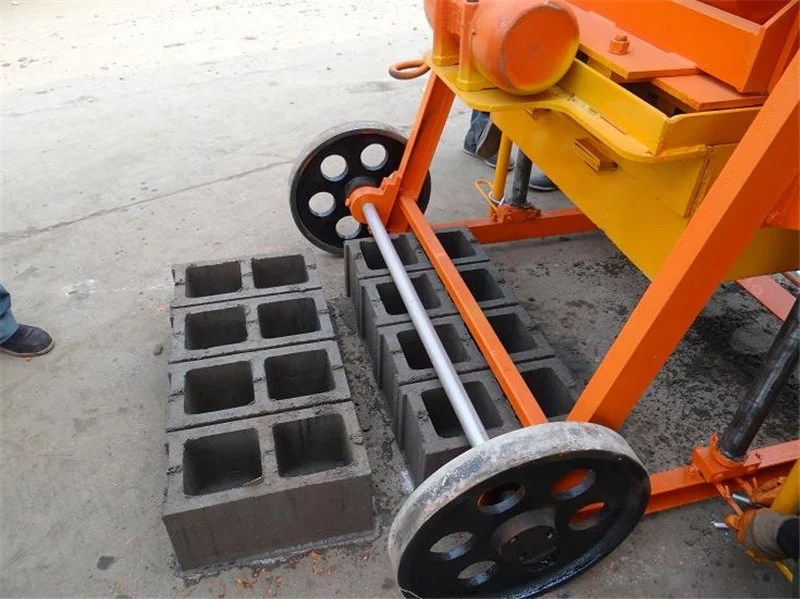
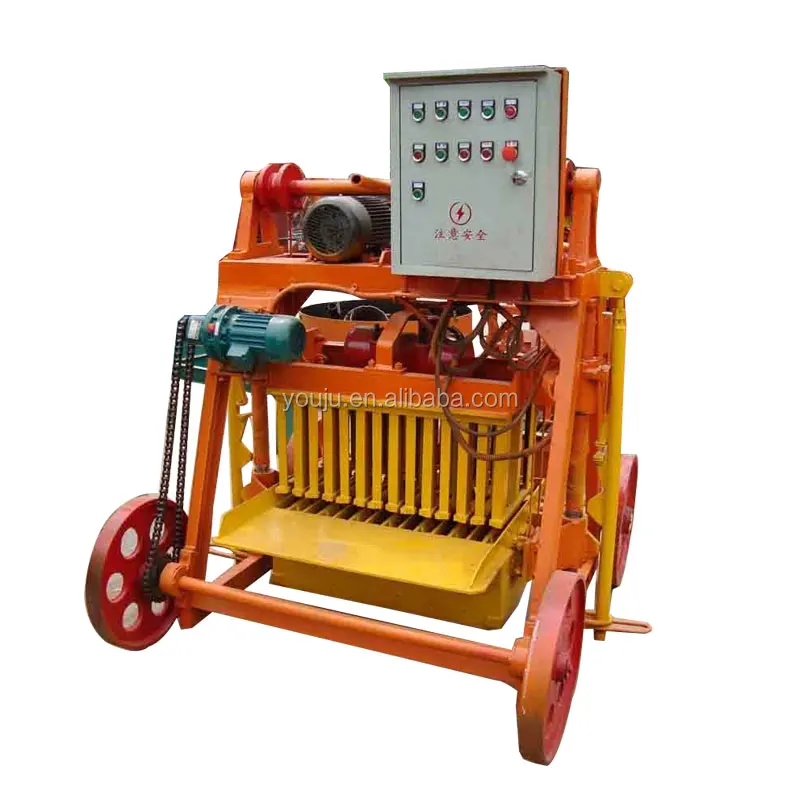
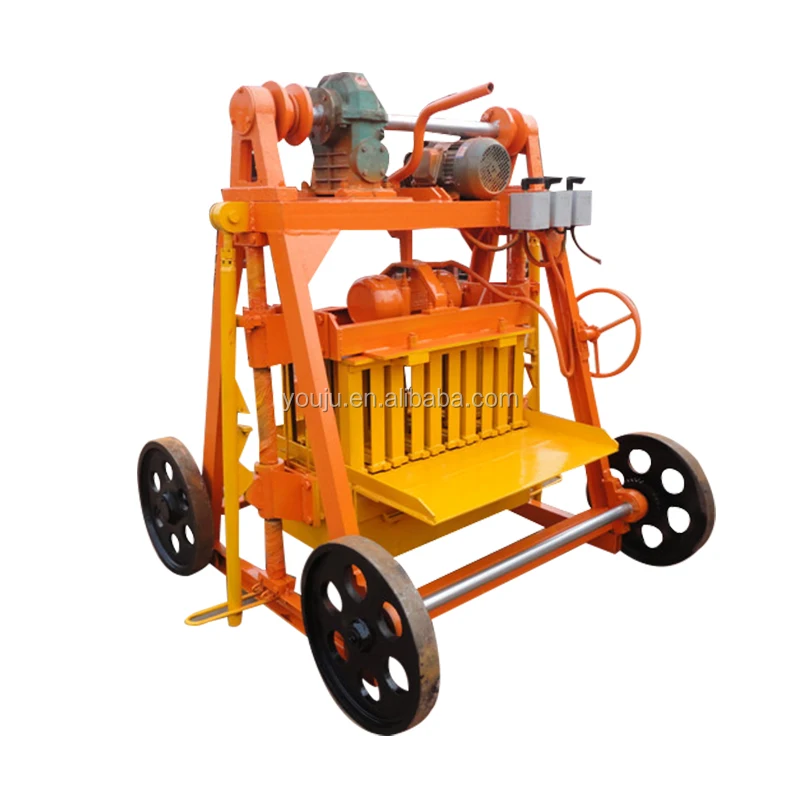
Description
Stocked for immediate dispatch — every QMJ4-45 unit is container-load planned before you confirm, so your blocks arrive before the pour date slips.
Technical Specifications
| Parameter | Value |
|---|---|
| Model | QMJ4-45 |
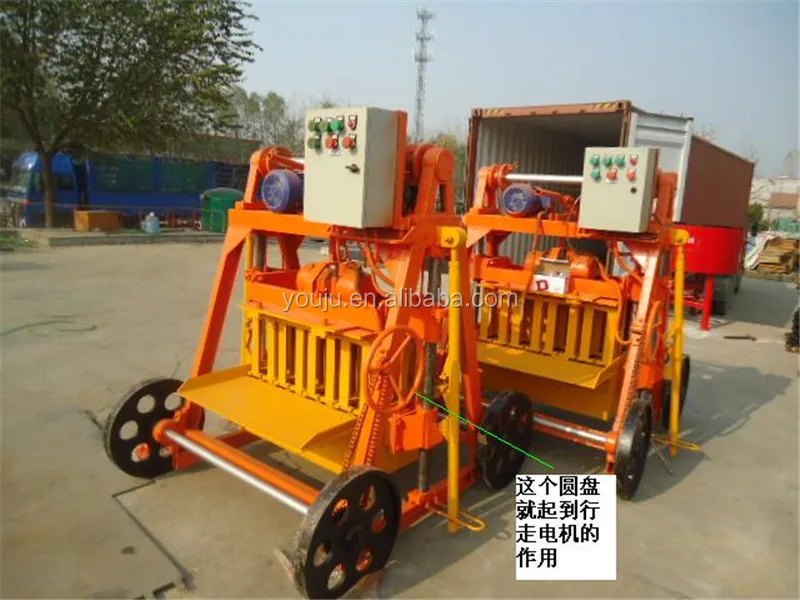
| Product Type | Mobile Egg Laying Concrete Block Making Machine |
| Molding Capacity | 4 pcs/mold (basis: 400×200×200mm hollow block) |
| Molding Cycle | 40–45 s |
| Vibration Frequency | 2400 r/min |
| Forming Method | Mold vibration |
| Demold Method | Manual |
| Turning/Moving Method | Manual |
| Total Power | 6 kW |
| Power Source | Diesel / Petrol engine |
| Pallet Requirement | None (egg-laying type, blocks laid directly on ground) |
| Productivity (400×200×200mm hollow block) | 3000 pcs/day (8-hour shift, 4 pcs/mould, 40–45s cycle) |
| Productivity (400×150×200mm hollow block) | 3500 pcs/day (8-hour shift, 5 pcs/mould, 40–45s cycle) |
| Productivity (400×120×200mm hollow block) | 4500 pcs/day (8-hour shift, 6 pcs/mould, 40–45s cycle) |
| Automation Level | Manual / Egg-laying |
| Warranty | One year for the whole machine |
Application Suitability
| Application | Material or Output |
|---|---|
| On-site hollow block production at remote construction sites | Cement, crushed stone, sand, and locally sourced aggregate |
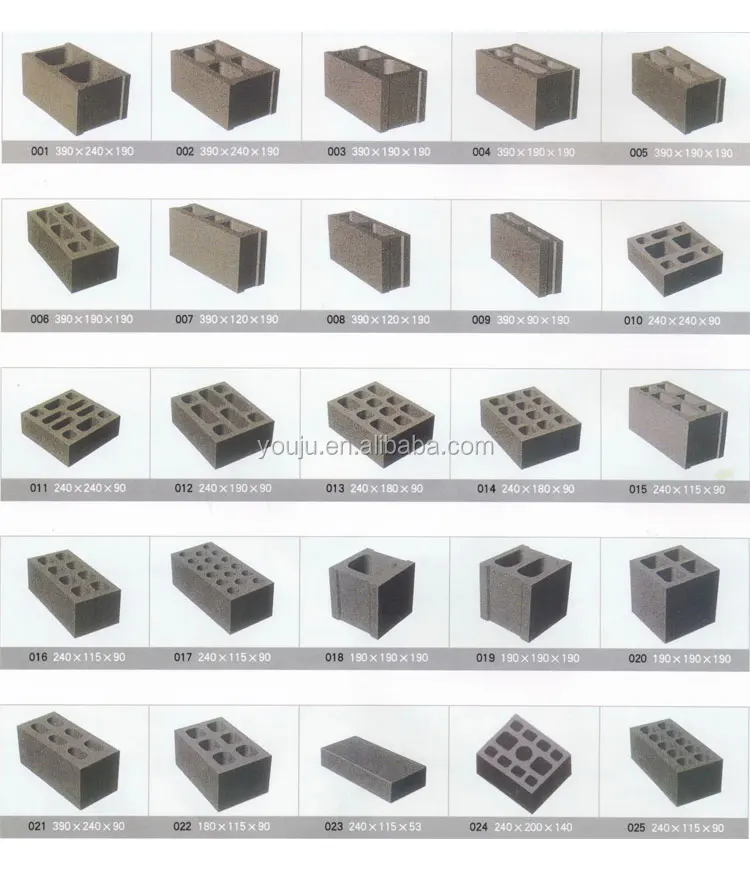
| Small-scale block manufacturing without fixed plant | 400×200×200mm, 400×150×200mm, 400×120×200mm hollow blocks |
| Housing project block supply for masonry crews | Engine-driven operation independent of grid power |
| Entrepreneur-led block yard startup | Minimal site preparation, blocks laid directly on compacted ground |
Why "Pieces per Day" Means Nothing Without the Block Format Attached
A quoted daily output only matters when you know which mould and which shift length produced that number.
I have watched buyers compare two mobile block machines side by side using a single headline figure, only to discover later that one number assumed a thin 120mm partition block while the other assumed a 200mm structural unit. The real daily throughput on your actual product can differ significantly from the brochure line. With the QMJ4-45, the productivity changes depending on whether you are running the 4-cavity, 5-cavity, or 6-cavity mould, and every number here is tied to a specific format, an 8-hour shift, and a 40–45 second cycle [NEED_CITE: block machine capacity calculation standards by format and shift length]. Always ask the supplier to state the block dimensions behind the output claim before you sign.
Dispatch Timing That Matches Your Project Schedule
The reason contractors reach for a mobile block machine in stock is the calendar, not the catalogue. When a dry-season window is closing or a foundation crew is waiting on blocks, a twelve-week production slot is not an option. The QMJ4-45 is held in ready-to-ship configuration, meaning the engine, mould, and frame are assembled, tested, and staged for loading. Once you confirm the destination port and container type, the machine can be dismantled for shipment and loaded within a short window, keeping your site timeline intact.
Loading Plans Checked Before the Container Door Closes
I learned to walk every container load myself after a motor bracket bent in transit on an earlier shipment, leaving a contractor idle for weeks while a replacement part crossed an ocean. Now the engine mounting, mould stack, and frame bolting are each verified against a written loading diagram before the QMJ4-45 leaves the yard. The machine is partially dismantled to fit standard container dimensions, with each sub-assembly secured to prevent shift damage during ocean transit [NEED_CITE: container loading and cargo securing standards for heavy machinery]. Packing photographs are shared before the door seals so you see exactly what is on board.
Reading the Numbers That Actually Matter on Site
The 2400 r/min vibration frequency is the force that compacts your concrete mix into a dense block before demoulding. On an egg-laying machine with no pallet to absorb energy, that vibration transfers directly into the ground-laid block, so frequency and mix moisture must work together — too wet and the block slumps before the cycle ends, too dry and the edges crumble. The 40–45 second molding cycle is short enough to keep a manual crew moving but leaves room for the operator to hand-feed the next batch. Because the QMJ4-45 runs on a diesel or petrol engine rather than grid power, you eliminate the voltage, frequency, and phase questions that delay commissioning on electric machines — fuel quality becomes your only utility concern.
The Real Cost When Dispatch Details Get Skipped
Buyers who focus only on machine price and ignore the shipping conversation tend to absorb the cost later. A mould that arrives with a cracked weld because it was stacked without bracing means a replacement order and weeks of downtime. An engine bolted loosely to the frame can shift during handling at the destination port, damaging the mounting plate and requiring on-site fabrication to correct [NEED_CITE: common transit damage causes for industrial machinery in containerized shipments]. These are not manufacturing defects — they are packing failures — and they fall entirely on the buyer when the loading plan was never reviewed.
Why Sourcing This Machine Through This Channel Works
Block machinery is the single focus here, so the QMJ4-45 is not bundled from unrelated suppliers and relabeled. The machine, mould, and engine are specified as one matched unit. Configuration is confirmed against your actual block format and local aggregate before dispatch, not pulled from a default catalogue line. Stocked models mean the dispatch lead time is measured in days rather than production queue weeks. The loading plan for each unit is reviewed individually — container dismantling arrangement, securing points, and packing photos — so arrival condition matches departure condition. Voltage and control language questions are irrelevant on an engine-driven machine, removing a common source of commissioning delay.
Documentation & Verification
- Factory test record showing actual block output on your requested hollow block format
- Container loading diagram with engine and mould securing details for the QMJ4-45
- Packing photographs taken before container door seal at dispatch
- Mould drawing and format list for every cavity included in your stock package
- Customs documentation support matched to your destination port requirements
Installation, Commissioning & Support
- No fixed foundation needed — the QMJ4-45 lays blocks directly on compacted, level ground
- Diesel or petrol engine eliminates electrical wiring; only fuel supply and basic tools required on site
- Machine arrives partially dismantled; frame and engine reassembly completed with hand tools
- First production run supervised remotely with cycle timing and mix adjustment guidance
- One-year warranty covering the complete machine including vibration assembly and mould
- Wear parts and additional mould formats available for follow-up shipment on request
What to Send With Your Inquiry
Share the hollow block dimensions your market actually sells, the daily volume your masonry crews consume, and your destination port so the arrival estimate can be quoted alongside the dispatch date. Confirm whether your site fuel supply is diesel or petrol, and note any container size restrictions at your receiving yard.
Frequently Asked Questions
Q: What is the current stock status and dispatch lead time for the QMJ4-45?
A: Stocked units are held ready for container loading. Once you confirm the destination port and mould format, the machine is dismantled for shipment, loaded, and dispatched within a short window. Lead time is quoted upfront based on current stock position and your port of arrival, not on a production queue.
Q: How is the QMJ4-45 packed and loaded into a container for shipment?
A: The machine is partially dismantled — engine, frame, and mould stack separated — to fit standard container dimensions. Each sub-assembly is secured to the container floor with bracing to prevent transit shift. Packing photographs are taken before the door seals so you can verify the load arrangement before the container leaves the yard.
Q: What is the estimated arrival time at my destination port?
A: Arrival timing depends on your port and current shipping schedules. The estimate is quoted at inquiry stage alongside the dispatch date, giving you a single timeline from order confirmation to machine on site. This lets you plan block production start against your construction schedule.
Q: Can the machine run on diesel only, or is a petrol engine also available?
A: The QMJ4-45 is available with either a diesel or petrol engine from stock. Diesel is the more common choice on construction sites where fuel is already supplied for excavators and loaders. Confirm your preferred option at inquiry so the correct engine is fitted before dispatch.
Q: What mould formats ship with the standard stock package?
A: Standard stock packages typically include one hollow block mould sized to your requested format. Additional moulds for other dimensions — such as switching between 400×200×200mm and 400×120×200mm — can ship in the same container. Confirm which formats your market requires so they are loaded together and avoid a second shipment.