

Description
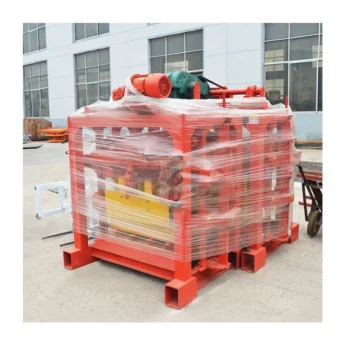
Stocked Dispatch — QT4-18 block machine in stock with container loading plan and arrival estimate confirmed before order placement, so project timelines stay intact.
Technical Specifications
| Parameter | Value |
|---|---|
| Model | QT4-18 |
| Product Type | Hydraulic Concrete Block Making Machine |
| Overall Dimensions (L×W×H) | 3900×1600×2300 mm |
| Molding Cycle | 15–25 s |
| Vibration Force | 40–50 kN |
| Total Power | 24 kW |
| Mixer Model | JQ350 |
| Pallet Size | 850×550×25 mm |
| Total Weight | 3 T |
| Control System | PLC control system |
| Hydraulic Station | Included |
| Automation Level | Semi-automatic with PLC |
| Stacking Method | Manual |
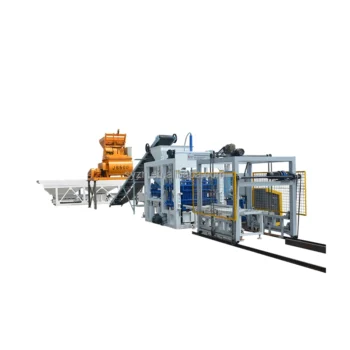
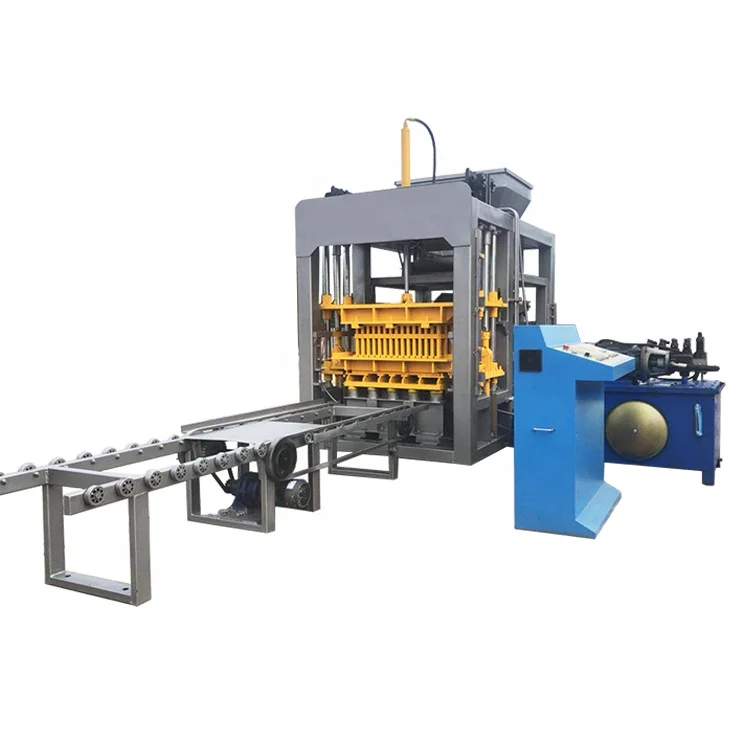
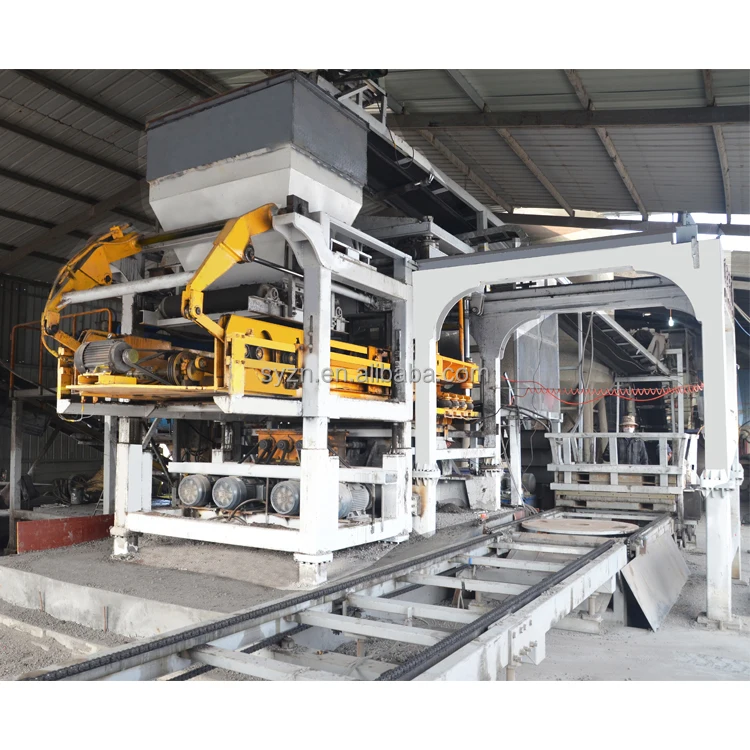
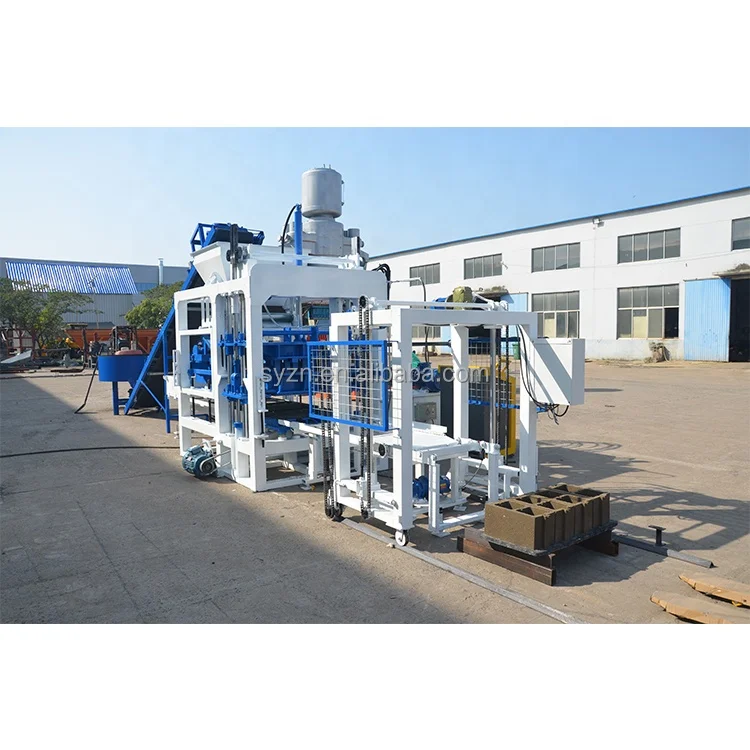
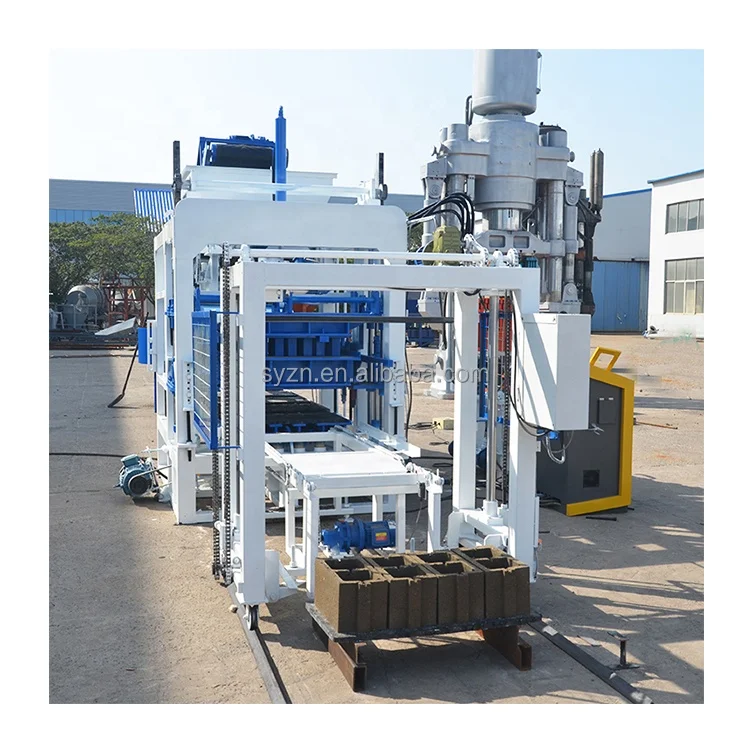
| Included Equipment | Block making machine, hydraulic station, PLC control system, pallet feeder, brick conveyor, block sweeper |
| Free Accessories | Manual hydraulic trolley, spare parts, tools |
| Output Capacity (Hollow Block 400×200×200 mm) | 1200–1680 pcs/hr (basis: 15–20 s cycle, mould cavity count to be confirmed) |
| Output Capacity (Hollow Block 400×150×200 mm) | 1800–2400 pcs/hr (basis: 15–20 s cycle, mould cavity count to be confirmed) |
| Output Capacity (Solid Brick 240×115×53 mm) | 3240 pcs/hr (basis: 15–20 s cycle, mould cavity count to be confirmed) |
| Voltage & Frequency | To be confirmed before order |
| PLC Display Language | To be confirmed before order |
Application Suitability
| Application | Material or Output |
|---|---|
| On-site block production for construction contractors | Hollow blocks and solid bricks from crushed stone, sand, cement, and fly ash |
| Small to medium block and paver production plants | Paving blocks and curbstone using locally sourced aggregates |
| Capacity supplement for existing masonry product lines | Multiple formats on a single pallet size with mould changeover |
| First-plant entrepreneurs targeting local building demand | Semi-automatic operation with PLC-assisted consistency |
What "Fast Delivery" Actually Means When You Order a QT4-18 Block Machine in Stock
Dispatch timing is only meaningful when container loading, dismantling sequence, and port arrival are confirmed together — not just a shipping date.
I have watched project contractors lose weeks because a supplier quoted a ship date but never clarified whether the machine would arrive assembled or knocked down, or whether the pallets were in the same container. A QT4-18 block machine in stock means the main press, hydraulic station, pallet feeder, and brick conveyor are ready to load. The real question is whether the loading plan accounts for your pallet count, spare parts crate, and any standard moulds that travel alongside. [NEED_CITE: container loading and weight limits for 20GP shipments]
Stocked Configuration and What Ships with the Press
When we list a QT4-18 block machine in stock, the included equipment is fixed: the main press, hydraulic station, PLC control panel, pallet feeder, brick conveyor, and block sweeper. There is no ambiguity about whether ancillary items appear on the packing list. The manual hydraulic trolley and the basic spare parts kit are included as free accessories, which means the operator can move loaded pallets away from the press on the first day without sourcing additional handling gear locally.
Pallet Size Locked, Curing Area Plannable
The 850×550×25 mm pallet size is already defined for this model. That matters because your curing rack spacing, forklift tine width, and yard layout all depend on pallet dimensions. Buyers who confirm pallet size before shipment avoid arriving at a site where the existing forklift cannot handle the format. With the pallet size locked, you can prepare curing zones and rack configurations while the container is still on the water. [NEED_CITE: pallet handling and curing area planning for concrete block production]
Molding Cycle and Vibration Force Interpreted
The 15–25 s molding cycle range covers both lighter solid brick formats and denser hollow block production. At the shorter end of the cycle, solid bricks in a 240×115×53 mm format move through the press quickly, while hollow blocks at 400×200×200 mm require longer vibration to achieve consistent wall density. The 40–50 kN vibration force works in tandem with hydraulic pressure to compact the mix; insufficient vibration leaves voids in hollow block webs, while excessive force can fracture the bottom face. Matching vibration to your specific aggregate gradation and cement content is what determines actual block strength, not the vibration rating alone. The PLC control system allows the operator to store cycle parameters per mould, reducing inconsistency between shifts.
The Cost of Skipping the Loading Plan
I once loaded a machine for a Middle East contractor on a tight build schedule. The machine arrived, but the standard mould set had been placed in a separate shipment to balance container weight, and the spare hydraulic seals were left behind. The operator ran production for two weeks until the first mould wore, then the plant sat idle waiting for parts that should have been in the same container. Every QT4-18 shipment now goes with a loading photograph set and a packing checklist that shows exactly where each crate sits. [NEED_CITE: common shipping omissions in industrial machinery exports]
Why Source This Model Through Our Stock Channel
Block machinery is our single focus, so the QT4-18 is specified as a matched system — press, mould, pallet, and handling — rather than assembled from separate suppliers. Configuration is set against your actual mix design and local aggregate, not a catalogue default. Mould design covers the formats your market actually sells, and standard moulds ship from stock alongside the machine. Voltage, frequency, and PLC display language are confirmed before the container seals, eliminating commissioning delays at your site. Installation and operator training are arranged to match your arrival window.
Documentation & Verification
- Line layout drawing showing QT4-18 footprint with pallet feeder and conveyor positions
- Capacity calculation per block format with mould cavity count and cycle time stated
- Factory test record on your target block format before dispatch
- Hydraulic and electrical schematic matching the shipped configuration
- Packing photograph set showing dismantling state and container load sequence
- Voltage, frequency, and PLC language confirmation sheet signed before shipment
Installation, Commissioning & Support
- Foundation slab sized to the 3900×1600 mm machine footprint with level tolerance specified
- Power supply matching confirmed kW draw and agreed voltage before the press energizes
- Machine arrives dismantled with reassembly sequence documented in packing photographs
- PLC parameters set to your mould and cycle time during on-site commissioning
- Operator trained on mould change procedure and daily hydraulic station inspection
- First-batch spare parts list provided with reorder lead times for hydraulic seals and mould wear items
Before You Send the Inquiry
To give you a realistic dispatch and arrival timeline, we need your target block format and daily output requirement, your local voltage and frequency, and the pallet count you plan to run. If you already have a curing yard and forklift on site, share the dimensions so we can verify the 850×550×25 mm pallet fits your existing handling setup. Let us know which mould formats you need from stock and whether any custom mould drawings should travel in the same container.
Frequently Asked Questions
Q: How do I verify the actual output capacity before ordering?
A: Each capacity figure depends on the block format, mould cavity count, and cycle time. We provide a written capacity calculation that states the exact mould and cycle assumed for every format you plan to produce, so the daily output expectation is transparent before the order is placed.
Q: What is the dispatch lead time for a stocked QT4-18?
A: Stocked machines and standard moulds can be prepared for container loading within a short window after voltage and PLC language confirmation. Custom moulds require additional time for design and machining, which is quoted separately and added to the overall dispatch schedule.
Q: Why must voltage and frequency be confirmed before shipment?
A: The motor wiring, hydraulic pump rating, and PLC input voltage are all set to the agreed standard at the factory. Changing these on site after arrival causes commissioning delays and may require replacement components that were not included in the original shipment.
Q: What support is available after the machine arrives at my site?
A: Installation guidance covers reassembly from the container load state, commissioning with your chosen mould, and initial parameter setting on the PLC. Operator training addresses cycle adjustment, mould changeover, and daily maintenance routines specific to the QT4-18 configuration you received.
Q: Which spare parts should I order with the first shipment?
A: The included free accessories cover basic tools and a starter spare parts set. We recommend adding hydraulic seals, vibration motor bearings, and mould wear inserts based on your planned production volume so that replacements are on hand when the first change is due, avoiding idle time waiting for a separate parcel.