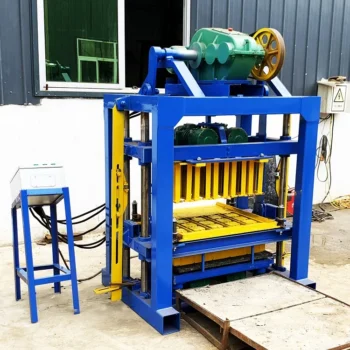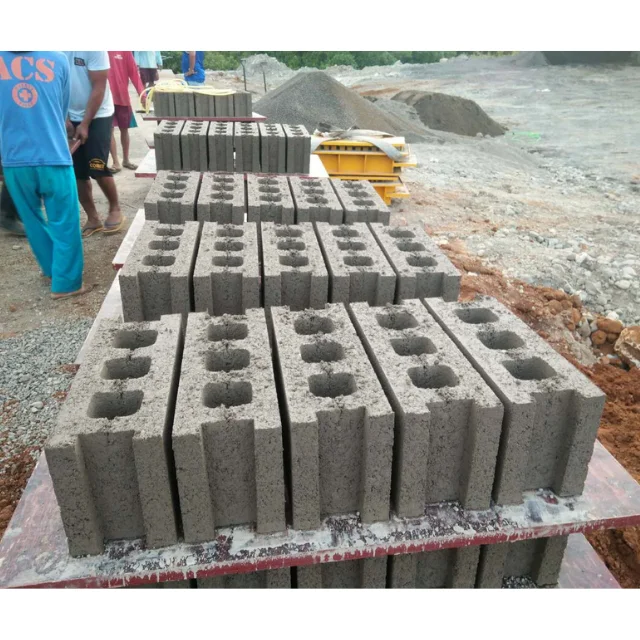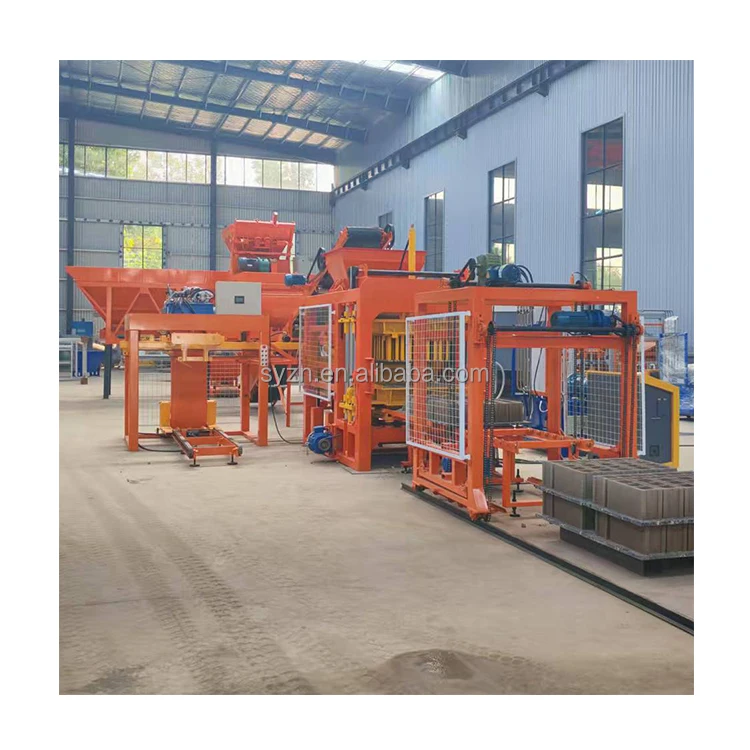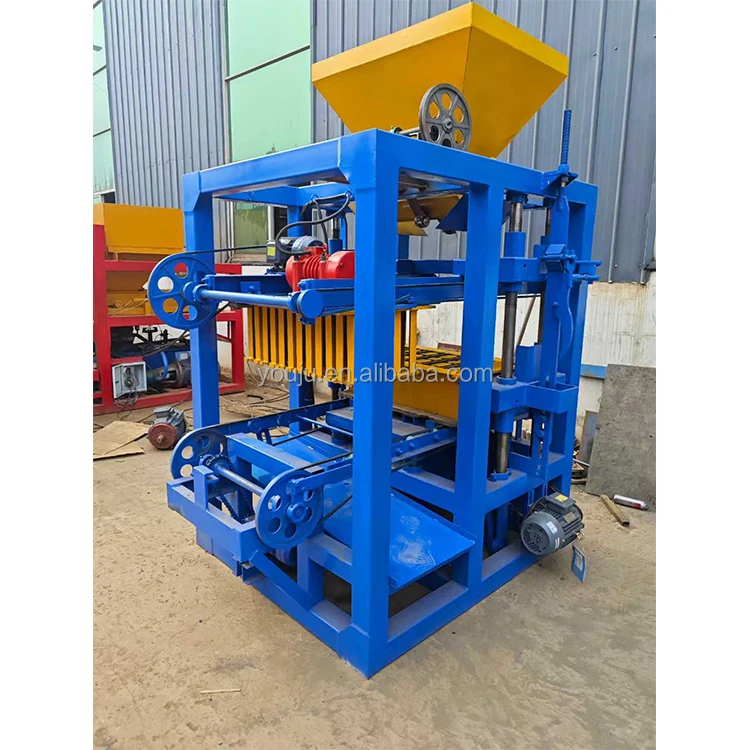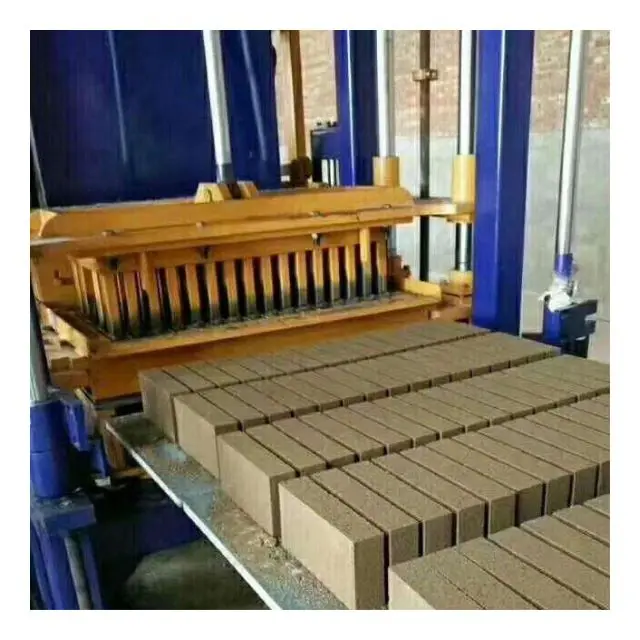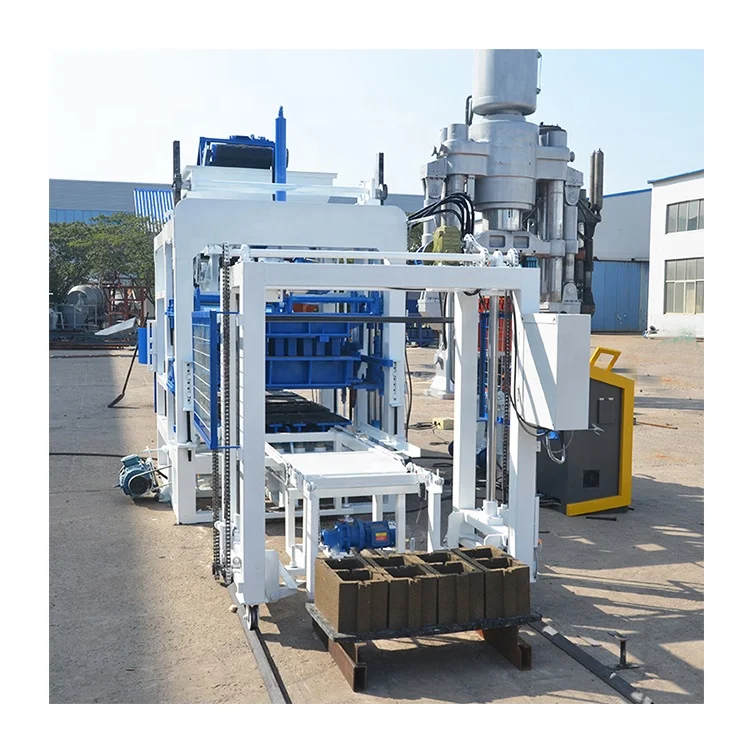

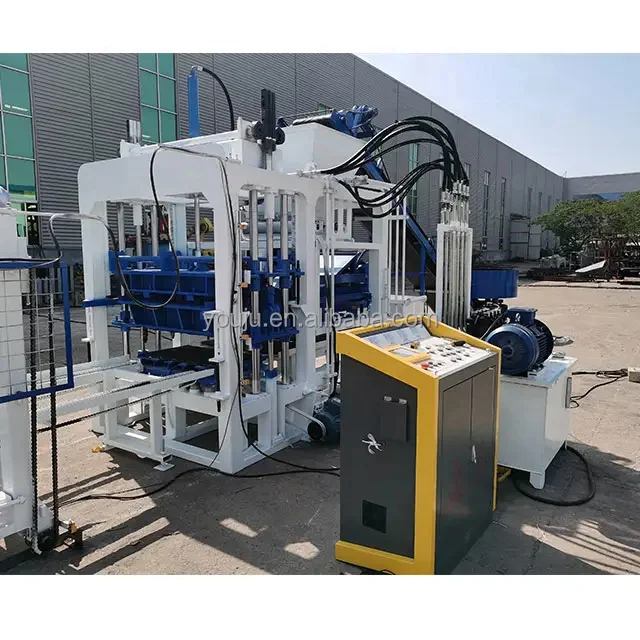
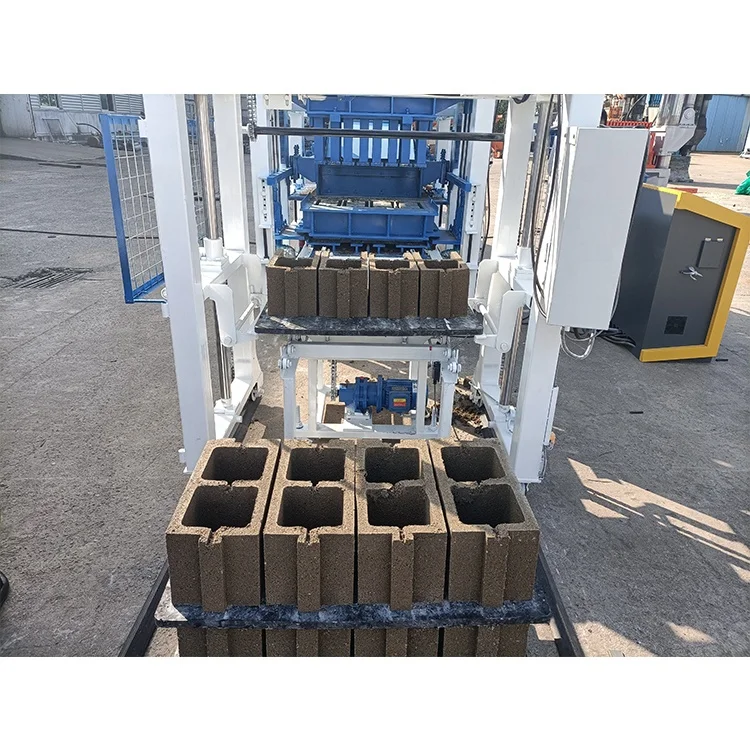
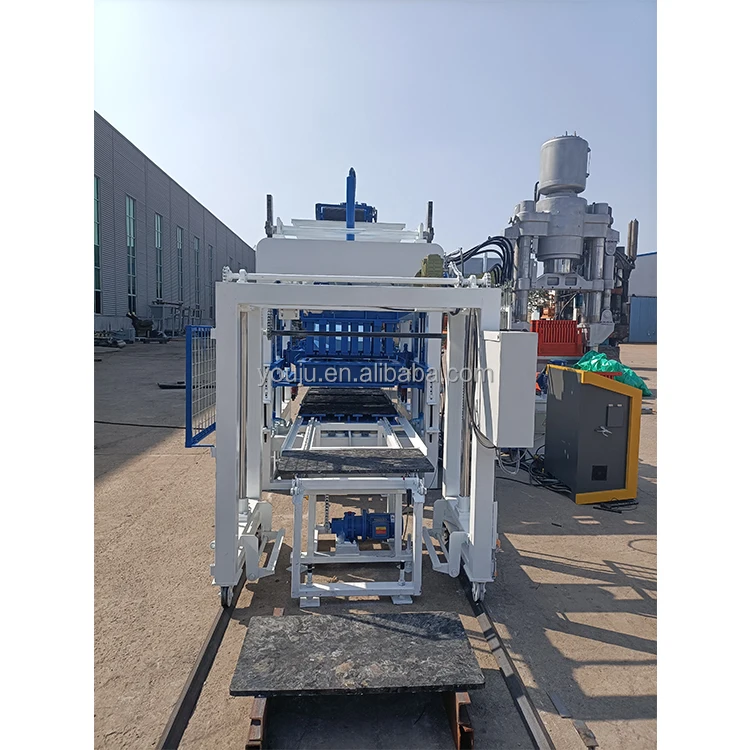
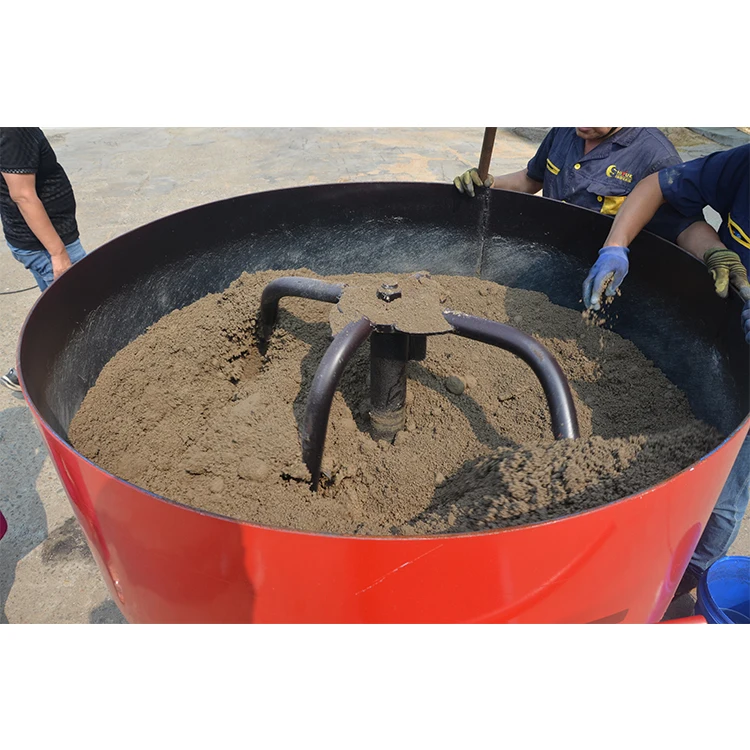
Description
Ready Stock Dispatch — Every QT4-18 leaves our Linyi warehouse with voltage and frequency confirmed in writing, avoiding the three-week rewiring delays I have seen strand machines on Southeast Asian job sites.
Technical Specifications
| Parameter | Value |
|---|---|
| Model | QT4-18 |
| Product Type | Stationary Block Making Machine |
| Host Machine Power | 27.5 kW |
| Vibration Force | 40 kN |
| Moulding Cycle | 15 s |
| Pallet Size | 1020 × 570 mm |
| Overall Dimensions (L×W×H) | 7100 × 1600 × 2610 mm |
| Weight of Host Machine | 5 T |
| Mixer Model | JS500 |
| Voltage | 380 V (configurable for destination market) |
| Water Consumption | 4 T / day |
| Required Workers | 3–4 |
| Workshop Area | 150 m² |
| Automation Level | Semi-automatic |
| Theoretical Productivity | Basis not stated in source (to be confirmed against target block format) |
Application Suitability
| Application | Material or Output |
|---|---|
| Hollow block production for residential and commercial walls | Crushed stone, cement, sand, and water mix |
| Solid concrete block for load-bearing structures | Standard concrete aggregate with cement binder |
| Paving and infrastructure units | Concrete mixes compatible with vibration compaction |
Why the Voltage Question Should Come Before the Price
Confirming electrical standards before the QT4-18 stationary block machine in stock is crated prevents dead-on-arrival equipment.
I have dispatched stationary block lines to buyers who assumed voltage compatibility, only to find their workshop ran on a different phase or frequency standard. The machine sits idle while replacement motors, contactors, and transformers are sourced locally or shipped from the factory. This delay cancels out any lead time advantage gained by buying from stock. [NEED_CITE: voltage and frequency standards by export market]
A QT4-18 stationary block machine in stock is only fast if it actually runs when it reaches your floor. Our dispatch checklist requires written confirmation of your site voltage, phase, and frequency before the machine is dismantled for loading. This step takes one day and saves weeks of on-site electrical rework.
Dispatch Timeline from Linyi Warehouse
The QT4-18 stationary block machine in stock ships from our Linyi facility with a defined container loading plan. The host machine, mixer, and pallet feed system are dismantled into modules that fit standard container dimensions, and the loading sequence is photographed before the doors close.
Arrival Estimate for Southeast Asian Ports
Based on typical multi-week transit times from Qingdao or Rizhao ports, buyers in Southeast Asian markets can expect arrival estimates that account for ocean freight, port clearance, and inland delivery. We quote the arrival window before the proforma invoice is signed, so project deadlines are planned around a realistic date. [NEED_CITE: typical ocean freight transit times from Shandong ports to Southeast Asia]
How Vibration Force and Pallet Size Define Your Output
The 40 kN vibration force on this machine compacts concrete into the mould cavity, and the result depends on your local aggregate gradation and cement content. A 40 kN force is adequate for standard hollow and solid blocks but must be matched with a mix design that responds to vibration rather than resisting it. The 1020 × 570 mm pallet size determines how many blocks are formed per cycle and must match the curing rack dimensions and forklift capacity you already operate. A mismatch here means pallets do not stack on your existing racks or require a new forklift purchase.
What Happens When Dispatch Documentation Is Incomplete
A machine shipped without packing photographs, customs paperwork, or a factory test record becomes a problem at your destination port. Customs holds are common when commercial invoices do not match packing lists or when machinery descriptions are vague. The buyer pays demurrage while the paperwork is corrected from overseas, and the delivery advantage of buying stock evaporates. [NEED_CITE: common customs hold reasons for industrial machinery imports]
Why Buyers Source This Machine Through Our Stock Desk
We hold QT4-18 units in configurations that have already been tested at the factory, so the dispatch decision is about matching your port and voltage rather than building from scratch. The dismantling method for container loading is proven on this model, reducing the risk of damage in transit. Voltage, frequency, and control language are verified against your written specification before crating. Packing photographs and customs documentation are provided as standard, not requested after the fact. The arrival estimate is quoted before commitment, based on actual sailing schedules rather than optimistic assumptions.
Documentation & Verification
- Factory test record showing the QT4-18 running through a full moulding cycle before dismantling
- Voltage and frequency confirmation sheet signed against your site specification
- Packing photographs showing dismantled modules and container loading sequence
- Customs documentation package with machinery description matched to HS code requirements
- Operation and maintenance manual in the confirmed control language
Installation, Commissioning & Support
- Foundation must support the 5 T host machine weight and 27.5 kW vibration load without flexing
- Dedicated electrical circuit required matching the confirmed voltage, phase, and frequency specification
- Machine arrives dismantled; reassembly sequence follows the packing photographs provided
- JS500 mixer commissioning includes water-to-cement ratio calibration against your local aggregate
- 1020 × 570 mm pallet alignment checked against your curing rack spacing during setup
- Operator training covers mould change procedure and daily vibration assembly inspection
- Wear parts list provided with first replacement intervals based on standard concrete mixes
What We Need to Confirm Your Dispatch
Provide your destination port, site voltage, phase, and frequency so we can match a stocked QT4-18 to your electrical standard. Share your target block format and daily volume so we confirm whether the stocked mould set covers your requirement. Let us know your project deadline so the arrival estimate is calculated against a realistic sailing schedule.
Frequently Asked Questions
Q: Which QT4-18 configurations and mould sets are currently in stock?
A: Our Linyi warehouse holds QT4-18 stationary block machines in semi-automatic configurations with standard mould sets for hollow and solid blocks. Mould inventory changes with dispatch activity, so we confirm availability against your specific format requirement at the time of inquiry rather than publishing a static list that may be outdated.
Q: What is the realistic dispatch lead time and arrival estimate for my port?
A: Dispatch from stock typically takes several days for crating and customs clearance at origin, followed by ocean freight transit to your destination port. We quote a written arrival estimate that includes port-to-port sailing time and typical clearance windows, calculated after your destination port and preferred shipping line are confirmed.
Q: How is the machine dismantled and loaded for container shipment?
A: The QT4-18 host machine, JS500 mixer, and pallet feed system are separated into modules that fit standard container dimensions. The dismantling sequence is documented with packing photographs before the container doors close, so your reassembly team has a visual reference when the shipment arrives.
Q: Are voltage, frequency, and control language pre-confirmed before dispatch?
A: Yes. Every QT4-18 dispatch requires your written confirmation of site voltage, phase, frequency, and preferred control display language. This check-off is completed before the machine is crated, preventing the on-site electrical rework that delays commissioning when assumptions are made.
Q: What customs documentation and packing records are provided with the shipment?
A: Each shipment includes a commercial invoice, packing list, bill of lading, and machinery description aligned with customs requirements. Packing photographs show the container loading sequence, and the factory test record confirms the machine ran through a full cycle before dismantling.