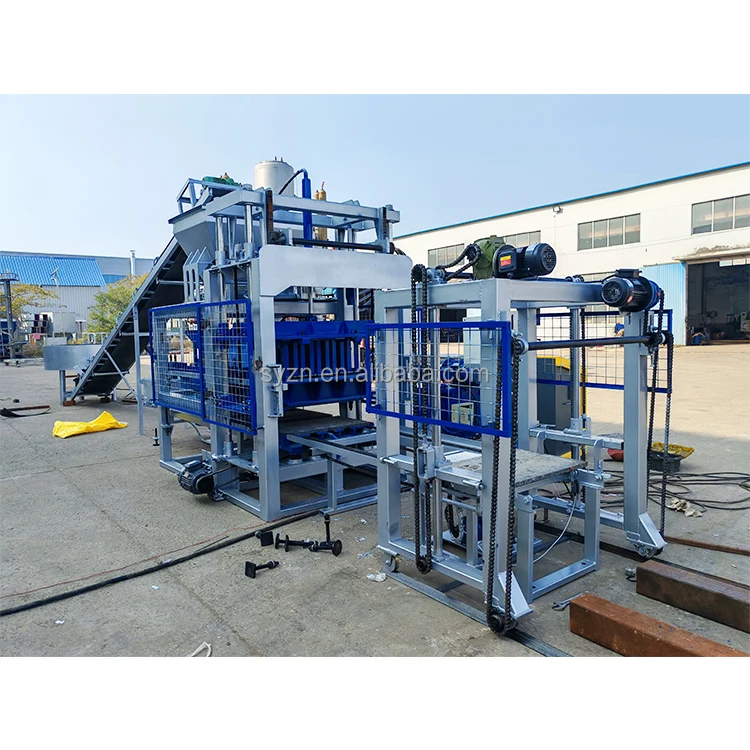
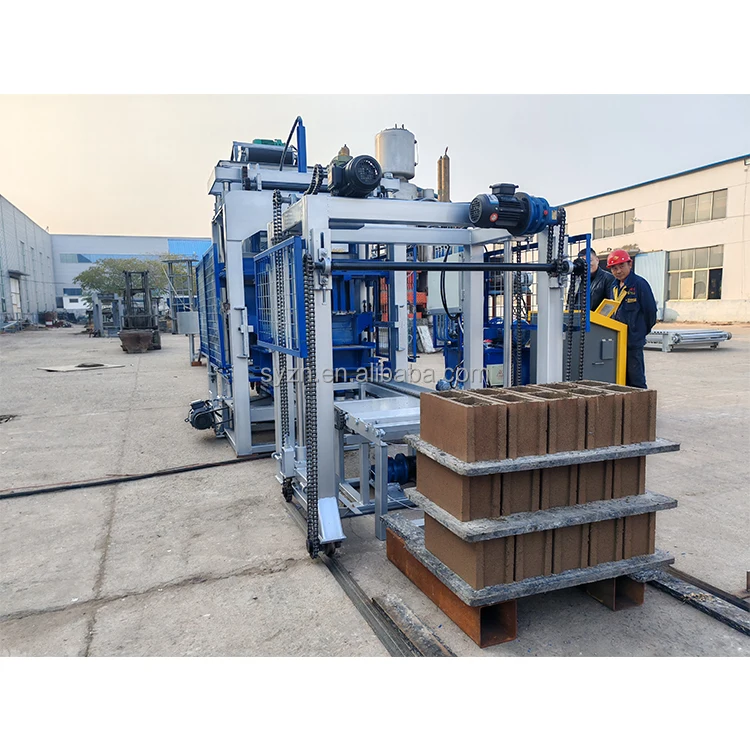
Description
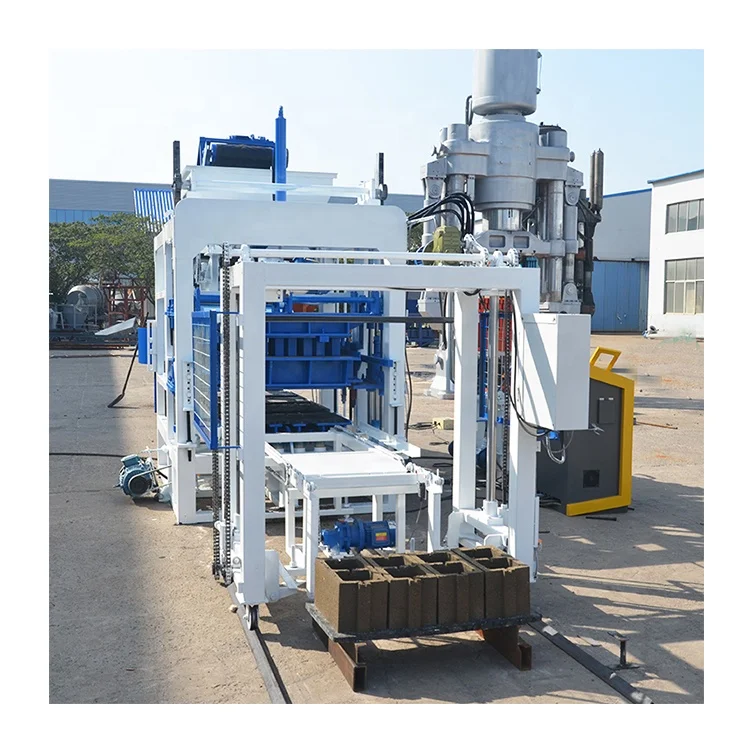
Stock Dispatch Readiness — QT4-15A block machine in stock with standard moulds pre-matched to common hollow block formats, so your order moves straight to container loading instead of waiting on custom tooling.
Technical Specifications
| Parameter | Value |
|---|---|
| Model | QT4-15A |
| Product Type | Fully Automatic Concrete Block Making Machine |
| Overall Dimensions (L×W×H) | 4100×1600×2600 mm |
| Rated Pressure | 16–21 MPa |
| Main Vibration Form | Platform Vibration |
| Vibration Frequency | 4200 r/min |
| Vibration Force | 55 KN |
| Pallet Size | 880×550 mm |
| Molding Cycle | 25–30 s (basis to be confirmed) |
| Demolding Method | Hydraulic |
| Total Mass | 4 T |
| Factory Area Required | 300 m² |
| Automation Level | Fully Automatic |
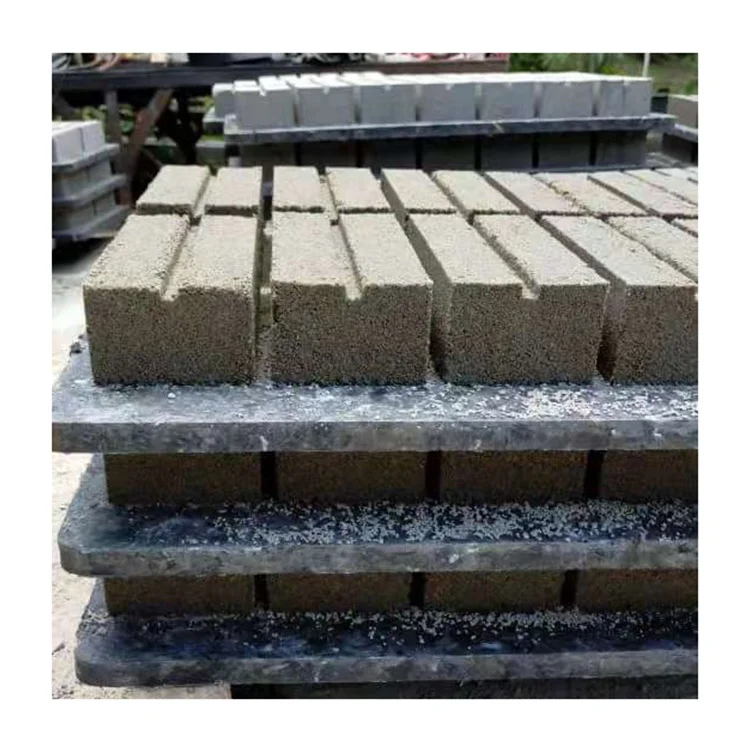
| Applied Products | Hollow blocks, solid blocks, pavers, interlocking blocks, curbstone, colored pavers |
| Raw Materials | Crushed stone, sand, cement, fly ash, gravel, slag |
Application Suitability
| Application | Material or Output |
|---|---|
| Hollow block production for residential walls | Crushed stone, sand, cement mix |
| Solid block manufacturing for load-bearing structures | Gravel, sand, cement with fly ash additive |
| Paving block runs for walkways and yards | Fine aggregate with colored pigment |
| Interlocking brick output for landscape projects | Sand and cement blend with slag |
| Curbstone forming for road edge finishing | Coarse aggregate and cement |
| Colored paver batches for decorative surfaces | Cement, sand, and oxide pigment |
Why the Voltage Check Matters More Than the Lead Time
A machine sitting idle at your site because the voltage does not match is the most expensive delay a block project can face.
When I was on the buyer side, a fully automatic machine arrived in Vietnam only to find the local supply was a different frequency from what the control panel expected. The entire crew waited three weeks for a transformer that should have been discussed before the order was signed [NEED_CITE: voltage and frequency standards by export market]. With the QT4-15A block machine in stock, the dispatch timeline is short — but that advantage disappears if the electrical specification is left to assumption. Confirming voltage, phase, and PLC display language before the machine leaves the factory keeps the arrival timeline honest.
Dispatch Timeline That Holds Up at the Port
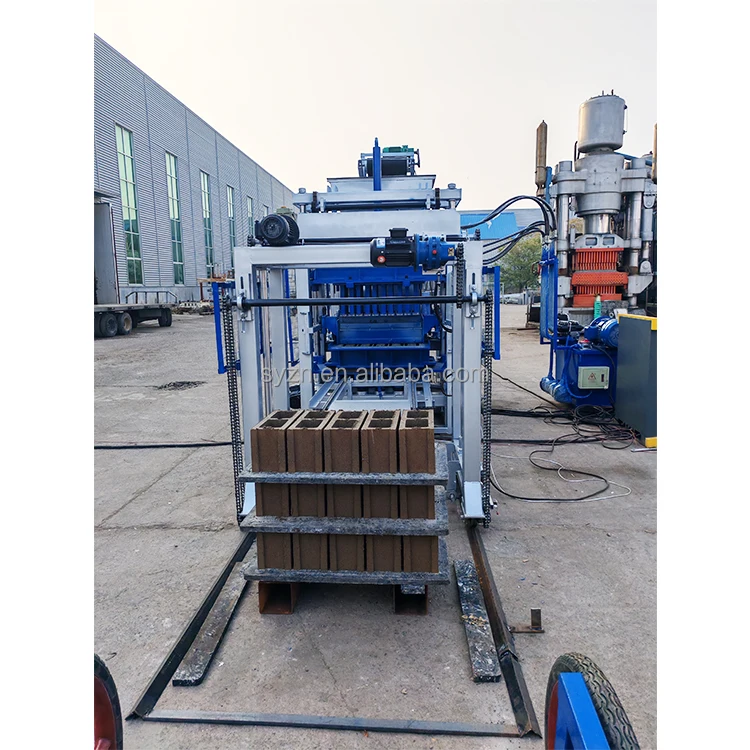
Buyers working to a project deadline need a confirmed shipping date, not an estimate. The QT4-15A is a standard production model with documented overall dimensions and total mass, which means container loading plans can be finalized at the quotation stage rather than after production. A QT4-15A block machine in stock moves from factory test to packing photographs to customs documentation in a sequence that keeps both sides informed at every handoff point.
How Container Loading Is Arranged Before You Pay Freight
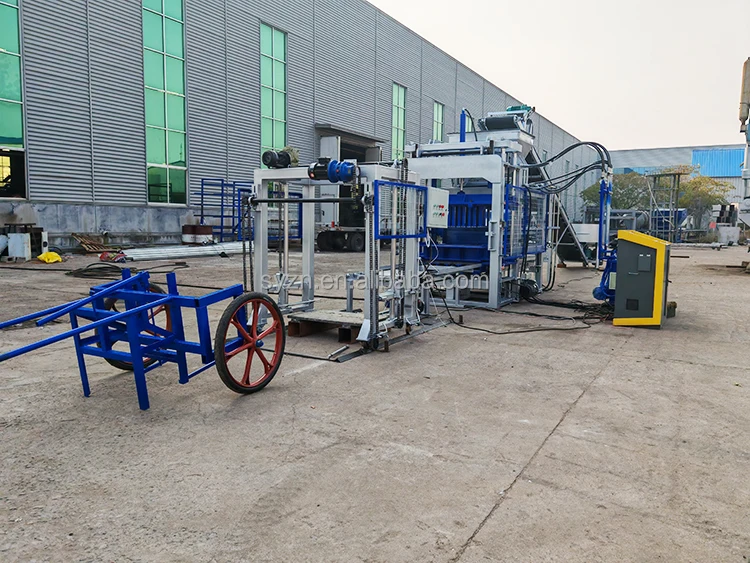
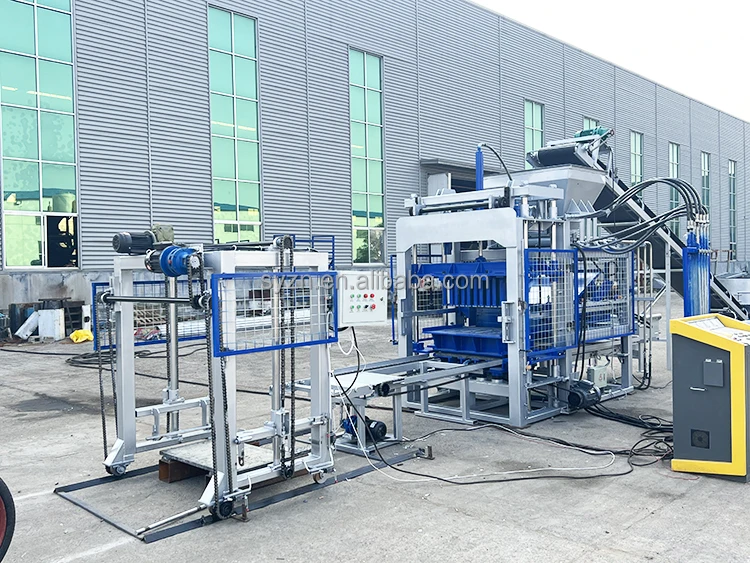
The overall dimensions of 4100×1600×2600 mm and a total mass of 4 tonnes place this machine within a standard container loading envelope. The host press, hydraulic station, and control cabinet are dismantled into documented sub-assemblies so the loading plan can be shared with your freight forwarder before the container is booked [NEED_CITE: CE machinery directive requirements for industrial equipment]. This removes the guesswork from arrival estimates and lets your site crew prepare the foundation while the machine is still on the water.
What the Specs Mean on the Production Floor
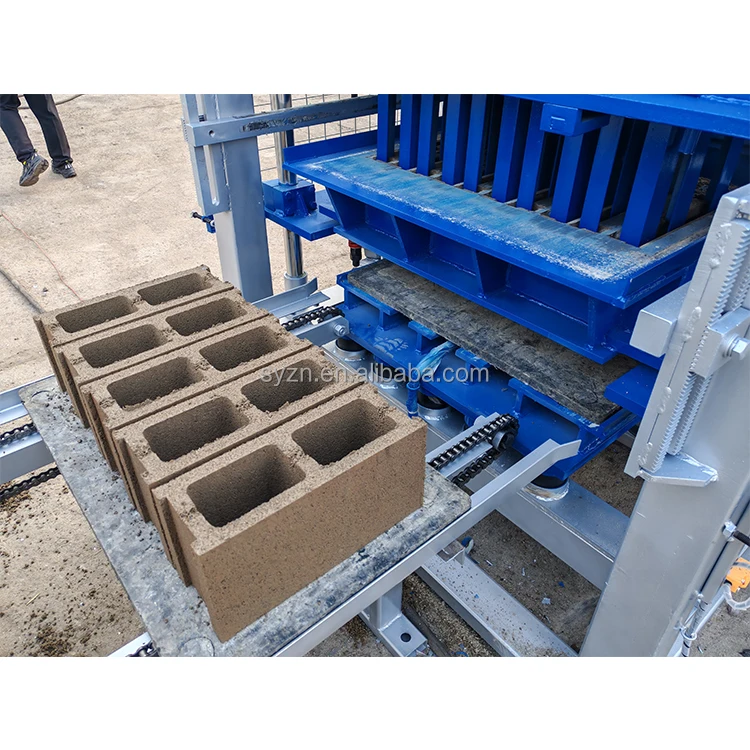
Platform vibration at 4200 r/min paired with 16–21 MPa hydraulic pressure determines how densely the mix is compacted into the mould cavity. The 55 KN vibration force drives the aggregate particles into a tight arrangement before the hydraulic ram applies the finishing pressure from above — the combination is what gives hollow blocks their wall strength. The 880×550 mm pallet size is a common standard across the industry, which means replacement pallets can be sourced locally without waiting on a special shipment. Hydraulic demolding lifts the formed block off the pallet surface cleanly, reducing edge chipping on thin-wall hollow formats that are sensitive to sudden release.
The Cost of Skipping Electrical Confirmation
When voltage and frequency are assumed rather than verified, the consequences compound. A control panel wired for the wrong supply can damage the PLC on first power-up, turning a commissioning visit into a repair call. Hydraulic solenoid valves rated for one frequency will cycle at the wrong speed on another, making molding cycle times unpredictable and block consistency unreliable [NEED_CITE: hydraulic solenoid response at variable frequency]. The QT4-15A block machine in stock is ready to ship quickly, but electrical confirmation remains the step that protects that speed from being wasted on a transformer rental or a rewound motor.
What You Get When the Machine Is Already Built
Every stocked QT4-15A has been assembled and run through a factory test cycle before being listed for dispatch. Standard moulds for the most common hollow and solid block formats are paired and tested with the host machine, so format flexibility is available from day one rather than after a custom tooling lead time. Voltage and control language are confirmed with the buyer before the machine is crated — this single checkpoint prevents the idle-site scenario I witnessed firsthand in Southeast Asia. Packing photographs document the machine condition and loading arrangement before the container doors close, giving both parties a clear record for freight claims if anything shifts in transit. Customs documentation is prepared with the correct HS code and machine description so clearance at the destination port follows the planned schedule rather than triggering an inspection hold.
Documentation & Verification
- Factory test record covering your specified block format before dispatch
- Voltage and PLC display language confirmation sheet signed prior to crating
- Machine specification sheet matching the exact configuration shipped
- Container loading plan with dismantling arrangement and weight distribution
- Packing photographs showing machine condition before container doors close
- Customs documentation with correct HS classification for smooth port clearance
Installation, Commissioning & Support
- 300 m² factory area requirement with level concrete foundation for the 4100×1600 mm footprint
- Dedicated power circuit matching confirmed voltage and frequency for the 18.45 kW total load
- Dismantled sub-assemblies reassembled on site with documented bolt torque sequence
- First production run supervised to set hydraulic pressure within the 16–21 MPa range
- Operator training on PLC interface in confirmed language covering mould change procedure
- Wear parts list for hydraulic seals and vibration motor bearings with reorder intervals
- 880×550 mm pallet handling routine to prevent surface buildup affecting demolding quality
What to Include With Your Inquiry
To give you an accurate dispatch date and arrival estimate, share the block format you intend to produce first and the daily volume your project requires. Confirm the voltage, phase, and frequency available at your site so the electrical package can be matched before crating. Let us know the condition of your curing area and what pallet size you already have in stock — the 880×550 mm standard may already fit your operation, or a quick adjustment can be arranged before the machine ships.
Frequently Asked Questions
Q: Is the QT4-15A currently in stock and what is the dispatch lead time?
A: The QT4-15A is maintained as a stocked model with standard configurations ready for factory test. Dispatch lead time depends on the electrical confirmation and any pallet or mould adjustment requested. Once voltage and control language are agreed, the machine moves to packing and container loading. Current availability is confirmed at the inquiry stage so your project schedule is not built on an assumption.
Q: How is the machine packed and loaded into the container?
A: The host press, hydraulic station, and control cabinet are dismantled into documented sub-assemblies based on the 4100×1600×2600 mm overall dimensions. A loading plan is prepared showing the position and securing method for each component. Packing photographs are taken before the container doors close and shared with the buyer for freight documentation and arrival inspection purposes.
Q: What is the estimated arrival time from order to port of destination?
A: Arrival time depends on the destination port, shipping line schedule, and any transshipment required. Once the machine is loaded and the bill of lading is issued, transit time follows the carrier’s published schedule. We provide the container number and vessel details so your freight forwarder can track the shipment and arrange port clearance in advance of arrival.
Q: Are voltage and PLC language confirmed before dispatch?
A: Yes. Voltage, phase, frequency, and PLC display language are confirmed in writing before the machine is crated. This checkpoint prevents the idle-site scenario where a machine arrives and cannot be powered up until a transformer is sourced or a control panel is modified. Every QT4-15A block machine in stock goes through this confirmation regardless of how quickly the buyer needs it shipped.
Q: What moulds are stocked and ready to ship with this machine?
A: Standard moulds for common hollow block and solid block formats are kept in stock alongside the QT4-15A. The 880×550 mm pallet size accommodates multiple cavity layouts within that envelope. If your project requires a specific format not covered by the standard range, the lead time for a custom mould is quoted separately so it does not delay the machine dispatch.