

Description
Rapid Dispatch Focus — Every stocked LY2-40 is inspected, crated and photographed before the buyer confirms the vessel booking, so the lead time quoted is the lead time kept.
Technical Specifications
| Parameter | Value |
|---|---|
| Model | LY2-40 |
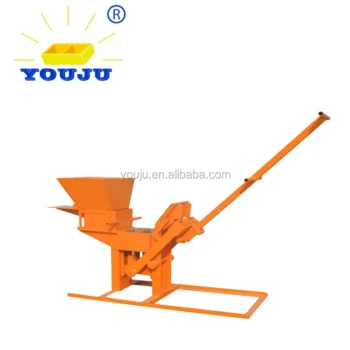
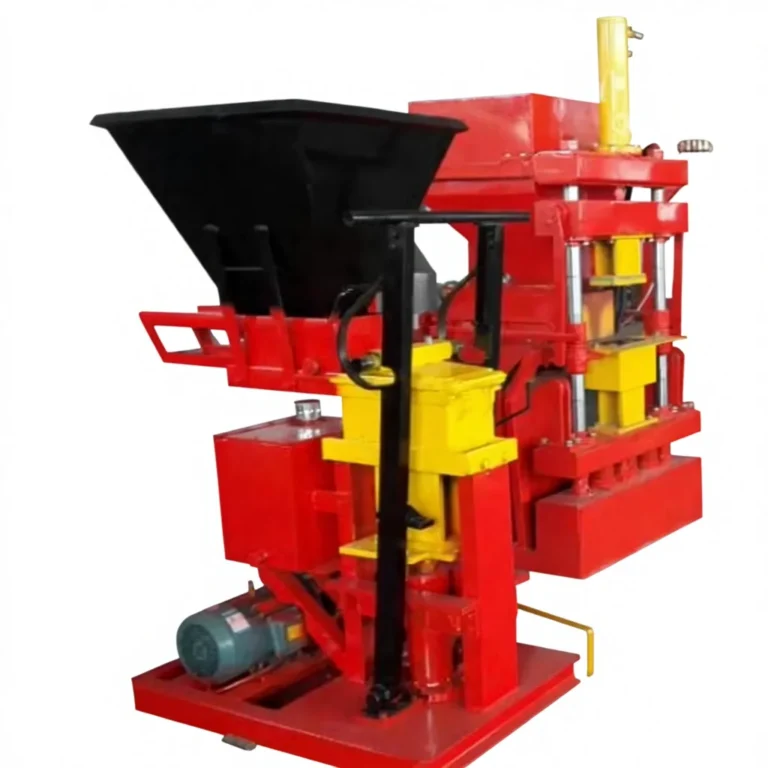
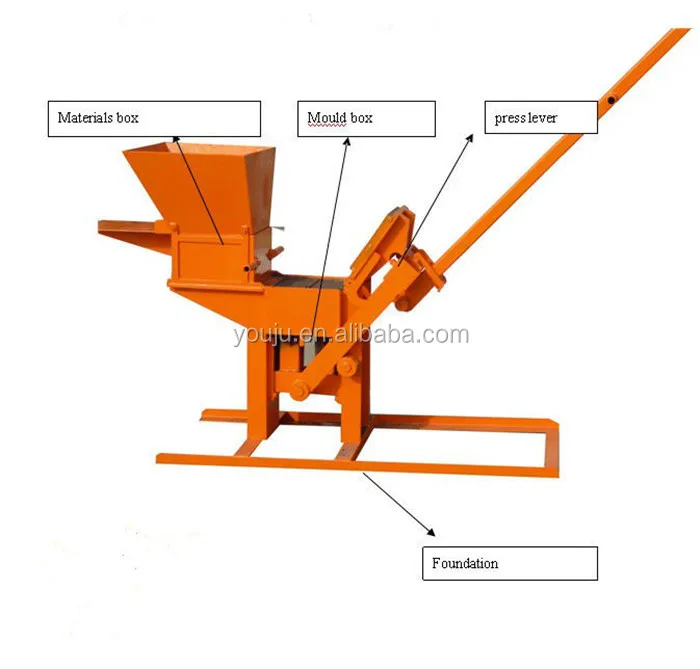
| Product Type | Manual Clay Interlocking Brick Making Machine |
| Power Requirement | No Power, Completely Manual |
| Overall Dimensions (L×W×H) | 1600 × 700 × 1200 mm |
| Net Weight | 200–240 kg |
| Molding Cycle | 30–40 seconds per press |
| Output Capacity | 400–1000 pcs/day (basis not stated in source — confirm block format, material and wall thickness before planning) |
| Lifting System | Manual lever operation |
| Mobility | Steel wheels for repositioning on site |
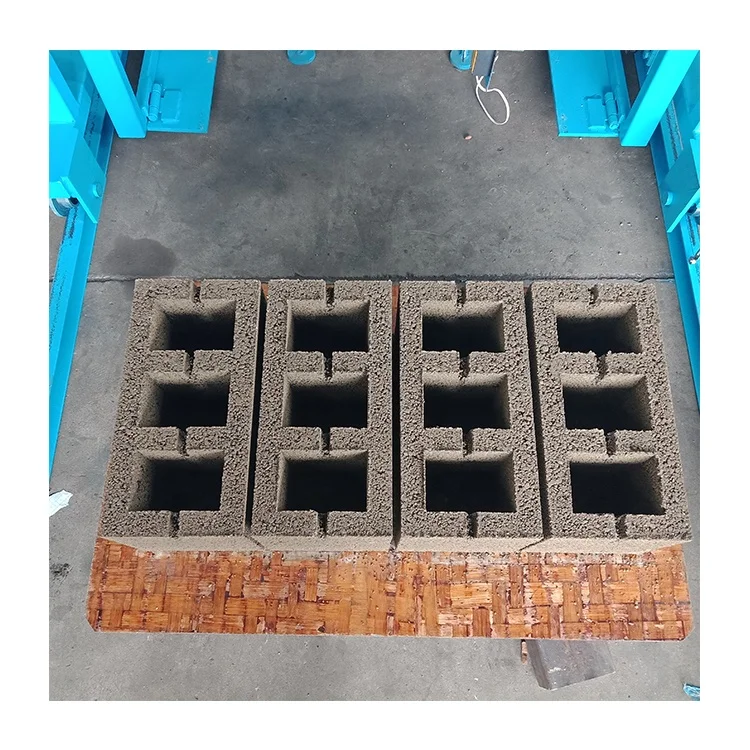
| Mould Compatibility | Changeable moulds for various interlocking block formats |
| Recommended Mixer | JFA-1 or JQ350 mixer |
| Mixing Method | Automated with external mixer or manual hand mixing |
| Automation Level | Fully manual, no electrical infrastructure required |
| Warranty | 1 Year |
Application Suitability
| Application | Material or Output |
|---|---|
| Off-grid clay brick production in areas without grid power | Local clay, laterite or sandy loam soil mixed with small cement ratio |
| On-site interlocking earth block manufacturing for housing projects | Site-excavated soil stabilized with cement or lime |
| Entrepreneur-level first brick plant with minimal capital outlay | Compressed earth blocks in interlocking formats |
| Construction contractor producing blocks directly at the building site | Raw clay or laterite sourced within transport distance of the project |
What "Ready to Ship" Actually Means When You Order a Manual Clay Interlocking Brick Making Machine in Stock
A machine on the floor today is not the same as a machine cleared through customs next month.
Buyers working to a project deadline often hear "in stock" and assume the machine will be pouring blocks on site within days. In reality, container loading, ocean transit, destination port clearance and inland transport to the build site each add their own delay. A stocked manual clay interlocking brick making machine in stock cuts the production wait to zero, but the logistics chain still needs to be planned honestly [NEED_CITE: container shipping transit times and port clearance lead times]. When a supplier says "ready to ship," the next question should always be: packed, photographed and loaded by when, and on which vessel?
Dispatch Timeline and Container Loading Realities
The LY2-40 weighs between 200 and 240 kg and measures 1600 × 700 × 1200 mm, which means multiple units can share a single 20-foot container alongside mixer equipment and spare moulds. Because the machine requires no power connection, there is no electrical panel to protect from moisture during ocean transit — the main packing concern is securing the steel frame against shifting. When a buyer confirms a Manual Clay Interlocking Brick Making Machine in stock order, the dispatch sequence runs from final inspection and factory test pressing through to crating and container stuffing.
Mould Availability and What Ships with the Machine
Standard interlocking block moulds that sit on the shelf ship together with the press. Custom mould formats drawn to a buyer’s specification require a separate production run and add to the lead time. Buyers should confirm which moulds are available from stock at the point of ordering, because a machine ready to leave the factory floor is only useful if the mould it carries can produce the block format the local market actually buys [NEED_CITE: interlocking block format standards by region]. The LY2-40 accepts changeable moulds, so a second or third format can be added later — but the first mould must match the project requirement from day one.
Reading the Specs That Matter on a No-Power Press
The 30–40 second molding cycle governs how many presses an operator can complete in a shift, but the realistic daily count depends on how fast the mixed clay reaches the machine and how quickly finished blocks are carried to the curing area. The recommended JFA-1 or JQ350 mixer keeps the material supply steady so the operator is not waiting for the next batch. Steel wheels allow the LY2-40 to be rolled closer to the curing yard as the stack grows, reducing the carry distance for wet blocks. The 1600 × 700 mm footprint is small enough to operate under a simple roof shelter without a dedicated factory building. Net weight of 200–240 kg gives the frame enough mass to resist movement during the manual lever press, but the machine can still be tilted and rolled by two workers when repositioning is needed.
The Hidden Cost of Ordering a Machine That Is Not Truly Ready
A press advertised as "in stock" may still need a mould swap, a fresh coat of protective paint, or replacement of worn lever bushings before it leaves the yard. If the supplier does not confirm the exact machine serial number and photograph the unit before payment, the buyer may receive a different press from a later production batch with a longer wait [NEED_CITE: machinery export packing and pre-shipment inspection practices]. For a contractor on a housing deadline, that delay pushes back wall construction and idles the masonry crew who were scheduled to start laying interlocking blocks.
Why Buyers Source This Machine Through Our Stock Channel
Single-focus block machinery supply means the LY2-40 press, its moulds, pallets and the recommended mixer are specified as one matched set rather than sourced from unrelated vendors. Stock availability is confirmed per unit with serial-level photographs, so the buyer sees the exact machine that will enter the container. Dispatch lead time and container loading plan are quoted upfront, with an estimated arrival window based on the chosen shipping route. Customs documentation support is included so destination clearance does not stall the delivery. The factory test record shows the machine pressing actual interlocking blocks before dismantling for shipment.
Documentation & Verification
- Factory test record showing the LY2-40 pressing interlocking blocks with the buyer’s chosen mould before crating
- Machine specification sheet confirming dimensions, net weight and zero-power manual operation
- Mould drawing and format list for every mould included in the shipment
- Packing photographs of the crated LY2-40 and container loading sequence
- Customs documentation support including HS code guidance for destination port clearance
- Operation and maintenance manual covering lever mechanism servicing and mould change procedure
Installation, Commissioning & Support
- No electrical connection needed — the LY2-40 operates fully manual, so no dedicated power circuit is required on site
- Level ground preparation for the 1600 × 700 mm footprint with a firm surface to prevent frame shift during pressing
- Machine arrives partially assembled; steel wheels, lever mechanism and mould frame require bolt-tightening on arrival
- First-run guidance covers soil moisture assessment and cement ratio adjustment for the buyer’s local clay source
- Mould change procedure walkthrough so operators can swap interlocking block formats without extended downtime
- Wear parts list identifying lever bushings and mould liners that may need replacement after sustained operation
Before You Request a Quotation
Tell us the exact interlocking block format your project or local market demands, including block dimensions and interlock profile. Share what soil type is available on or near the site — clay, laterite, sandy loam — and whether a stabilizer like cement or lime is accessible locally. Confirm your destination port so we can match the dispatch schedule to the next available vessel and give you a realistic arrival estimate.
Frequently Asked Questions
Q: What is the current stock status and fastest dispatch timeline for the LY2-40?
A: Stocked LY2-40 units are available on the factory floor and can be inspected, test-pressed and crated once the buyer confirms the order and mould selection. Dispatch timing then depends on container booking and vessel schedule to the destination port. We quote the loading date and estimated arrival together so you can plan site preparation around a known window.
Q: Which mould formats are available from stock versus made to order?
A: Standard interlocking block moulds that we produce regularly are held in stock and can ship with the LY2-40 immediately. Custom formats drawn to your specific block dimensions require a separate mould production run, which adds lead time. Confirming your target block format early lets us tell you whether the mould you need is on the shelf or must be built.
Q: How is the LY2-40 packed and loaded into a container for shipment?
A: The machine is partially dismantled to reduce the shipping envelope, secured inside a steel frame crate, and photographed at each packing stage. Multiple LY2-40 units along with a JFA-1 or JQ350 mixer and spare moulds can share a single container. Loading photographs are shared with the buyer before the container is sealed.
Q: What is the estimated arrival time from order to port of destination?
A: Transit time varies by destination port and vessel routing. Once the container is booked, we provide a sailing date and an estimated arrival based on the carrier’s published schedule. Buyers should add destination port clearance time and inland transport to this estimate when planning their site construction start date.
Q: Are spare moulds and wear parts shipped together or ordered separately?
A: Spare moulds that are in stock can be loaded into the same container as the LY2-40 at no additional shipping cost. Wear parts such as lever bushings and mould liner plates can also be included in the initial shipment. Items not held in stock are quoted separately with their own production lead time so you can decide whether to add them now or reorder later.