

Description
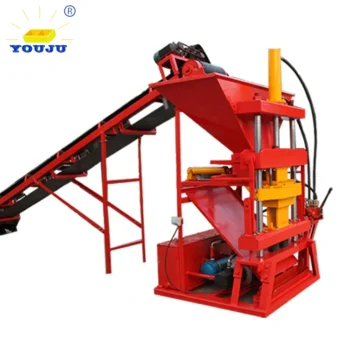
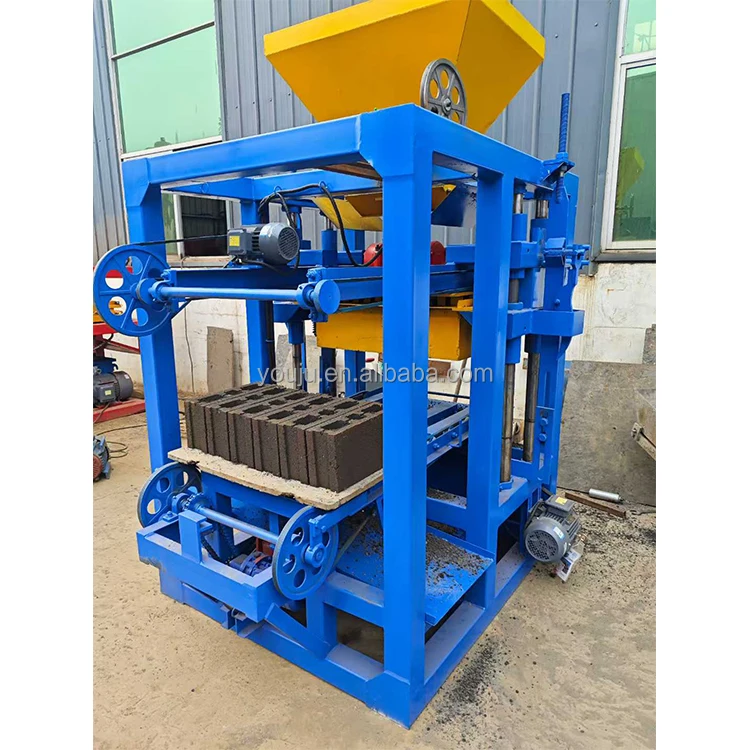
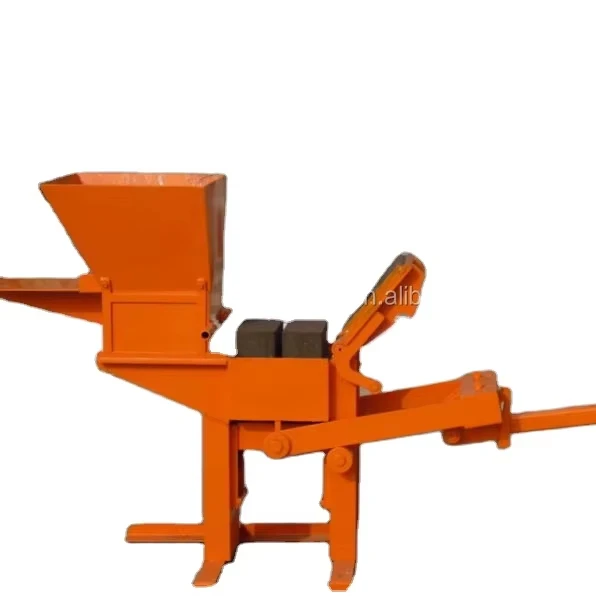
Stocked configuration — LY2-40 manual clay brick machine units are assembled and factory-tested before dispatch, so container loading dates stay firm instead of sliding week after week.
Technical Specifications
| Parameter | Value |
|---|---|
| Model | LY2-40 |
| Product Type | Manual Clay Interlocking Brick Machine |
| Power Source | No Power, Completely Manual |
| Lifting System | Manual |
| Mobility | Steel wheels (mobile) |
| Overall Dimensions (L×W×H) | 1600 x 700 x 1200 mm |
| Net Weight | 200-240 kgs |
| Molding Cycle | 30-40s (basis not stated in source — confirm block format / material / thickness) |
| Output Capacity | 400pcs-1000 pcs/day (basis not stated in source — confirm block format / material / thickness) |
| Mould Format | Changeable for various blocks |
| Recommended Mixer | JFA-1 Mixer or JQ350 Mixer (source value — verify against manufacturer catalog) |
| Warranty | 1 Year |
Application Suitability
| Application | Material or Output |
|---|---|
| Compressed earth interlocking brick production for rural housing projects | Local red clay mixed with sand and a small cement percentage |
| On-site mobile brick making for remote construction sites | No grid power required, relocated by hand or small tractor |
| Small-scale entrepreneur block plant in off-grid regions | Low daily volume with minimal capital outlay |
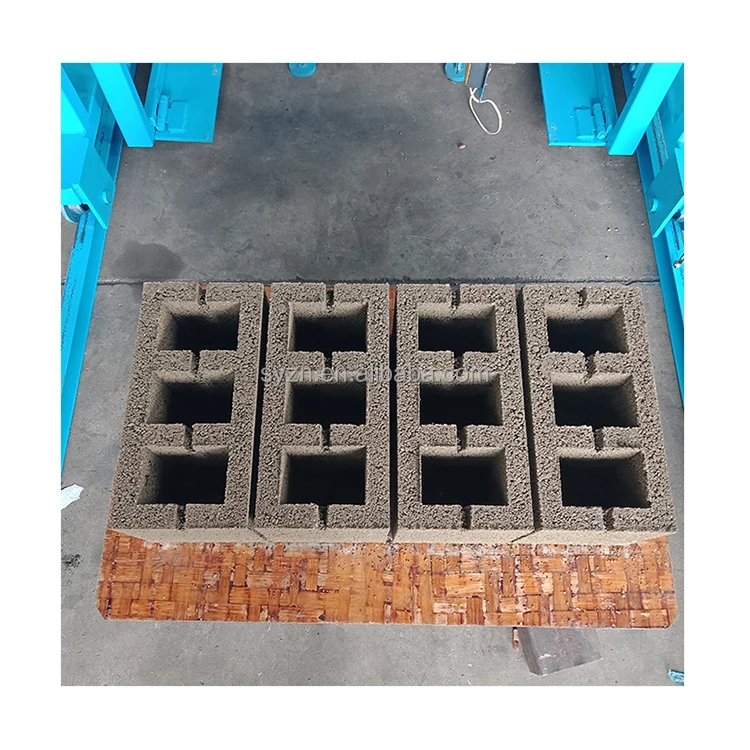
| Interlocking wall construction for community development | Standard interlocking profiles with mortarless or thin-joint laying |
Why "Ready to Ship" Needs More Than a Label
Many manual clay brick machine in stock listings look firm until you ask for a container loading date, and the conversation suddenly shifts to production schedules and parts delays. A stocked LY2-40 should mean the frame is welded, the moulds are mated, and the machine has already pressed test bricks before your order is confirmed.
I learned this the hard way after watching orders pile up for machines that were listed as available but still waiting on mould castings. For project-deadline buyers, the difference between a truly ready unit and one that is merely in the order queue can cost an entire building season. [NEED_CITE: typical container transit times from Chinese ports to West African and South American destinations] The LY2-40 manual clay brick machine in stock we load has already run its cycle test, so the only question left is whether your port accepts the documentation we prepare.
Dispatch Timeline From Factory Floor to Container Door
When a buyer needs a manual clay brick machine in stock for a project that already has a deadline, every day between order confirmation and gate-out matters. The LY2-40 weighs under 240 kgs and measures 1600 mm long, which means multiple units fit into a standard 20-foot container alongside moulds and spare parts. Our warehouse team dismantles only what is necessary — usually the handle assembly and wheel brackets — and photographs each stage so the buyer knows exactly what arrives.
What Gets Loaded Beside the Press
A standalone press does not produce bricks. The recommended JFA-1 or JQ350 mixer must ship in the same container, along with the changeable moulds the buyer selects. We confirm mould format before crating, because an interlocking profile for one market may differ from what the next port expects. [NEED_CITE: interlocking brick profile standards vary by regional building code] Loading plans are shared with the buyer so there are no surprises when the container doors open at destination.
Reading the Numbers Behind the LY2-40
The 1600 x 700 x 1200 mm footprint is not just a shipping convenience — it defines the maximum mould cavity area and therefore the brick formats this press can accommodate. A larger interlocking brick requires a larger mould plate, and the manual lever travel must generate enough compression across that entire area. The 200-240 kg net weight keeps the frame grounded during the compression stroke without requiring a concrete foundation, which is exactly what a mobile, no-power setup demands.
The 30-40 second molding cycle depends entirely on the operator rhythm and the soil mix moisture content. A drier clay mix compresses faster but may produce weaker bricks, while a wetter mix requires longer dwell time in the mould. The changeable mould system means one LY2-40 can press different interlocking profiles across a single project, provided the moulds are ordered upfront and ship together.
When Stocked Turns Into Stranded
A machine listed as available means little if the included moulds do not match the interlocking profile your local market sells. I have seen buyers take delivery of a manual press only to discover the moulds produce a brick that local contractors will not lay. [NEED_CITE: regional preferences for interlocking brick profiles in African and South American construction markets] The result is a second mould order, a second freight payment, and a project that stalls while waiting for a container that should have carried the right profile the first time.
Why Buyers Source the LY2-40 Here
The LY2-40 is our single-focus product category, so stock levels are maintained against actual shipping schedules rather than aspirational sales targets. Every unit leaving the warehouse has been assembled, cycle-tested with a standard clay mix, and photographed before crating. We match moulds to the buyer’s requested interlocking profile before the machine is crated, not after. Pallet and mixer recommendations are confirmed against the container space available, so the full production setup arrives together. Customs documentation is prepared per destination country requirements, reducing the chance of port-side delays. [NEED_CITE: export documentation requirements for brick making machinery to developing markets]
Documentation & Verification
- Factory test record showing cycle completion with standard clay mix before crating
- Packing photographs documenting dismantling state and container loading position
- Mould drawing and interlocking profile confirmation matched to buyer’s market
- Customs documentation package prepared for destination port clearance requirements
- Operation manual covering assembly reversal and first-run soil mix guidance
Installation, Commissioning & Support
- No foundation required; level compacted ground sufficient given 200-240 kg frame weight
- No electrical connection needed; manual operation eliminates voltage and frequency confirmation
- Handle assembly and wheel brackets reattach with basic hand tools upon arrival
- First-run soil mix trial recommended with local clay sample to confirm compression quality
- Mould change procedure covered in manual with format-specific compression guidance
- Wear parts limited to mould surfaces and pivot pins, all replaceable on site
What We Need Before Loading Your Container
To confirm which stocked LY2-40 units can ship against your deadline, send us your target interlocking brick profile, the local soil type you will be pressing, and your destination port. If you already have a mixer or plan to source one locally, let us know so we can adjust the container loading plan. We also need to know whether your project site has any access restrictions for offloading, since the steel-wheel chassis is designed to roll but still requires reasonably flat ground.
Frequently Asked Questions
Q: Is the LY2-40 currently in stock and what is the dispatch lead time?
A: Stock levels rotate based on recent orders, but we maintain assembled LY2-40 units ready for crating. Once mould format is confirmed and matched, typical dispatch falls within a short window for factory test completion and container booking. We quote the loading date at inquiry stage, not after payment.
Q: How is the machine dismantled and loaded into a container for shipment?
A: Only the handle assembly and wheel brackets are removed to maximize container space. The main frame and compression mechanism stay intact. We photograph every dismantling stage and share loading plans with the buyer so reassembly at destination is straightforward with basic hand tools.
Q: What arrival estimate can be quoted for my destination port?
A: Transit time depends entirely on the destination port and current shipping line schedules. We provide a port-specific arrival estimate at the quotation stage, based on the container booking date we confirm. This estimate accounts for typical transit durations, not best-case scenarios.
Q: Which mould formats are included as standard and can additional moulds ship in the same container?
A: The LY2-40 ships with mould formats confirmed before crating based on the buyer’s market requirements. Additional moulds can share the same container alongside the press and recommended mixer. We confirm all mould profiles against your target brick before the container is sealed.