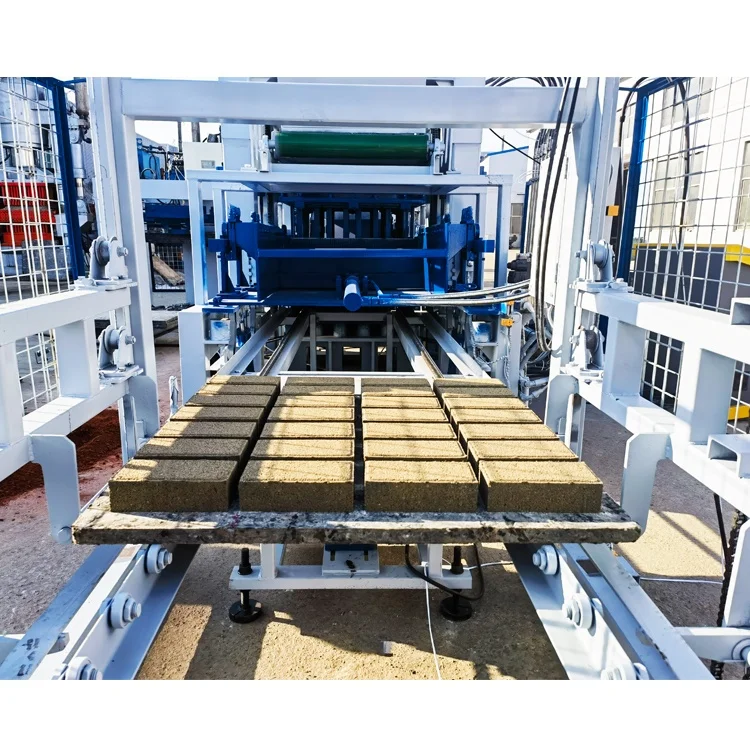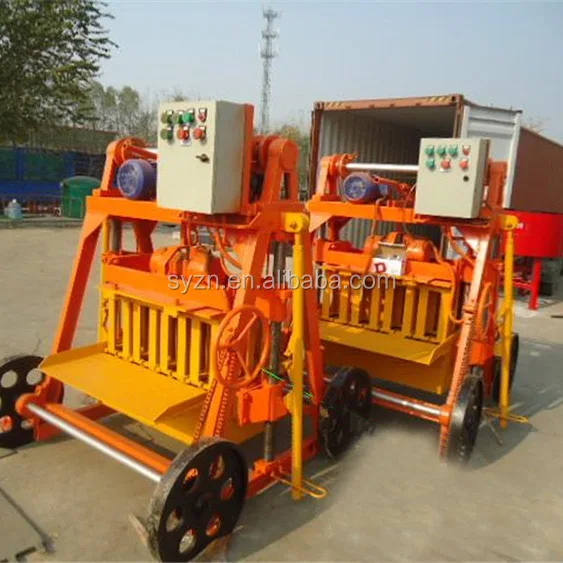
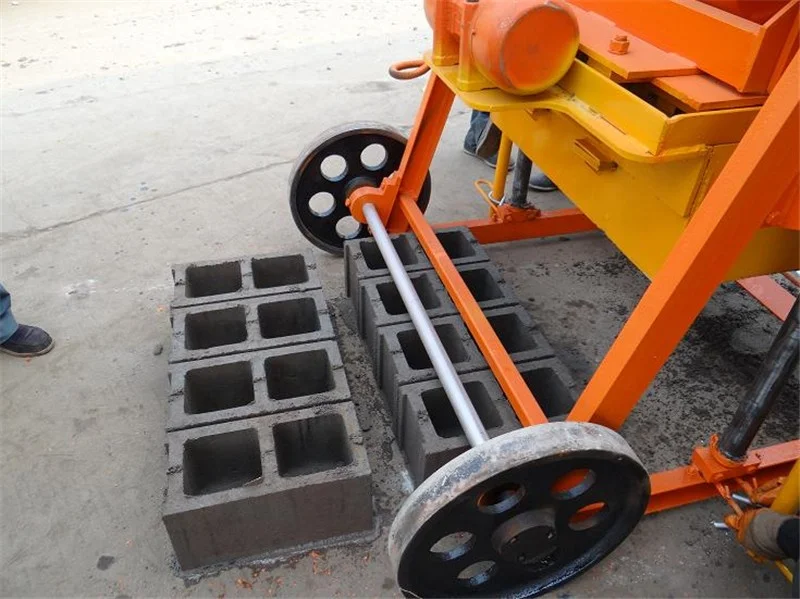
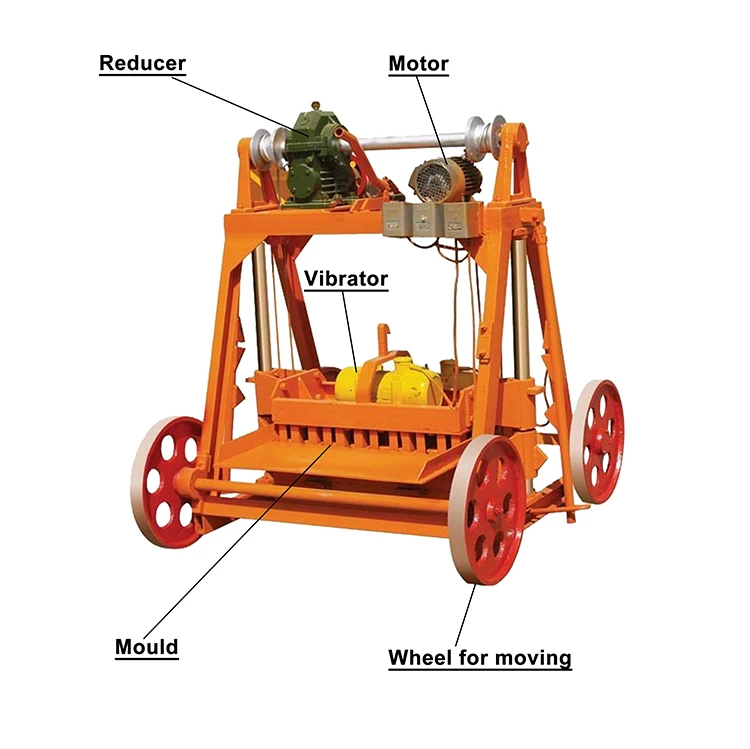
Description
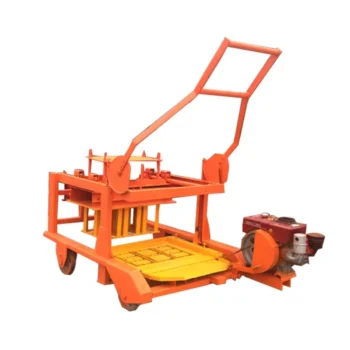
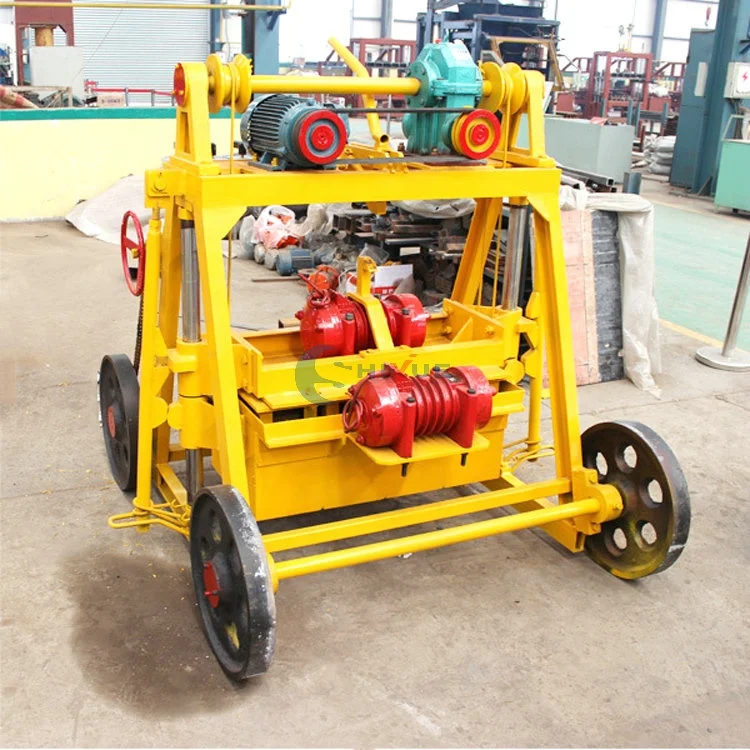
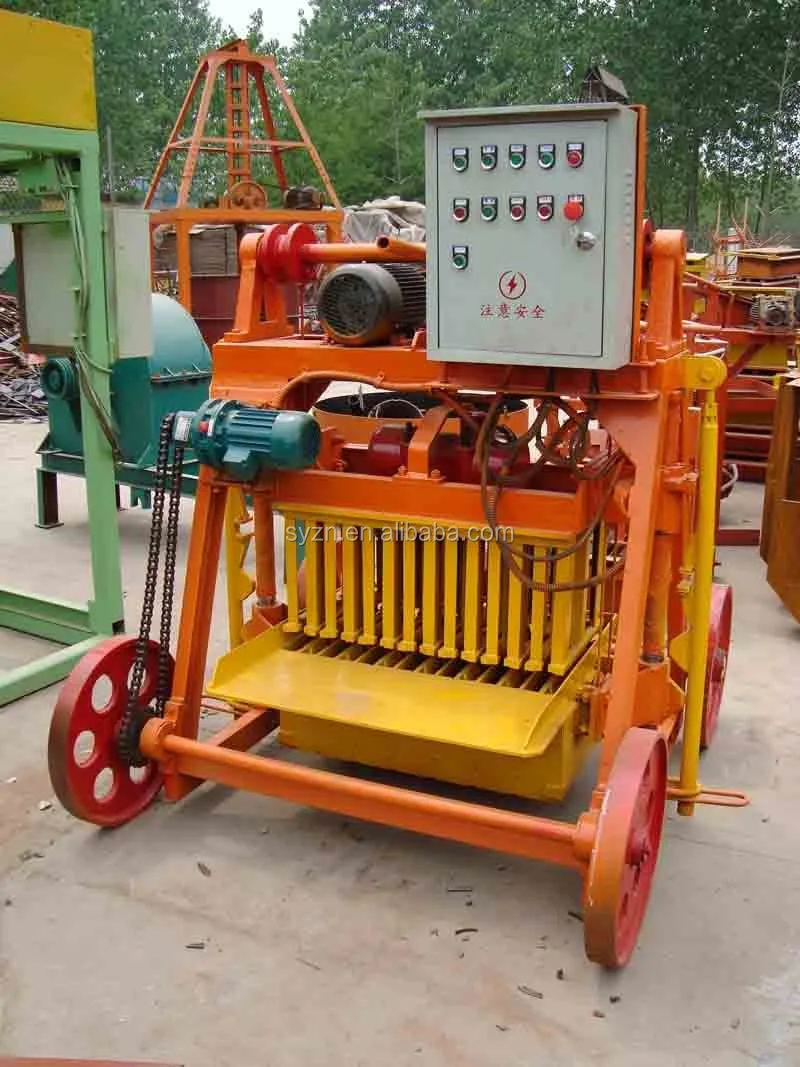
Ready Stock, Fast Dispatch — The QMJ4-45 mobile egg laying block machine sits on the warehouse floor in Linyi, verified for inventory before your order is confirmed, so container loading dates are real dates, not estimates.
Technical Specifications
| Parameter | Value |
|---|---|
| Model | QMJ4-45 |
| Product Type | Mobile Egg Laying Block Machine |
| Rated Power | 7.4 kW |
| Voltage & Frequency | Configurable to buyer’s local V/Hz (confirm exact specification before order) |
| Control System | Manual force control with jog control |
| Overall Dimensions (L×W×H) | 1550 × 1335 × 1580 mm |
| Net Weight | 1 T |
| Pallet Requirement | No pallets required — blocks laid directly on ground |
| Compatible Mould Formats | Hollow block, solid block, road block, curb stone |
| Cycle Time | 45 s (basis to be confirmed with block format, material and thickness) |
| Output Capacity | 2400 pcs / 8 h based on 400×200×200 mm hollow block, 4 pcs per mould; 3200 pcs / 8 h based on 400×150×200 mm block, 5 pcs per mould |
| Raw Materials | Concrete, sand, cement, fly ash, lime, gypsum |
| Vibration Method | Vibration (type and force in kN to be confirmed) |
| Hydraulic Pressure | To be confirmed — verify whether unit is hydraulic or mechanical |
| Orientation System | Four-pole guided with extended orientation bearing |
| Assembly State | Skid-mounted, mobile |
| Electrical Components | Imported appliances and sealing parts (specific brands to be confirmed) |
Application Suitability
| Application | Material or Output |
|---|---|
| On-site block production for construction contractors | Hollow and solid concrete blocks laid directly on prepared ground |
| Small-scale block manufacturing for first-time plant owners | Standard hollow blocks from cement, sand and crushed stone |
| Road block and curb stone precasting | Pavers and kerbstones produced via mould change on the same unit |
| Housing project contractors producing locally | Walling blocks from locally sourced aggregate and cement |
| Building material distributors | Low-investment mobile unit for solid and hollow block formats |
Why the Voltage Question Should Come Before the Price on a mobile egg laying block machine in stock
A machine wired for the wrong frequency is scrap metal on arrival.
I spent years shipping egg laying machines across North America and Europe before I learned this the hard way. A job site in the southern United States ran on 220V/60Hz. We dispatched a QMJ4-45 configured for 380V/50Hz — standard for our domestic market. The motor burned out within the first hour of operation. The contractor waited three weeks for a replacement stator while his crew sat idle and his project deadline slipped. Every mobile egg laying block machine in stock we now hold goes through a voltage verification checkpoint before it leaves the warehouse [NEED_CITE: voltage and frequency standards by export market].
Dispatch Timing and What It Actually Means for Your Project
When a buyer needs a mobile egg laying block machine in stock, the real question is not whether the machine exists in a warehouse. It is whether the specific configuration — correct voltage, correct mould, correct control language — can be loaded into a container within the timeframe the buyer’s project demands. Stock availability without configuration readiness still means delay. We confirm voltage, frequency and mould format against the buyer’s site conditions before quoting a dispatch date, so the lead time we give is the lead time the buyer receives.
Container Loading and Arrival Estimates for the QMJ4-45
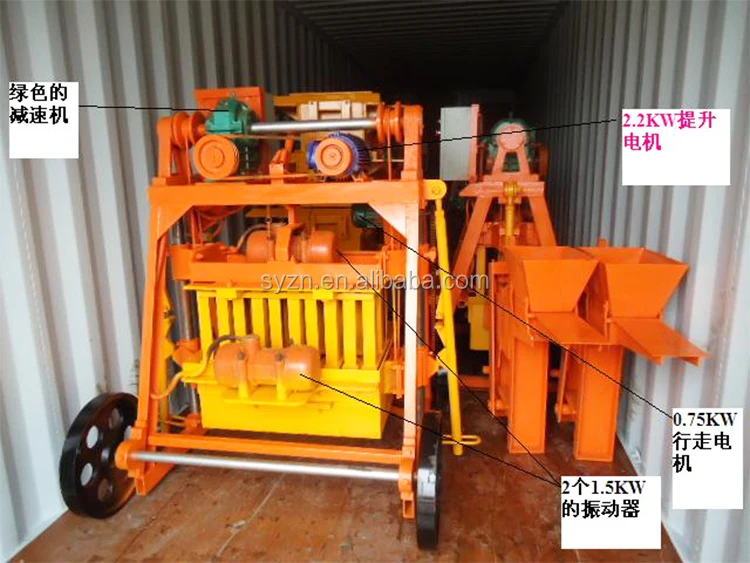
The QMJ4-45 weighs approximately one tonne and measures 1550 × 1335 × 1580 mm, which allows it to fit inside a standard 20GP container alongside one or two mould sets and basic spare parts. Whether the machine ships fully assembled or partially dismantled depends on the container type and the buyer’s preference for reassembly effort on site [NEED_CITE: standard container dimensions and loading practices for industrial machinery]. We provide packing photographs before the container doors close and share the container number for tracking once it moves to port. Arrival estimates are calculated from the shipping line’s published transit schedule, not from guesswork.
Understanding the 45-Second Cycle Time and What It Delivers
The published cycle time of 45 seconds applies to a specific block format and material consistency, and the output figures follow the same logic. At 400×200×200 mm hollow blocks with four cavities per mould, the QMJ4-45 produces approximately 2400 pieces across an eight-hour shift. Switching to a 400×150×200 mm format with five cavities shifts that figure to roughly 3200 pieces. These numbers assume continuous operation with material fed to the hopper without interruption and a flat, prepared surface for the blocks to be laid on. Buyers should plan their daily target around the format they actually sell, not the highest figure on the sheet.
Four-Pole Guidance and Block Dimensional Consistency
The four-pole guided orientation system with extended bearings keeps the mould head aligned through every stroke. On a mobile machine that is physically pushed or pulled across uneven ground between production runs, alignment drift is the most common cause of blocks that vary in height or develop cracked corners. The extended bearing surface distributes the lateral load across a longer travel path, which reduces play at the guide posts over time. This matters especially when switching between hollow block and curb stone moulds, where the head geometry and pressing force differ.
The Real Cost of Skipping Configuration Checks Before Dispatch
A machine that arrives with the wrong voltage cannot be fixed with an adapter. The motor must be rewound or replaced, which takes weeks when the correct winding specification has to be sourced internationally. A mould that does not match the block format the local market demands means the buyer either sells a product nobody wants or orders a new mould and waits again. Pallet-free egg laying machines eliminate one variable — there is no pallet investment to get wrong — but the voltage and mould decisions remain critical [NEED_CITE: CE machinery directive requirements for industrial equipment]. Every day the machine sits unpowered on a job site is a day of lost production and idle labour.
What Happens When Buyers Ignore Site Voltage and Frequency
The consequences go beyond a burned motor. Frequency mismatch affects the vibration motor’s RPM, which changes the compaction force and produces blocks with inconsistent density and strength. A 50Hz motor running on 60Hz supply spins faster, increasing vibration amplitude beyond what the frame and guide posts were designed to absorb. Over time this accelerates wear on the orientation bearings and can crack welds on the main frame. These failures do not appear in the first week — they surface months later, when the buyer has already committed to a production schedule and cannot afford downtime.
Why Sourcing This Machine From a Block Machinery Specialist Matters
Our single product focus is block making machinery, which means the QMJ4-45 is not pulled from a general catalogue and relabelled. The machine, mould and supporting components are specified as a matched set. We confirm the buyer’s local aggregate and mix design before recommending a mould cavity count, because a five-cavity mould running a stiff, low-slump mix may not fill completely in a 45-second cycle. Configuration is set against the buyer’s actual conditions, not a factory default. Stock machines in our Linyi warehouse carry verified inventory counts, so a buyer working against a project deadline receives a dispatch date backed by a physical unit, not a production slot. Mould design and supply covers the formats the buyer’s market actually purchases, including custom drawings when standard options do not fit.
Documentation & Verification
- Factory test record on buyer’s specified voltage and frequency before container loading
- Mould drawing and format list confirming cavity count and block dimensions
- Packing photographs showing machine condition and securing method inside container
- Voltage and frequency confirmation sheet signed off before dispatch
- Customs documentation package prepared for destination country requirements
- Operation manual covering mould change procedure and daily maintenance checks
Installation, Commissioning & Support
- Machine arrives skid-mounted — position on level ground and connect to confirmed power supply
- 7.4 kW rated power requires a dedicated circuit with appropriate breaker sizing at the job site
- First production run supervised remotely to verify cycle timing against chosen block format
- Mould change training covers alignment pins and clamping sequence for format switching
- Wear parts list identifies orientation bearings and vibration components for planned replacement
- Daily maintenance checklist provided for lubrication points on the four-pole guide system
Preparing Your Inquiry for a Fast Response
To move from inquiry to dispatch date quickly, share your target block format and dimensions, the daily output you need to sustain your project timeline, and your site voltage and frequency. If you already have a concrete mix recipe using local aggregate, include that so the mould cavity count can be matched to your material’s flow characteristics.
Frequently Asked Questions
Q: What QMJ4-45 configurations are currently in stock, and are standard moulds included?
A: Stock status changes with ongoing shipments. We confirm the exact available units and their current voltage configuration at the time of inquiry. The machine ships with one mould set matching the buyer’s requested block format. Additional moulds for other formats can be added to the same container before dispatch.
Q: How fast can the QMJ4-45 be loaded into a container after order confirmation?
A: Once voltage, frequency and mould format are confirmed and the order is placed, a stocked QMJ4-45 can typically be prepared and loaded within a matter of days. The exact timeline depends on whether any configuration change is needed before loading.
Q: Does the machine ship assembled, and will it fit in a 20GP container?
A: The QMJ4-45 measures 1550 × 1335 × 1580 mm and weighs approximately one tonne, which fits inside a 20GP container. It ships skid-mounted and largely assembled. Minor components may be detached to optimise container space and reattached on site with basic tools.
Q: Can you provide an estimated arrival date before I place the order?
A: Yes. Once we know the destination port, we reference published shipping line transit schedules to provide an arrival estimate. This is quoted before the order is confirmed so the buyer can plan site preparation and crew scheduling around a known timeline.
Q: If my site voltage does not match the stocked unit, can it be reconfigured before shipping?
A: Voltage and frequency can be matched to the buyer’s supply before dispatch. Motor winding or replacement is completed and tested at the factory. This adds a short period to the preparation timeline, which is communicated upfront so the revised dispatch date is clear.